
Ask a nutrition and health scientist what they worry about most in food policy right now, and the answer is likely the same: Ultra-Processed Food (UPF).
Rightly so, because many UPFs — industrially manufactured products stuffed with additives and flavourings that bear little resemblance to anything that once grew in a field — pose a serious threat to our health. No doubt about it: UPFs — looking at you, sugary and artificially sweetened soda — need to be more strictly regulated.
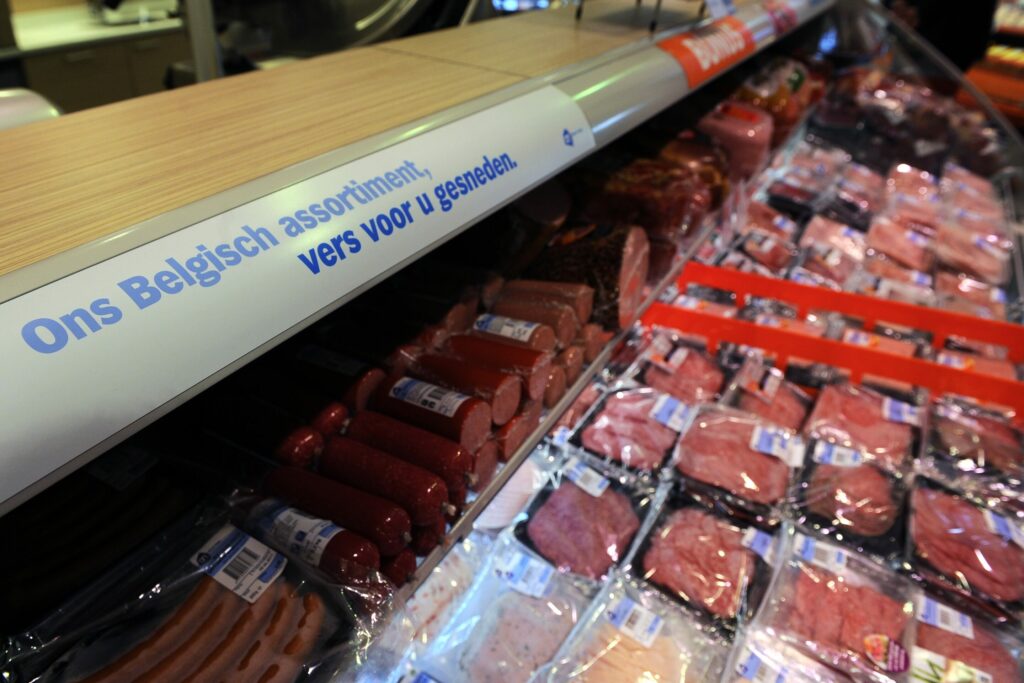
However, while this debate rages, one of Europe’s most powerful industries is hiding in plain sight: the meat industry. A recent study found UPF sausages to be the second-biggest UPF category consumed by European adults — the biggest in some countries.
Despite this, the meat industry has spent years cultivating an image of itself as the antithesis of everything people fear about modern food: natural, traditional, rooted in the land. It is an image that is, in large part, a fiction.
The pastoral myth on your supermarket shelf
Copa-Cogeca, one of the most powerful agricultural lobbying organisations in Brussels, has run campaigns describing traditional meat products as 'deeply rooted in our cultural heritage', while portraying plant-based alternatives as artificial and corporate.
The same playbook dominated Farm to Fork debates, where warnings about threats to 'traditional foods' proved remarkably effective: six years after the Farm to Fork Strategy was launched, its commitments to reduce meat consumption have been almost entirely unfulfilled.
But what does this 'traditional' production actually look like? Between 2005 and 2020, the number of farms in Europe declined by 37% — that is 5.3 million farms lost, overwhelmingly smaller family operations.
Ninety percent of broiler chickens are raised in intensive indoor systems; 99% of pigs kept for food production never see the outdoors. Over 80% of European milk comes from intensive dairy farms. These are not the farms of industry advertising.
GMO feed, hidden additives, and the transparency gap
The average European indirectly consumes around 60 kilograms of embedded soy per year through animal products. The EU produces just 5% of the soy it needs - the rest is imported mostly from Brazil, Argentina and the US, where cultivation is almost entirely genetically modified.
EU consumers rightly want to avoid GMO-labelled products, and food producers comply. Yet the same consumer may be entirely unaware that their meat was produced using GMO feed, because no such labelling is required.
There are over 1,400 authorised feed additives in the EU — compared with just over 300 approved for human food. Vitamins, emulsifiers, preservatives, flavourings and digestibility enhancers are routine features of the modern livestock diet, none of which appear on any food label.
Even bovine carcasses can be treated with lactic acid washes — introduced at the request of the US Department of Agriculture — with no obligation to inform the consumer.
The ultra-processed product hiding in plain sight
The central irony of the current debate: the industry most aggressively attacking plant-based foods as 'ultra-processed' is itself a major UPF producer. Sausages, bacon and cured hams are routinely marketed as traditional — yet many contain the very additives that define ultra-processed food.
Nitrates and nitrites, used to preserve and colour processed meats, are linked to cancer risk; processed meat has been classified as a Group 1 carcinogen by the IARC for over a decade.
The terms that suggest otherwise — 'traditional', 'artisanal', 'natural' — have no legal definition in the EU. Producers display them prominently on the front of the pack while burying additives in tiny print on the back. It is a legally sanctioned misdirection.
It is time Europe’s food debate caught up with the facts
Meat consumption in the EU is currently between two and four times higher than recommended levels. The science on the health and environmental costs of current production is unambiguous. And yet policy change remains extraordinarily difficult — not because the public doesn’t care, but because the industry narrative is so powerful, so well-resourced and so deeply embedded in EU political culture.
Eighty percent of Common Agricultural Policy subsidies go to just 20% of farms — the largest, most intensive operations — a situation Copa-Cogeca has consistently lobbied to maintain, even while positioning itself as the defender of family farms.
The UPF debate is important. We must not allow the meat industry to hijack it by presenting itself as the healthy and natural alternative while the realities of its industrial production and the health impacts of excessive meat consumption remain hidden.
We need meaningful reform for public health, animal welfare and the environment. This requires policymakers’ willingness to distinguish between the romantic image of European farming and the industrial reality.
If the European Commission wants to reduce the harm ultra-processed food causes — and it certainly should — it needs to start by putting real restrictions on the marketing of unhealthy food to children, as well as mandatory and harmonised front-of-pack nutritional labelling.
This op-ed draws on findings from foodwatch’s 2026 report on ultra-processed meat, food industry lobbying and the 'natural' food narrative in Europe. The full report is available here.
