
The federal migration policy shifts taking place in Brussels are being framed under a familiar banner: the restoration of systemic integrity.
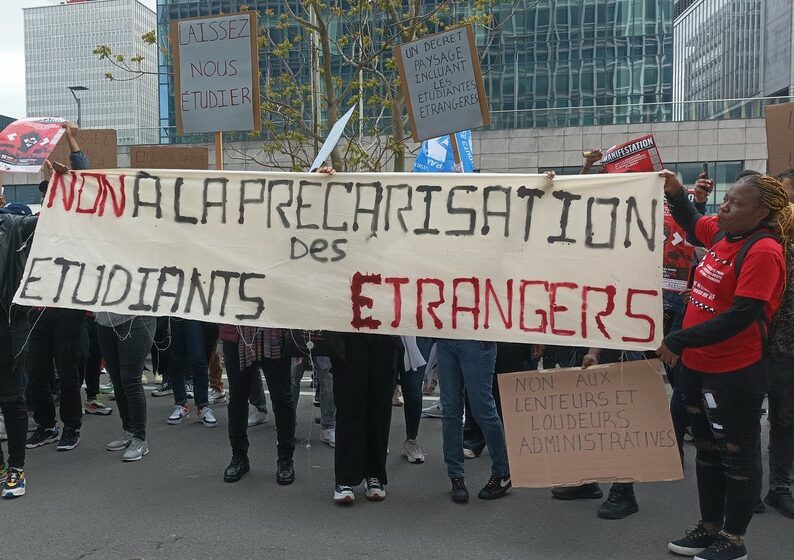
Led by the federal government, Belgium’s latest regulatory tightening targeting non-EU students is explicitly designed to dismantle what policymakers have labeled a 'revolving door' of residency abuse.
On paper, the objectives sound reasonable. Every sovereign state maintains a legitimate interest in ensuring that student visas are utilised for genuine academic pursuit rather than serving as an artificial, long-term backdoor for economic migration. Safeguarding higher education from predatory, unaccredited institutions is a goal any statesman would endorse.
Yet, a critical look at the mechanisms chosen to achieve this order reveals a profound strategic miscalculation. By implementing rigid academic credit milestones, demanding an inflexible accumulation of 100 credits by the end of a bachelor's student's third year, alongside a steep hike in the mandatory financial proof-of-funds threshold to €1,050 per month, the reform misdiagnoses the nature of global talent acquisition.
When combined with dramatic tuition fee increases at specialised institutions, which can now hit up to €17,500 annually, the policy ceases to filter for academic merit. Instead, it filters for wealth.
For a nation nestled at the institutional heart of the European Union, this pivot toward a restrictive, wealth-selected immigration model does not merely reshape domestic lecture halls; it actively undermines European economic diplomacy at a moment of intense global competition.
The core reform hurdles
The core reform hurdles are clear. The credit deadlines require bachelor’s students to accumulate 100 credits by their third year or risk deportation; the financial premium raises the monthly proof-of-funds threshold to €1,050, turning international education increasingly into a luxury asset; and the targeted impact is already visible in more than 2,615 student visa rejections in the preceding cycle, disproportionately affecting African applicants, especially those from Cameroon and Morocco.
Behind these figures lies a stark reality. The heaviest burden of these rejections falls squarely on African students. This trend is self-defeating. As explored in my recent book, Economic Diplomacy of the Diaspora, the international student body must not be viewed by interior ministries as a statistical migration liability to be managed or curbed. Rather, they represent a highly dynamic, liquid asset class of non-state diplomats.
Consider the vital economic corridor between Belgium and Nigeria, Africa’s economic powerhouse. When a Nigerian scholar navigates the rigorous hurdles to study in Flanders, Wallonia, or Brussels, they are not a drain on public safety nets. They are an active, living node in international trade.
These individuals bridge linguistic, cultural, and regulatory divides. They facilitate market entry for European enterprises looking southward, understand bilateral trade compliance, and channel critical insights back into both ecosystems. To disrupt this pipeline over rigid, administrative milestones is to cut off Belgium's own access to the world’s youngest, fastest-growing economic continent.
A soft power vacuum
Higher education has historically been one of Europe's most potent tools of cultural and economic diplomacy. When Africa's future leaders, innovators, and policy analysts are educated in Brussels, they return home with lifelong institutional, democratic, and commercial ties to Europe.
By replacing welcoming intellectual corridors with cold bureaucratic walls, Belgium risks forcing these brilliant minds into the geopolitical orbits of competing global superpowers in Asia and elsewhere. These global competitors are not closing their doors; they are actively expanding scholarships, streamlining post-study work pathways, and aggressively court-shipping African tech and engineering talent.
True statesmanship requires looking beyond immediate domestic political optics to evaluate long-term global competitiveness. Belgium does not need to choose between an unregulated open border and an isolationist fortress. The solution lies in shifting our paradigm from the fear of 'brain drain' or 'backdoor migration' toward a structured framework of 'brain circulation.'
Belgium should be pioneering trade-aligned visa pathways, public-private diaspora scholarships, and flexible post-study 'search years' that allow top-tier international graduates to transition smoothly into the high-skilled local workforce, driving innovation in STEM, logistics, and research.
If Belgium wishes to sustain its influence on the global stage, it must recognise that its economic diplomacy is only as strong as its willingness to invest in the global talent holding the keys to tomorrow's markets. Slamming the revolving door might satisfy short-term domestic rhetoric, but it ultimately locks Belgium out of the defining economic partnerships of the century.
