

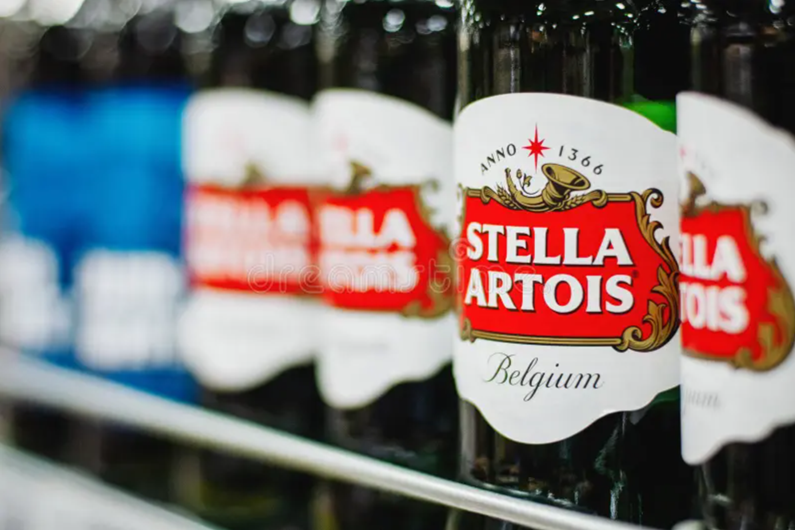
Every day, somewhere in Russia, someone cracks open a Belgian beer. A beer that is proudly Belgian, the jewel in the crown of the world's largest brewer, is still being produced in Russia. Still generating economic activity. Still keeping the lights on in eleven breweries linked to a joint venture in which AB InBev retains a 50% non-controlling stake.
AB InBev says it tried to leave. But the result was not a clean break, and the nature and limits of those exit attempts matter. First came a proposal to sell its stake in the Russian joint venture to its Turkish partner, Anadolu Efes. Later came a more elaborate asset swap under which AB InBev’s Russian assets would be exchanged for Efes-held assets in Ukraine. Both plans were presented as responsible disengagement. But they both ultimately failed after intervention from the Kremlin.
The company has repeatedly pointed to those blocked deals as evidence of genuine exit efforts. Critics, however, see something different: not a clean withdrawal, but an incomplete break, or even a simple reshuffling of assets. AB InBev owns roughly a quarter of Anadolu Efes, meaning some indirect economic connection could have remained even after the proposed transactions.
After Moscow rejected the proposed exit, Vladimir Putin placed the Russian operation under temporary management by a Kremlin-approved local entity. AB InBev therefore appears further than ever from a clean separation: no longer in operational control, but still formally tied to the business.
That distinction matters. Announcing an exit in 2022 was one thing; achieving a visible break was another. Nearly three years of negotiations, revised proposals, and asset write-downs followed, while the company remained connected to the Russian business.
Heineken managed to leave after taking a painful loss and said its flagship brand had already been removed from the market. Carlsberg fought, saw its assets seized, and eventually secured a sale. These are not companies of superior virtue, and their cases also show how difficult and politically obstructed Russia exits could be. But they also show that, even when exits are difficult and costly, there comes a point when the visibility of the break matters as much as the mechanics of the exit.
AB InBev says it tried to reach that point, and the record shows real attempts to do so. But even after the Kremlin intervened, the separation remained incomplete. The company remained formally tied to the business, while its brands continued to be brewed and sold in Russia through that operation.
That lingering stake matters because the Russian business has hardly withered, on the contrary. And the implications go far beyond corporate optics. The Russian business connected to AB InBev’s joint-venture stake reportedly paid over €1bn in taxes to Russia last year - money flowing into a state budget heavily geared toward sustaining the war effort.
This is what makes the company’s prolonged and incomplete exit so unfortunate. Belgium has rightly positioned itself as one of Ukraine’s steadfast allies. Our government has provided weapons, funding and political support. We host NATO and the institutions of the European Union. We lecture, sometimes insufferably, about the rule of law and human dignity. Even acknowledging the steps AB InBev took and the constraints it faced, the result created a reputational problem that extended beyond the company itself, because corporate reputation and national reputation are often not, in the end, entirely separable.
And yet Belgium’s most globally recognisable corporate name spent years in a position that, whatever the constraints, looked deeply uncomfortable from the outside: no longer clearly in control, but not fully separated from Russia either.
The Kremlin’s eventual seizure of operational control should not be allowed to function as retroactive absolution. AB InBev can fairly say that its options were constrained by the joint-venture structure and by Russian obstruction. But in hindsight, the cautious, negotiated exit process did not produce the fast or visible break the moment required. In wartime, such a prolonged and incomplete separation does not inevitably become reputationally neutral.
AB InBev may have sought to exit. It may also have faced constraints that made a clean break harder than critics admit. But history often judges the outcome, not only the process. And the outcome is that Belgium’s most recognisable corporate name remained visibly entangled in Russia for far too long.
The shame, I’m afraid, is not theirs alone. It is ours to share.
