

Every 4 minutes, a woman is raped in conflict. Every 30 minutes, a child is raped in the eastern Democratic Republic of Congo.
Today, on the International Day for the Elimination of Sexual Violence in Conflict, Europe should stop and ask itself one question. We say we stand with survivors. So why are we not doing enough?
The numbers leave us little room for comfort. The recently published annual report states that Pramila Patten, the Special Representative of the UN Secretary-General on conflict-related sexual violence, documented close to 10,000 cases in 2025. This is more than twice as much as in the previous year, with the Democratic Republic of the Congo (DRC) among the hardest-hit areas in the world.
However, these numbers tell only half the story. As the Special Representative voiced it, they are only “an indication of a much broader pattern of violations that remain largely unseen and underreported.” And in the weeks since the report was published, Europe's response has not come close to matching what it describes.
The harm does not end with the act
In light of this statement, violence needs to be looked beyond numbers, and its effects need to be analysed on the lives of the victims and survivors of CRSV. In simpler words, it needs to be understood how the children of the raped victims or individuals who experience the trauma of watching the sexual assault continue to carry the shame, poverty, and trauma without ever having experienced rape.
The same report records that men and boys were raped in detention centres as a form of torture, and LGBTQI+ people were targeted for their identity, including through so-called corrective rape meant to punish and erase them. If we continue treating rape as a single act, we risk building inadequate responses that end years before the suffering does. Neither our funding nor our justice has reached that far.
Why should we care? When the rape of a girl in Kivu goes unacknowledged without anyone being blamed for it, the silence belongs to us. When the child conceived out of this act of violence is shunned by their community, the abandonment belongs to us. And when the perpetrators travel across the border to join our supply lines, the impunity also belongs to us.
We know exactly who is responsible
This is not the power of not knowing. We know. We have known about eastern DRC for twenty-five years, since Mukwege opened Panzi and began counting the wounded.
We have known about the Yazidi women since Nadia Murad survived ISIS slavery and refused to stay silent. Seventy-seven perpetrators of sexual violence have now been named by the UN Secretary-General, of which sixty-two have been listed as armed groups, with the addition of three in eastern Congo alone this year.
Inclusion on the list is no longer limited to armed groups; it names Russian and Israeli armed and security forces after the UN documented sexual violence against Palestinian detainees, while continuing to list Hamas over the attacks of 7 October.
What Europe has lacked is not information but the will to act on it. We need to sanction those responsible, name by name, and make conflict-related sexual violence a standing ground for sanctions in its own right.
Europe must fund what works
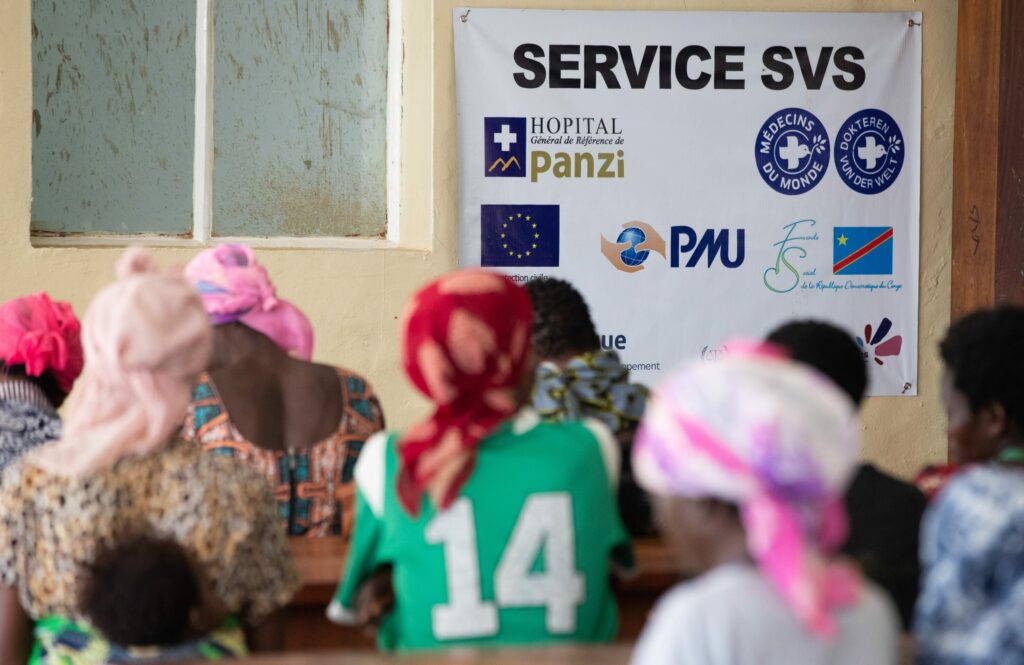
In Kinshasa, I sat with the people who carry the Panzi model forward. The answer to this does not need to be invented. It already exists, built by survivors and the doctors who refuse to give up on them. Europe's task is only to fund it.
So let us applaud not only the survivors who speak, but the people who heal them. Concretely, Europe should do three things. First, fund care that survivors lead and that lasts long after the cameras leave, rather than treating it as the first line to be cut when budgets tighten.
Second, recognise children born of conflict-related sexual violence as victims in their own right. In the DRC, more than a thousand such children have just had their nationality and civil status formally recognised. It can be done. It simply has not been done at scale.
Third, sanction those responsible and make sexual violence a standing ground for sanctions, including by tying access to the mineral trade to accountability.
Today should not end with another statement of concern. It should end with a decision. We must fund the care that survivors lead, sanction those responsible, and recognise these children for the harm done to them and the rights they are owed.
That is within Europe's power. The only question left is whether we will use it.
