

The dream of a unified European defence market is stalling. Yet European defence integration may still advance – not through flagship multinational programmes, but through supply chains, investment and deregulation.
As the European Parliament edges closer to its summer recess, there appears to be agreement on further updates to last year's landmark Defence Readiness Omnibus. The suite of deregulations, exemptions, clarifications on defence in ESG frameworks and streamlining of procurement directives was widely welcomed by member states and their defence industries.
Revisiting the package to make further improvements makes a great deal of sense. Application processes for research funding through EU instruments such as the EDF remain excessively bureaucratic, national certification regimes for production lines are still too disparate, and approvals for the construction of new production sites still take too much time.
Measures that alleviate this regulatory burden may seem somewhat boring to political operators, but they nevertheless make a meaningful contribution to limiting defence inflation – that is, the increase in costs caused by surging demand without sufficient production capacity to satisfy it. With many order books filled until the end of this decade and beyond, manufacturers must be able to swiftly build new factories, expand their supplier base and obtain the finance required to do so.
But for some, boring is not enough. For some time, the European Commission and Brussels policy wonks have entertained the idea of harnessing the benefits that would come with a more unified European defence market. Many point to the number of different platforms and products across European militaries that fulfil the same role and, rightly, argue that pooling research and development costs while increasing production volumes could generate significant efficiencies, particularly in higher-end defence technologies.
And while clear national interests – such as jobs and control over critical technologies – have always discouraged nations from pursuing this seriously, there was some hope that greater consolidation would occur after Russia’s invasion of Ukraine. After all, the fiscally constrained continent must rearm at significant scale and, if Western intelligence chiefs' warnings about future Russian threats are to be believed, at significant speed.
But the last few months have shown that such consolidation is unlikely to happen for the foreseeable future. The Franco-German-Spanish collaboration to build a next-generation fighter aircraft has effectively collapsed. And with that collapse, the future of the Franco-German next-generation Main Battle Tank appears increasingly doubtful. Meanwhile, the EU's flagship programme intended to help member states finance their defence expenditure, SAFE, remains inaccessible to UK industry, one of the largest defence industrial bases in the European theatre.
Why consolidation is faltering
While there are many different views on why these opportunities for increased European cooperation failed, one explanation surely stands out: despite the urgency of acquiring military capabilities, politicians clearly lack either the support or the sense of urgency required to impose a Europeanisation of the continent's defence market on national defence-industrial interests.
Instead, leaders appear wary of allocating additional spending beyond their own, often economically struggling, constituencies. And there is little the EU can do to force a change in behaviour. Defence enjoys an explicit exemption from European procurement rules under the Treaties.
The instruments already created to enhance cooperation, such as the EDA, OCCAR and NATO's NSPA, often remain underused. If states wanted to cooperate, they could. And while political leaders often lack the will and support to pursue harmonisation, military bureaucracies sometimes lack both the mindset and the incentive.
After NATO allocates capability targets, national military organisations use their own structures to translate them into procurement requirements. Only when it becomes clear that developing a product tailored to unique national requirements is unaffordable do bureaucracies seriously consider multinational solutions.
Those solutions must then accommodate competing requirements through a lengthy and often tedious negotiation process. Thus, as long as nations retain sole responsibility for translating capability targets into procurable requirements, increasing Europeanisation appears unlikely.
Bottom-up Europeanisation
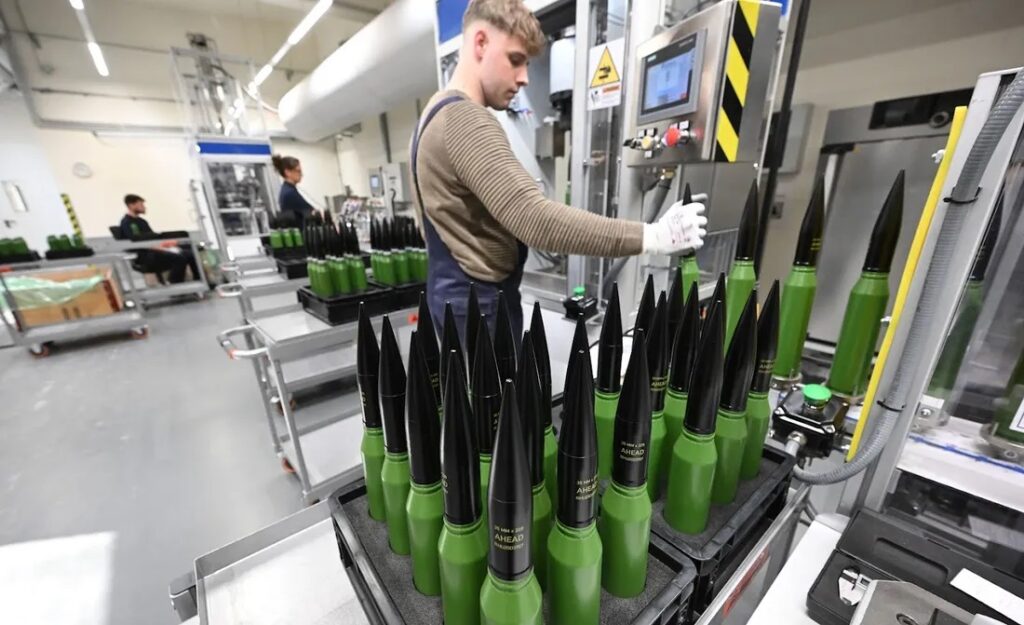
However, with defence spending developing unevenly across Europe, industry may become an unexpected driver of the Europeanisation of the defence industrial base. Consider German defence primes facing a serious challenge in delivering their booked contracts on time while under pressure to identify new suppliers.
Yet the defence market remains highly regulated through certification regimes and quality-control requirements, making market entry difficult. Meanwhile, in other countries, fully certified production lines operate below capacity as slower growth in defence spending means procurement contracts either fail to materialise or flow to other segments of the industry.
For primes, this may also bring significant long-term benefits. The massive growth in procurement spending currently seen in some European countries will eventually level off as stockpiles are replenished, urgent capability requirements are satisfied, and fiscal headroom is exhausted. Companies that position themselves as job creators and tax-generating producers across the continent may ultimately fare better politically than those that maintain exclusively national supply chains.
For this to work, companies must be enabled to take these decisions. And, as in civilian commercial industries, the EU has a role to play in shaping the regulatory framework that governs business-to-business interactions. The seemingly boring Defence Readiness Omnibus is, therefore, a worthwhile endeavour for those looking for a realistic path forward for European defence-industrial integration.
