

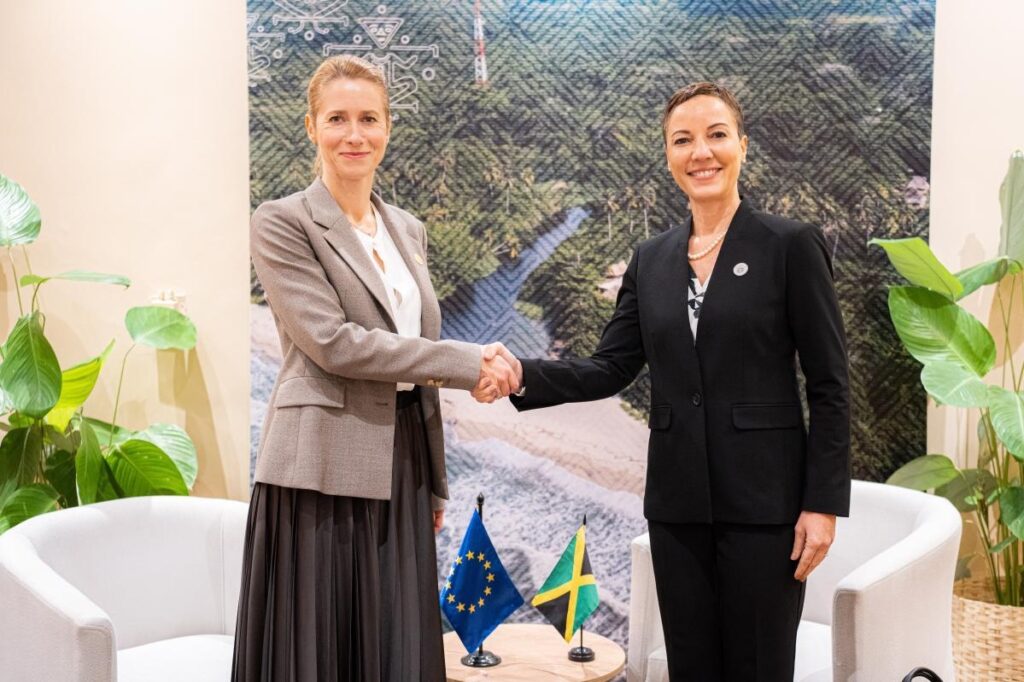
On 10th November 2026, the EU-Jamaica Business Forum will be convened in partnership with the Government of Jamaica and The Brussels Times. The occasion is an important opportunity to explore how to deepen and expand trade and investment opportunities between Jamaica and the European Union.
As we prepare for this Forum, it is worth recalling the very strong relations that have existed between Jamaica and the EU since the establishment of formal diplomatic ties in 1975. It is a partnership which Jamaica is proud to celebrate, built on a foundation of mutual respect and shared values such as belief in democracy, the rule of law and multilateralism.
Jamaica has consistently acknowledged the EU for proactively aligning its support with our national development goals through grants, technical assistance, and loans which facilitate the delivery of real and tangible benefits to our citizens. Among the sectors that have received vital support are national security, justice, climate change, agriculture, education, the private sector, water, and road infrastructure.
Significantly, the recent use of budget support as the relevant mechanism has not only signalled confidence in the governance mechanisms used and the success of Jamaica’s domestic fiscal reforms, but also in one of the most effective and efficient forms of development finance.
Our cooperation has been anchored in several Agreements, beginning with the signing of the first Lomé Convention in 1975 between the former African, Caribbean and Pacific Group (ACP), of which Jamaica is a founding member, and the former European Economic Community.
After four (4) successive Lomé Conventions, the Cotonou Partnership Agreement (CPA) and, more recently, the Samoa Agreement, Jamaica’s engagement with the EU remains very strong. Both sides have continued to engage regularly, on specific bilateral, regional and global matters, through the medium of the EU-Jamaica Political Dialogue, which remains an important avenue for review and alignment of the areas of cooperation.
The CPA provided the basis for the conclusion of the CARIFORUM-EU Economic Partnership Agreement (EPA) in 2008, which was designed to promote trade and investment flows, economic diversification, research and innovation and foster sustainable development. This EPA was the first agreement of its kind to be concluded between the EU and a subset of the ACP Group of States. Given its broad scope, it remains a unique agreement, with the potential to yield even greater collaboration.
Turning trade agreements into tangible benefits
The EPA has been critical in supporting services exports and cultural exchange. Europe remains the largest and most consistent touring market for reggae musicians, with approximately 3,000 touring engagements during the ten years 2015-2025.
Over the same period, approximately 1,000 Caribbean creatives operating in the fashion industry participated in the EU fashion circuit in major markets, including France and Italy. We also acknowledge the extensive participation of Jamaican athletes and sportspersons in major European competitions on an annual basis.
Despite these developments, a balanced reflection is imperative at this juncture. While the EPA has established a strong and forward-looking framework, the level of tangible benefits realised by the majority of CARIFORUM Member States to date has not met expectations. CARIFORUM continues to express concern that after two Five-Year Reviews of EPA implementation, there have been limited gains in trade and investment that are directly attributable to the Agreement.
This was reaffirmed at the recent meeting of the Fifth Joint Council of the CARIFORUM-EU EPA, held in June 2026 in the Dominican Republic. Whilst this may not be attributed to any single factor, the market access restrictions to which CARIFORUM service providers are subjected in our largely services-oriented economies remain a major impediment to the realisation of the promised benefits of the Agreement.
Unlocking new opportunities for trade and investment
As we look to the future, our focus must now shift towards more effectively realising the full potential of the Agreement, including timely implementation of the recommendations emerging from the EPA’s five-year review mechanism.
In addition, greater emphasis must be placed on strengthening knowledge and information sharing; increasing capacity-building; expanding technology transfer; and advancing collaboration in areas critical to building resilience and competitiveness in our economies, including, inter alia, climate-smart agriculture and support for MSMEs.
There is also significant scope to deepen engagement in digital trade, which presents new avenues for innovation, entrepreneurship, and services exports. These are among the areas which we should seek to reinforce at the multilateral level, especially within the framework of our active engagement as members of the World Trade Organization (WTO).
Jamaica is committed to doing its part to ensure that the EPA evolves as a truly enabling instrument: one that delivers inclusive, sustainable, and mutually beneficial outcomes for both parties.
Jamaica is also provisionally applying the Samoa Agreement, which establishes the current overarching legal framework for partnership between the Member States of the Organisation of African, Caribbean and Pacific States (OACPS) and the EU.
At the hemispheric level, the EU and Jamaica engage within the Community of Latin America and the Caribbean (CELAC), which is supported by a range of bi-regional programmes on justice and peace, drug control and digitisation – to name a few. We look forward to the next EU-CELAC Summit in 2027.
A shared commitment to resilience and global cooperation
As partners, Jamaica and the EU continue to stand together in defence of important principles. This has been especially evident in respect of Russia’s ongoing war in Ukraine. We have expressed solidarity with the principles espoused in the Schuman Declaration, as Europe faces its greatest challenge since World War II.
From the outset, Jamaica has been consistent and clear- such acts of aggression cannot be tolerated – sovereignty and territorial integrity must be defended. We remain steadfast in this conviction and assure the EU of our unwavering support.
I firmly believe that our partnership is poised for many more years of success, in spite of the various multi-dimensional threats which face the global community. Even as we celebrate some noteworthy and record achievements, we must also seize this opportunity to position ourselves to build resilience to exogenous shocks, including geopolitical tensions and natural events, as well as enhance collaboration to promote the rule of law and multilateralism.
As Hurricane Melissa has demonstrated, the risks posed by natural and environmental challenges have never been more dangerous. We wish to reaffirm our deep appreciation to the European Union for the tremendous support that has been provided and continues to be extended following the passage of Hurricane Melissa in October 2025.
Future Jamaica-EU collaboration must include a greater focus on resilience-building at all levels and across all sectors, including in areas that serve to promote youth engagement. Even as we continue to make strides in our development agenda, we must honour our shared responsibility to guard against the erosion of what we have already accomplished. Long live the Jamaica-EU partnership!
