

Bulgaria’s parliamentary elections in October reveal a grim reality: democracy in parts of Europe isn’t just fragile – it’s backsliding. Rampant corruption, a weakening rule of law, and widespread vote-buying are eroding democratic norms, with marginalised groups like the Roma used as political pawns.
In the elections, oligarch Delyan Peevski’s DPS-New Beginning party won 11.5% of the votes and came in fourth. His party may end up playing an important role in supporting – or obstructing – a parliamentary majority. Peevski secured a significant share from the Roma community with 47% according exit pools. Yet this wasn’t genuine support; it was built on coercion and vote-buying, highlighting the deep-rooted corruption that plagues Bulgaria.
The country’s entrenched corruption, clientelism and compromised judiciary mirror a troubling pattern across Central and Eastern Europe and the Western Balkans. For Europe’s new leadership, Bulgaria’s plight must be seen as a warning about the risk of internal erosion in upholding democratic principles.
A Broader Pattern of Democratic Backsliding
Bulgaria consistently ranks among the EU’s most corrupt states. Reports from Transparency International and the Commission’s own rule of law reports describe a judiciary weakened by political interference and an electoral process that has become more spectacle than substance.
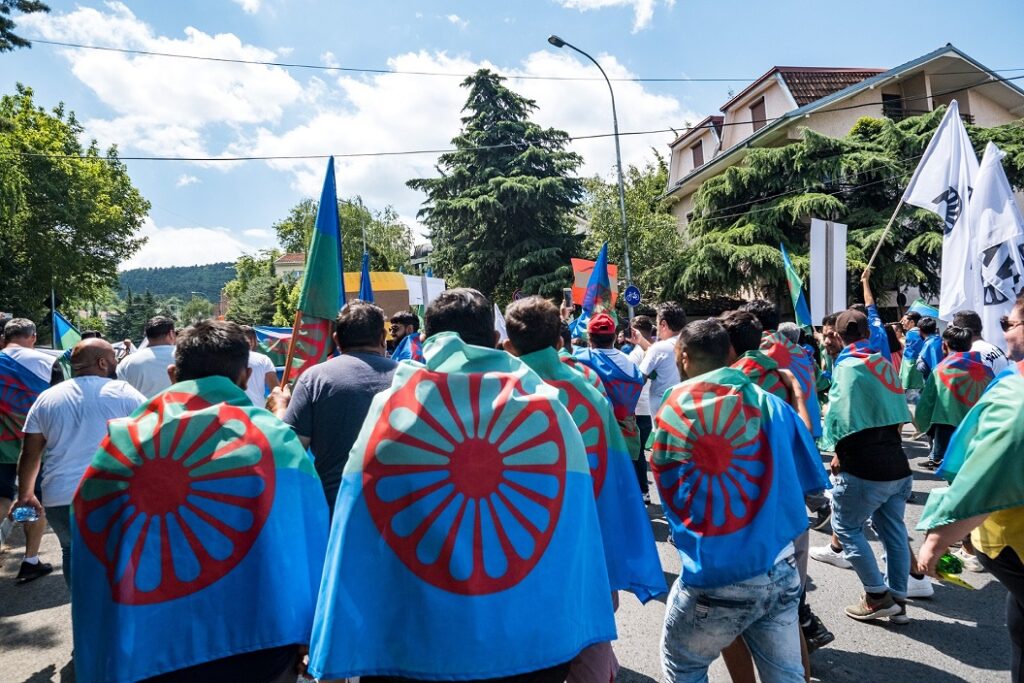
For many Roma, voting is less a right than a coerced transaction, shaped by intimidation, dependency or financial inducements. Roma communities, economically vulnerable and marginalised, are exploited as pawns in a system that values power over principle.
This disenfranchisement extends beyond Bulgaria, exposing a systemic failure in Central and Eastern Europe and the Balkans to protect its most vulnerable citizens. In Hungary reports have shown how Roma voters were told to vote for specific candidates in order to keep their benefits and stay in workfare programmes. The European Parliament has described emergence of “hybrid regime of electoral autocracy” in Hungary.
In Poland, judicial reforms under the former ruling Law and Justice (PiS) party weakened democracy, drawing rebukes from the European Court of Justice. Romania’s anti-corruption institutions face political pressure, and Slovakia’s corruption scandals erode public trust. In the Balkans, fragile institutions and economic stagnation leave countries open to influence from Russia and China.
Roma communities across these regions are routinely exploited by political forces that benefit from their disenfranchisement. They are used as scapegoats for governance failures and manipulated as voting blocs through coercion and vote-buying. This double standard exposes Europe’s democratic vulnerabilities, making it susceptible to authoritarian influence.
What Europe’s New Leadership Must Address
The EU must urgently recommit to safeguarding democracy. For European Commission President Ursula von der Leyen, who has pledged to uphold the rule of law, protecting the Roma and other vulnerable groups is a critical test. As new Commissioners take office, they must protect minority rights and democracy. Failure to act decisively will mean surrendering Europe’s core values to authoritarian forces.
Michael McGrath, the Commissioner-designate for Democracy, Justice, and the Rule of Law, must prioritise electoral integrity. His proposed “Democracy Shield” to combat foreign interference, and his emphasis on linking Rule of Law compliance to EU funding, are crucial but require rigorous implementation.
This includes strengthening independent electoral monitoring in high-risk areas like Bulgaria and ensuring fair practices through robust oversight with EU-backed mechanisms. McGrath’s anti-corruption strategy is vital but must be supported by concrete actions, sufficient resources, and a readiness to challenge entrenched interests.
The EU must also shield Roma voters from disinformation. Expanding the European Democracy Action Plan to include tailored digital literacy and civic engagement programs would empower Roma voters to counter manipulative campaigns. Partnering with the European Digital Media Observatory (EDMO) would help combat harmful narratives, fostering informed civic participation.
Commissioner-designate Roxana Mînzatu, responsible for Social Rights and Equality, faces an equally urgent task. Protecting the Roma from political exploitation is both a question of social justice and essential to the EU’s democratic credibility. The EU must invest in initiatives that support Roma voter education, economic resilience and civic engagement, breaking cycles of dependency and fostering true political agency.
Targeted voter protection programs and collaboration with local civil society groups – whose presence offers on-the-ground insight and accountability where democratic standards are at risk – will be crucial to countering exclusionary practices that erode democracy.
Hadja Lahbib, the Commissioner-designate for Preparedness-Crisis Management and Equality, stressed the need for the full implementation of EU equality laws and announced plans for a new anti-racism strategy during her hearing. However, her remarks lacked specific measures addressing the unique challenges faced by Roma communities, raising concerns about the inclusivity and effectiveness of her approach.
To effectively combat democratic backsliding, she must ensure that civil society engagement explicitly incorporates strategies that address the systemic discrimination and exploitation experienced by the Roma. This should include targeted initiatives to protect Roma communities from political manipulation and to ensure their full participation in democratic processes.
Europe’s Moment of Reckoning
If the EU’s leaders are committed to democratic ideals, they must defend them where they are most threatened. The EU’s future as a democratic union depends on meaningful actions to protect its most vulnerable citizens. With rising authoritarianism, the EU’s internal strength and credibility hinge on upholding democracy within its borders, not on rhetoric.
This is Europe’s moment of reckoning. The Commissioners-designate in the second von der Leyen Commission are currently questioned in confirmation hearings at the European Parliament. If confirmed, they must act decisively to protect democratic integrity and ensure that marginalised groups like the Roma are no longer political pawns. The time for action is now.
