
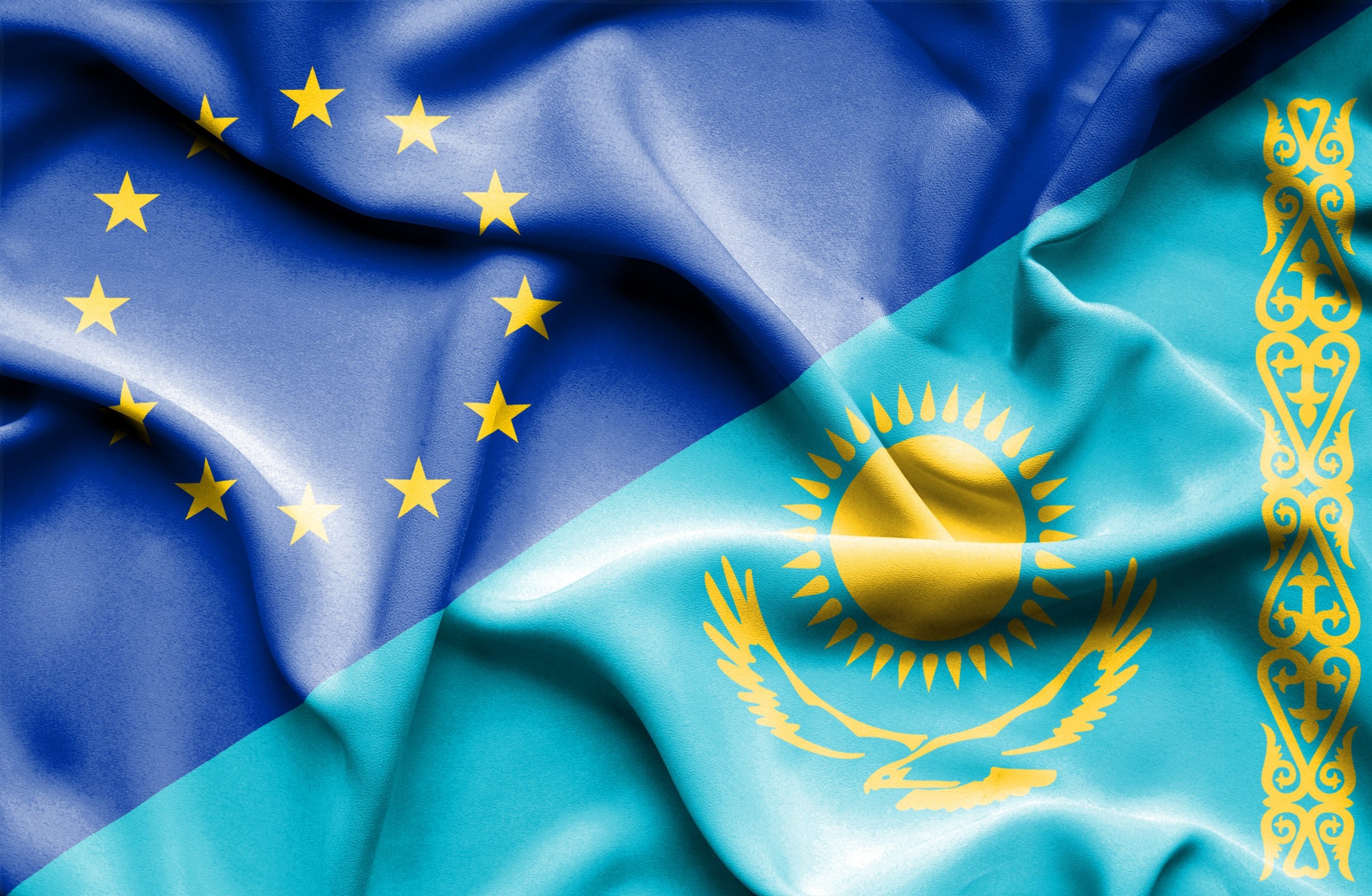
Ten years ago, in the heart of Astana, a document was signed that quietly marked the beginning of something remarkable. The Enhanced Partnership and Cooperation Agreement (EPCA) between Kazakhstan and the European Union was more than a diplomatic formality — it was a statement of intent, a shared belief that geography should not be a barrier to collaboration, and that trust could turn distance into opportunity.
A decade later, that belief has transformed into one of the most dynamic and forward-looking partnerships in the Eurasian space. What began as a framework for political and economic dialogue has grown into a living, evolving relationship that now shapes how Europe engages with Central Asia — through trade, energy, digital transformation, green technology, and human connection.
The numbers alone tell a story of scale. In 2024, bilateral trade between Kazakhstan and the European Union reached nearly 50 billion dollars, the highest figure in their 30-year relationship. Of all trade between the EU and Central Asia, Kazakhstan alone accounts for almost 90 percent. European investments in Kazakhstan now exceed 200 billion dollars, representing about two-thirds of the EU’s total investment in the region. Yet, this partnership is not defined by numbers — it’s defined by trust.
When European Council President Charles Michel visited Astana, or when President Kassym-Jomart Tokayev met European leaders in Brussels, Samarkand, and New York, the tone was consistent: the EU and Kazakhstan are no longer just partners of convenience, they are partners of conviction. Their cooperation is built on shared principles — openness, dialogue, and the belief that prosperity must be sustainable to endure.
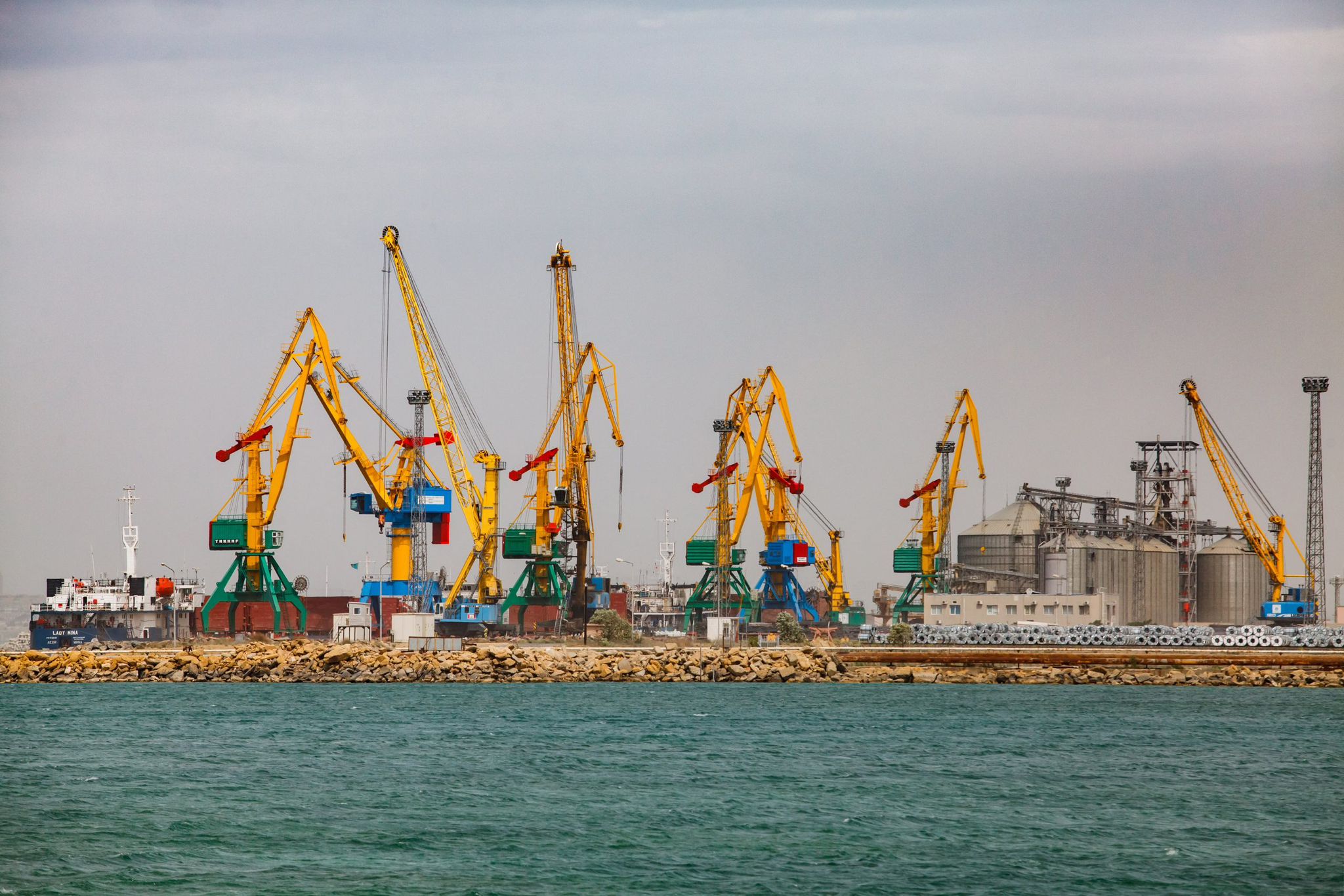
Cranes at the Port of Aktau on the Caspian Sea — a vital hub of the Trans-Caspian International Transport Route that connects Europe and Asia
A green future forged in trust
Nowhere is this more visible than in the energy and environmental sphere. Kazakhstan, rich in oil and uranium, supplies around 13% of the oil and 16% of the uranium consumed by EU member states. But beyond the traditional role of a resource partner, Kazakhstan has chosen to position itself as a key player in Europe’s green transition. Under the 2022 Memorandum of Understanding on Sustainable Raw Materials, Batteries and Green Hydrogen, both sides committed to building cleaner, circular supply chains that serve the industries of tomorrow.
In 2025, the European Commission went a step further by adding Kazakhstan’s Sarytogan graphite mining project to its list of strategic projects for Europe — a rare distinction that underlines the EU’s confidence in Kazakhstan as a reliable source of critical materials. With support from European partners, this project in the Karaganda region will not only fuel innovation in Europe’s electric vehicle and renewable energy sectors but will also bring investment, technology, and new jobs to Kazakhstan itself.
And this is the quiet strength of the relationship: it is reciprocal. Europe finds in Kazakhstan a trusted partner for its energy security, while Kazakhstan finds in Europe a long-term ally for modernization, diversification, and sustainable growth.
The middle corridor: reconnecting continents
Perhaps the most transformative aspect of this partnership lies in connectivity — the arteries of modern trade and cooperation. Stretching from the Caspian shores to the heart of Europe, the Trans-Caspian International Transport Route, often called the Middle Corridor, is fast becoming the symbol of a new Eurasian reality. As global logistics shift, Kazakhstan’s location has turned from a geographical fact into a strategic advantage.
Through this corridor, goods can travel between China and Europe in under 15 days, bypassing congested routes and reducing carbon footprints. European companies are increasingly investing in logistics and transport hubs across Kazakhstan, while the EU’s Global Gateway strategy identifies the country as a priority partner for developing sustainable, digital, and climate-resilient infrastructure. The result is not only faster trade, but a reimagining of the map itself — one where Kazakhstan is no longer the periphery, but the bridge that connects continents.
Education and culture have followed the same trajectory. Thousands of Kazakh students have studied in European universities under the Erasmus+ programme, while over forty international universities — many from the EU — now operate branch campuses or partnerships in Kazakhstan. Most of these focus on future-oriented disciplines like computer engineering, cybersecurity, and natural sciences. In turn, this exchange of knowledge has strengthened the foundations of a more open, globally connected Kazakh society.
Negotiations will also soon be underway to simplify the EU visa regime for Kazakh citizens, a practical step that will make it easier for people, professionals, and businesses to travel and collaborate. It’s a symbolic gesture too — because partnership, after all, is not only about policies and pipelines; it’s about people.
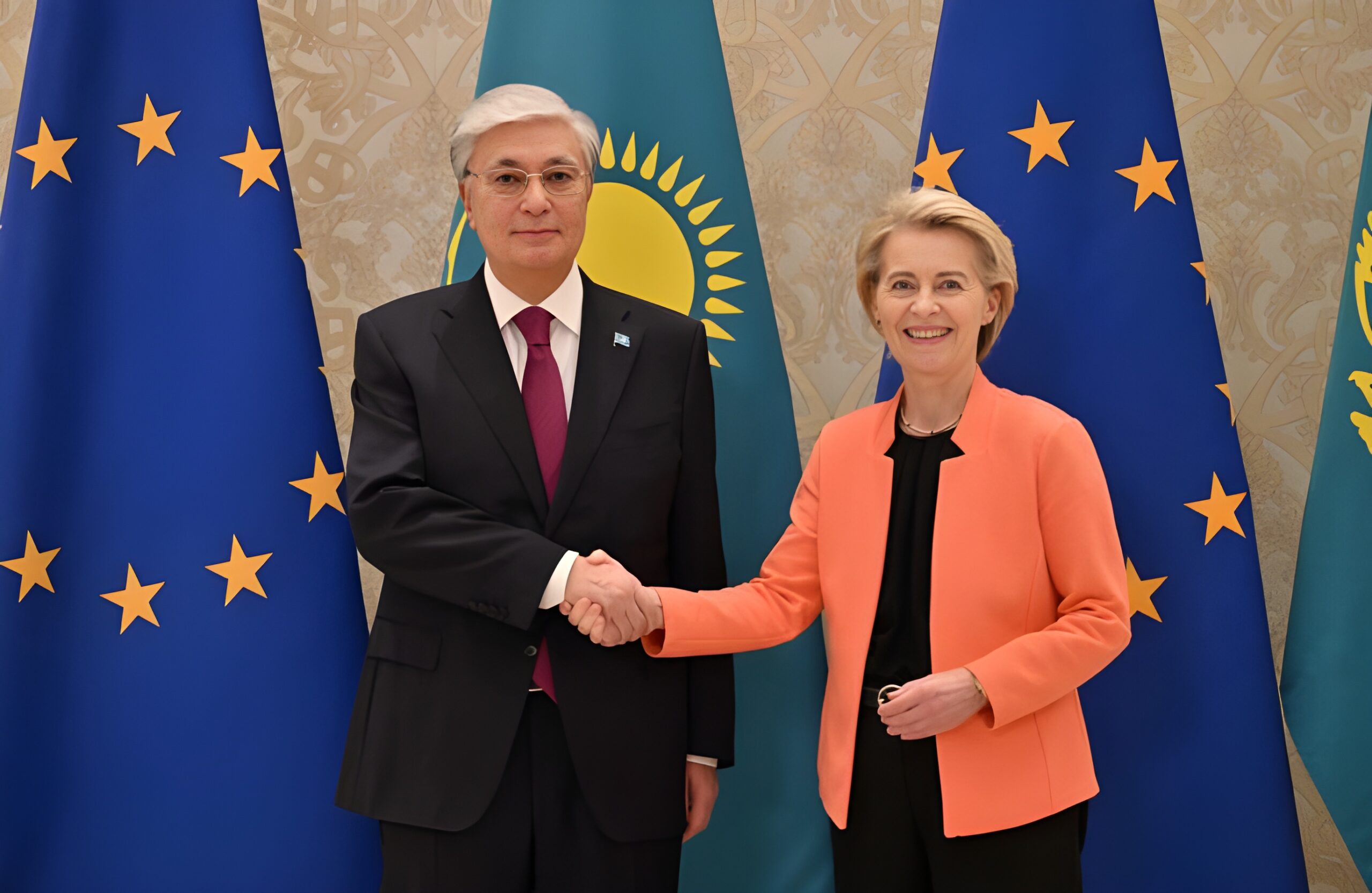
President Kassym-Jomart Tokayev of Kazakhstan and President of the European Commission Ursula von der Leyen
From dialogue to shared destiny
The past decade has also been marked by high-level diplomacy that feels unusually steady in today’s turbulent world. In recent years, President Tokayev has met repeatedly with EU leaders — European Council President António Costa, European Commission President Ursula von der Leyen, and EU High Representative Kaja Kallas — in venues ranging from Samarkand to New York. The dialogue has been consistent, pragmatic, and forward-looking. Both sides are not merely discussing the future — they are building it.
The depth of this cooperation can be felt in fields as diverse as agriculture, digitalization, and scientific research. Kazakhstan has begun exporting fish and will soon add honey and meat products to EU markets — a small but telling example of how the country’s economy is diversifying far beyond hydrocarbons. At the same time, joint initiatives in artificial intelligence, smart logistics, and green hydrogen are laying the foundation for a new phase of industrial partnership.
Europe’s growing interest in Central Asia is no coincidence. As the EU seeks to strengthen supply chains, diversify energy sources, and promote regional stability, Kazakhstan has emerged as a natural anchor. Its balanced diplomacy, open investment climate, and strategic location make it not just a partner, but a cornerstone of the EU’s Eurasian vision.
Looking back, the past decade has seen the Kazakhstan–EU relationship mature from cooperation to genuine interdependence. Looking ahead, the next decade promises to be even more transformative — defined by digital innovation, cleaner energy, and closer human ties. The challenges of climate change, energy transition, and global instability demand collaboration, not competition. And that is precisely what Astana and Brussels are delivering: a partnership that works, quietly but effectively, across borders and across generations.
The story of Kazakhstan and the European Union is, at its heart, a story of complementarity. One side brings innovation, experience, and markets; the other brings resources, connectivity, and ambition. Together, they are crafting something larger than trade figures or treaties — a shared future built on trust, respect, and the conviction that in a world of uncertainty, cooperation remains the most powerful form of stability.
Ten years after the signing of the EPCA, the partnership between Kazakhstan and the European Union stands as a model of pragmatic diplomacy and visionary cooperation. It is a bridge between East and West, yes — but also between the past and the future. And as the world continues to search for examples of constructive engagement, the Kazakhstan–EU relationship reminds us that true partnerships don’t just adapt to change — they create it.
Promoted by Embassy of the Republic of Kazakhstan to the Kingdom of Belgium
