
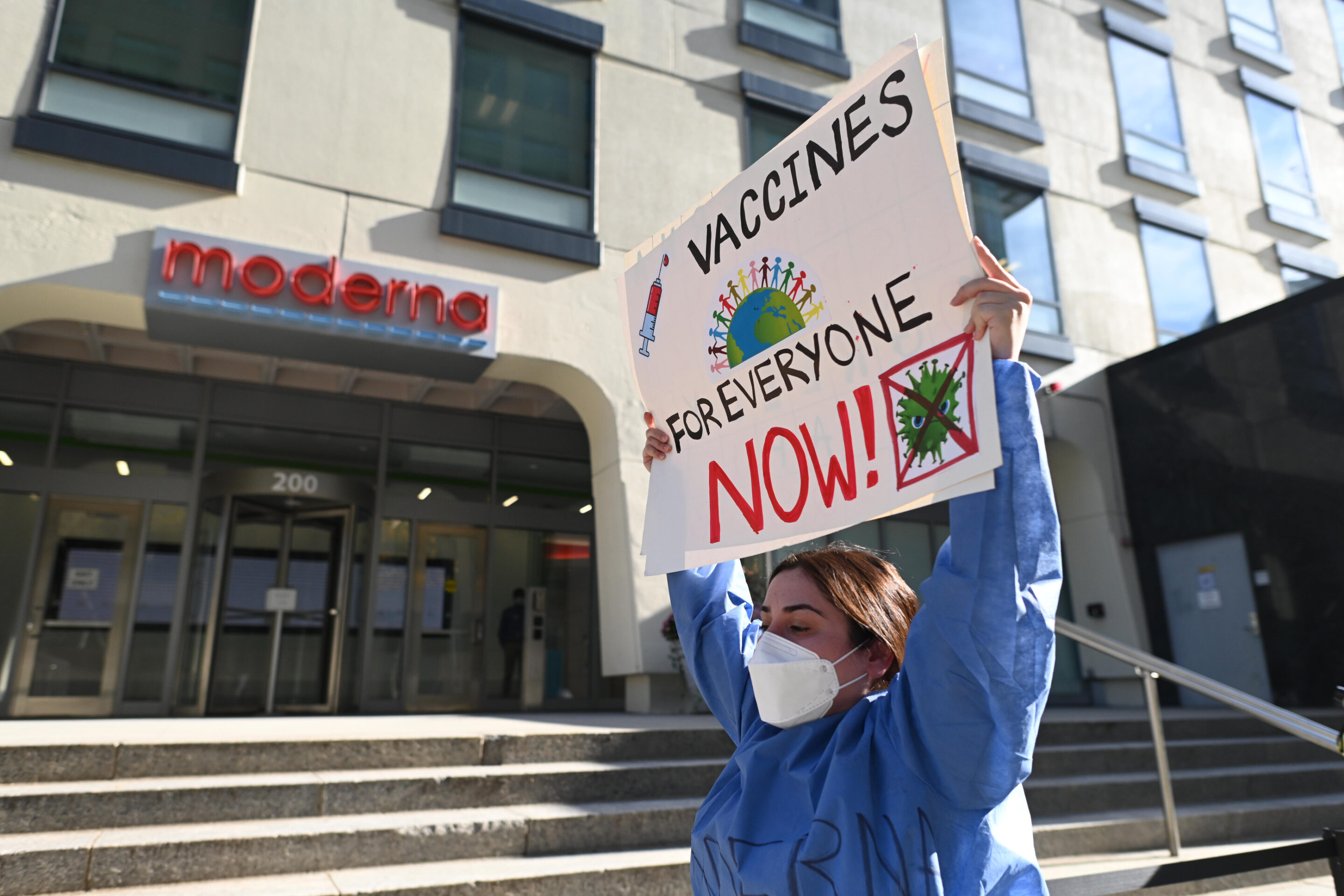
Women bore the heaviest burden during COVID-19. In Brazil, eight in every 10 health workers who died while responding to the pandemic between 2020 and 2021 were women. Nearly half were people of colour, and two-thirds worked without formal employment protections.
Globally, health and care workers experienced COVID-19 mortality approximately 1.3 to 3 times higher than the general population. With women representing around 70% of the global health and care workforce, the impact was heavily borne by them.
These losses had far-reaching social consequences. It weakened already overstretched health and care systems, reduced access to essential services, increased the unpaid care responsibilities of households and communities and deepened inequalities.
Many of these deaths were not inevitable. Health workers often faced the pandemic without adequate personal protective equipment and timely access to vaccines, diagnostics and treatments, as these lifesaving technologies remained concentrated in a handful of countries.
The current Ebola outbreak is a wicked déjà vu. Long described as a "disease of care", women, who perform most paid and unpaid care work, disproportionately bear the Ebola burden as well. Early outbreak data revealed that women accounted for two-thirds of infections, while subsequent occupational data from June and July showed that, among cases with occupational information available, 23% were housewives or homemakers, the largest identified occupational group.
Although African countries have long contributed Ebola pathogen samples that enabled research and product development, the resulting diagnostics, therapeutics and vaccines often remained scarce.
Since the outbreak was declared in May 2026, more than 6,342 confirmed cases and 3,072 deaths have been reported in the DRC, making it the largest and deadliest Ebola outbreak in the country's history.
The Bundibugyo Ebola virus was first identified in 2007. Yet, when the current outbreak was declared in May 2026, nearly two decades later, there was still no licensed vaccine, approved specific treatment or readily available point-of-care diagnostic for the virus. Potentially useful candidate products existed, but they were not readily available to affected populations. The United States, for example, initially restricted access to its stockpiled experimental MBP134 treatment. It was only as the outbreak reached a devastating scale that these gaps began to be addressed. Yet, by late August, the DRC had received just over 16,000 Ervebo vaccine doses.
That is why the negotiations of the World Health Organization's Pathogen Access and Benefit-Sharing (PABS) System matter so profoundly. No health worker should have to enter a hospital knowing that effective vaccines, medicines or diagnostics for a disease exist elsewhere but remain out of reach for them. Behind the technical language and political bargaining over the PABS System in the WHO Pandemic Agreement, this is what is at stake: the basis of our societies, women health and care workers and the people they care for.
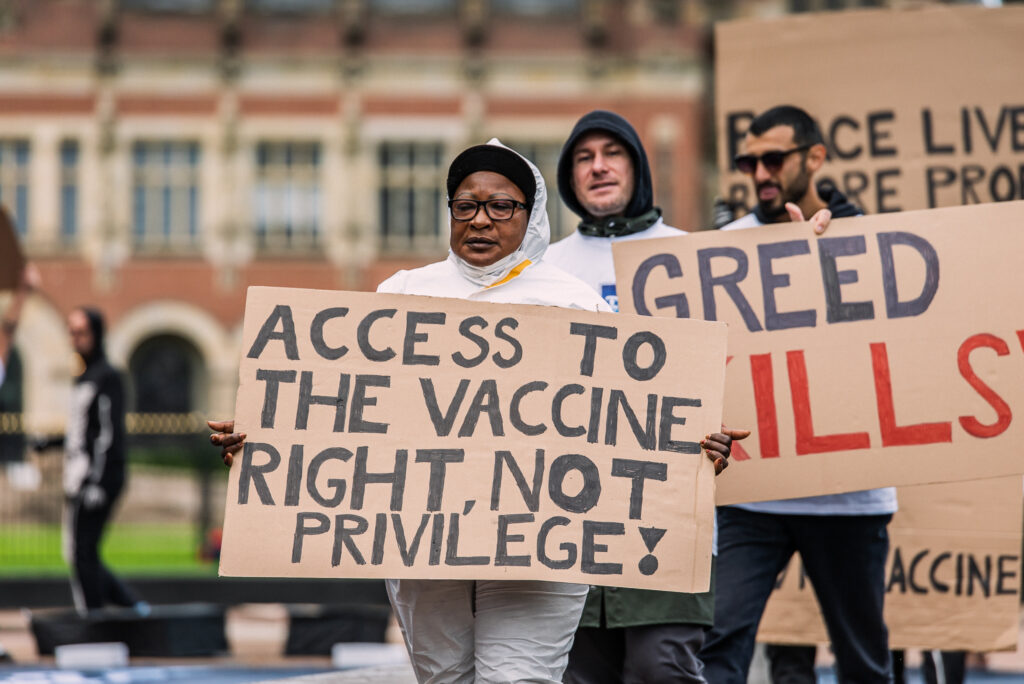
Vaccinate Our World (VOW) advocates demonstrate outside the International Court of Justice in The Hague, Netherlands, on October 13, 2021, calling for broader and more equitable global access to COVID-19 vaccines.
We paid for the world’s failures with our lives. So we, as women workers organized through unions and civil society groups, want a say in how the world deals with the next health emergencies, and we demand that equity be embedded, implemented and enforced at every stage of the Pathogen Access and Benefit-Sharing System.
The principle behind the PABS System is to rapidly share pathogens with pandemic potential so that scientists and manufacturers can develop vaccines, therapeutics and diagnostics. In return, the companies that benefit from those pathogens or their digital sequence information would need to provide equitable benefits.
The main proposal under discussion would require participating manufacturers to reserve around 20% of real-time production of vaccines, therapeutics and diagnostics during a pandemic and a public health emergency of international concern for the WHO through a combination of donations and at affordable prices.
However, what has been agreed so far is to provide 10% of real-time production only during pandemics, and an agreement has yet to be reached about the remaining 10%. Rich countries are opposed to sharing real-time production during public health emergencies and early-stage outbreaks. Were this provision adopted, it could be triggered right now for Ebola and contribute to preventing the suffering we are witnessing.
Rich countries also oppose making benefit-sharing a legally binding pre-condition for accessing pathogens’ digital genomic information. They argue access should be granted without binding obligations, with benefit-sharing agreements negotiated only after a specific product is developed. This creates a significant loophole. It shifts the burden onto the WHO to track whether users of the PABS System have developed a product and then pursue them to sign a benefit-sharing agreement. Such an approach weakens accountability and facilitates the evasion of benefit-sharing obligations.
Another important proposal is licensing commitments from manufacturers. This would help expand and diversify manufacturing capacity across regions, enabling more countries to produce vaccines, medicines and diagnostics, reducing dependence on a handful of suppliers and helping ensure that scarcity is no longer an inevitable feature of future pandemics.
These are not radical ideas. They are practical lessons drawn directly from COVID-19 and Ebola. Yet, rich countries in the Global North and the European Union continue to oppose them, arguing that stronger obligations could discourage innovation. From where we stand, this argument does not reflect reality. This would only allow the pharmaceutical industry to continue free-riding on the genetic resources of developing countries. Any innovation without access is of little use, especially when it is not available during life-threatening disease outbreaks.
Healthcare workers have already paid the price of pandemic inequity, and an effective PABS System could ensure we don't repeat the mistakes of the past.
Authors:
Perpetual Ofori-Ampofo, former Chairperson of the West African Health Sector Unions Network (WAHSUN).
Fhatimath Zimna, Co-chair of the Health and Social Services Sector Coordinating Committee of Public Services International (PSI).
Solange Caetano, President of the Inter-American Health Unions Federation (FISS), Brazil.
Penninah Iutung Amor, Medical Doctor and Executive Vice President of the AIDS Healthcare Foundation (AHF), Uganda.
