
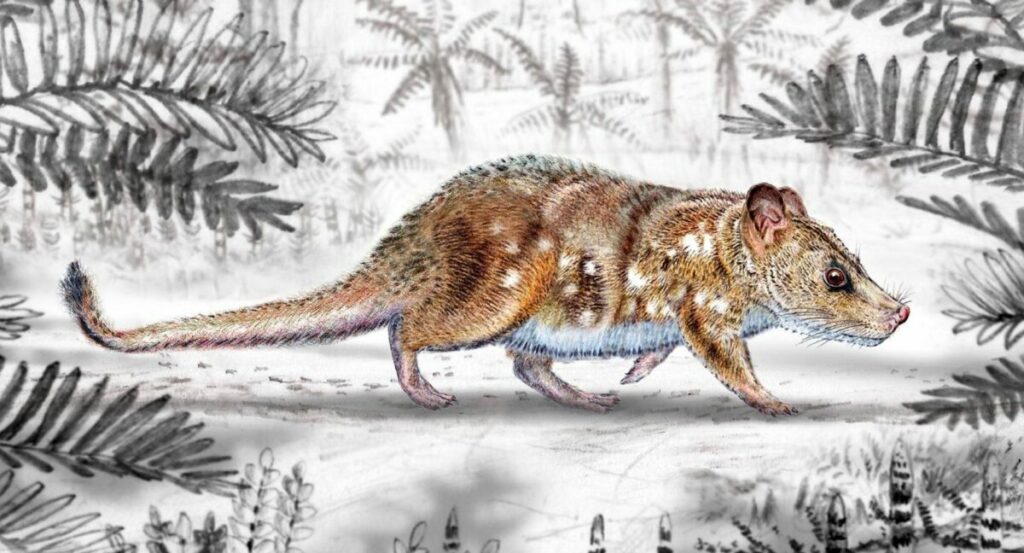
Researchers in Chile have uncovered the fossil of a small mouse-sized mammal, previously unknown to palaeontologists, that lived alongside dinosaurs.
The discovery was made in Patagonia, southern Chile, by a team of scientists from the University of Chile and the Chilean research centre Millennium Nucleus.
It was announced last week in an article published by the British scientific journal, Proceedings of the Royal Society B.
Named Yeutherium pressor, the creature weighed between 30 and 40 grammes and lived during the Late Cretaceous period, about 74 million years ago. It is the smallest mammal ever identified in the South American region.
The fossil consists of a small jaw fragment with one molar and the crown and root of two other molars, Hans Puschel, leader of the team of scientists, told French news agency AFP.
Researchers identified it in the Río de las Chinas valley, a watercourse in Magallanes region, located roughly 3,000 kilometres south of Santiago.
According to the researchers, Yeutherium pressor was a mammal capable of laying eggs, similar to modern-day platypuses, and carrying its young in a pouch like kangaroos or opossums.
The shape of its teeth suggests a diet of relatively hard plant foods.
Like the dinosaurs it coexisted with, this small mammal disappeared at the end of the Cretaceous period, around 66 million years ago.
