
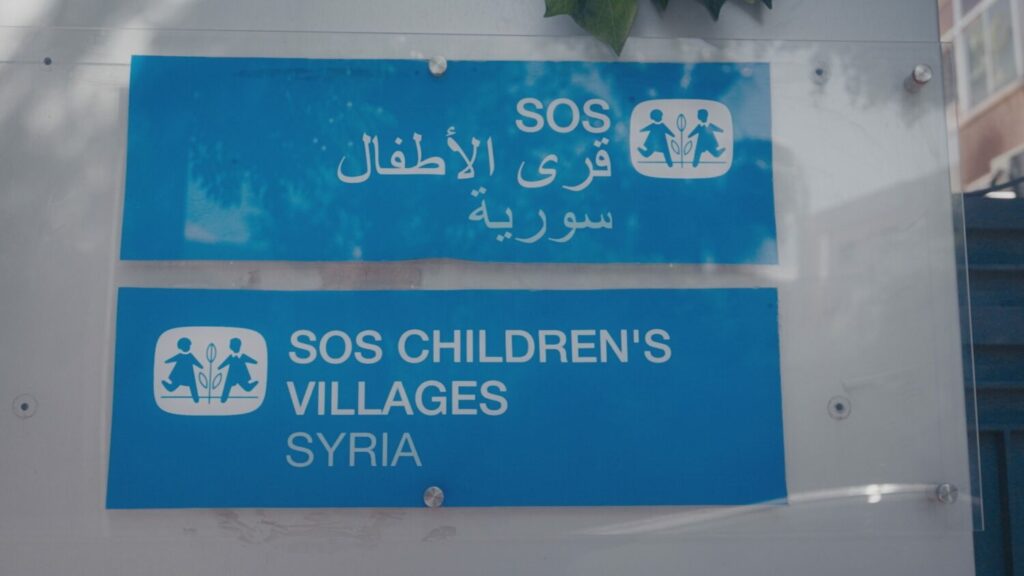
Lighthouse Reports, an investigative consortium of journalists, published last week a report about an EU-funded childcare charity, SOS Children’s Villages, which it claims held children during the civil war in Syria to exhort their parents that had been imprisoned by the Assad regime.
The report follows another report in October 2024 which also was linked to Syria. That report focused on EU-funded removal centres in Turkey where refugees were detained under difficult conditions until they were forcibly deported to unsafe countries such as Syria.
The new investigation, with a coalition of Syrian and international media, focuses on SOS Children’s Villages International, an Austria-headquartered charity, which was founded in 1949 and operates in more than 130 countries. The NGO is supported by funding from the EU, UN, European governments, philanthropic foundations and personal donations.
Lighthouse identified over 320 children who were confined to orphanages managed by its branch in Syria, a government-run orphanage and private charities. The largest number of children in the database - more than 100 - were sent to live in facilities run by SOS Syria, the Syrian association of SOS Children’s Villages International.
The records show that many children were still toddlers when they were taken from families, and several were newborns. The children were being held at orphanages in order to pressure their parents to collaborate with the regime.
According to the journalists, SOS Children’s Villages kept this quiet until the Assad regime fell, seven years after whistleblowers first informed international staff.
Over nine months, since the fall of the Assad regime last December, Syrian and international journalists built a database of children hidden by the Syrian regime. They reviewed thousands of leaked and gathered documents, conducted more than 100 interviews with families, current and former orphanage staff in Syria, government officials, whistleblowers, activists, lawyers and other witnesses.
“The key findings of the project indicate that the children could be the victims of crimes against humanity, particularly in the forms of imprisonment or deprivation of liberty, persecution, and enforced disappearance,” commented human rights lawyer Kimberly Motely.
The journalists found evidence of missing and possible falsified records that indicate that the actual number of children who disappeared into orphanages is likely much higher. Some children were falsely recorded as abandoned orphans; others were referred to by new names. Families are still searching for at least 3,700 children who went missing under the Assad regime.
Many children were only reunited with their families as part of a prisoner exchange with armed opposition groups. Some, the children of suspected foreign fighters, were deported to Russia and Iraq, according to Lighthouse. No evidence was found that children were placed in other SOS children’s villages outside of Syria.
What triggered the investigation?
Charlotte Alfred, Investigations Editor at Lighthouse Reports, told The Brussels Times, that the sudden collapse of the Assad regime enabled access to sources, locations and documents that were previously unimaginable under the decades-long dictatorship.
“Within days of Assad’s ouster, relatives of missing children that were detained with their families started speaking out for the first time about the role of orphanages in taking their children. This sparked outcry in Syria and a frantic search for information by thousands of families whose children are still missing.
At the same time, several members of our team were able to return to their homeland in Syria for the first time in more than a decade, something they hadn’t dreamed would be possible. They were able to visit detention centers, challenge officials and access records in ways that would have been completely unthinkable under the generations of dictatorship of the al-Assad family.
We realized this was an opportunity for Syrian investigative journalists, in partnership with international colleagues, to use this new access to help address one of the most urgent and painful issues for Syrians today.”
You have submitted formal requests to the Commission for access to information. What information are you requesting?
Lighthouse reports sent the requests on 16 July and says that the EU has granted almost €10 million to SOS Children's Villages International during 2013 – 2024. In addition, SOS Children's Villages Belgium received an EU grant of ca €1,3 million for a temporary project in Tartous, Syria, but is not implicated in the investigation.
“We asked among others about the funding different Commission Directorates-General granted to the NGO and at what point they were made aware of that SOS Children's Villages International was taking in the children whilst their parents were being detained in Syria. We also asked if they were aware that Asma Al-Assad, the president’s wife, was connected with SOS Syria and that most top positions were appointed by the government.”
How cooperative was the new regime in Damascus in your investigation and what is it doing now to find the children and return them to their families?
“The new government knows that this is a major priority for the Syrian people, but have struggled to respond to the families’ demands for justice and accountability, let alone finding answers about children who are still missing. Our team spoke to many members of the new government throughout the investigation, who varied in their ability to speak openly and share information about this issue.”
An inquiry into the missing children has started with representatives of ministries, the victims and civil society. But the committee has limited resources and has yet to report any results. High-level officials have been arrested but have not yet been indicted. “This is a crime because staff at orphanages are obliged to inform families about the whereabouts of their children,” a committee spokesperson said.
Comments
SOS Children’s Villages wrote in a press release that it is actively supporting family tracing and reunification in Syria, while continuing to support children and young people without parental care. The NGO admits that many children were forcibly and unnecessarily separated from their families by authorities during the war and placed into care, often without proper documentation.
“We took decisive action in 2018 to halt the placements of children into our care without proper documentation.” According to its own review, 139 children were placed in interim alternative care at SOS Children’s Villages in Syria between 2013 and 2018. All of them have been reunited with their families or referred back to the authorities.
Asked for a comment, Bertil Videt, Head of Global Communications of SOS International Children’s Villages, referred to its press release. “Regarding the broader fate of children in alternative care across Syria during the war, we are supporting international efforts to trace missing children and reunite families,” he added. The NGO prefers to refer to its services as ‘alternative care’ and not ‘orphanage’.
A Commission spokesperson confirmed on Monday that it has seen the report. “Children should never be taken hostages or be forcibly transferred. This is prohibited under international humanitarian law, notably the Geneva Convention. Such crimes must be investigated and the perpetrators of these serious violations of international humanitarian law must be held accountable.”
“Abducted children wherever it happens is a matter of concern,” Paula Pinho, the Commission’s chief spokesperson,” told The Brussels Times last week, referring to Commission President von der Leyen’s state of union speech.
In her speech, she told the moving story of a Ukrainian boy who was abducted by Russian troops but was happily returned to his country thanks to his grandmother’s efforts to find him. “There are tens of thousands more Ukrainian children whose fate is unknown . . . every abducted child must be returned." She announced a summit of the International Coalition for the Return of Ukrainian Children.
The Commission confirmed that SOS Villages International has been a beneficiary of EU funds across several funding programmes between 2013 and 2024. However, none of them were to the benefit of Syria, except one.
SOS Villages Belgium commented that, as an autonomous Belgian association within the SOS Children’s Villages federation, it finds the findings of the report shocking and heartbreaking.
“SOS Children’s Villages Belgium supports every international investigation and stresses that everything must be done to trace the children involved and reunite them with their families. We hereby reaffirm our unwavering commitment to protecting children and upholding the highest international standards.”
Update: A previous version of the article has been updated to include comments from SOS Children’s Villages Belgium.
