

So-called "accidental Americans" in Belgium may finally get clarity about whether their data can legally be shared with the US tax authorities under the intergovernmental FATCA agreement; a Belgian court referred the case to the Court of Justice of the European Union (CJEU).
The Belgian Court of Markets referred a request for a preliminary ruling to the Court of Justice of the European Union (CJEU), which the Association of Accidental Americans (AAA) says marks a "historic moment" long-awaited by all those "unjustly affected" by the transfer of their tax data to the United States.
"We have been waiting for this moment for eight years – eight years of work, determination, and resilience so that the law would finally be enforced and the CJEU would be asked to rule on this fundamental issue," said AAA's President Fabien Lehagre.
"Today marks a victory of the law over politics. We welcome the decision of the Court of Markets, which ushers this case into a new historic phase," he stressed.
What is the issue?
Under the US Foreign Account Tax Compliance Act (FATCA) anti-tax evasion measure, financial institutions all over the world must transmit the financial account data of all their customers identified as US citizens to the country's authorities.
This includes the data of "accidental Americans" – those who acquired American nationality because they were born in the United States but have no other ties to the country. However, as the US tax system is based on citizenship rather than residency, they must still pay American taxes.
Belgium was among the countries that previously signed an intergovernmental agreement with the United States to implement the FATCA. In practice, this meant that Belgian tax authorities essentially acted as an intermediary for relaying the information from banks to the US tax authority.
However, as a result, Belgium and other EU Member States were breaching their own laws to comply with US law.
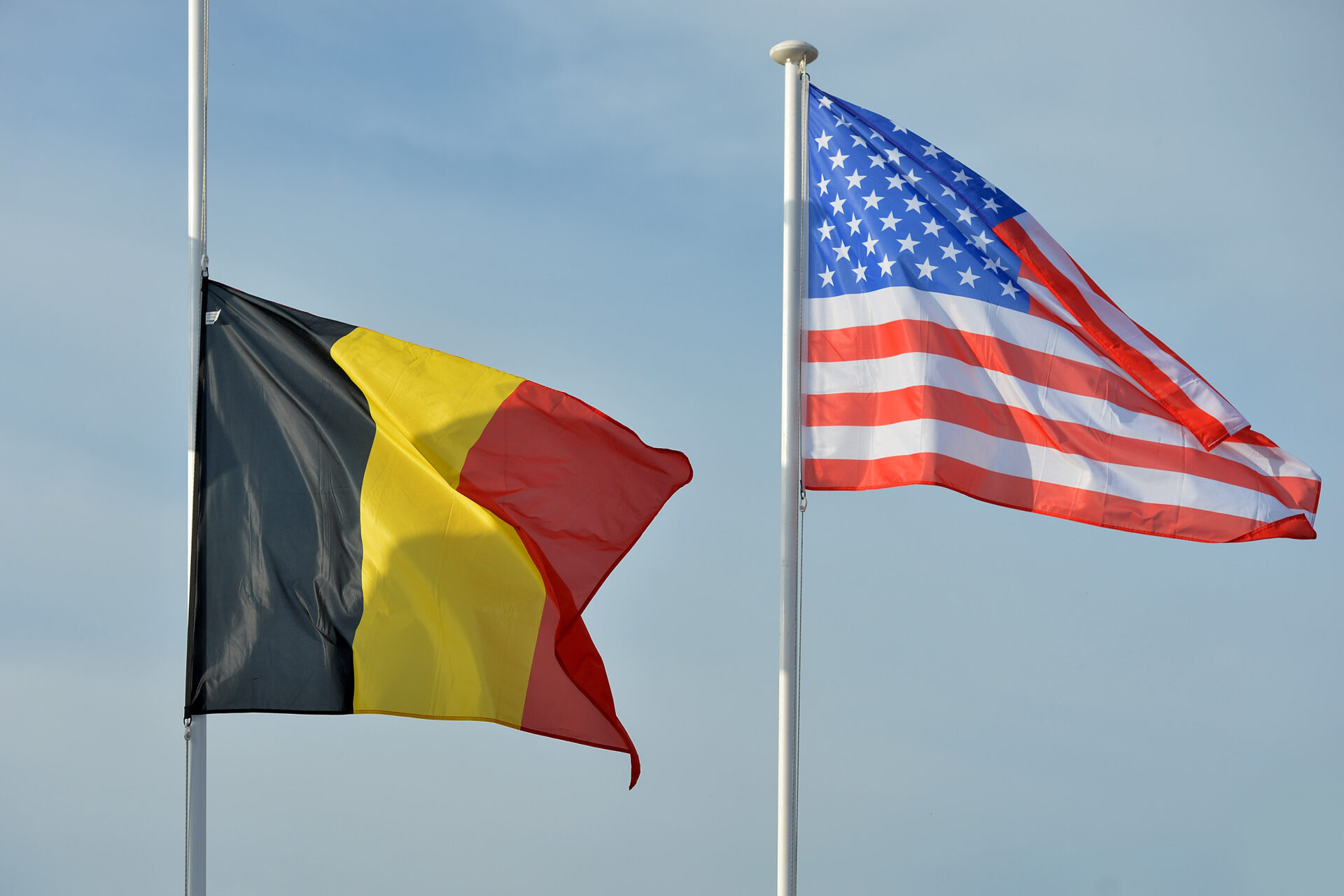
Credit: Belga / David Stockman
Belgium was ordered by the Belgian Data Protection Authority (DPA) to stop sharing this data with the US tax authorities in 2023 – a decision that was later annulled by the Brussels Court of Appeal. In early 2025, however, that decision was overruled, and the country was ordered to stop sharing the data for a second time.
Since 2017, the AAA has been warning Belgian, European, and US institutions about FATCA-induced GDPR violations such as disproportionate measures, lack of proportionality, systematic data transfers to a third country, insufficient safeguards, and structural discrimination.
Now, eight years later, the Court of Markets in Belgium has "recognised the urgent need to clarify the law," the organisation said – putting an end to years of legal uncertainty and institutional buck-passing.
According to AAA's legal counsel Vincent Wellens, the referral to the CJEU is "a major step forward."
"It will allow clarification of whether EU Member States may maintain data-collection practices and international data transfers for tax purposes when they do not comply with the GDPR's requirements – particularly its provisions on international transfers and its principles of data minimisation and transparency," he said.
Turning point for EU
This referral means that, for the first time, the CJEU will have to answer several questions that concern not only the FATCA regime but also any large-scale tax-related data-collection mechanism. That would include the transfer of such data to third countries, as well as whether the EU-US Data Privacy Framework is relevant in this context.
Another important question is whether collecting data for tax purposes in the absence of any indication of fraud or tax evasion complies with the principle of data minimisation.
"These questions have never been settled, and their examination by the CJEU represents a crucial step for the protection of fundamental rights in Europe," Wellens said.
Therefore, he said, this decision also marks a "turning point" for EU institutions and a strong signal to the EU. "The EU must decide whether the fundamental rights of EU citizens may be sacrificed in the name of an imbalanced bilateral agreement concluded with a third country."
