The former NATO Secretary General, Lord Robertson, used to say that, as someone who straddles the Atlantic, he would feel the pain of America and Europe drifting apart more acutely than anyone else. Fortunately, he hastened to add, common sense always prevailed and prevented continental drift.
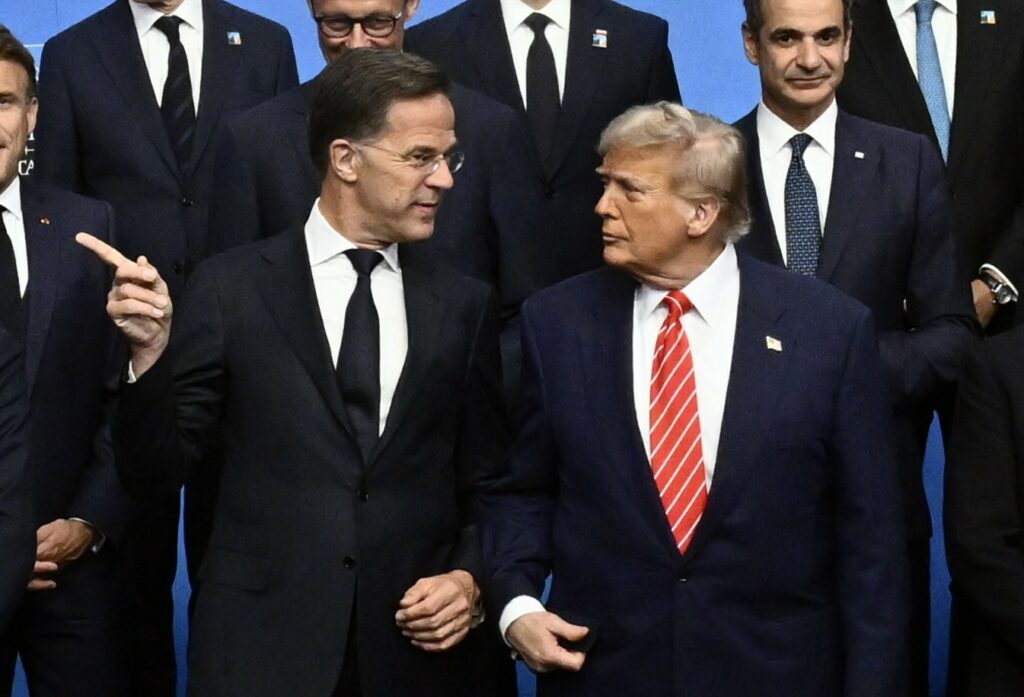
Mark Rutte, NATO's current Secretary General, must have a much higher pain threshold than all his predecessors. After all, he is trying to maintain an alliance that the President of the United States is badmouthing daily.
Up until now, Rutte's ability to play to Donald Trump's limitless narcissism has achieved a lot. He was instrumental in ensuring the success of the 2025 Summit in The Hague, and he also seems to have played a crucial role in deflecting what is arguably NATO's most serious crisis to date: Trump's desire to "own" Greenland.
Rutte's understanding of what makes Trump "tick" was also evident in the latter's rambling speech at the World Economic Forum in Davos last January, when the US President proudly stated that someone had called him "daddy".
Rutte had paid Trump this odd compliment a few months earlier, and while many observers considered it too sycophantic, it seemed to have resonated with Trump. In short, Rutte seems well aware of how to charm the snake.
But will it work this time? The question of whether Trump could ever be convinced that NATO remains strategically important to the United States is moot. Trump has criticised America’s allies for being freeloaders ever since he entered the political arena. During his first term in office, he publicly questioned NATO and showed no interest in the benefits of having allies.
Now, with the war against Iran not going as planned and allies reluctant to engage while hostilities are ongoing, has Trump’s anger become too great for even a shrewd interlocutor such as Mark Rutte to contain?
Rutte has little choice but to try to make his magic work once again. Trump can continue ranting and raving about his allies' cowardice and ingratitude, and he could further harm NATO by ridiculing the mutual defence commitment or by withdrawing some US forces from Europe.
He has already linked continued US support for Ukraine to allies' support for the war against Iran. However, while he can cause a great deal of damage, he cannot formally withdraw from NATO. This would require a two-thirds majority in the Senate, which he would not be able to obtain.
Several influential Republicans have made it clear that they will not support US withdrawal from NATO, and Congress has set a limit on the number of troops that can be withdrawn from Europe.
Therefore, even though Trump has hijacked the Republican Party in unprecedented ways, he may not want to risk confrontation with parts of his own party, particularly as defeat in the midterm elections is looking increasingly likely.
All this suggests that the problem for NATO in the coming months – and probably throughout Trump's second term – will not be a formal withdrawal, but rather the gradual erosion of the alliance due to US neglect.
Against this backdrop, European efforts to "hedge" against a future without credible US engagement in NATO are eminently sensible. Granting the European Union a greater role in defence procurement, exploring the options provided by the EU Treaty's mutual defence clause or discussing nuclear matters with France and the UK could strengthen European unity on security and defence matters while retaining NATO as a framework for addressing the most serious threats.
By contrast, calls for redesigning NATO without the US are unlikely to convince most European nations. Aside from further damaging an already disrupted relationship, such calls greatly underestimate the contribution of the US to European security.
However, most importantly, Donald Trump is not the US. The next administration may well take a very different approach to allies and alliances. It would be ironic if, in a tit-for-tat move, the Europeans had hollowed out NATO to the extent that it could no longer facilitate a transatlantic reconnection.
Therefore, despite the frightening prospect of three more turbulent years ahead, NATO must be preserved. The Alliance's new command structure, which shifts more responsibility to the Europeans, could provide a model for an orderly reduction of the US's role in European defence.
The final verdict on NATO's future will not be cast by Trump or by the European allies. Rather, it will be cast by the US Congress, particularly the pro-Trump but also pro-NATO Republican Party. A US NATO official once quipped that "we Republicans believe we own NATO".
Perhaps now is the time for the Grand Old Party to wake up and reclaim ownership of the alliance.
