
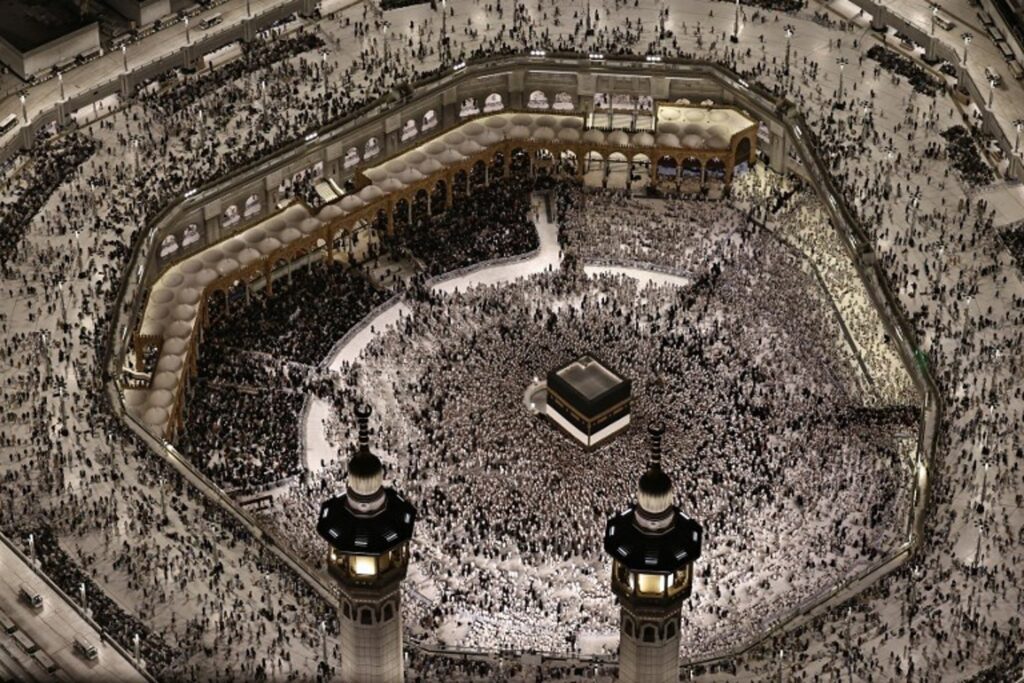
Under scorching daytime temperatures ranging between 42°C and 47°C, the annual Hajj pilgrimage began on Monday in Mecca, drawing 1.5 million Muslim worshippers from across the globe.
The Hajj, a central pillar of Islam, is a religious duty that all Muslims who are physically and financially able must complete at least once in their lifetime.
In Mecca, some pilgrims avoided praying at the Kaaba, the sacred cube-shaped structure, due to the oppressive heat that has caused heatstroke, fainting, and even cardiac issues among attendees.
Many pilgrims were unprepared for the harsh climate. Imad Ahmed, a visitor from the United Kingdom, said, “I make sure to drink plenty of water and electrolyte-rich beverages because we are constantly sweating and moving around.”
Authorities in Saudi Arabia have installed powerful air-conditioning systems around the grounds of the Grand Mosque, claiming it to be "unmatched globally". These measures include large fans, mist sprayers, cooled flooring, and free bottled water for pilgrims.
Among the most challenging rituals is the Tuesday gathering at Mount Arafat, where worshippers spend hours exposed to the searing sun atop a rocky hill.
The pilgrimage concludes in Mina, near Mecca, with the symbolic stoning of Satan. A dedicated hospital is prepared to treat pilgrims suffering from heat-related illnesses in this area.
Such precautions are not unwarranted. In 2024, over 1,300 pilgrims died when temperatures exceeded 50°C, according to Saudi officials.
