
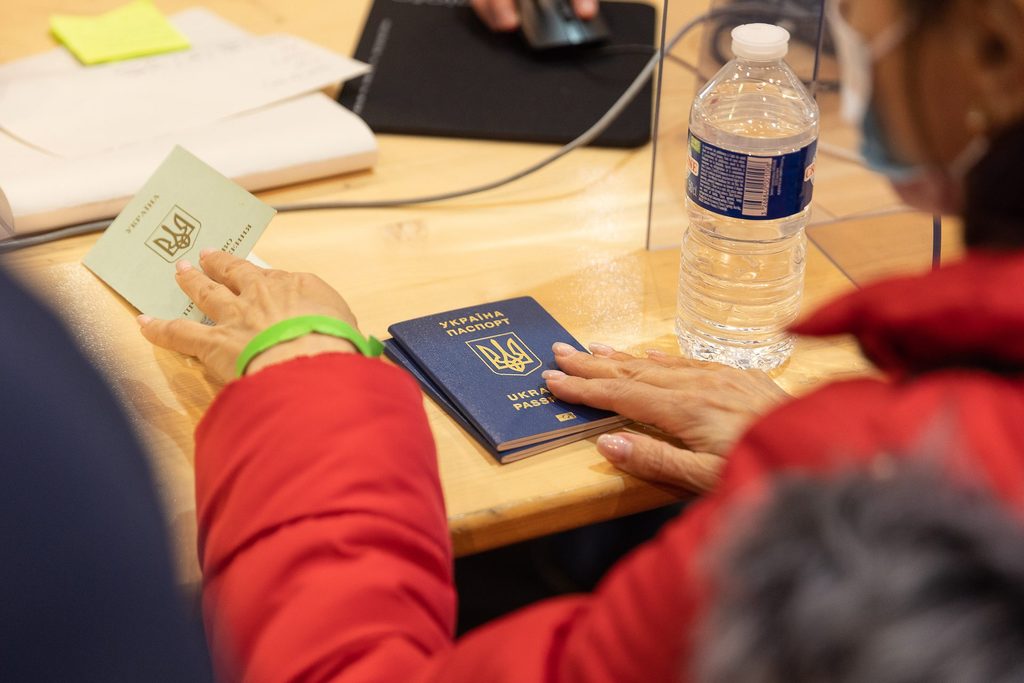
Ukrainian refugees in Belgium, including children, have been forced once again into the streets due to ongoing Belgian asylum seeker reception crisis. which has been ongoing for three years.
Applicants for international protection have since October 2021 been denied shelter during their procedure, despite being entitled to it. Single men are continuous victims of this reception crisis in Belgium, but when the shortage gets exceptionally acute, groups that tend to be given priority, such as families with children, are also left to fend for themselves.
For the second time since the Russian invasion of Ukraine, this group also includes Ukrainian refugees, warned Refugee Work Flanders (Vluchtelingenwerk Vlaanderen). Despite their status of temporary protection, the shortage of places has seen Ukrainian men be denied shelter since September.
"And there has been no shelter for families and other vulnerable people since October," the organisation's Thomas Willekens told The Brussels Times. "They end up on the street after registration if they don't have their own solution."
Left to own devices
About 65 Ukrainian refugees are still arriving in Belgium daily. Most find a place to live themselves, such as with relatives or acquaintances within the Ukrainian community. However, some 15% need shelter, but places have run out.
Several Ukrainian people staying at the refugee registration centre near Brussels-Midi station criticised Belgium for continuing to give temporary protection to refugees from Ukraine if they are not providing them with shelter. "We are being left to our own devices," one woman told VRT NWS.
Some have spent almost all their money to stay in a hotel, while others are living with family members, but many of them are also staying in shelters, and have been told to leave. "I hope I do get a shelter place somewhere now. Otherwise, I will be on the streets," one such woman said.
Since the start of the war, the responsibility to shelter Ukrainian refugees has been a regional competency. In Flanders, cities and municipalities are given money to voluntarily set up public shelters. But the new Flemish coalition agreement does not contain any reference to temporarily displaced people and their reception needs, Willekens stressed.
"At the same time, we see that local governments are phasing out their reception places, and the Flemish Government's emergency villages are also being phased out." Just 4,400 public shelters remain open in the region, as opposed to 7,300 two years ago. The Domestic Administration Agency (ABB) which runs these shelters has disputed that there is a shortage.
This is mainly because Ukrainians who are denied a place are temporarily accommodated in the Fedasil Ariane transit centre in Brussels. Even here, almost all places are filled, and single men are being turned away. Meanwhile, the Ukrainian refugees who are staying with family or acquaintances instead of getting a reception place are not always counted in the figures, instead falling through the cracks of the system.
This precarious situation means Ukrainians' lives are on hold: because they can't register at an address, they can't apply for a so-called A-card which is necessary to work or get social support, Willekens warned. Refugee Work Flanders has called on the government to put Ukraine back on the agenda.
