
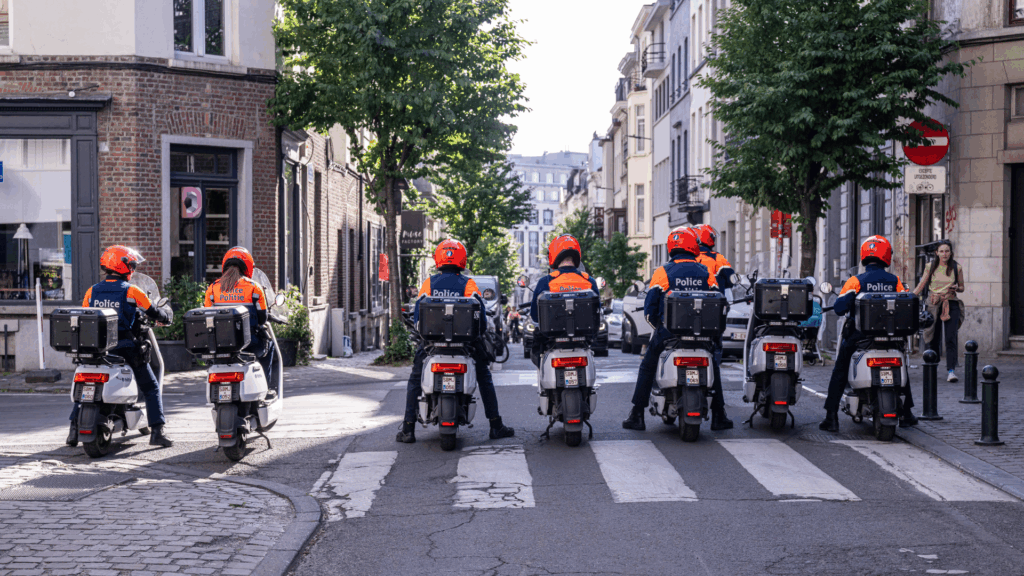
Almost one in five (19%) of Brussels residents "often" or "always" feel unsafe in their neighbourhood, according to figures from a new Security Monitor survey. The increasing feeling of insecurity is linked to drug nuisance and drug crime.
The new Security Monitor – a survey of almost 150,000 people – shows that across Belgium, just under 10% of people "often" or "always" feel unsafe in their neighbourhood. At 19%, this figure was highest in the Brussels-Capital Region (up from 16% before), compared to 7% in Flanders, and 13% in Wallonia.
"The fact that this feeling of insecurity in Brussels is increasing is worrying," said Belgium's Interior Minister Bernard Quintin (MR). "In some Brussels neighbourhoods, a lot of problems come together: nuisance caused by drugs, intimidation on the streets, damage to vehicles, fly-tipping. We need a structural response to that."
These sentiments are reportedly most common among women and young people, and are usually linked to higher concerns about drug trafficking and petty crimes in populated regions.
According to Quintin, the results show that the fragmentation of Brussels' six police zones is "clearly no longer tenable." He stressed the need for an integrated approach: "one policy, one vision, one strategy, working both at the policy level and on the ground."
To do that, Quintin wants to move forward "very quickly" with the project to merge the Brussels police zones. A unified police zone should lead to more intervention capacity and more neighbourhood officers. He also called for a regional security plan, drawn up by the Public Prosecutor's Office, federal police and local police zones.
"The situation in the capital is complex. It requires cooperation, clarity and determination. Only together can we succeed," he stressed.
Related News
- Homophobic ambush: The defendants saw themselves as vigilantes
- Safe ride: What are the rules for using e-scooters in Brussels?
- Party and Play: The Chemsex formula consuming Brussels
As the Security Monitor analyses citizens' opinions on feelings of security, victimisation, willingness to file complaints, neighbourhood problems, and satisfaction with police work in the state, it acts as a means of pinpointing areas of broad-based security policy that need improvement.
This year's response rate was significantly higher than the previous report in 2021, which saw a response rate of only 25%. The Federal Police highlight the use of digital tools for sending and completing the survey as a reason for the uptake in participation, with almost 70% of responses received online.
The results declared citizens' wishes for more police presence on the streets and in stations, as almost one-fifth of respondents claimed that police are not visible in their neighbourhood. 80% of respondents tied active police presence to feelings of satisfaction and safety.
In general 51% of individuals felt that filing complaints is pointless. Violent crimes such as verbal, sexual, and physical abuse have been frequently left unreported for these reasons.
Drug crime, burglaries, and phishing
Traditional crime rates have been replaced by a rise in cybercrime, which has faced a 9% increase since the previous report.
Almost half of the respondents have reported becoming victims of a phishing attempt in the past year, with 7% of the attempts completed. A further combined 30% of respondents faced instances of internet fraud or computer hacking.
Burglaries remain the most frequently reported crimes, yet still an estimated 25% of victims do not report the crime to the police. Less than 50% of thefts are reported making the reality of the crimes double what is disclosed.
Despite declining rates of burglaries, the crime is still considered to be amongst the top priority police tasks by citizens - alongside sexual violence, illegal dumping, monitoring of behaviour on roads, and drug trafficking.
According to the report the latter is the organised crime most in need of combative action, with concerns over drug trafficking and consumption becoming a growing concern in large cities in particular. Drug-related nuisance is more commonly reported in urban areas than in rural spaces.
Road safety concerns remain significant. Inappropriate speed remains the most cited problem (61%), comparable to 2021 and 2018, followed by aggressive driving (44%) and traffic noise (36%).
Discrimination-based violence
Discrimination-based crime generally is on the rise, despite being the least reported offence. Willingness to press charges remains low, contributing to a disparity between the true rates of discrimination-based crime and the official figures.
Crimes of discrimination based on origin or nationality are the most commonly reported, with around 5% of incidents taken to the police. Gender discrimination is the second most frequently reported. Sexual orientation based discrimination rates the lowest at just over 1%, supporting Belgium's position as the second-ranked country in Europe for LGBTQ+ rights.
