
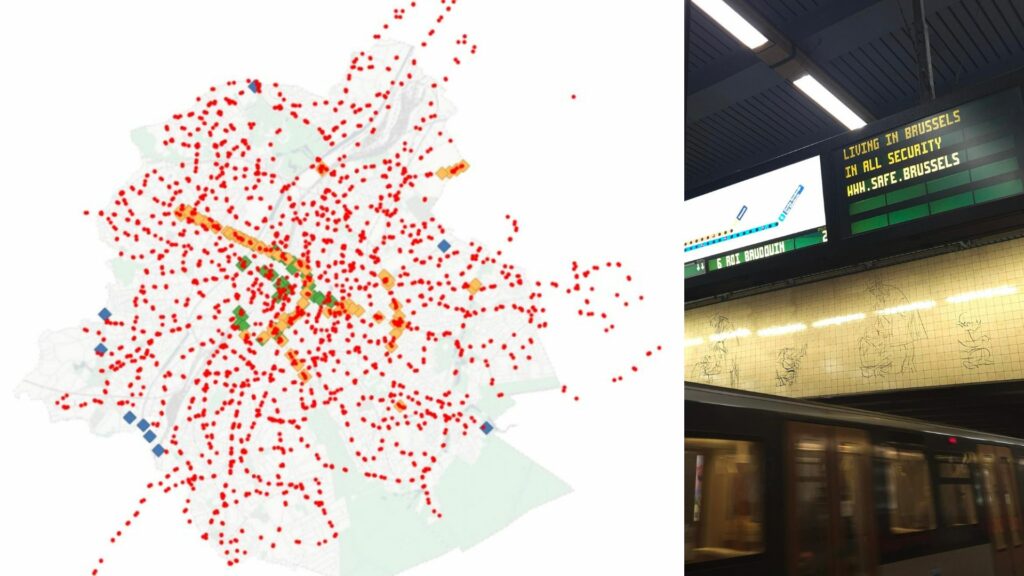
Floods, chemical accidents, health threats or even terrorist attacks. In case of emergency, providing people with rapid and direct communication about their safety is vital. From now on, warnings can be shared via electronic signs all over Brussels.
People in Brussels will be informed about any type of emergency via the electronic message signs on the network of public transport operator STIB/MIVB, as well as those along tunnels and main traffic arteries in the capital.
"To be clear: we are not launching this because we are expecting a crisis right now, Christophe Vanoerbeek, Director-General of Brussels Mobility, told The Brussels Times. "But you never know what might happen. And we need to be as well-prepared as possible."
Reaching thousands at once
Whether it concerns fires, floods, code orange or red warnings for storm or snow, power outages, terrorist attacks, health crises or any other kind of potential disaster – the aim is to get one message out to as many people as possible, as soon as possible.
These messages can be recommendations to evacuate or avoid a specific area that has been cordoned off by the emergency services, but also orders for people to go home quickly. On the STIB/MIVB screens, the alerts will be displayed in French, Dutch and English. On those operated by Mobility Brussels, they will only be shown in French and Dutch.
"Every day, STIB/MIVB buses, trams and metros connect more than a million passengers across Brussels," said CEO Brieuc de Meeûs. "We have hundreds of screens across the entire Capital Region, making us the ideal partner for this."
By communicating essential safety messages via STIB/MIVB's infrastructure in emergency situations, he stressed that the company is "fully fulfilling its role as a public service provider" and proving that it is a "real asset for Brussels and its inhabitants."
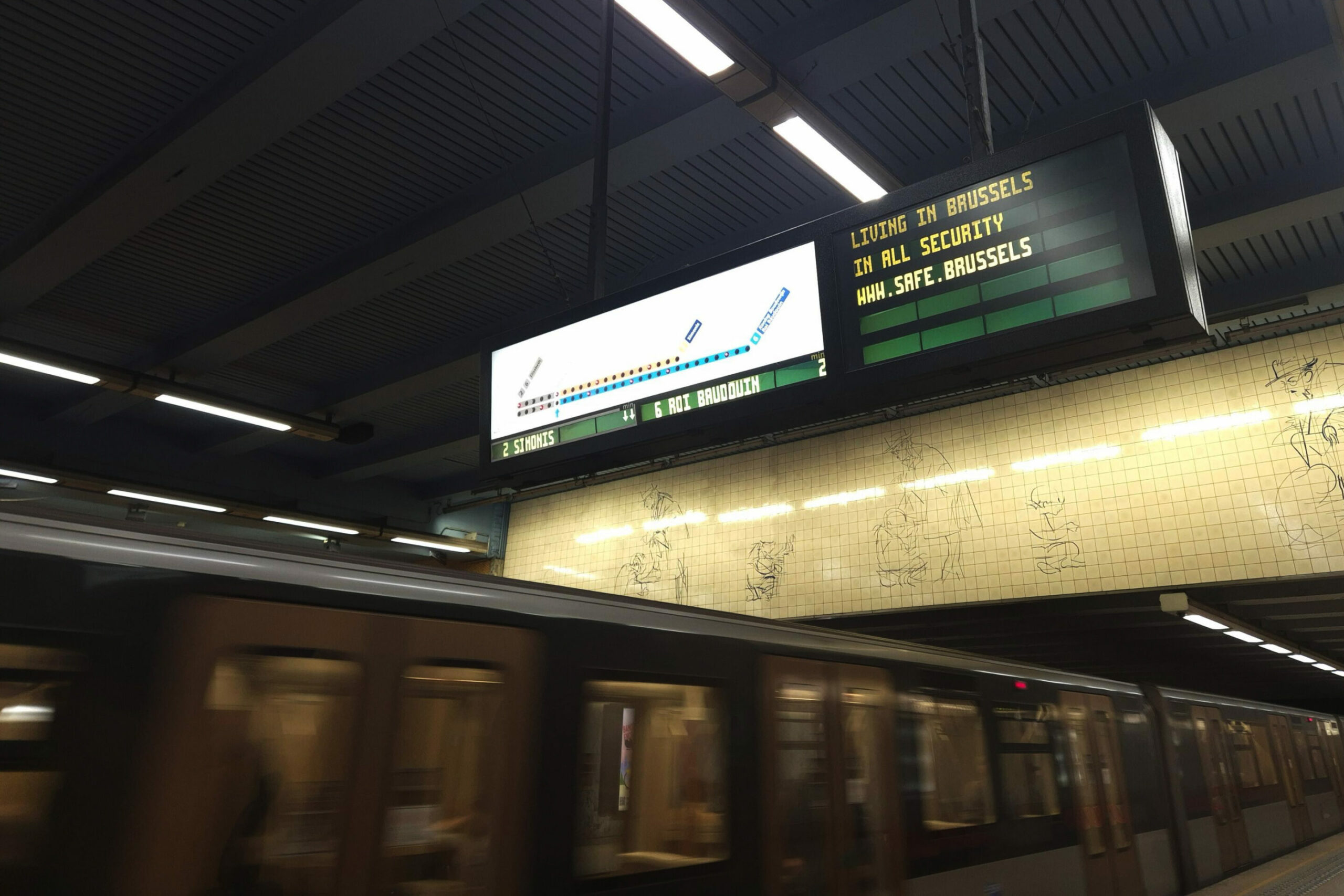
Test message on an electronic sign in Botanique metro stop, Tuesday 10 June 2025 in Brussels. Credit: Belga/Timon Ramboer
As before, authorities will use the most appropriate communication channels: loudspeakers, media, social media and the BE-Alert text messages. From now on, they will also use the electronic signs managed by Brussels Mobility and STIB/MIVB.
"In crisis situations, it is important to communicate with one voice," said Vanoerbeek. "Every day, hundreds of thousands of road users are on the streets in Brussels, and we inform them daily via our network of variable signs."
"These signs are located on the most frequently used roads and tunnels in the Brussels-Capital Region, enabling us to reach a large audience quickly in the event of a crisis," he said.
Taking action, saving lives
The crisis communication system was tested on Tuesday, but an initial test was conducted two years ago. After that, STIB/MIVB, the Brussels Mobility agency and safe.brussels had to establish a cooperation protocol and resolve technical issues.
The three signed a cooperation protocol to integrate this alert channel into their operational procedures. This agreement formalises everyone's commitments in this procedure and will ensure optimal responsiveness in the event of an alert.
"Alerting means taking action and saving lives. The best alerting in emergency situations requires a multiplication of dissemination channels," said Sophie Lavaux, Director-General of safe.brussels and Governor for Crisis Management.
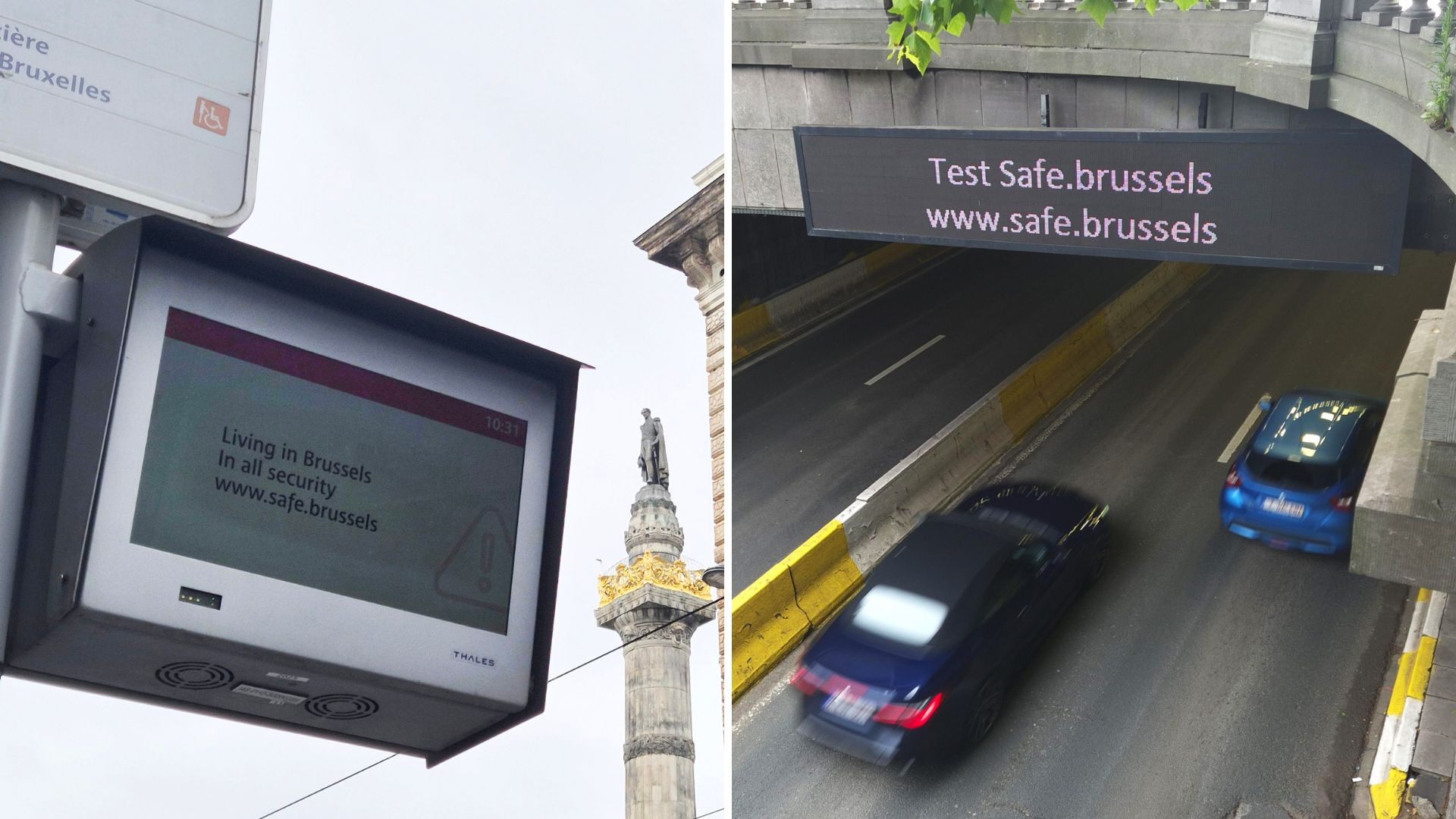
Test alert on a tram stop's digital screen (left) and on the Botanique tunnel. Credit: Belg
"Thanks to this cooperation agreement, our system is becoming more robust and operational. This successful test confirms the effectiveness of the good cooperation between our Brussels institutions," she said.
The purpose of Tuesday's real-life test was to verify and improve the procedure for issuing warnings via these media in the event of crisis management at at regional level.
The aim was to test the entire alarm chain with a message that was not known in advance to the various participants. This system will be tested again at the end of this year as part of a large-scale crisis exercise.
