
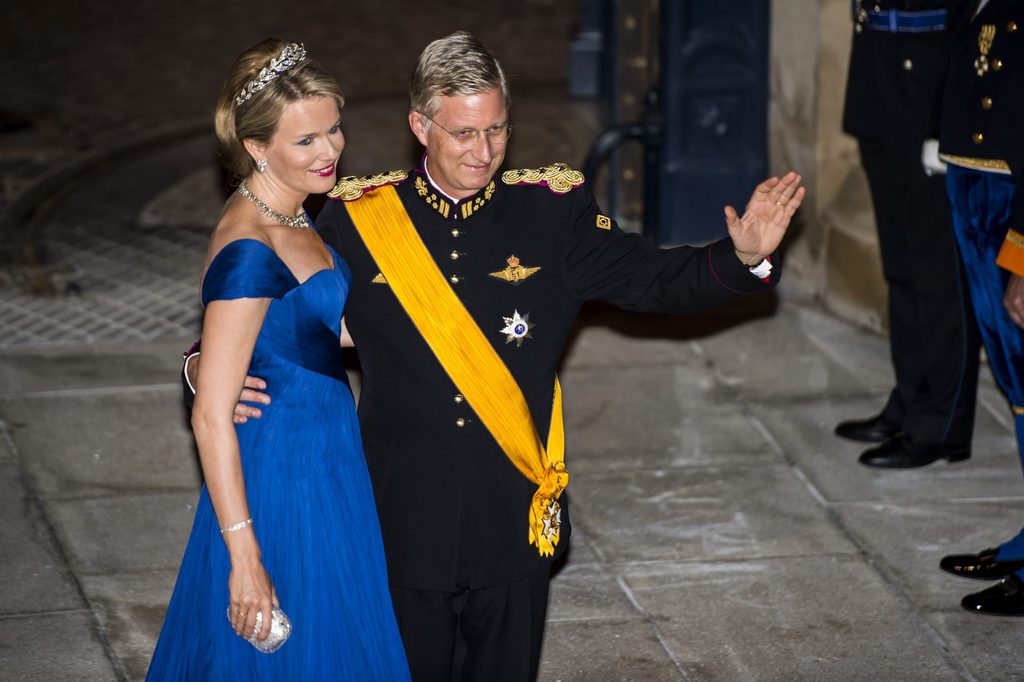
Belgians don't tend to take issue with the royal family, apart from Flemish separatists dreaming of an independent state. Exceptional circumstances have given rise to anti-monarchism in the past, but now even hardcore anti-royalists may be softening their tone.
An annual IPSOS survey called the Royal Barometer shows that Belgians mostly feel positive or indifferent about the royal family that represents them, year in and year out. In 2023, 55% of respondents said Belgium should remain a monarchy with the king as head of state compared to 28% who wanted Belgium to become a republic.
This acceptance applies across most political parties, even the radical left-wing Belgian Workers Party (PTB-PVDA). Apart from the Francophone green party Ecolo's commitment to abolish the monarchy in the long-term in 2002, there has been no concerted programme to do away with royals. There is one exception: the rightwing N-VA and the far-right Vlaams Belang, both of which aspire to Flemish independence – ironic considering that N-VA leader Bart De Wever currently serves as Prime Minister of Belgium.
The Royal Question
Flanders has historically been fonder of royals than Wallonia. After the Second World War, Belgium faced a constitutional crisis now known as the Royal Question. King Leopold III had remained in Nazi-occupied Belgium against the wishes of exiled political leaders in London, who would have preferred him to join them. The monarch decided to stay in Belgium, "imprisoned" in Laeken Castle instead.
At first, Belgians sided with their monarch, sympathising with him for his incarceration and his attempts to do the best he could for his country. However, everything changed in 1941: on the same day Pearl Harbour was bombed in the US, King Leopold announced his engagement to Princess Lilian. Public opinion quickly turned against him, with down-and-out Belgians resentful that he was not suffering the hardships of Nazi rule alongside them.
By the time Belgium was liberated in 1944, Leopold had absconded to Switzerland, but a 1950 referendum approved his return as King. 72% of Flanders voted for his reinstatement compared to 42% in Wallonia and 48% in Brussels.
March on Brussels
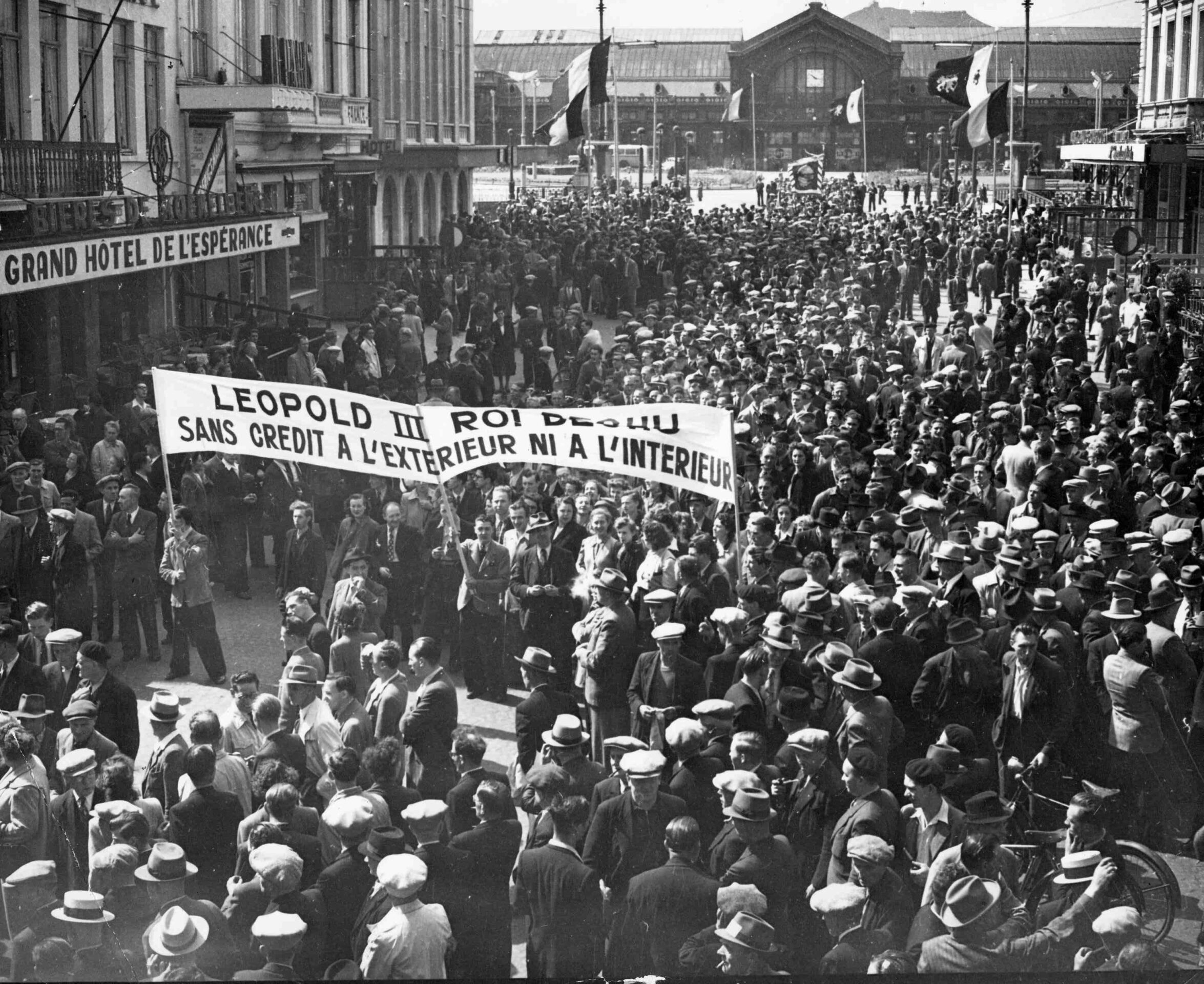
Students in Brussels protest against the return of King Leopold III in 1950. Credit: Belga
Chaos ensued. Socialists, liberals and communists opposed the return of a sovereign who had colluded with fascists. Discontented Walloon workers organised a series of unrelenting strikes. There was even a march on Brussels on 8 March that involved clashes with police. By 31 July, one million workers were participating in the movement, and a procession was heading towards Laeken Castle chanting 'Down with the King'.
The anti-monarchist Walloon review Toudie posits that either the US administration spoke to the Belgian Government – upheaval in the centre of Europe was the last thing the superpower wanted during the Cold War – or Leopold was pushed into resigning by his cabinet, which threatened dissolution.
The disgraced king agreed to abdicate on 16 July 1950 and did so on 1 August 1951. His son Prince Baudouin would succeed him and Belgium was held back from the brink of civil war, ending the most virile anti-monarchist protest the country has ever seen.
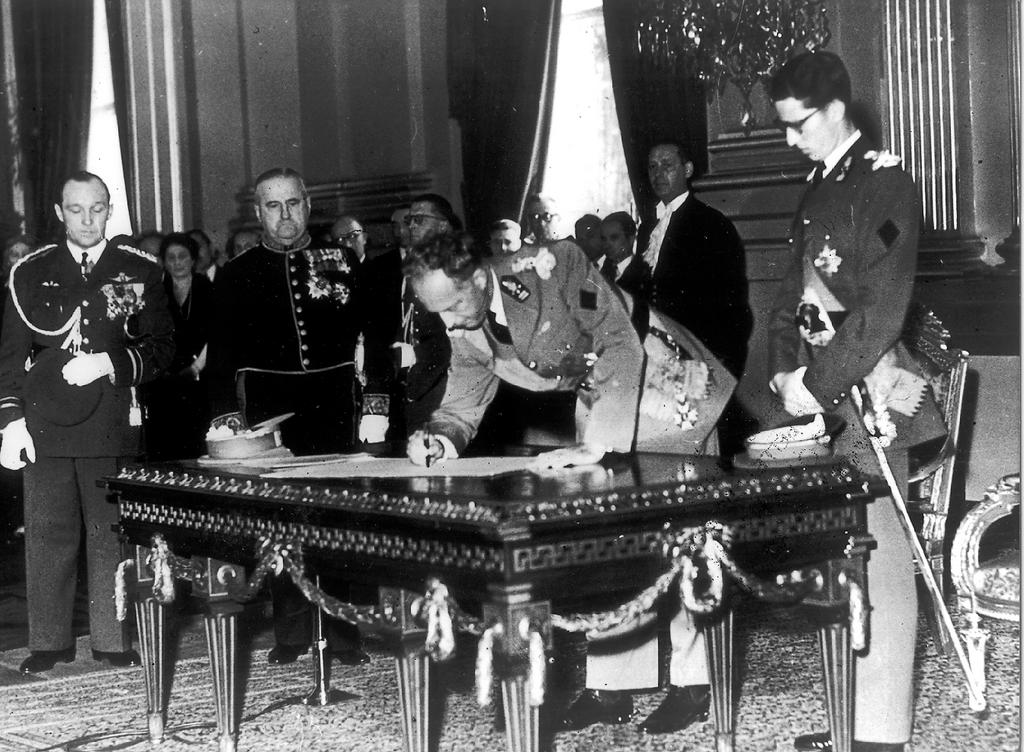
King Leopold III at the occasion of his abdication on the 16 July 1951. Behind him his son Prince Baudouin. Credit: Belga
However, director-general of the Centre for Socio-Political Research and Information (CRISP) Jean Faniel underlines an important nuance: the protest was against Leopold, not the institution itself.
"The parties opposed to the return of Leopold III – the liberals, socialists and communists – were not necessarily anti-monarchist," he told The Brussels Times. "The liberals were not anti-monarchist. The socialists were more divided. The communists were anti-monarchist, and at Baudouin's swearing-in ceremony, the communists had decided that they would all shout 'Long live the republic!'"
The chant led to the assassination of the communist leader Julien Lahaut. Faniel says anti-monarchism was "crystallised" in this persona, whose death was never properly investigated.
"For a very long time, the history of anti-monarchism in Belgium essentially remained limited to that."
Flemish pragmatism
Modern-day republicanism looks different in Flanders, where N-VA and Vlaams Belang lead the fight against the royals in the context of wanting an independent Flemish state.
In 1978, the leader of Vlaams Blok (Vlaams Belang's predecessor, banned for racism in 2004) Karel Dillen was invited to a private audience with King Baudouin, the first step to forming a Federal Government after elections. Dillen refused the invite and the party was not asked to the palace again once a cordon sanitaire was erected around it in 1989.
In 2010, De Wever showed up to the Palace without a tie, a "sign of defiance toward the royal institution", according to Faniel.
"A politician of that calibre turning up at the palace and appearing before the king without a tie was unprecedented, given that N-VA had just become the country's leading party."
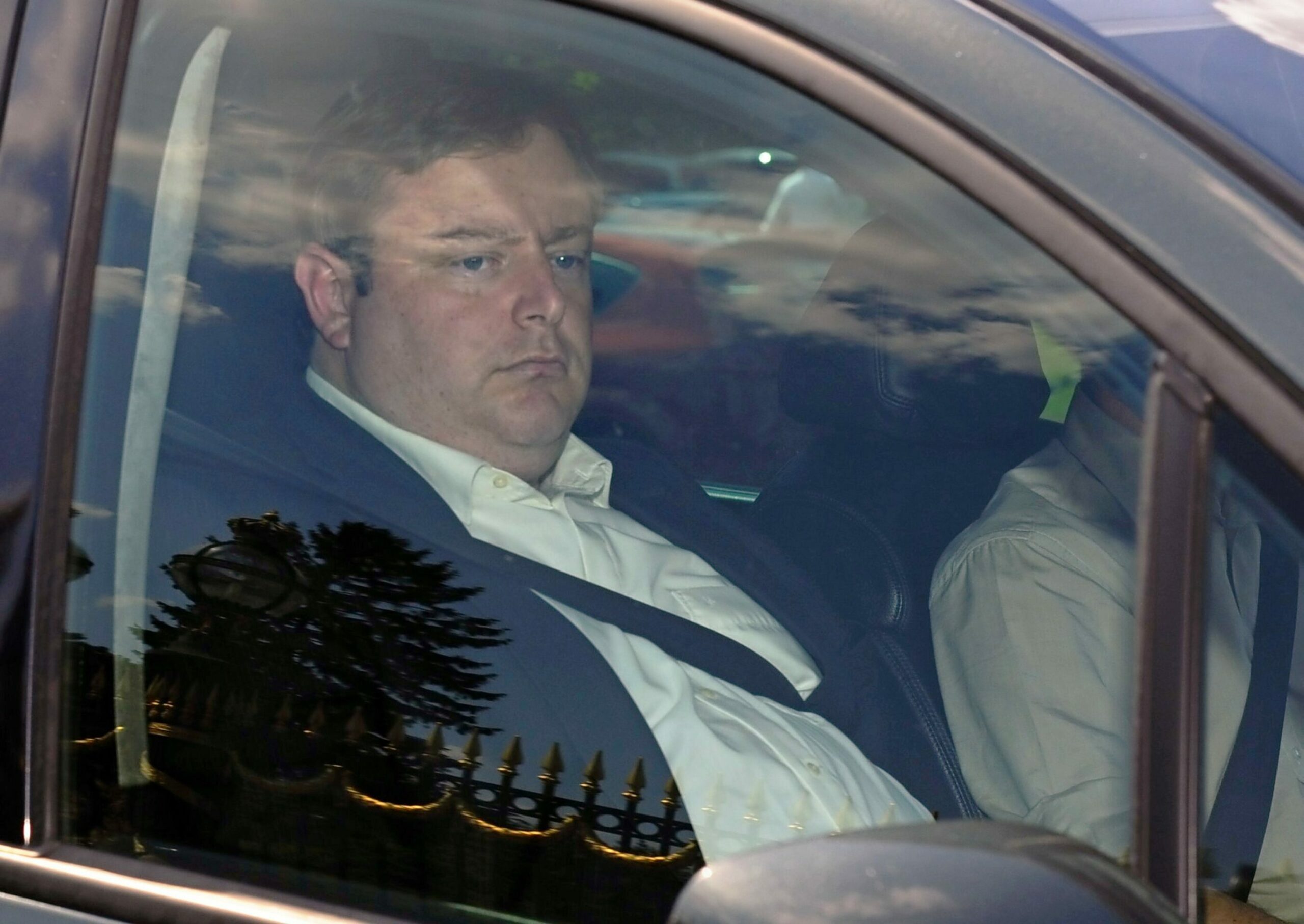
Bart De Wever arriving at Laeken Castle to meet King Albert in 2010. Credit: Belga / Eric Lalmand
Pragmatism seems to have trumped anti-royalism in both parties. Vlaams Belang's current leader Tom Van Grieken accepted his invite to the Palace after elections in 2019 and in 2024. So did De Wever, who now holds weekly meetings with the King as Prime Minister.
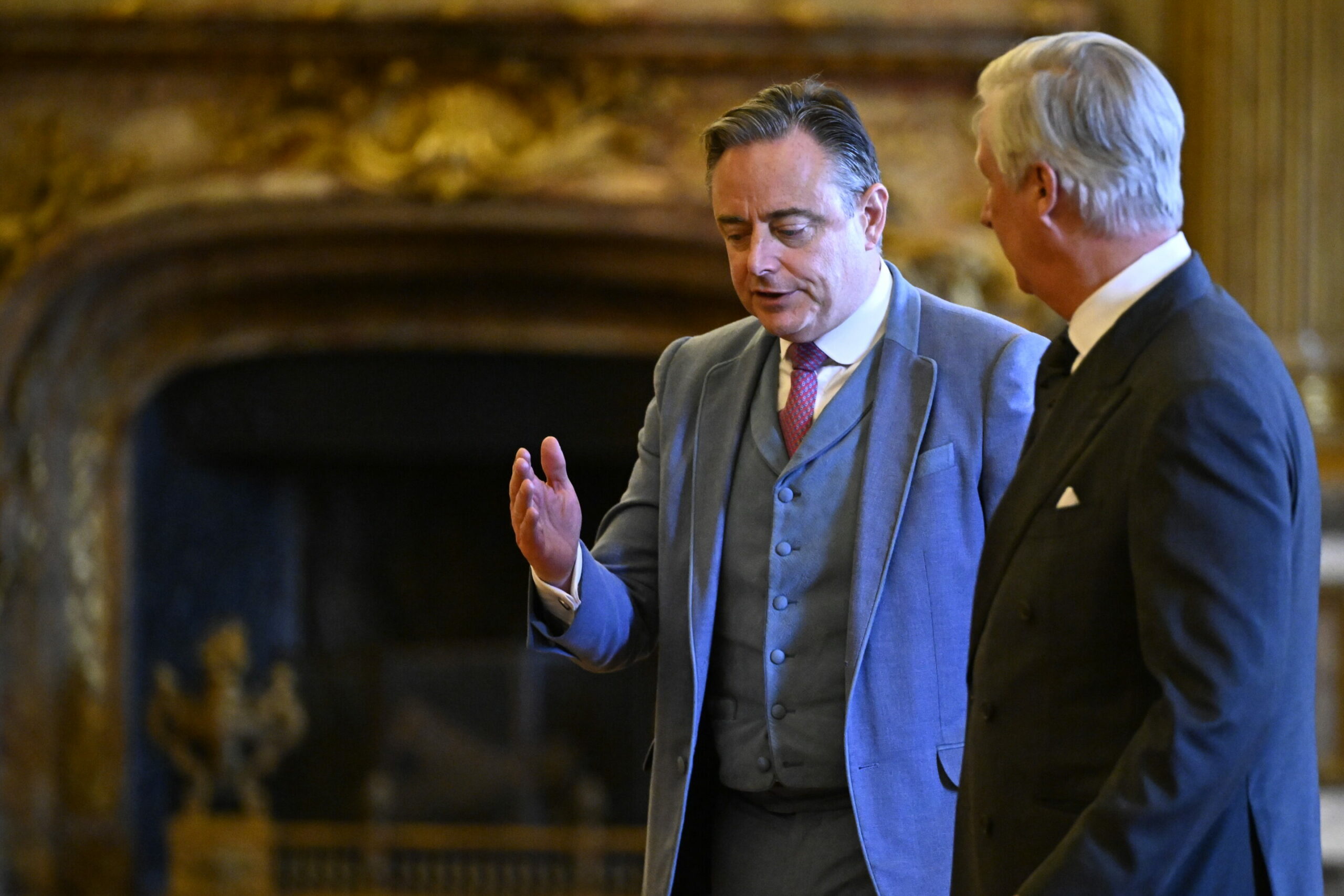
Prime Minister Bart De Wever speaking to King Philippe before swearing an oath and becoming Prime Minister on 2 February 2025. Credit: Belga / Jasper Jacobs
"He has really changed in that respect," says Faniel. After refusing the premiership in 2014, "De Wever has decided that is preferable to become Prime Minister than to remain in the shadows [...] Because the role gives him access to the top echelons of European politics and the ability to influence European decisions, particularly on issues that are very important to him, such as migration."
Anti-monarchism in Wallonia is not dead, however. Responding to a 2002 article written by Faniel's colleague Serge Govaert in the French monthly newspaper Le Monde Diplomatique, Nadia Geerts of the Republican Circle (CRK) objected to the idea that the Flemish are the "driving force" of Belgian republicanism while "the French-speaking community remains in the background, passive, even defensive. The situation is more complex than that."
Belgium's German-speaking region adores the royalty, with a flag that boasts a regal red lion in its centre and a National Day that coincides with the 'Royal Holiday' on 15 November. Faniel points out that the royals speak Dutch and French but are originally German (the family dropped the German surname 'Saxe-Coburg-Gotha' in 1920).
Ultimately, the monarchy is viewed as one way to keep Belgium unified despite its vast regional and linguistic divides. Even if imbued with a republican tradition – parts of Mouvement Réformateur and the Socialist Party, for instance – politicians avoid the issue for fear of accentuating differences best left alone.
"There are two things that hold the Belgians together: football and the monarchy," says Pierre Devuyst, a journalist at Le Soir Mag who has covered the monarchy for decades. "In reality, monarchy is the glue that holds Belgium together."
