
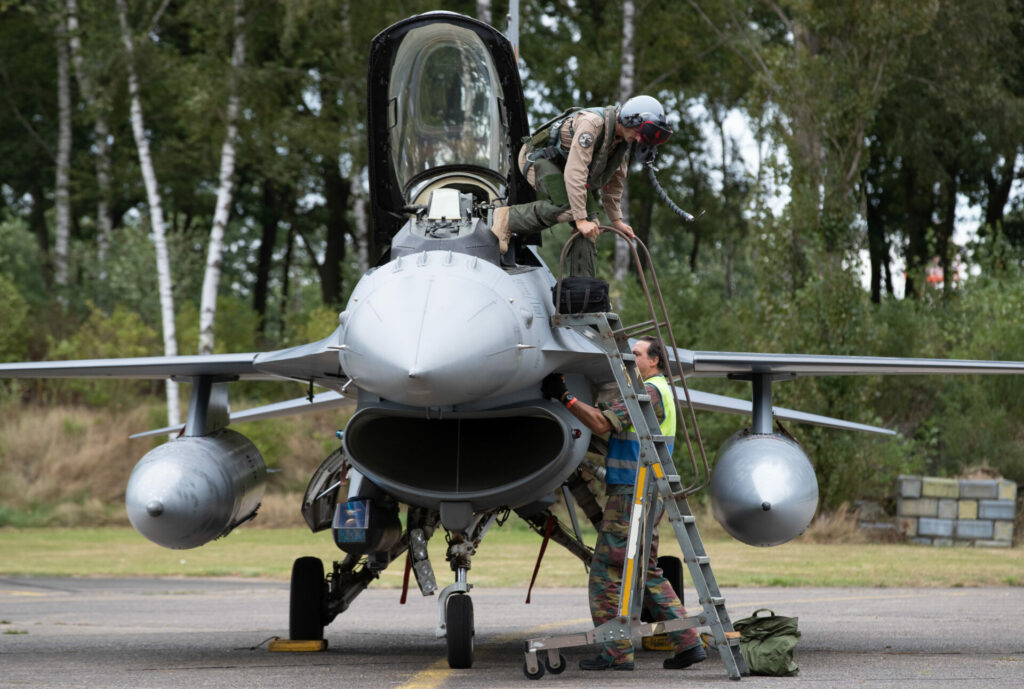
Belgium’s decision to procure nearly a dozen new fighter jets from the United States has provoked anger in the French defence establishment.
Last month, Belgian Defence Minister Theo Francken set out the government’s Strategic Defence Plan for 2026-34, revealing that Belgium would buy a further 11 F-35 fighter jets to add to the 34 it has already purchased.
Given recent transatlantic trade tensions, some have questioned the wisdom of the decision to hand such an important and lucrative contract to Lockheed Martin, a US-owned company.
Senior representatives of the French defence industry have done little to hide their displeasure over the announcement. They would have preferred Belgium to buy the French-made Rafale fighter jets instead.
During a conference in July, Éric Trappier, the head of Dassault Aviation, sharply criticised Belgium’s decision to buy more F-35s. In the midst of a discussion on the Future Combat Air System (FCAS) programme, which aims to build Europe's next-generation fighter jet, Trappier pointedly said that joining FCAS “requires a commitment to the European defence industry”.
He argued that Belgium, which is currently a FCAS observer member, did not meet the criteria for joining FCAS.
"If I was diplomatic, I would say that Belgium is welcome if they stop buying F-35s. If I wasn't, I would say they're really taking us for fools," Trappier said.
He added: “"They've just announced, in the middle of a trade war with the United States, that they're going to buy F-35s. I have nothing against that, but what surprises me is that just when they say they're buying the F-35, they want to get into the FCAS."
Following Trappier’s remarks, Francken hit back at the businessman. "As a founding member of NATO and the EU, a loyal ally and host of the headquarters, we have no lessons to take from arrogant industrialists," the defence minister said.
A long-running diplomatic quarrel
Arguments over the rights and wrongs of procuring US-made defence equipment have rumbled on for years as Belgium has sought to replace its ageing stock of F-16 fighters, which date from the 1980s. Belgium currently possesses 45 F-16s, and has committed to give 30 of the older fighter jets to Ukraine from 2026.
In 2017, France promised Belgium a “strategic and economic” partnership if the Belgian federal government chose to buy Rafale aircraft over its competitors.
The following year, given the choice between buying F-35s from Lockheed Martin and Rafales from Dassault, the government of Charles Michel opted to go with the American firm, citing the F-35’s compatibility with NATO standards, its interoperability with NATO equipment and its advanced stealth capabilities. The Belgian air force is expected to operate F-35s until at least 2060.
Francken's recent announcement has reignited the debate in France. An article on French defence website Forum Militaire delivered a blistering attack on Belgium’s decision to “sign a cheque to Washington”.
The article, which made reference to Belgium’s “betrayal” of France said: “How can we justify the purchase of a closed American aircraft, designed outside any European logic? For many observers, it's a major paradox: Belgium is defending the rhetoric of a European defence, while reinforcing its dependence on NATO.”
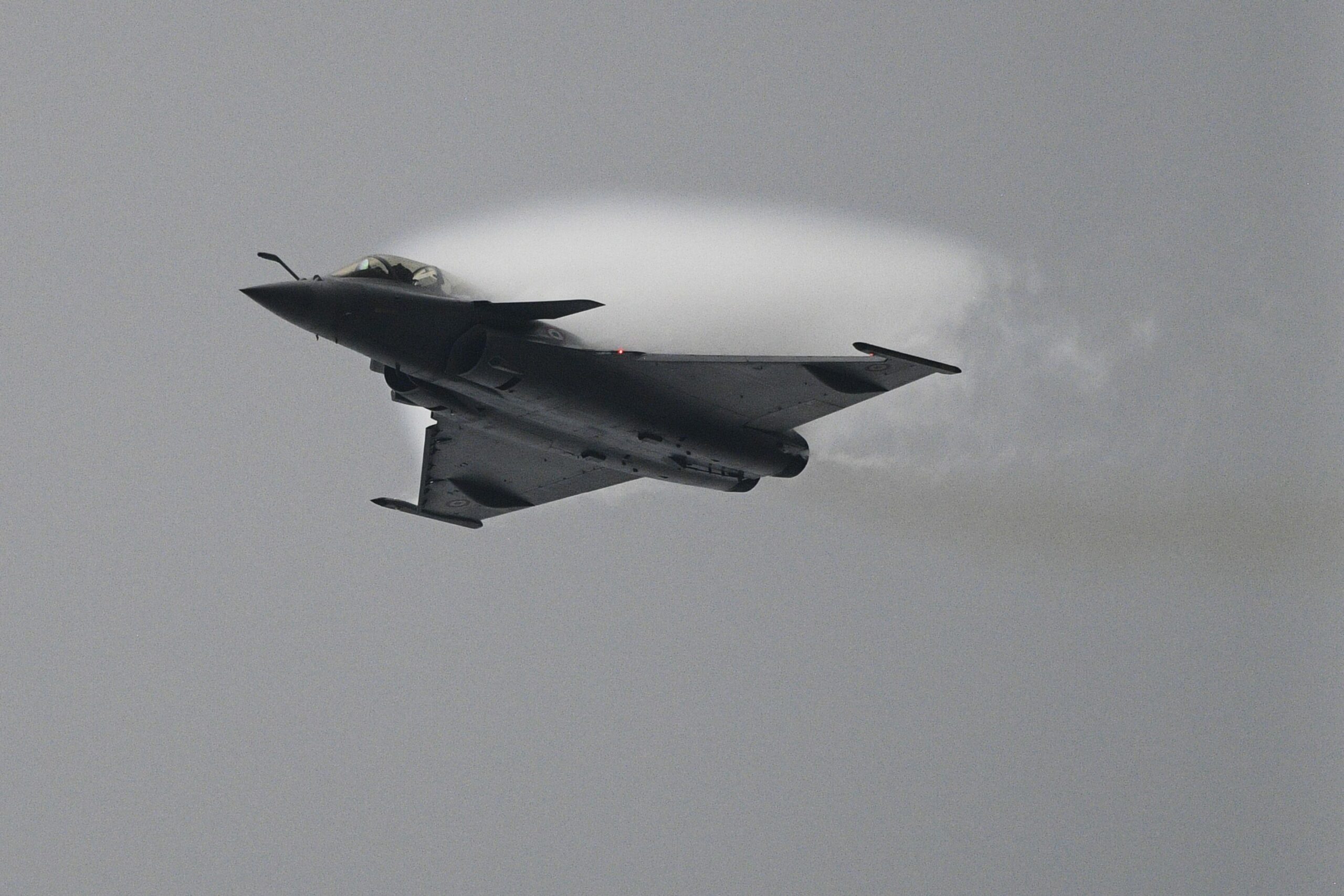
The French Rafale fighter jet in action. Credit: Yorkick Jansens/Belga.
Concerns about over-dependence on the US
Other European countries have backed out from the F-35 programme in the context of growing concerns about Europe's over-dependence on the US for its defence.
Just yesterday, Spain announced it was no longer considering the option of buying F-35s and would instead choose between two European models – the Eurofighter and the FCAS.
In March, Portugal walked back on plans to acquire the jets over fears that the US would leverage its influence over their use, placing economic limitations on access to components and crucial software.
The operation of the F-35 relies heavily on the US for an array of services for maintenance, operational support, intelligence, navigation data, ordinance trajectory and mission preparation, all of which could potentially be halted in the event of a Trumpist freeze in relations between the U.S. and Europe.
While the notion of a physical “kill switch” has been rejected, German officials are concerned that the American jets could be remotely disabled in the event of disagreements with their U.S. partners by blocking access to key software used for their operation.
Belgium’s Defence Minister has given assurances that this is not a technical or political possibility. “There is no button in the White House that would allow the United States to render our F-35s unusable. It’s an urban legend,” Francken told VRT on 10 March.

Credit: Belga/ Lockheed Martin Corporation
Belgium doubles down
While other European countries are showing more caution, members of Belgium’s political and defence establishment have steadfastly defended the government’s decision to buy American.
General Frederik Vansina, Belgium’s top defence official, told La Libre Belgique in February that the fighter jets, despite their issues, would be an expedient purchase for the Air Component of the Belgian Armed Forces.
"The F-35 is the best fighter plane in the world,” he said. “This has just been proven again by the Israelis during their operations over Iran. And all the lessons we are learning today from Ukraine clearly tell us that the only aircraft that will survive on the modern battlefield is a stealth aircraft.”
Prime Minister Bart De Waver has also weighed in on the subject. In April, he confirmed that Belgium would continue to opt for F-35s as the government has “already purchased” 34 of the jets. He emphasised the “multilateral nature” of the project, noting that noted that the aircraft “could be manufactured in Italy”, and would not be “solely American”.
Belgium has come under increasing pressure in recent months to increase its spending on defence. The federal government’s 'Easter Agreement' included a significant boost in defence spending, with a €4 billion budget increase to meet NATO’s 2% of GDP standard by 2025 instead of 2029.
