
No agreement was reached at a United Nations (UN) Summit in Geneva for a treaty against plastic pollution. The 10 days of tense diplomatic talks ended early on Friday morning.
The representative of Norway, co-chair of a group of countries advocating a "high ambition" treaty to protect the environment and human health from the growing threat of plastic pollution, announced at the opening of a plenary meeting of 185 governments: "We will not have a treaty on plastic pollution here in Geneva."
The president of the negotiations, Ecuador's Luis Vayas Valdivieso, had presented two different versions of a compromise proposal within 24 hours. The latest proposal was presented on the night of 14 to 15 August in a feverish and anxious atmosphere.
However, the heads of delegation, who met in an extraordinary session at dawn, were unable to agree on the latest version despite significant changes to the wording.
The text, which still contained more than a hundred points to be clarified, constituted an "acceptable basis for negotiation", according to two separate government sources interviewed by AFP shortly after the text was posted on the UN negotiations website.
'Short-term financial interests'
During the session, no consensus was reached, as reported by representatives from Saudi Arabia, India and Uruguay. As such, some members requested that the rejected texts not be included in the next round of negotiations. European Commissioner for the Environment Jessika Roswal, however, considered that the work carried out represented a good basis for resuming negotiations.
Many delegates expressed their disappointment, with the representative of Fiji saying that this failure "weakens multilateralism".
"A handful of countries, guided by short-term financial interests rather than the health of their populations and the sustainability of their economies, have blocked the adoption of an ambitious treaty against plastic pollution," said French Minister for Energy Transition, Agnès Pannier Runacher, in a statement.
Belgian Minister Jean-Luc Crucke (Les Engagés), echoed the sentiment, underscoring that "two worlds" clashed: "Those who want to move forward, invent sustainable solutions, protect the planet and public health... and those who cling to an outdated model, stuck in short-term interests," he said.
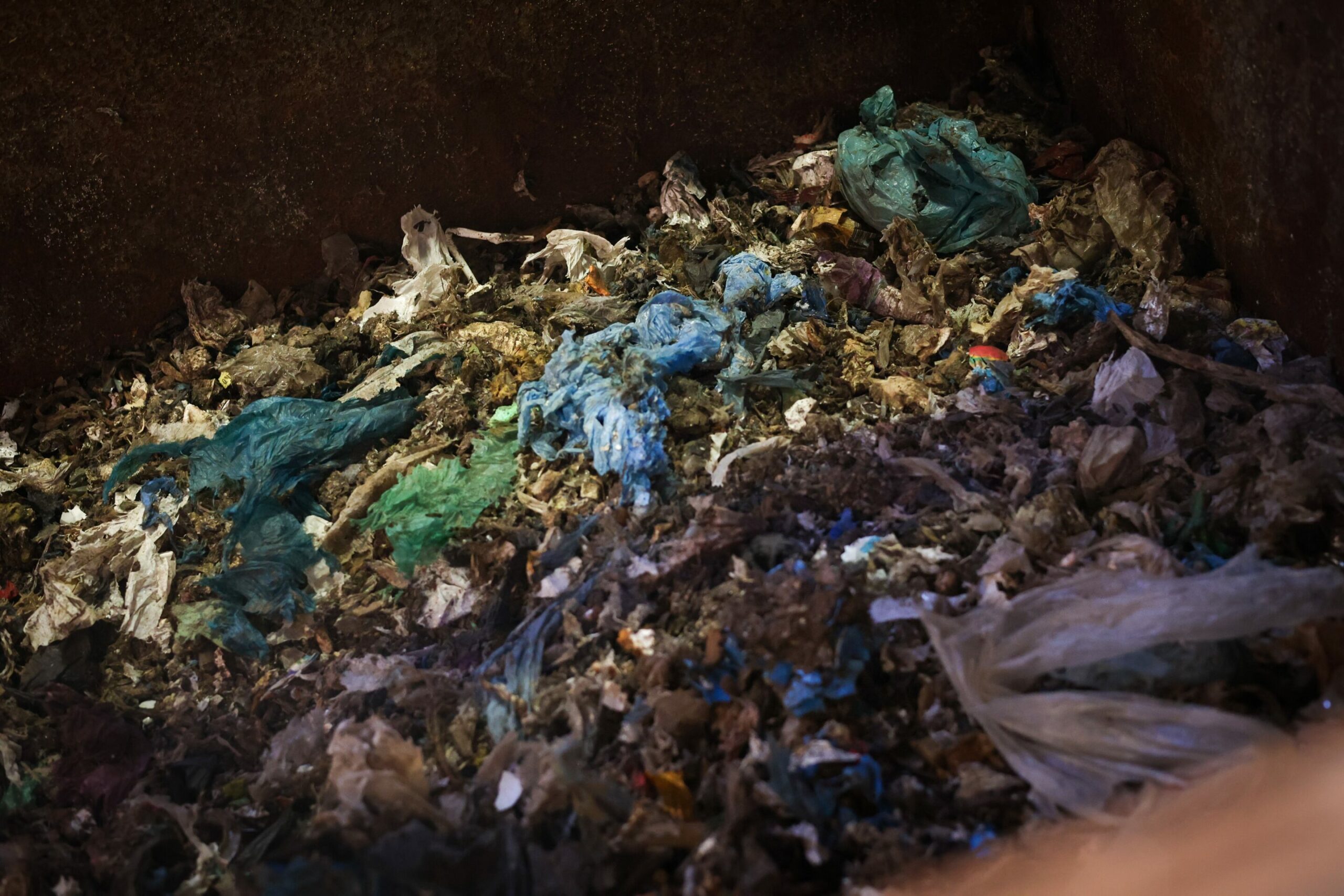
Illustration picture shows plastic waste. Credit: Belga/Virginie Lefour
Throughout the process, a trench war pitted two seemingly irreconcilable camps against each other. The "ambitious" group, including the European Union, Canada, Australia, many Latin American and African countries, and island nations, wanted to reduce global plastic production and control the most harmful molecules in order to reduce pollution.
On the other side were mainly oil-producing countries that refused any restrictions on the production of hydrocarbons, which are the basis of the plastics industry, and any ban on dangerous molecules or additives.
These countries could not accept that the entire negotiation was based on the "lifetime" of plastic, i.e. from the petroleum-derived substance to its waste state.
They waged a relentless campaign to change the "scope" or reach of the treaty text, which had been set in 2022 at the United Nations Environment Assembly.
China, the world's largest producer of plastic, had initially signed documents with this group at the start of the negotiations but remained relatively quiet throughout the process.
'The fight does not end'
Under the watchful eye of petrochemical industry representatives in the corridors, the countries had already failed once to produce a joint text during the last round of negotiations in Busan, South Korea, at the end of 2024.
The issue is all the more important given that the planet has produced more plastic since 2000 than in the previous 50 years, mostly single-use products and packaging.
Moreover, the trend is accelerating: if nothing is done, current production, at around 450 million tonnes per year, is expected to triple by 2060, according to OECD forecasts. Less than 10% is recycled.
Nonetheless, Belgian Minister Crucke, underscored that efforts to tackle the issue of plastic pollution will continue: "The fight does not end in Geneva. We must turn our shared convictions into concrete action," he said.
Related News
- Europe launches new satellite to measure climate and pollution
- Plastic pollution poses 'serious and growing' health threat
- Belgium's water 'roulette': Extreme weather complicates water resilience
- Climate minister in Geneva for plastic pollution treaty
This article was updated at 14:57 with more information.
