
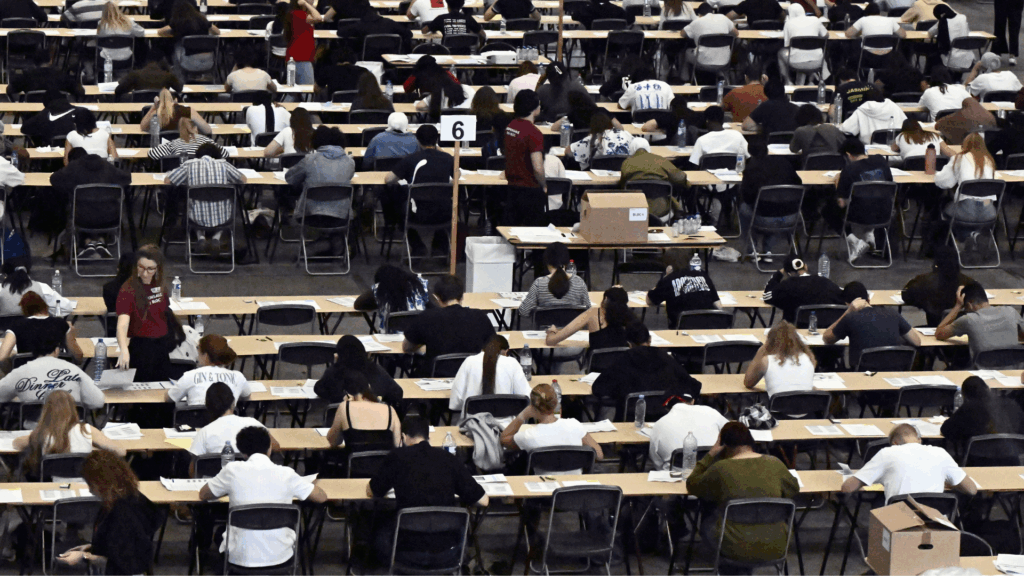
While concerns grow over reports of candidates for medical degrees cheating in the entrance exam using artificial intelligence (AI), universities in Belgium have long been grappling with the rise of AI in education.
In Belgium, those who wish to study medicine, dentistry, and in some cases, veterinary studies have to first pass an entrance exam, organised by the language communities.
Earlier in July, it was reported that three students were caught using the generative AI model ChatGPT during the Flemish entrance exam. This was the first time participants were caught doing this, according to VRT NWS, quoting the leader of the examination board, Jan Eggermont.
This year’s passing rate (47%) for the exam was unusually high, meaning several students who passed will still not be able to enter a medical programme, due to limited spots.
Eggermont told VRT NWS that the fact that the exam was potentially easier could explain the high passing rate.

Illustration picture shows the ChatGPT artificial intelligence software. Credit: Belga/Nicolas Maeterlinck
However, it was revealed this week that several students have appealed to the examination board, as they suspect that other students who passed were also cheating using AI.
While an investigation into the issue is yet to yield results, at least 19 students are set to take legal action regarding the possible fraud case, as confirmed by lawyer Christophe Vangeel speaking to Belga News Agency on Thursday.
Amid the ongoing public discourse, Eggermont announced his resignation on Friday, in a written statement to Belga News Agency.
"I deeply regret that the recent medical entrance examination has been so discredited...By stepping down, I hope to offer the opportunity for a fresh start for the entrance examinations and to restore public support for these important examinations,” read part of the statement.
Shifts in assessments
Amid the ongoing developments of the story, The Brussels Times contacted the 10 internationally ranked research universities in Belgium to find out how the different institutions are approaching the growing use of AI.
All universities had some form of guidelines, charter, or policy regarding the use of AI. While AI is strictly prohibited in exams in some cases, when it comes to classes and assignments, the institutions tend to approach AI by adapting their assessment styles and courses to include it.
An example is at the University of Antwerp, where assignments are now focusing more on discussing the reasoning and tools behind a project, according to UAntwerp’s spokesperson, Alexander Delport.
“For assignments, it is important to specify what is allowed and to what extent,” he said. “We also see a shift towards assessing not only the final product (e.g., a paper) but also the process, and towards including discussions as part of the evaluation.”
Foundational awareness
Additionally, several universities made a point of underscoring the need to inform students early on of what AI models actually can achieve and how they may be limited or unreliable.
At KU Leuven, the university sees the awareness of generative AI tools, or GenAI, as a basis to ensure students don’t break standards and ethical rules.
“GenAI tools have found their way into the university, and it is of importance that everyone understands how GenAI works, to ensure that the academic standards are upheld and copyright on material is respected,” a spokesperson told The Brussels Times.
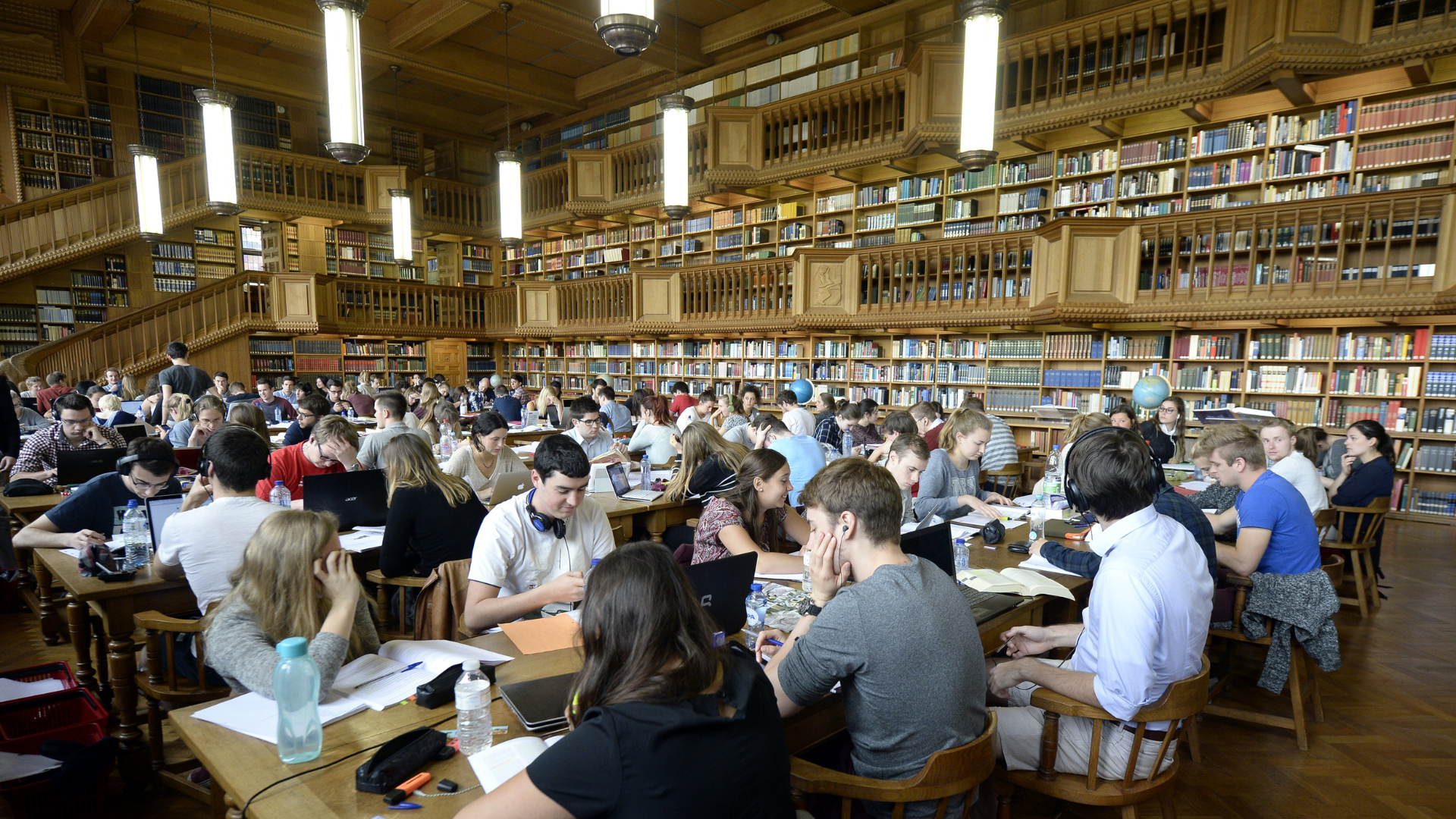
KU Leuven students. Credit: Belga
At UCLouvain, for example, all students, regardless of their field of study, receive “basic training” in AI and the use of generative AI tools.
“This training, combined with information sheets and guides, equips students with the tools and awareness they need to understand which uses are acceptable and which are not,” explained a spokesperson at UCLouvain.
Changes & challenges
Although AI has been dealt with at most institutions over the last few years, there are still numerous challenges to tackle.
Some of the issues reported by universities included ensuring that the use of AI is clear and transparent.
Additionally, UAntwerp’s spokesperson highlighted that inequality in education may be a challenge “since more advanced systems can be expensive and not all students can afford them.”
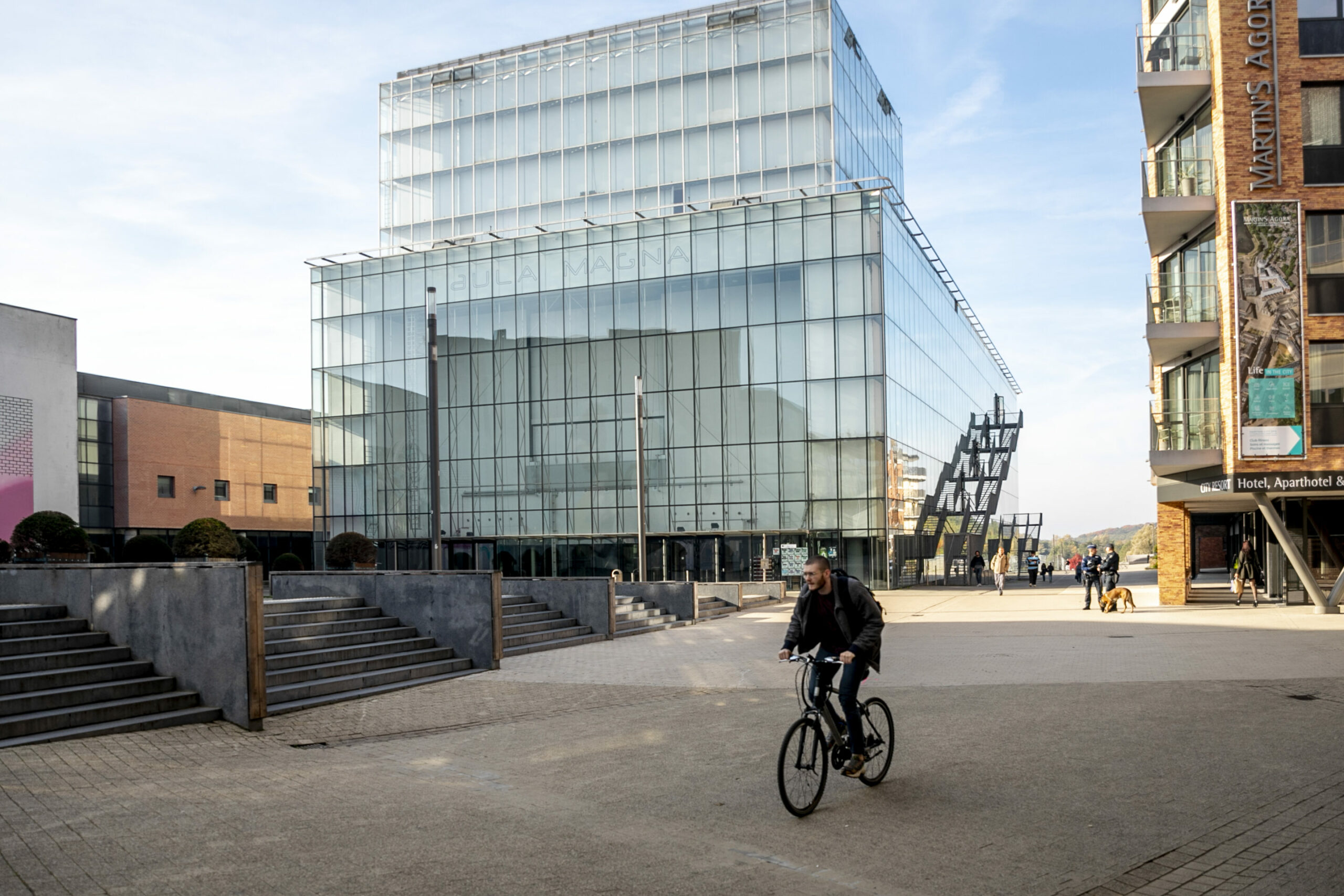
Illustration picture shows the Aula Magna building of the UCLouvain university in Louvain-la-Neuve, Wednesday 19 October 2022. Credit: Belga
Another point to consider is the need for constant updates in knowledge and approaches, according to a spokesperson at UCLouvain:
“Developments in generative AI are changing professional practices and require constant updating of skills…Teachers are being asked to consider whether it is appropriate to revise/adapt the skills targeted in the learning outcomes.”
At the University of Liège, for example, an “official interest group” has been meeting almost every month for over a year, according to its spokesperson, Dominique Verpoorten.
“Updates are not only about policies but also about training activities and curriculum updates,” he said.
