
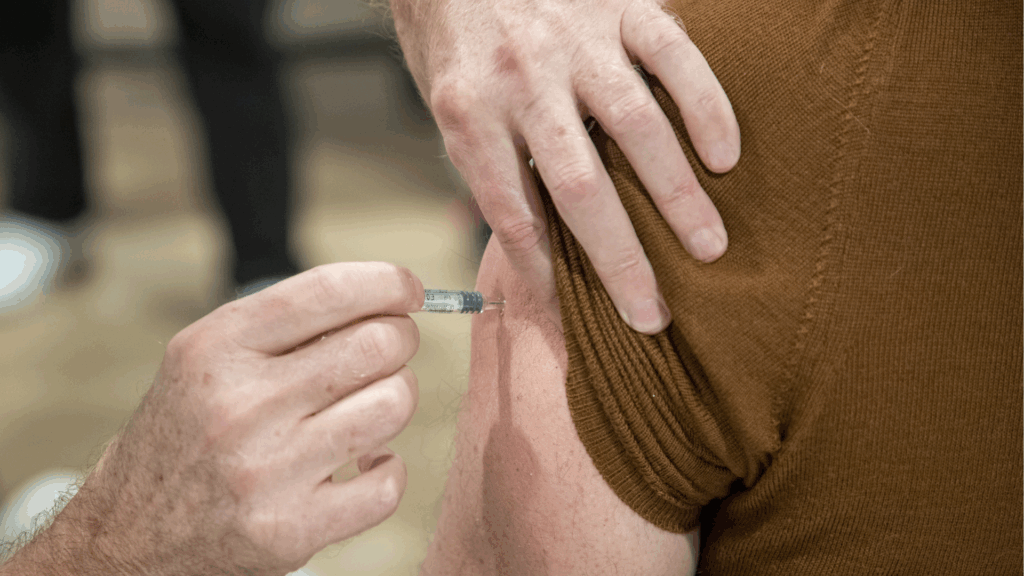
As Belgium approaches flu season, health authorities are urging the general public to get their yearly flu jab to slow down the spread of the virus and limit hospitalisations.
Every year, around 500,000 people in Belgium contract influenza, commonly known as the flu. In cases of severe flu epidemics, around 10% of the population is affected.
While the symptoms for many are relatively mild, the illness should not be underestimated, warned the Brussels Capital-Region’s social and health administration, Vivalis.
In Belgium, the Superior Health Council recommends getting a flu vaccine from around mid-October, although at-risk groups tend to be invited to get vaccinated earlier.
“The aim is to expose the immune system to a weakened form of the virus so that it learns to recognise it and defend itself when the time comes,” Vivalis explained in a statement.
The flu vaccine needs to be administered every year to remain effective, as the virus responsible for influenza continues to evolve.
How do I get vaccinated?
In the Brussels Region, the flu vaccine can be purchased at a pharmacy without a prescription.
The majority of the cost of the vaccine is reimbursed for those who are 50 or older, or are part of the “at-risk” group, which includes, for example, people with chronic illnesses, pregnant women, those above 65 years old, or those with high body mass index.
If the vaccine is reimbursed, people will typically need to submit a co-payment costing between €2.45 and €4.08, according to Vivalis. Otherwise, it will cost around €17.42.
The vaccine can be administered either by a general practitioner or by a pharmacist, although only certain pharmacies offer this service.
After receiving the vaccine, it can take around 10 to 15 days for it to help the body build up its immunity.
Side effects
Getting the flu jab can come with some side effects, as is the case with any vaccine. The most common side effects include mild pain, redness or swelling at the injection site.
Some people also experience a mild fever, headache or muscle ache after the vaccine. These symptoms tend to last for one or two days, according to Vivalis.
Covid jabs
When getting the flu vaccine, it is usually possible to get the Covid-19 vaccine at the same time. Vivalis recommends the vaccine be administered from mid-October if it is combined with the flu vaccine, or from September if it is only for Covid.
Just like the influenza vaccine, the Covid vaccine can be administered at certain pharmacies or by general practitioners. The vaccine is fully reimbursed by health insurers.
