
The Flemish city of Leuven was crowned the European Capital of Culture for 2030 earlier this week. What does the city have to offer and why does it deserve this prestigious title?
Leuven was selected as the European Capital of Culture for 2030 at the Royal Library of Belgium on Wednesday afternoon, pipping the Walloon city of Namur and Brussels municipality of Molenbeek-Saint-Jean to the post.
Together with 30 neighbouring municipalities, the city will curate a "very rich and diverse" programme in the coming years, Leuven Mayor Mohamed Ridouani told Belga News Agency. There are 70 project ideas and hundreds of Belgian and European partners already on board, which will have "an impact on the whole of Belgium," according to Minister-President of the French Community Elisabeth Degryse.
Deputy Mayor for Culture Bert Cornillie also emphasised that the public space would "receive new impetus" and heritage would be rediscovered. "From large-scale festivals to intimate neighbourhood projects, everyone will have the chance to live and participate in this experience."
Leuven embodies "a story that shows that in these dark and polarised times, there are also cities where people work together. (...) This is a moment of collective victory. With the 30 municipalities, artists, residents, the university, educators, associations, and partners, we have shown ambition and determination to forge links," said Ridouani.
The announcement came as a source of disappointment for Molenbeek, seen as the underdog in the competition. "We are very disappointed, because there was so much enthusiasm among citizens and public and private organisations for our project," said Molenbeek's Acting Mayor, Amet Gjanaj (PS), but added that the project would not end here.
"The projects that have already been created, such as bringing nature back into the city, opening up public space for creativity and encounters, empowering the voice of young people, and anchoring art in everyday life, will continue to grow," the municipality said.
Namur also expressed its disappointment in not being chosen, but said "the jury's decision does not detract from the enormous work and overwhelming passion of citizens, artists, associations, political authorities, and the entrepreneurial community of Namur".
What does Leuven have to offer?
Just a 20-minute train journey from Brussels, Leuven is famed for being the "Oxford of Belgium", consistently ranking highly on global university league tables for being home to the Katholieke Universiteit Leuven (KU Leuven). But for curious tourists, the city has far more to offer than just a university. Here's how to spend a day there.
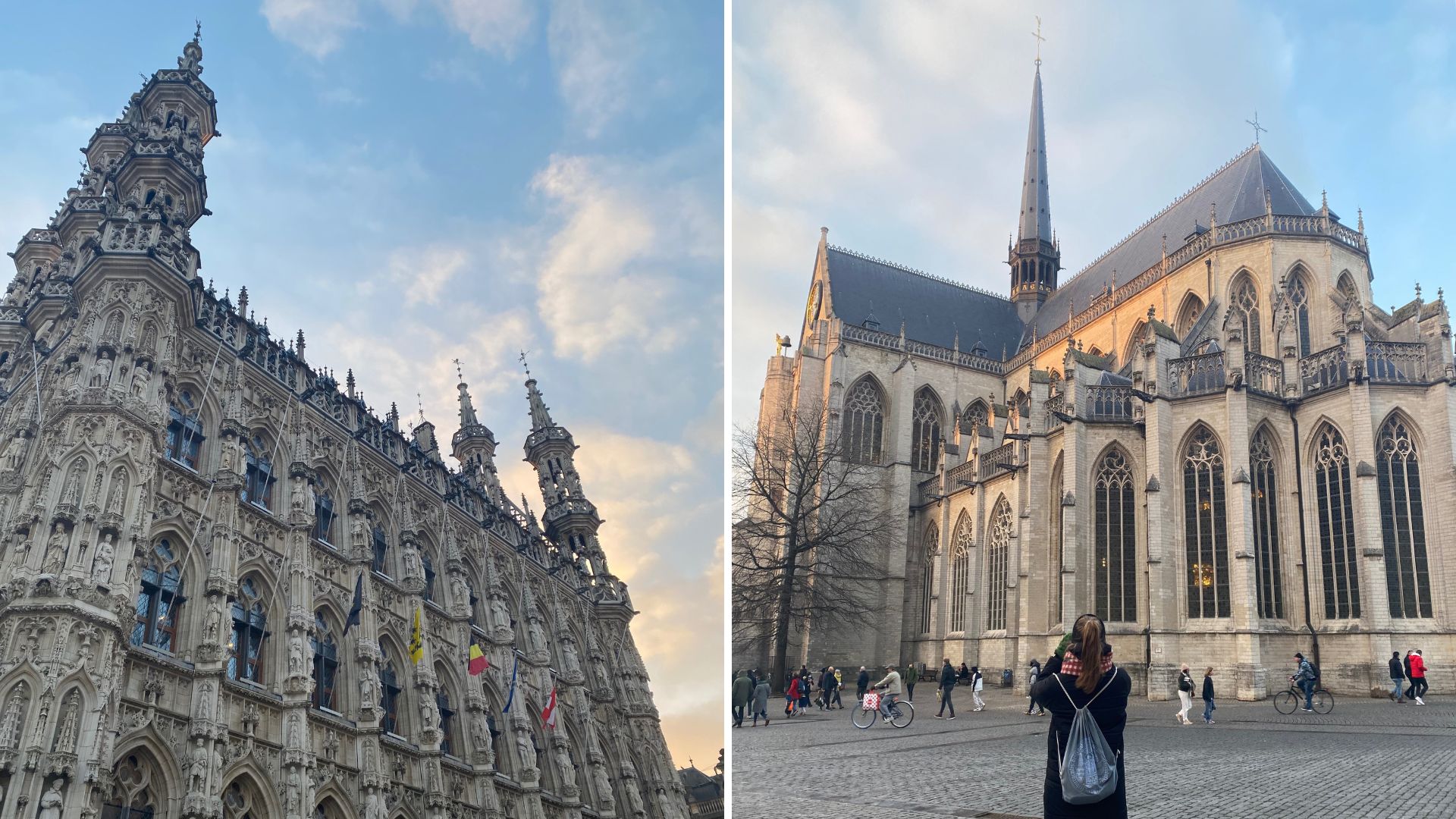
Leuven Town Hall (Left) and Saint Peter's Church (Right). Credit: The Brussels Times / Isabella Vivian
Leuven makes for the perfect day trip from Brussels, given its proximity to the capital and also its walkability once you're there.
Hop on a train, and when you arrive less than half an hour later, head directly to the Grote Markt (main square). Take time to marvel at the breathtaking architecture that surrounds you, with the Town Hall on your left and Saint Peter's Church on your right.
The 15th-century church is a classic example of Late Gothic architecture, whose towers were never completed. It was recognised as a UNESCO World Heritage site in 1999.
Also a Gothic gem, it took three architects and 30 years to build the Town Hall. Leuven's 'Hall of Fame' features 235 statues, which were only added to the façade after 1850, according to Visit Leuven.
The Oude Markt is just around the corner. A favourite among the city's many students, this unique square boasts an enormous number of restaurants and cafés – ideal for soaking up the sun on a terrace or warming up inside during the winter.

Oude Markt. Credit: Visit Leuven
Walking another ten minutes in the same direction, and you will reach the Botanical Garden (Kruidtuin in Dutch). The university of Leuven created this hidden oasis for students of medicine in 1738 and it is the oldest botanical garden in Belgium.
Botany enthusiasts are in for a treat: the 450 m² greenhouse complex boasts countless herbaceous, medicinal, aquatic and potted plants as well as a variety of tropical and subtropical species. There are also regular exhibitions in the orangery, the gatehouse and outside.
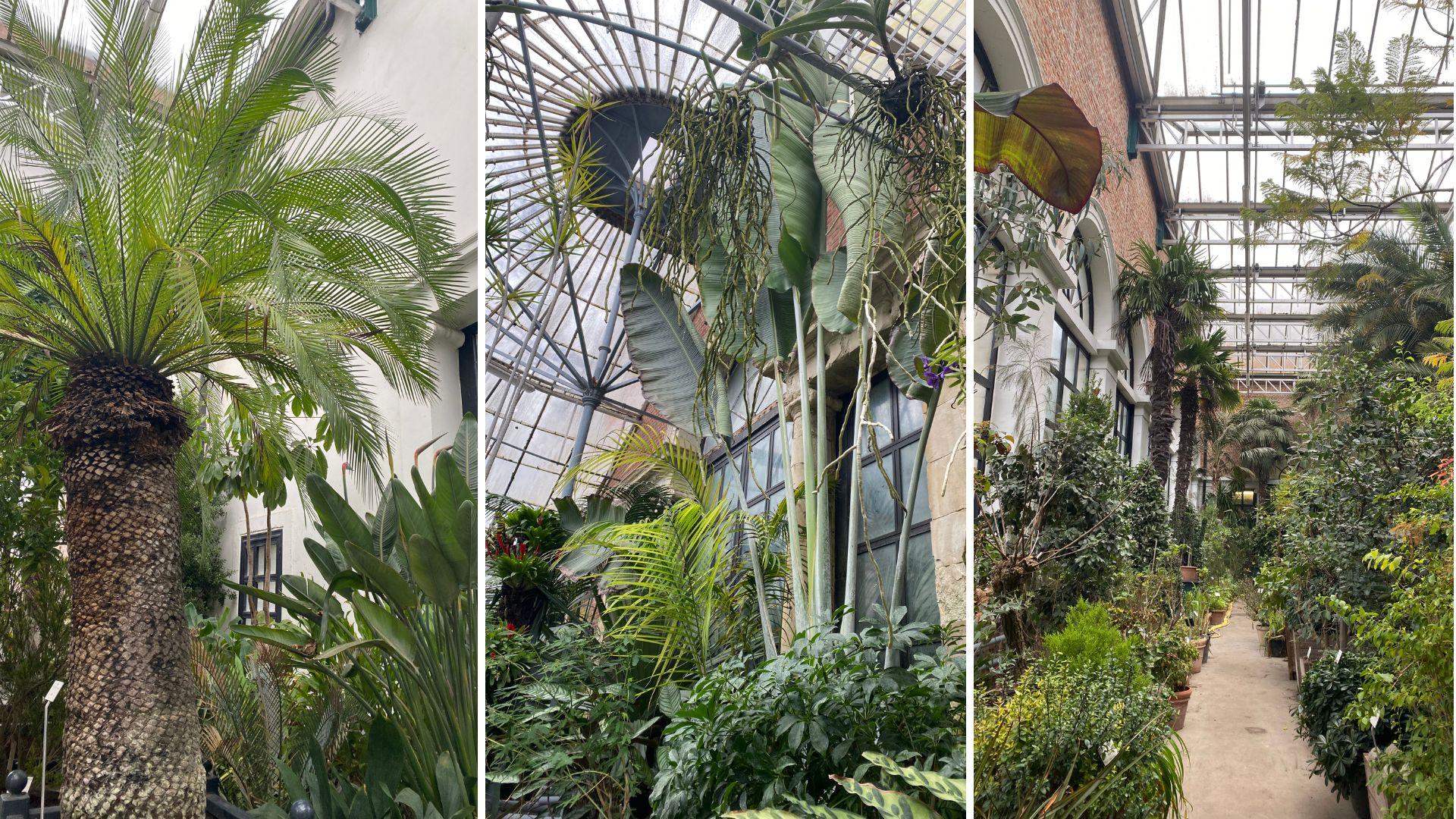
Leuven's Botanical Gardens. Credit: The Brussels Times / Isabella Vivian
From here, head west through Dijlepark – a hidden gem with an enchanting fairytale-like blue bridge – until you reach the Great Beguinage (Groot Begijnhof in Dutch), which is free to visit.
The beguinage dates from the 13th century and was listed as UNESCO world heritage in 1998. It consists of various alleys, courtyards, gardens and parks with dozens of houses and convents built from traditional sandstone. Students, visiting professors and university staff live in the complex.
Feeling peckish? Stop for lunch at one of our top picks! For those on a tighter budget, we recommend small-plates restaurants Optimist, Syrian Palmyra or Guzzi for pizza. For those wanting something more up market, try Italian spots Zoff, Baracca, or Furbetto. And for special occasions, give EED or EssenCiel a go. If you're more in the mood for a sweet treat, stop for an ice cream at 't Galetje or something chocolatey at Quetzal.
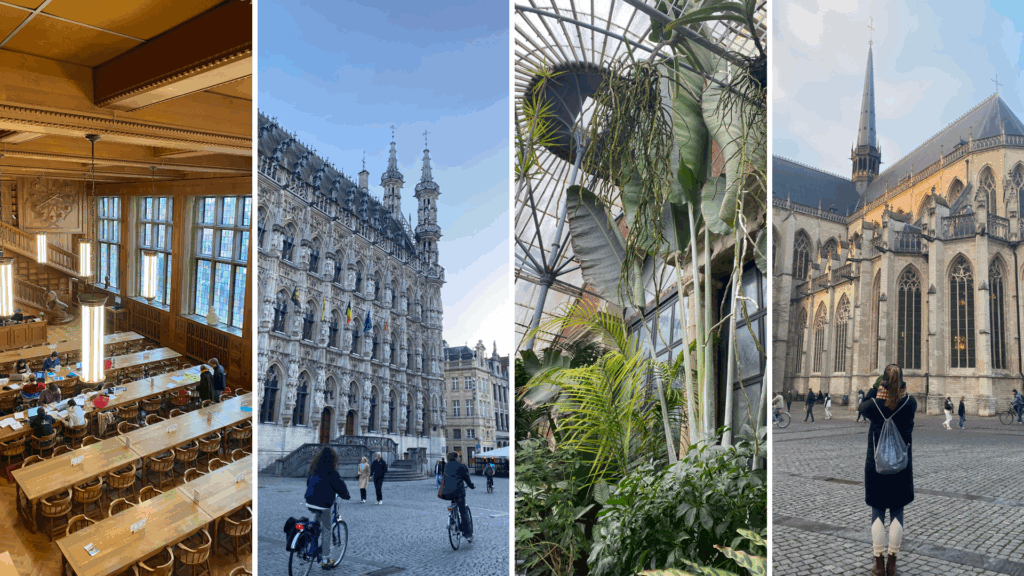
Last but certainly not least, on your way back to the station, stop at the KU Leuven library – an impressive, historic building with a beautiful reading room. Climb the five floors of the library tower and you'll find a photo exhibition, which takes you to five significant periods in the library's history and how it rose from the ashes following the catastrophic 1914 fire.
The climb is worth it: once you get to the top, you can enjoy a unique panoramic view of the city before getting the train home.

KUL library. Credit: The Brussels Times / Isabella Vivian
