
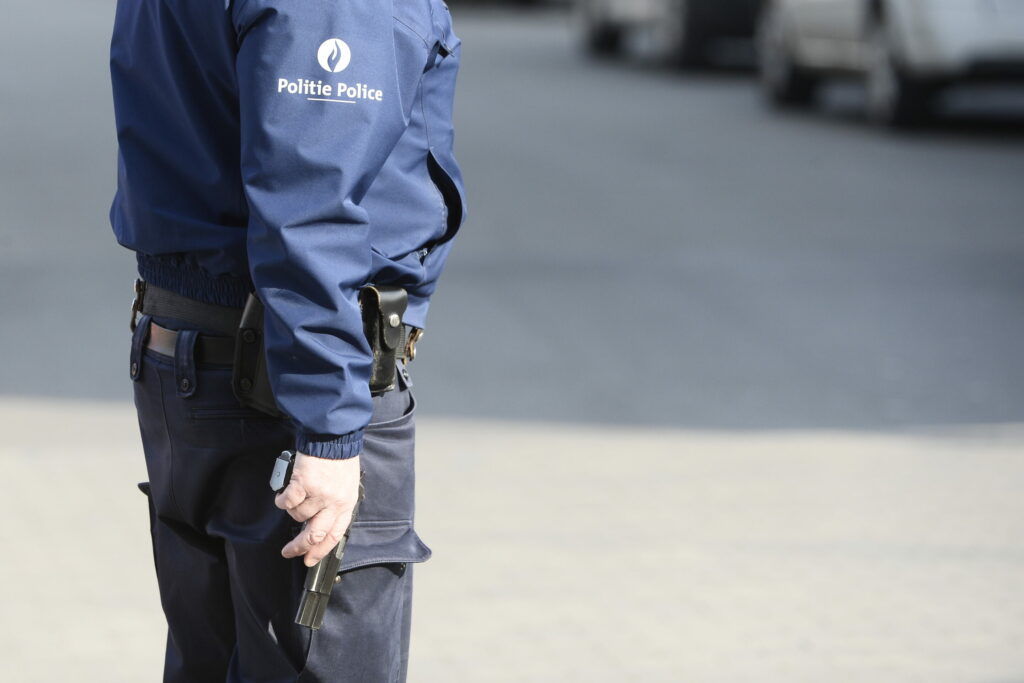
The Brussels-West police zone, which covers Molenbeek-Saint-Jean, Jette, Berchem-Sainte-Agathe, Ganshoren and Koekelberg, recorded 13 shootings during the months of July and August, all of them in Molenbeek.
A sobering report published this week by the local police outlined each of the incidents in turn, highlighting the severe challenges faced by officers on the ground.
A summer of gun violence
The list of incidents highlights a troubling pattern of violence. On 17 July, a victim was wounded in Rue Heyvaert. Two days later, further gunshots were heard in the Quartier du Triangle, next to the docks.
Two weeks later, shots were fired at the busy Chaussée de Gand–Rue de la Borne junction, followed by another incident the next day on Rue de Menin, where a home was damaged. The same day, a 17-year-old boy was shot in Rue de l'Ecole, a few steps away from Parc Bonnevie.
A few days later, on 5 August, gunshots damaged another home and a car that was driving through Rue Ransfort. The violence culminated with three separate shootings in August that left victims wounded in Rue du Facteur and Rue de l’École. Shell casings were also discovered at several locations, including Place Voltaire and Rue Ulens.
Shell casings were found at Place Voltaire, Rue de la Borne and Rue Ulens that same month. The last shooting of the summer happened in Rue Edmond Van Cauwenberghe, on 28 August.
Judicial response
Each shooting prompted an investigation, with prosecutors examining possible links to the drug trade. Ballistics experts and forensic labs were called in, and a multidisciplinary task force was created within the police investigative service.
Between 1 July and 31 August, police made 14 arrests, with nine suspects charged - including one minor, who was sent to a youth facility. Twelve searches were conducted, and 14 firearms were seized, ranging from handguns to machine guns and hunting rifles.
Preventive and proactive measures
In response to the violence, authorities increased police visibility in strategic hotspots, with reinforced motorised patrols operating day and night in cooperation with federal police. Local teams - neighbourhood inspectors, bike patrols and intervention units - were also mobilised to ensure faster response times.
Police stepped up communication with residents through neighbourhood patrols and information exchanges, and a large community meeting was held in late August in the Bonnevie district of Molenbeek. Local schools were also contacted to address safety concerns.
Partnerships with the Brussels-Capital Region were strengthened, particularly around the Bonnevie Park, while “peacekeepers” and the city’s camera surveillance system were more actively involved.
Persistent challenges
Despite these efforts, police have acknowledged the structural challenges they face in dealing with a wave of violence of this magnitude and say they are short of 150 police inspectors.
“All these measures require a constant balancing act in terms of capacity,” the report notes.
The report concludes that while judicial and preventive measures have been intensified, repeated gun violence continues to undermine security in Brussels-West, with Molenbeek at the centre of concern.
