

I'm standing in a crowd of 10,000 people shouting "kill the villains!" in French with a thick Walloon accent on a crisp autumnal day. What are we waiting for? A hanging. Is this a Monty Python sketch? No – just a standard Sunday in Belgium.
Not far from the Belgian city of Charleroi is Beaumont. This quaint medieval town in the depths of rural Wallonia counts just over 7,000 inhabitants and is normally quiet and unassuming. But every five years in October, it comes alive when the town re-enacts the 16th-century legend of Charles V and the three Auvergnats.
Charles V was the Holy Roman Emperor and Archduke of Austria, and grandson of the Spanish Catholic Monarchs Isabella and Ferdinand. On 21 August 1549, he came to Beaumont to introduce his son Philip II to the Spanish Netherlands and spent the night at the house of the Duke of Croÿ. But as he passed through the town, three men mistook him for a nobleman and abused him. They were immediately arrested, put on trial and executed. Justice was as swift as it was severe: at noon, the sentence was pronounced and an hour later, they were hanged.
Over the weekend, Beaumont once again re-enacted this ropey tale after a ten-year hiatus due to Covid-19. There were almost 700 participants in the re-enactment itself, including courtiers, clergy, guards and harlequins, attracting a record-breaking 10,000 spectators – one of whom was myself, a bewildered Brit not quite sure what she was getting herself into…
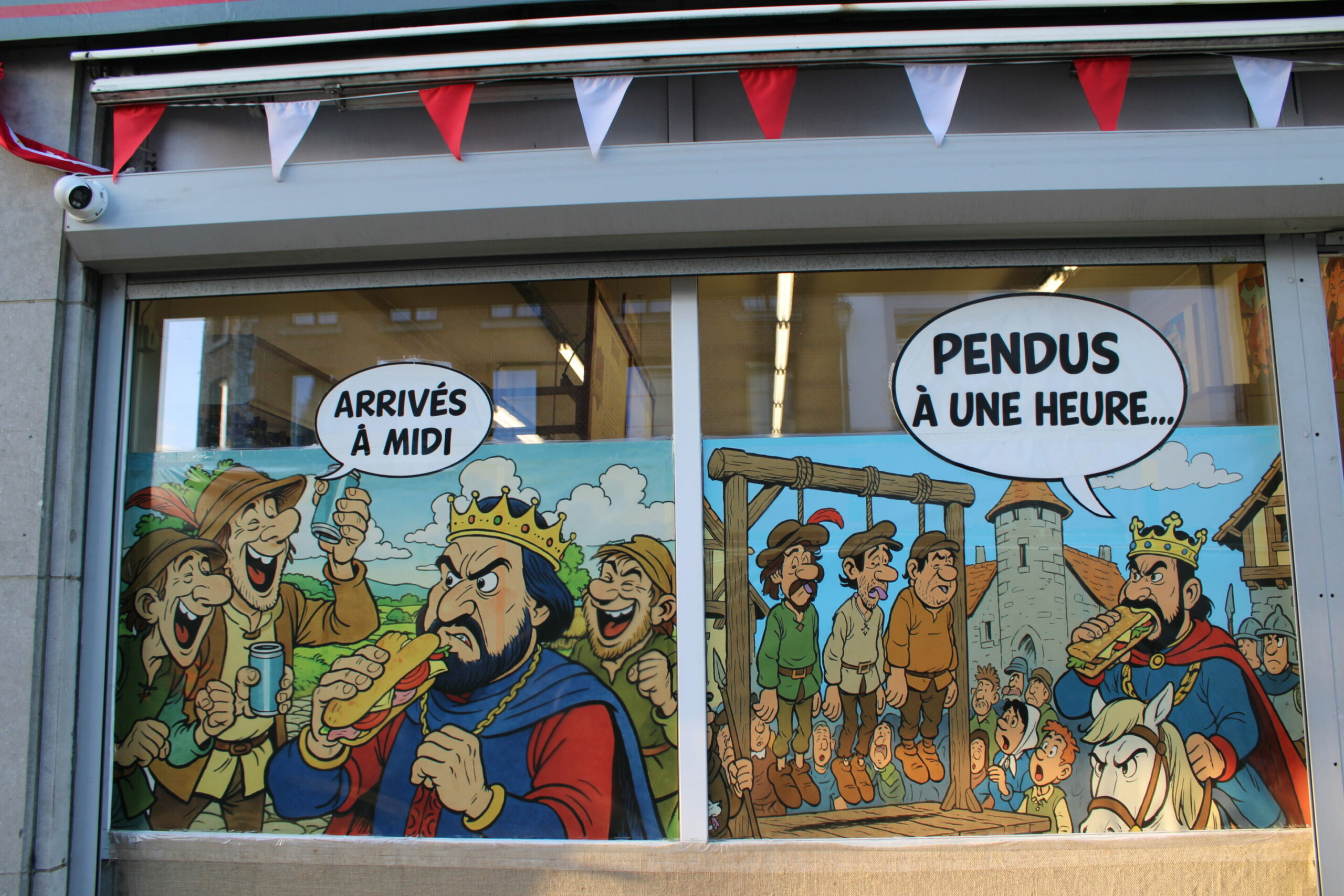
A festive corner shop. Credit: Isabella Vivian / The Brussels Times
Pauline Gailly, a 26-year-old Beaumontoise born and bred, is my tour guide for the weekend. We arrive late on Saturday afternoon. As we wander through the town, we pass several people dressed for the occasion and corner shops adorned with decorations.
Upon meeting her extended family, one of Pauline’s cousins greets me with "ah, c'est l'anglophone!" ("it's the English speaker!") – with a slightly bemused expression on his face at seeing a Brit in Beaumont of all places.
After discussing at length the most important business of the evening (which friterie to go to for dinner) and subsequently devouring several portions of frites, we venture out to watch the torchlit procession through the town.
People of all ages are present, from toddlers to the elderly, carrying spears, axes and lanterns; children line the streets waving excitedly at relatives as they pass.
By the time we arrive at the Grand Place (which is not as grand as the name suggests), it's raining – but the showers aren't dampening spirits and the sounds of flutes, bagpipes, drums and squeals of excitement can be heard on every corner.
By 9pm, the crowds disperse and it's time to head home before the main event on Sunday.
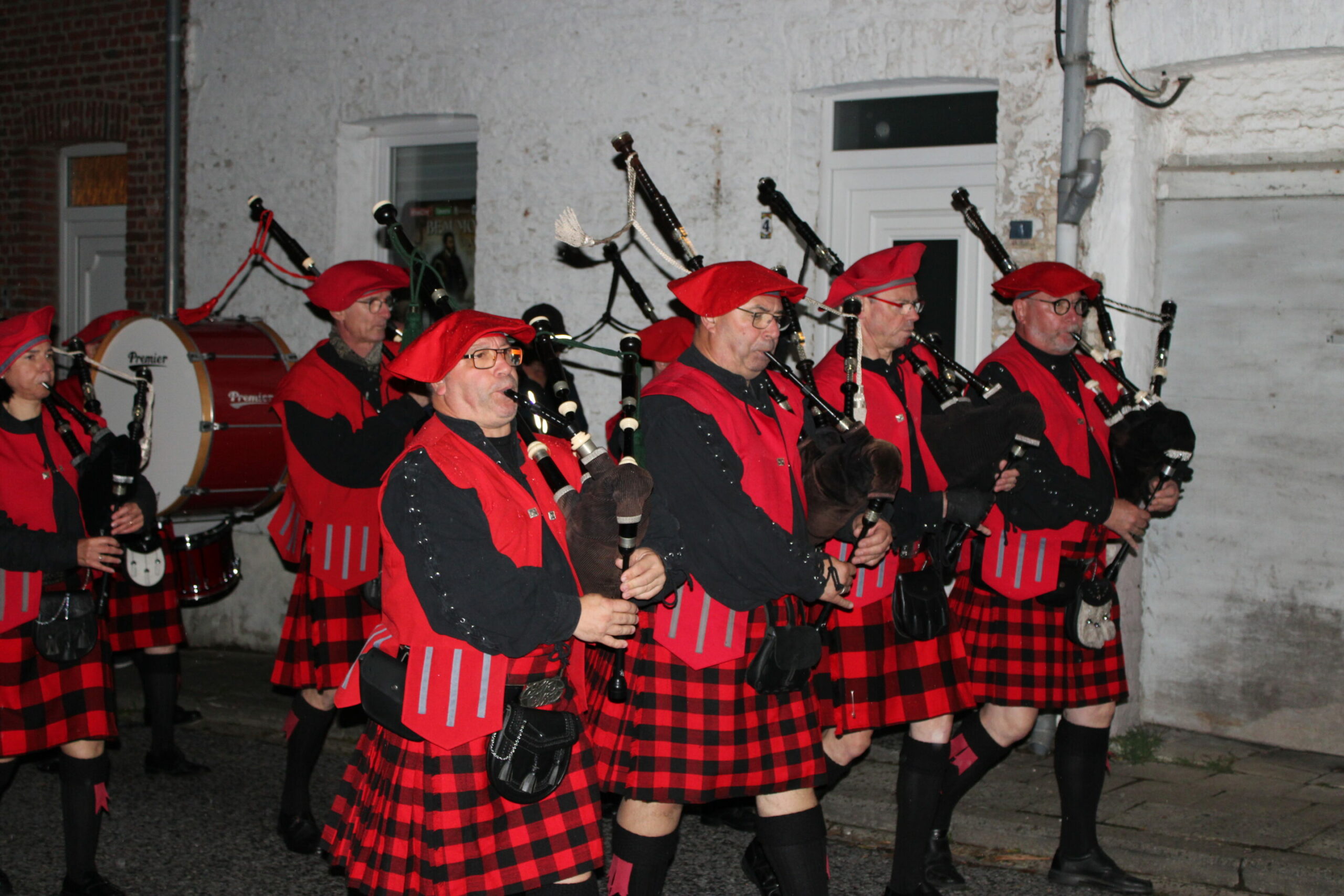
Bagpipers during Saturday night's procession. Credit: Isabella Vivian / The Brussels Times
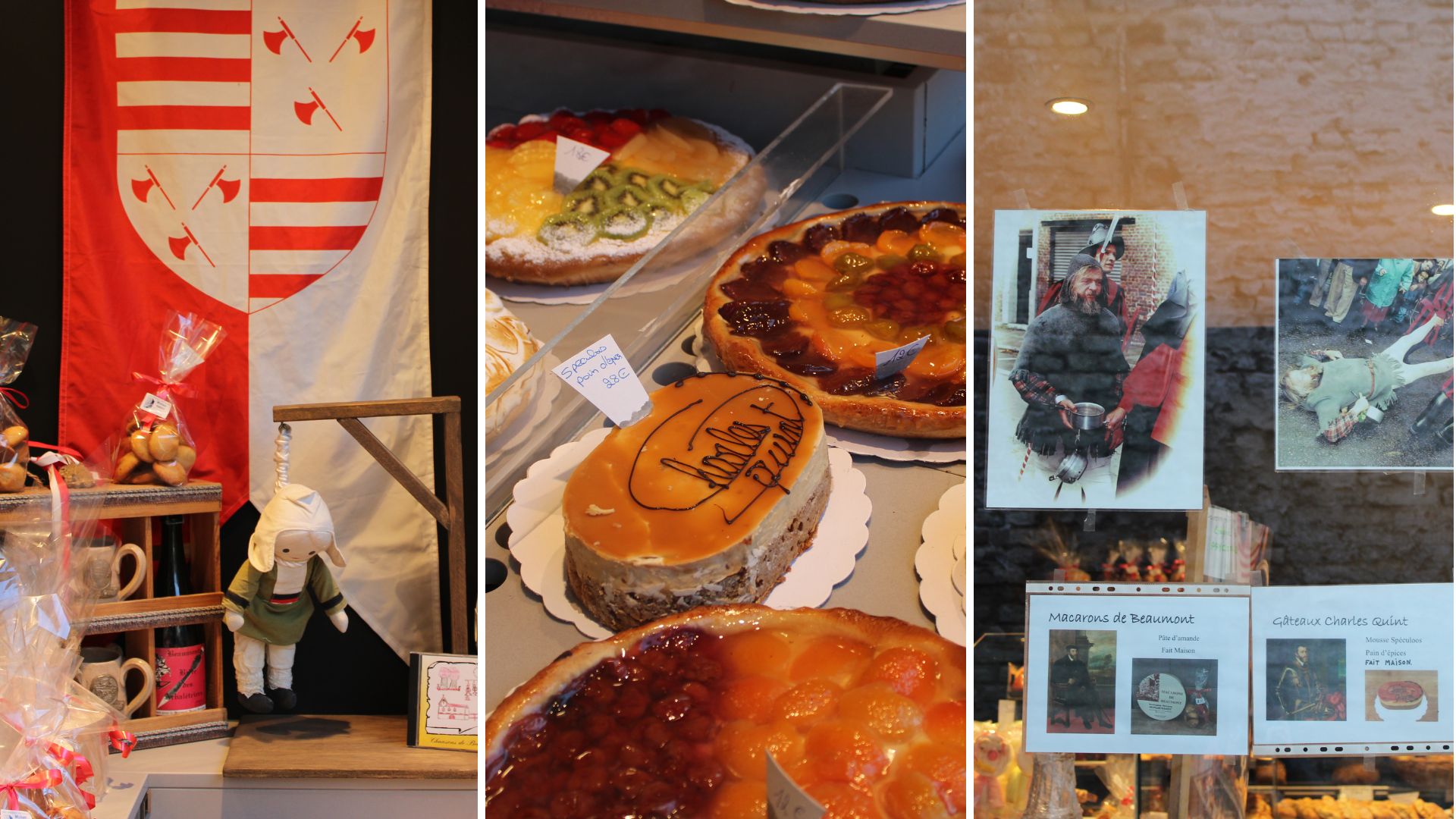
After a quick breakfast stop at the local boulangerie – also decked out in photos of previous editions and selling Charles V cakes and macarons – we arrive at the heart of the action at just before 9am.
Credit: Isabella Vivian / The Brussels Times
Two troubadours are already sitting around a campfire, eating and playing music to the crowds of cheerful children surrounding them.
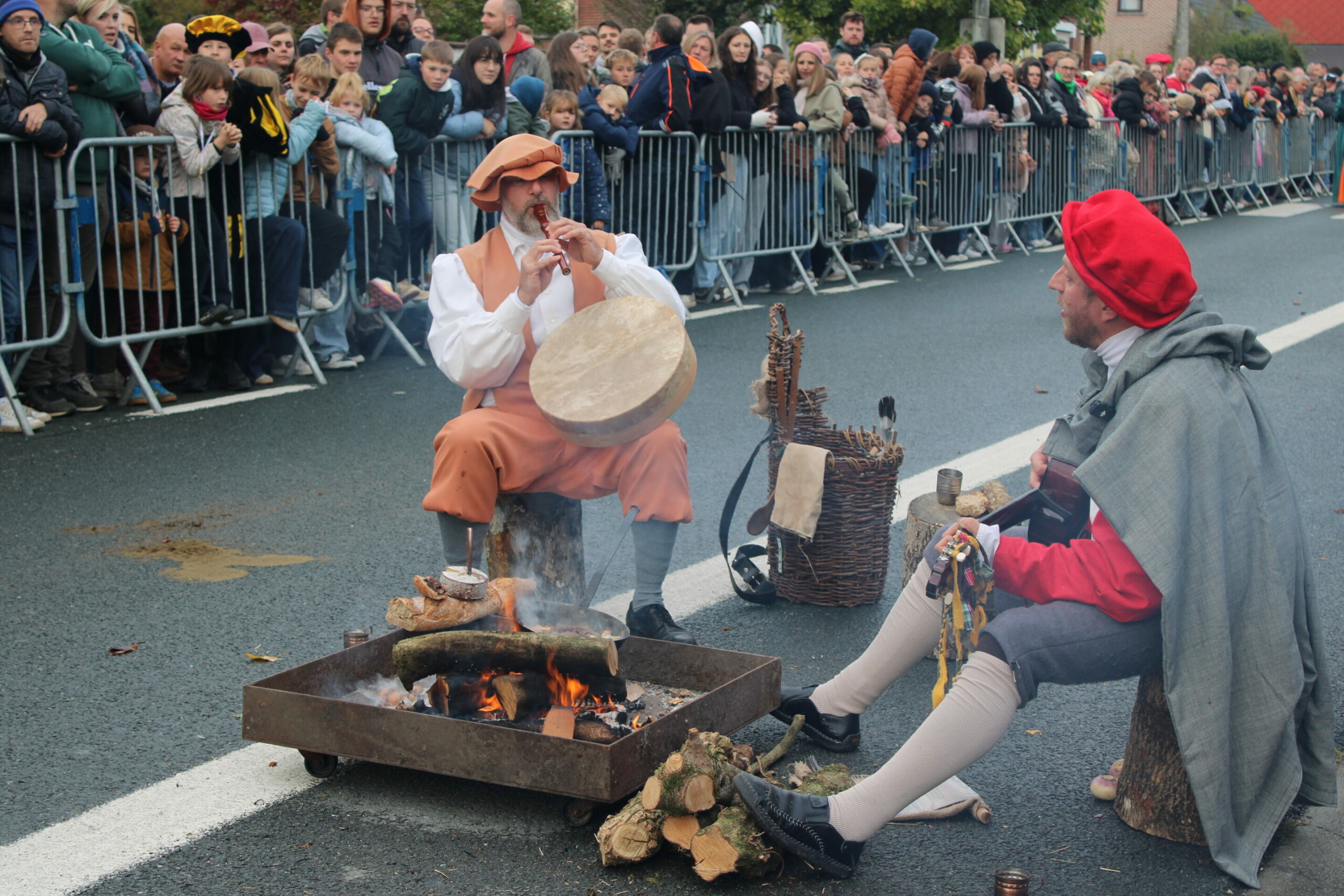
The two troubadours. Credit: Isabella Vivian / The Brussels Times
The three peasants from Auvergne in France (known as the Auvergnats) arrive at 9:15am, bringing chaos from the moment they appear: a huge bottle of beer immediately smashes to the floor from a basket hoisted onto one's back, but, undeterred, they continue fully in character, egged on by the crowd.
They giggle through forgetting their lines and ad-libbing, visibly enjoying themselves and their grotesque roles.
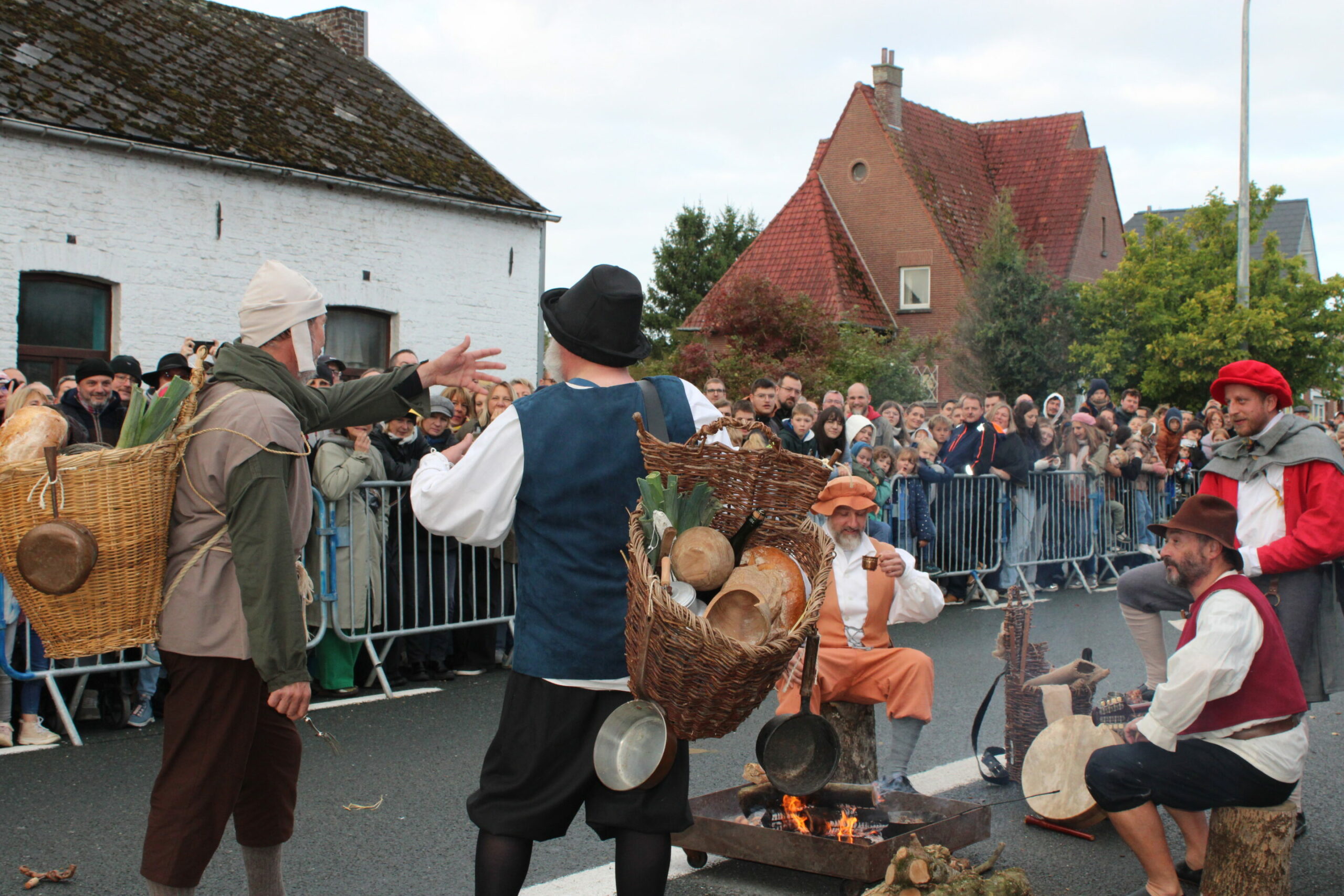
The three Auvergnats meet the troubadours. Credit: Isabella Vivian / The Brussels Times
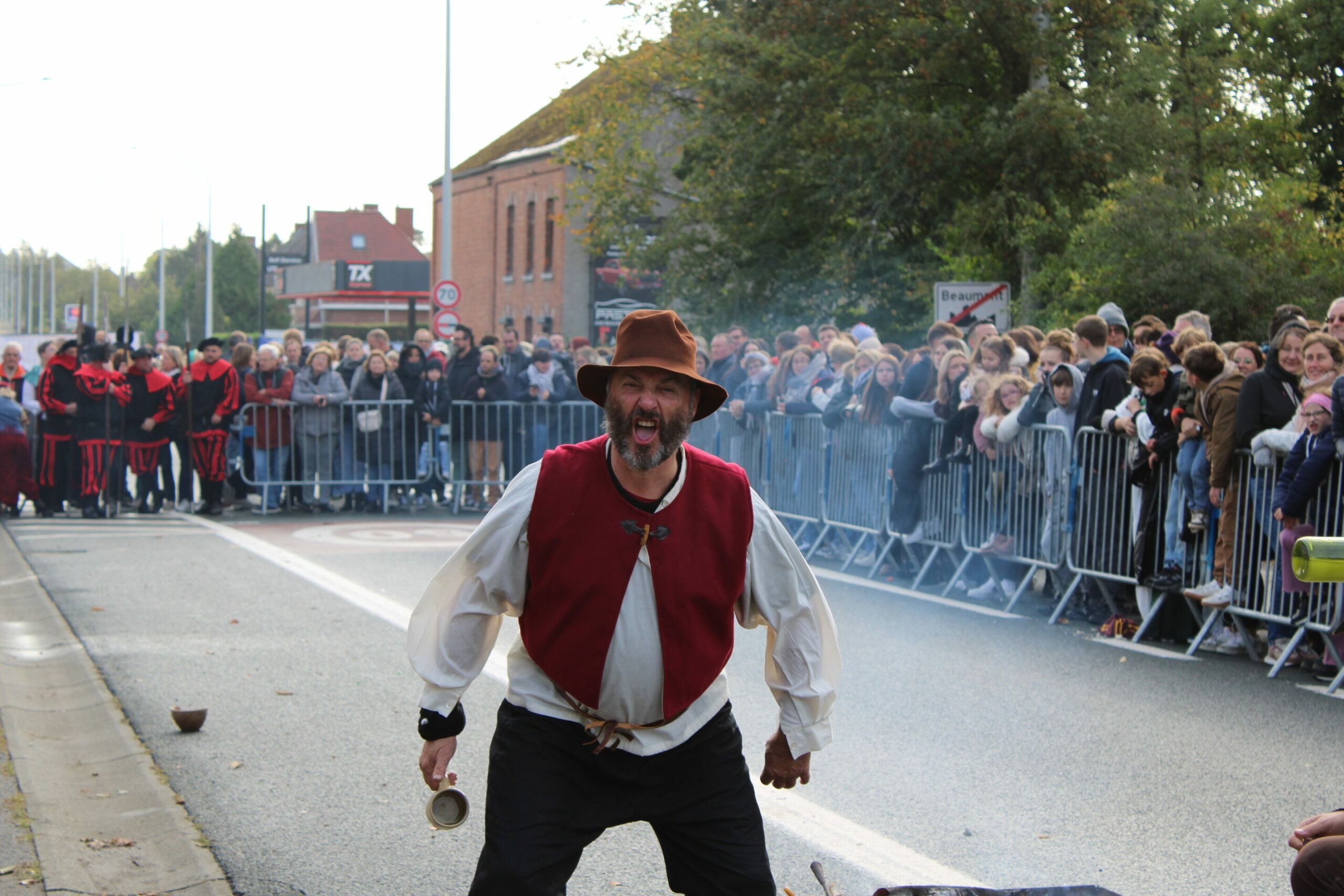
Nothing is off limits here: spitting, burping, slurping from bottles (likely not for the first time that morning), and even scratching their backsides with wooden spoons – anything to get a groan or giggle from their onlooking audience.
Credit: Isabella Vivian / The Brussels Times
Pauline turns to me, reminiscing about watching these same scenes as a child with chunks of meat tossed her way – and, sure enough, moments later, a hunk of gammon is flung in our direction.
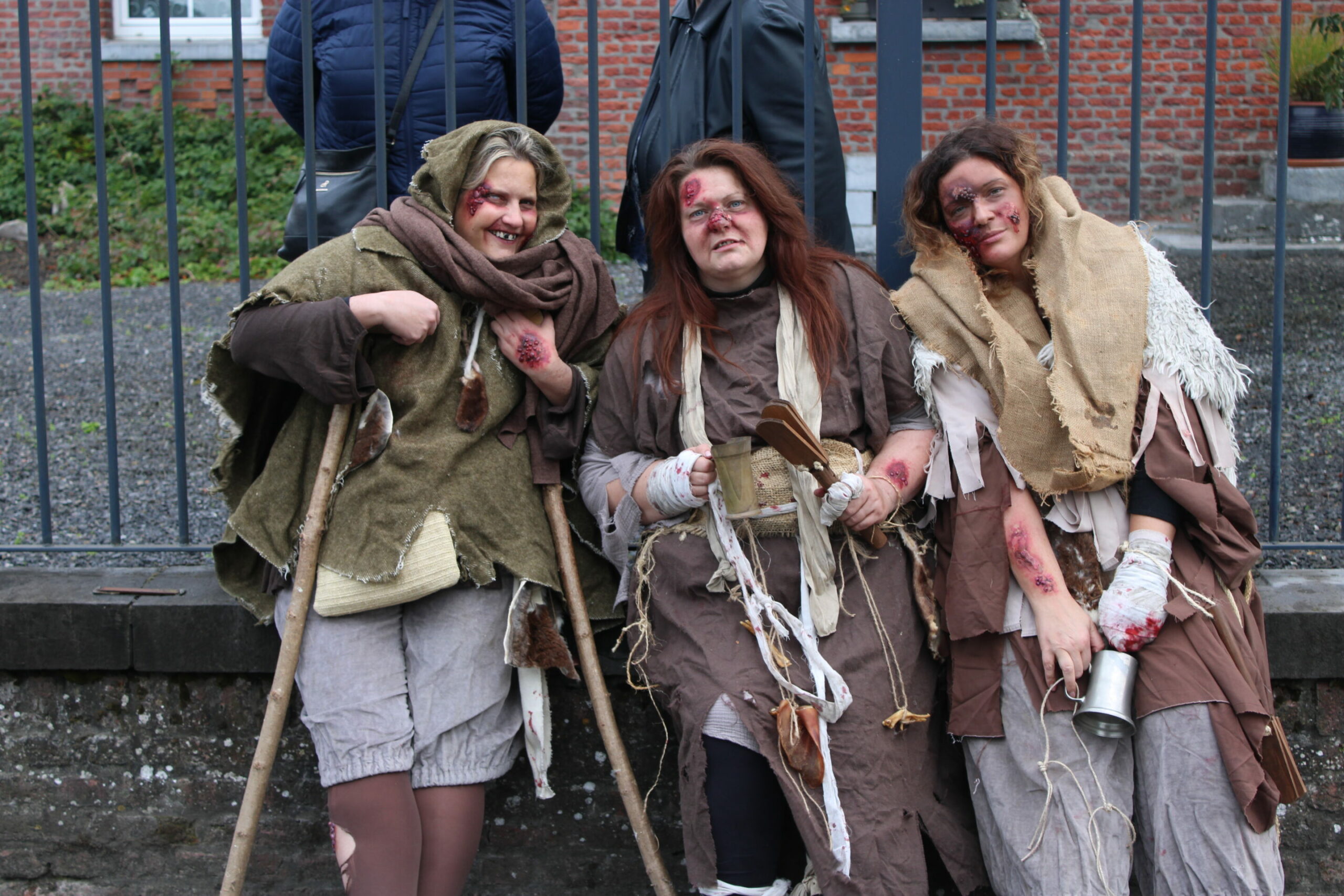
On the sidelines are three diseased hags, with disturbingly realistic boils and scabs on their skin and missing teeth.
Credit: Isabella Vivian / The Brussels Times
After an hour of crowd work and audience interaction – somewhat reminiscent of a circus or British pantomime – the majestic 'Charles Le Quint' arrives in all his splendour, riding a jet-black horse.
The mischievous Auvergnats think he looks like easy prey. With the help of some Dutch (or rather, Belgian) courage, they seize him and rob him of his horse – not realising he is none other than Charles V.
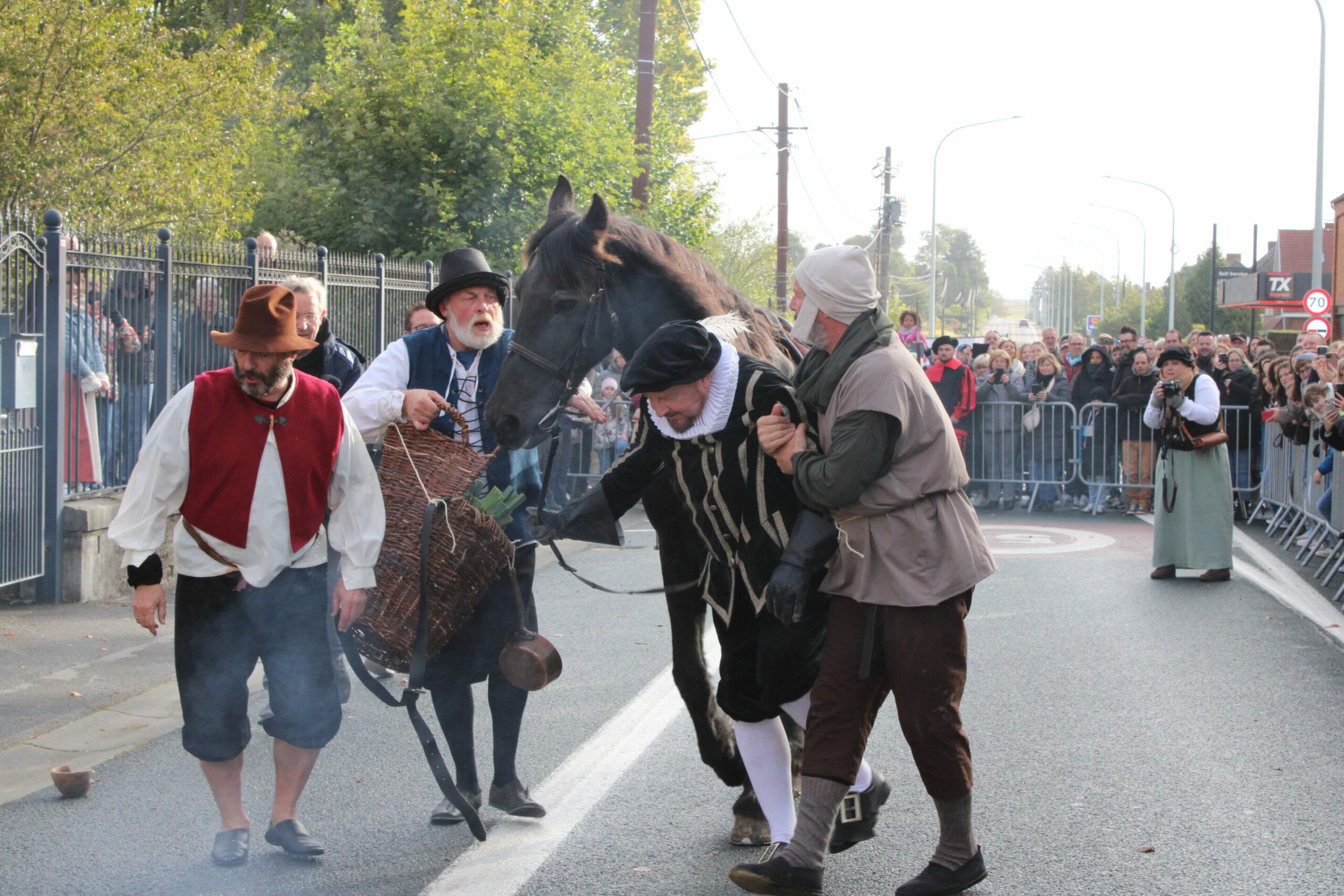
The Auvergnats seize Charles V. Credit: Isabella Vivian / The Brussels Times
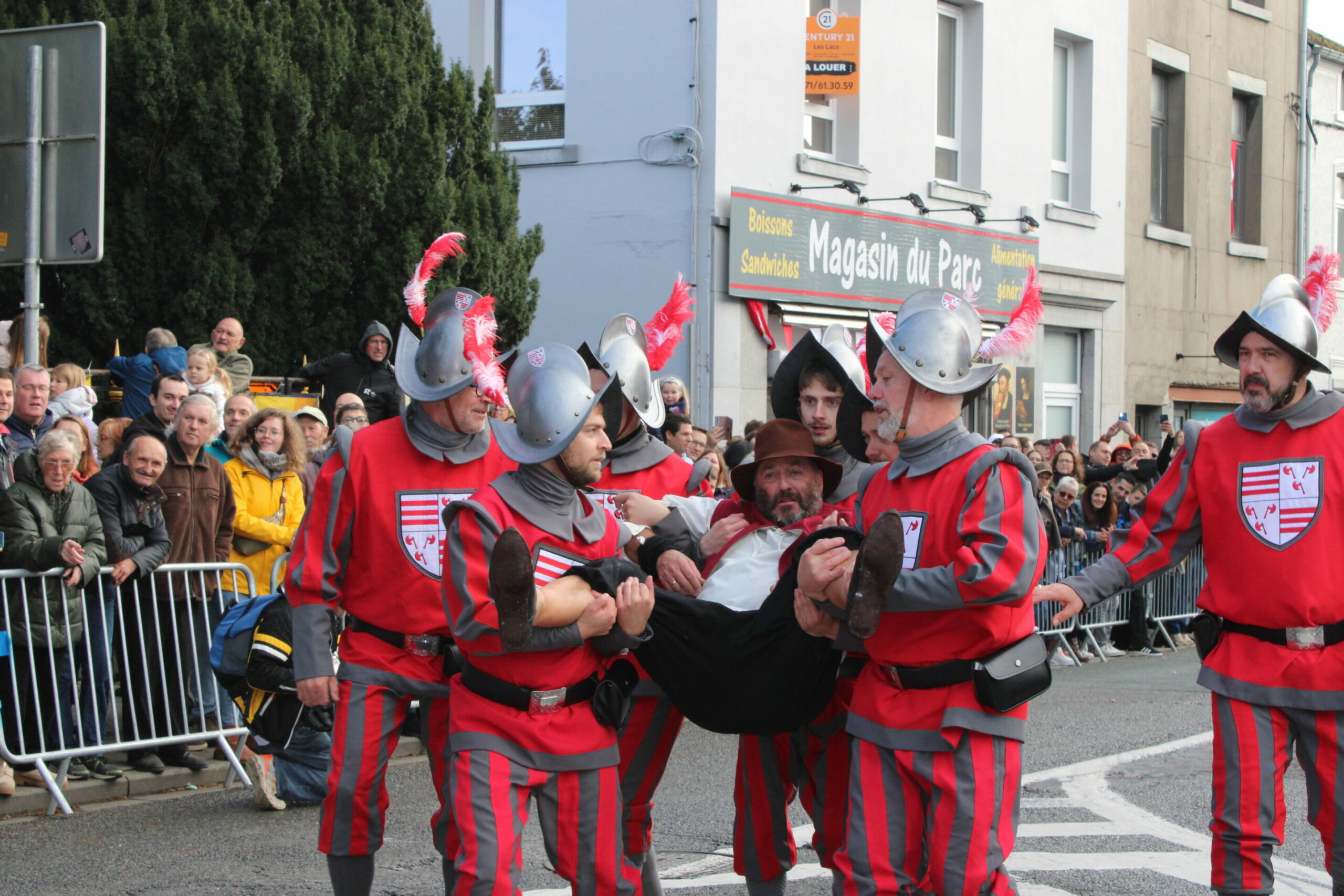
Suddenly, guards appear from all sides and grab the thugs, pulling them to the ground – not very successfully, as they each take it in turns to slip out of their grip and run away.
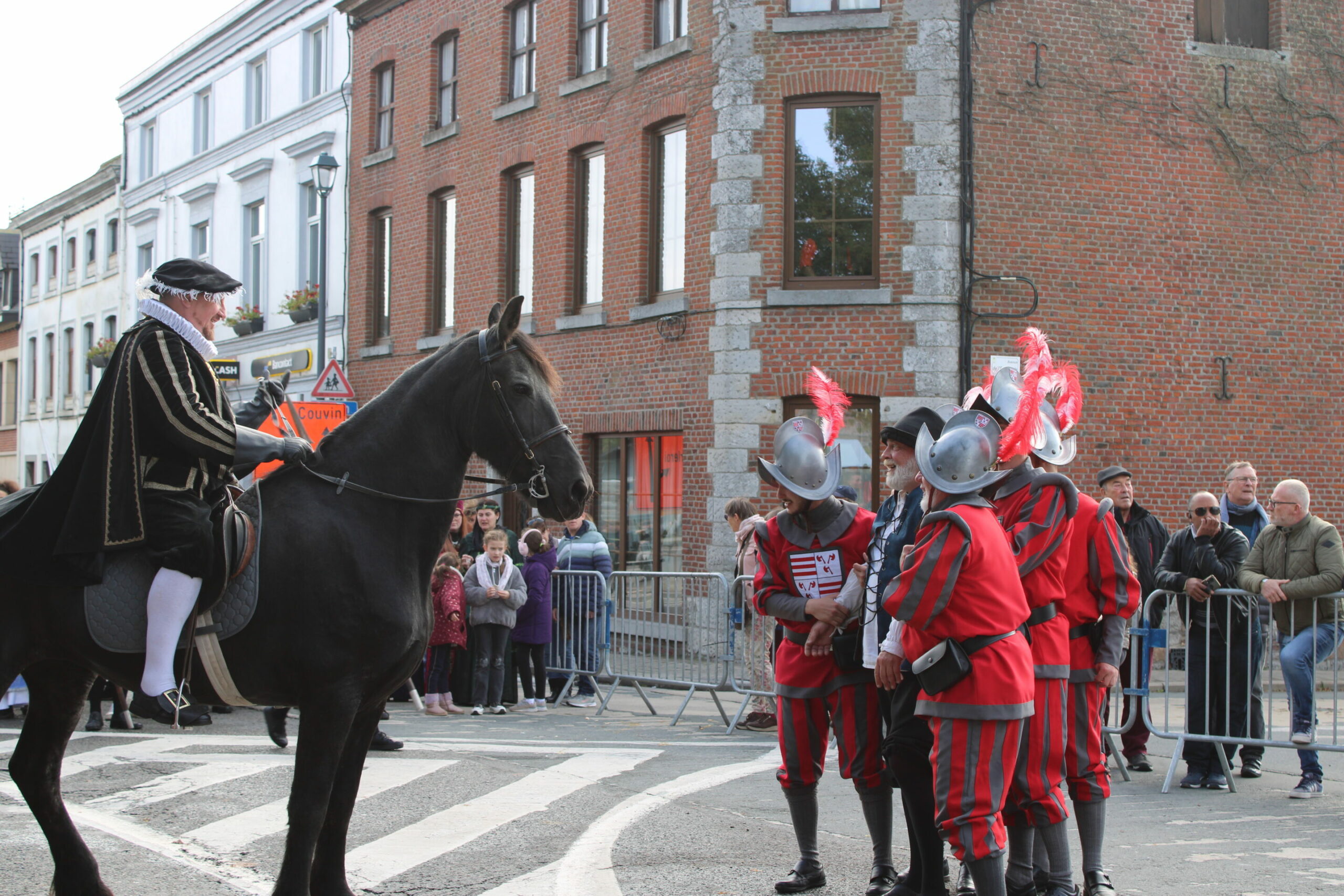
Charles V looks on as guards hold one of the Auvergnats. Credit: Isabella Vivian / The Brussels Times
The skirmishes and cat-and-mouse chases are as hilarious the 15th time as they are the first, getting increasingly more ridiculous as they run into crowds of onlookers, and even a local's house. The atmosphere is electric.
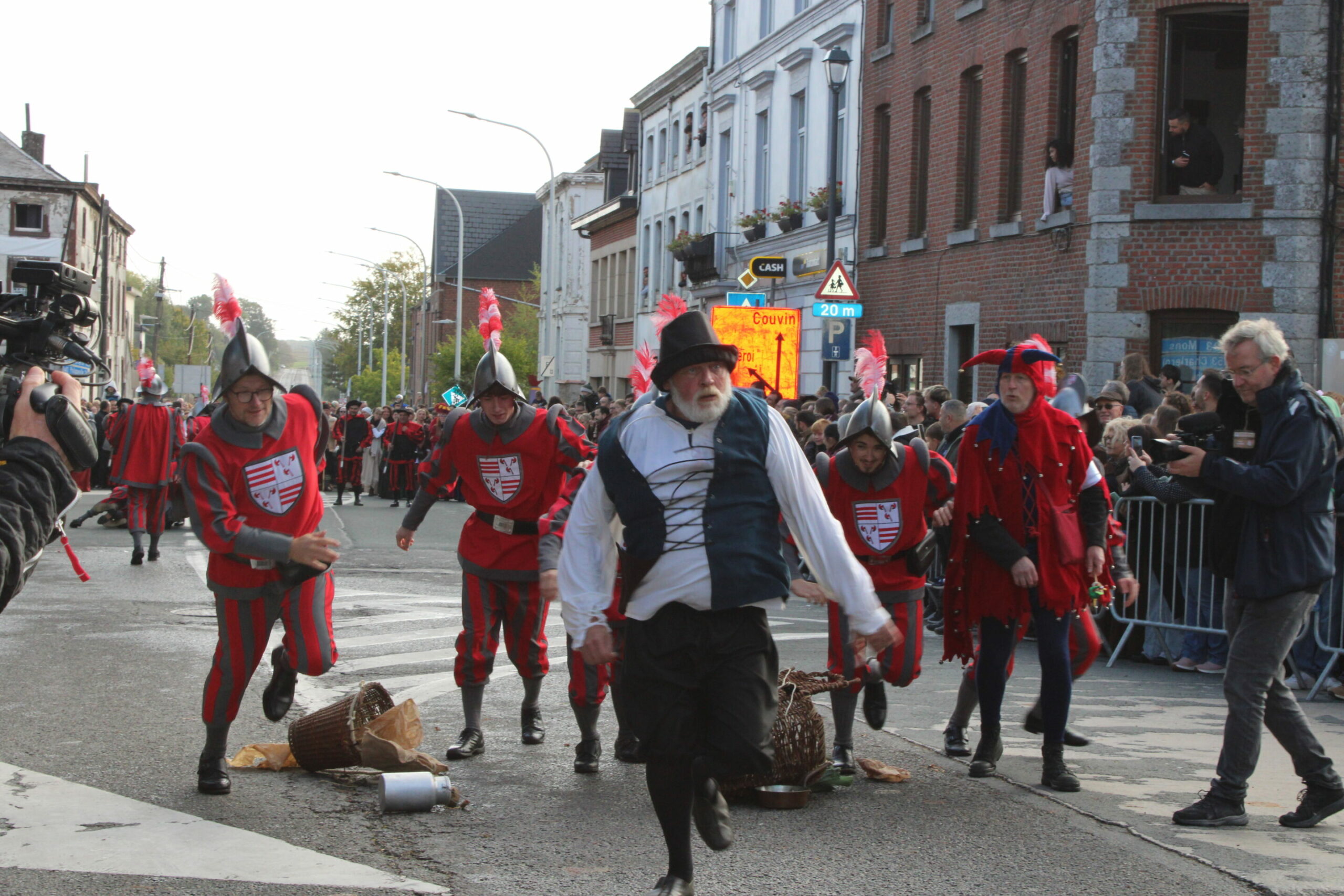
Running for freedom. Credit: Isabella Vivian / The Brussels Times
Credit: Isabella Vivian / The Brussels Times
The parade then begins: a long procession to the Grand Place where the thugs will meet their fate. Countless groups of courtiers, clergy and commoners proudly parade through the streets dressed in lavish costumes and beaming from ear to ear.
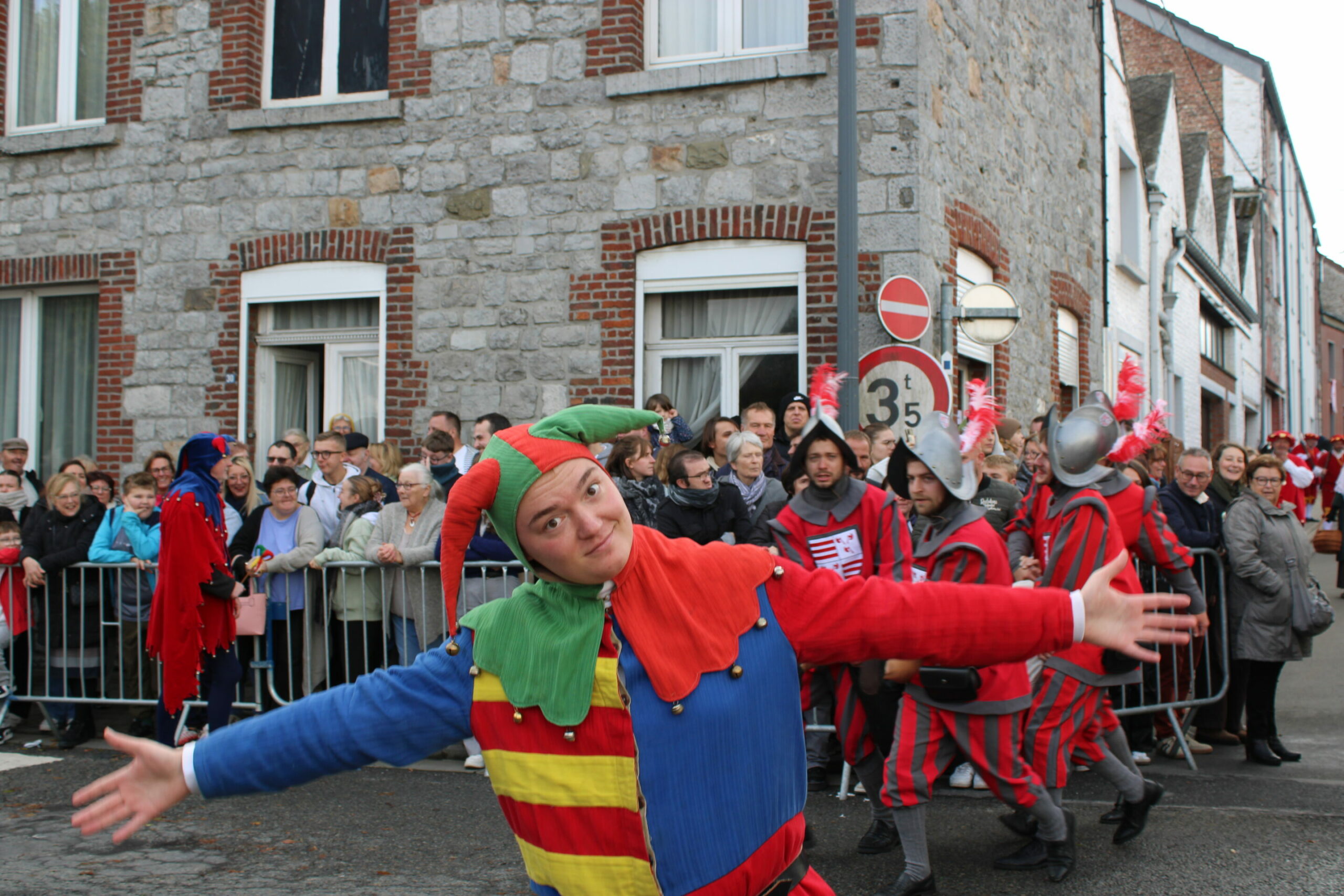
A court jester. Credit: Isabella Vivian / The Brussels Times
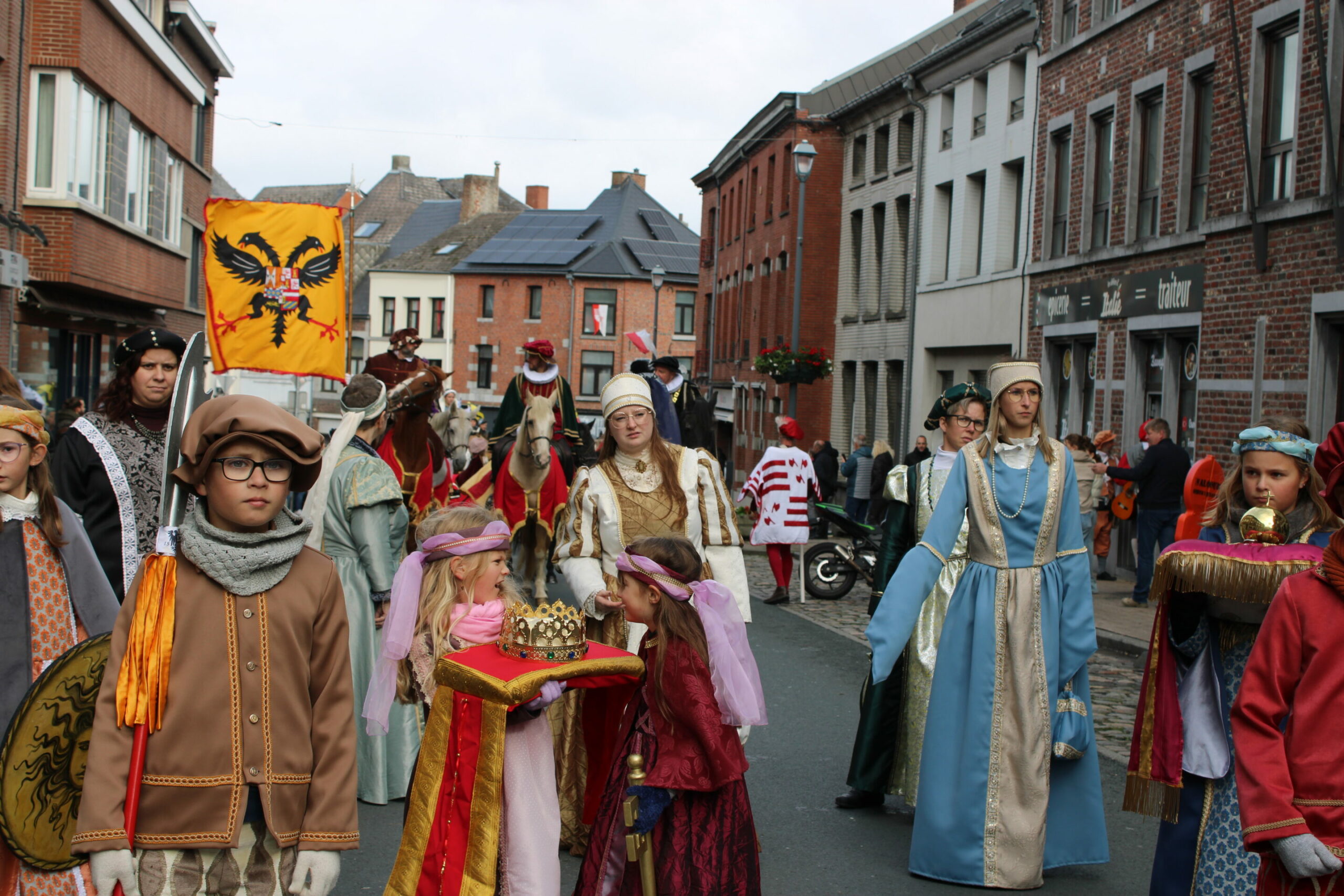
Credit: Isabella Vivian / The Brussels Times
As in any small town, Pauline spots various people from her childhood as we walk: a school friend dressed as a guard and an old maths teacher as a nun. Gunshots and cries of "Vive l'empereur! Vive Charles Le Quint!" surround us.
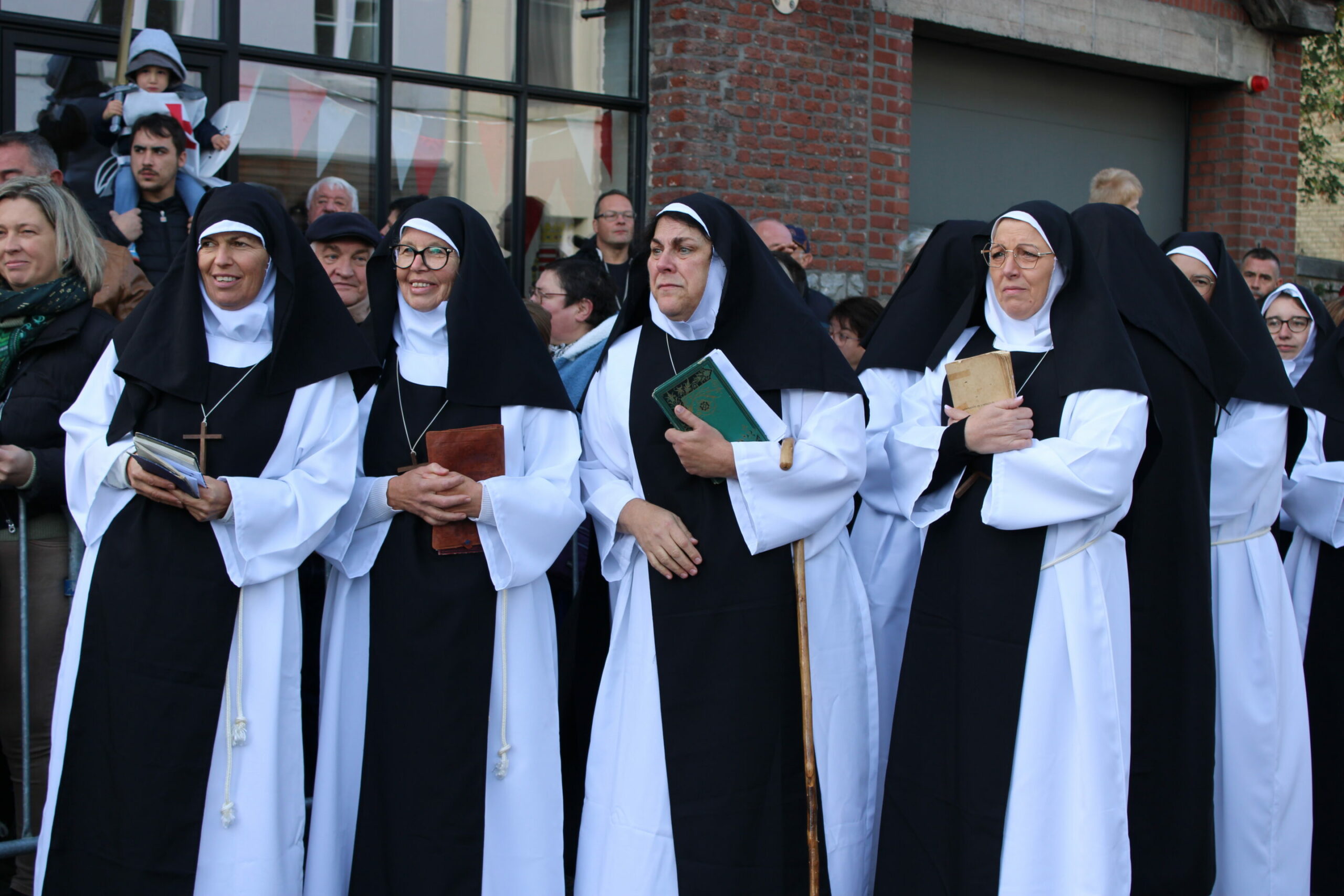
Credit: Isabella Vivian / The Brussels Times
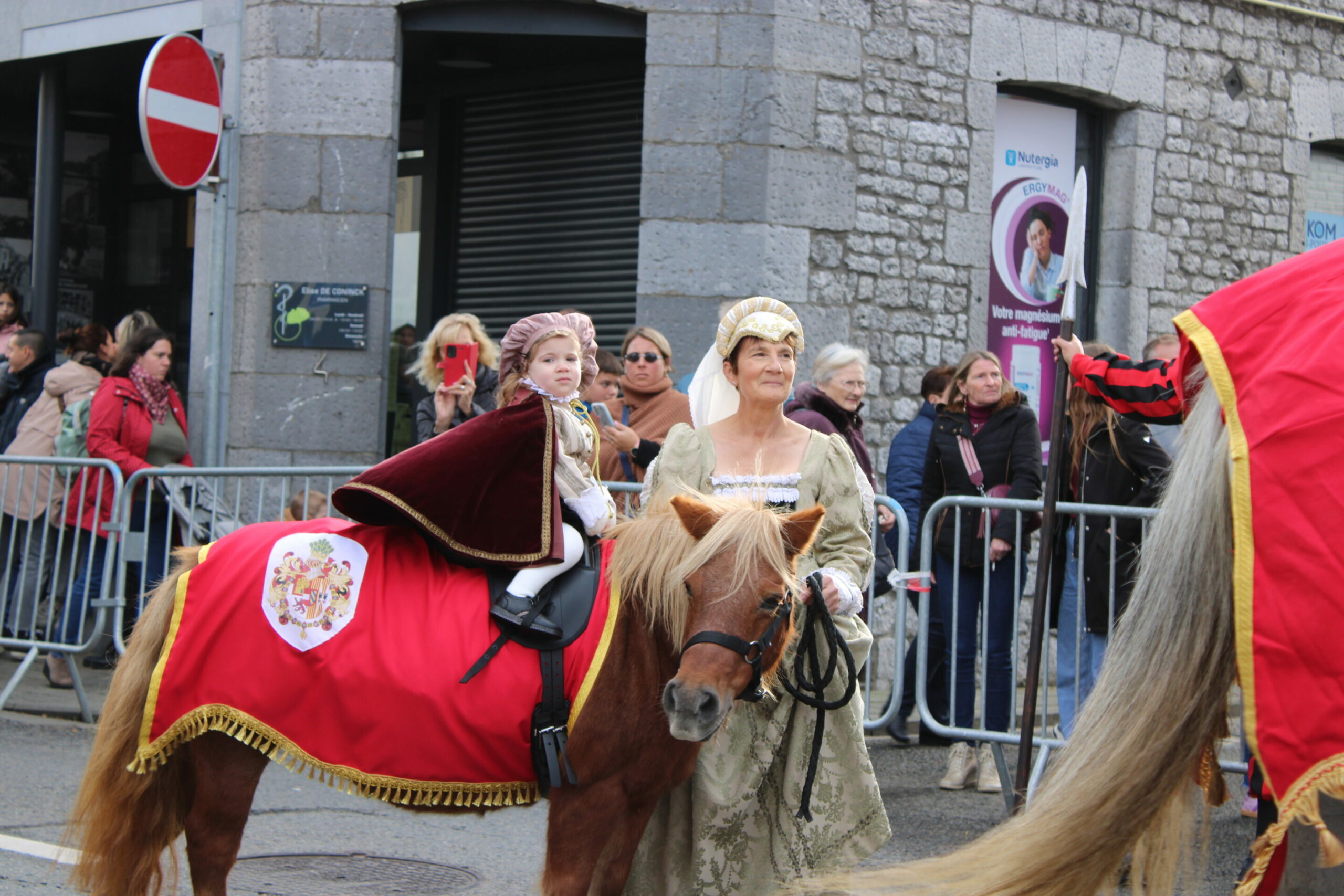
Credit: Isabella Vivian / The Brussels Times
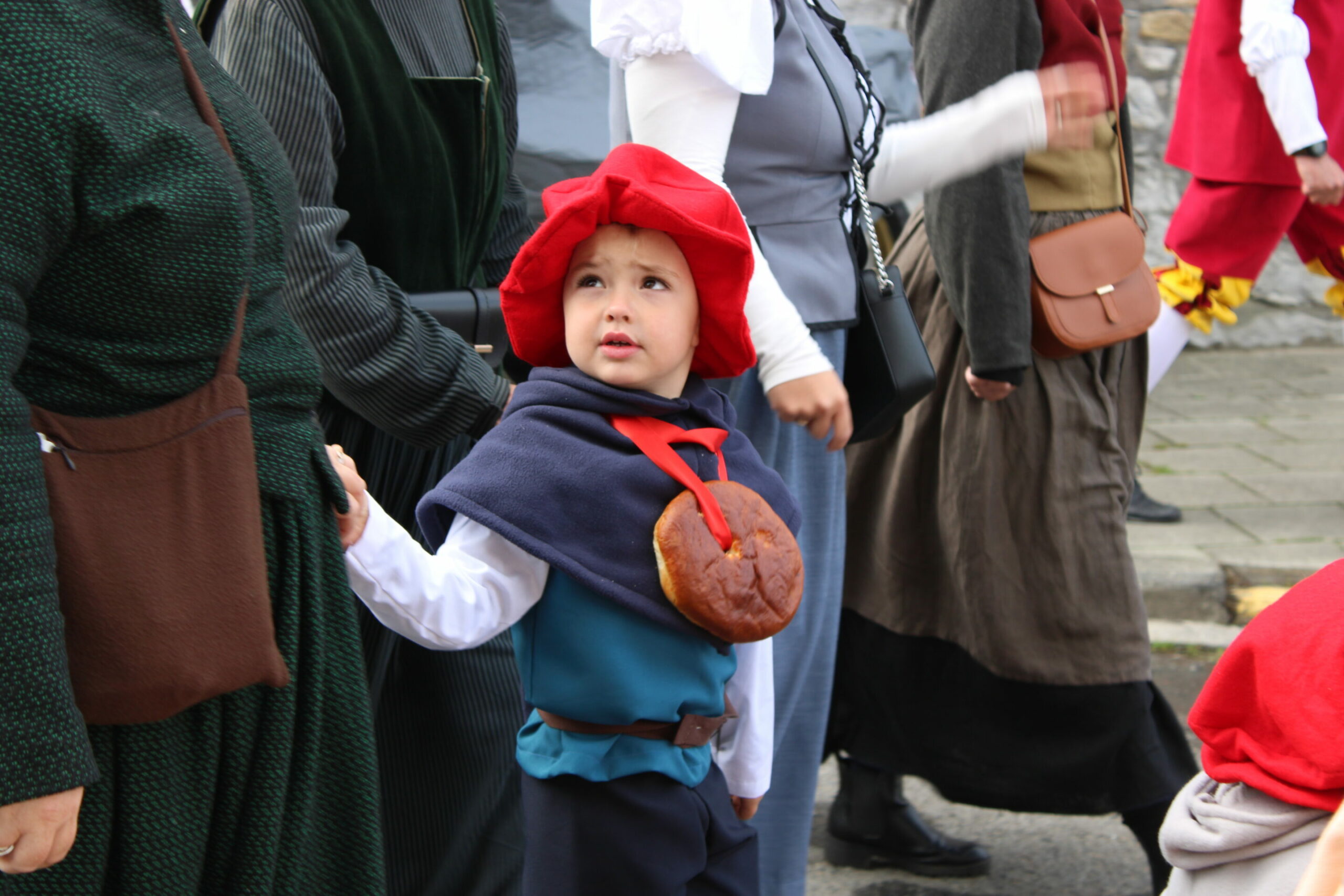
Credit: Isabella Vivian / The Brussels Times
As the procession nears the Grand Place, we reach a standstill. One harlequin takes advantage of the brief pause to come over for a chat. Through slurred French, he tipsily tells us this is his third time participating in the procession, each time with the Confrérie du Saint-Sacrement group.
His drunken state (it's not even midday) begins to make sense when, a little further down the line, we notice a woman giving out free shots of brandy (known as goutte in French) from a portable mini barrel attached to her waist.
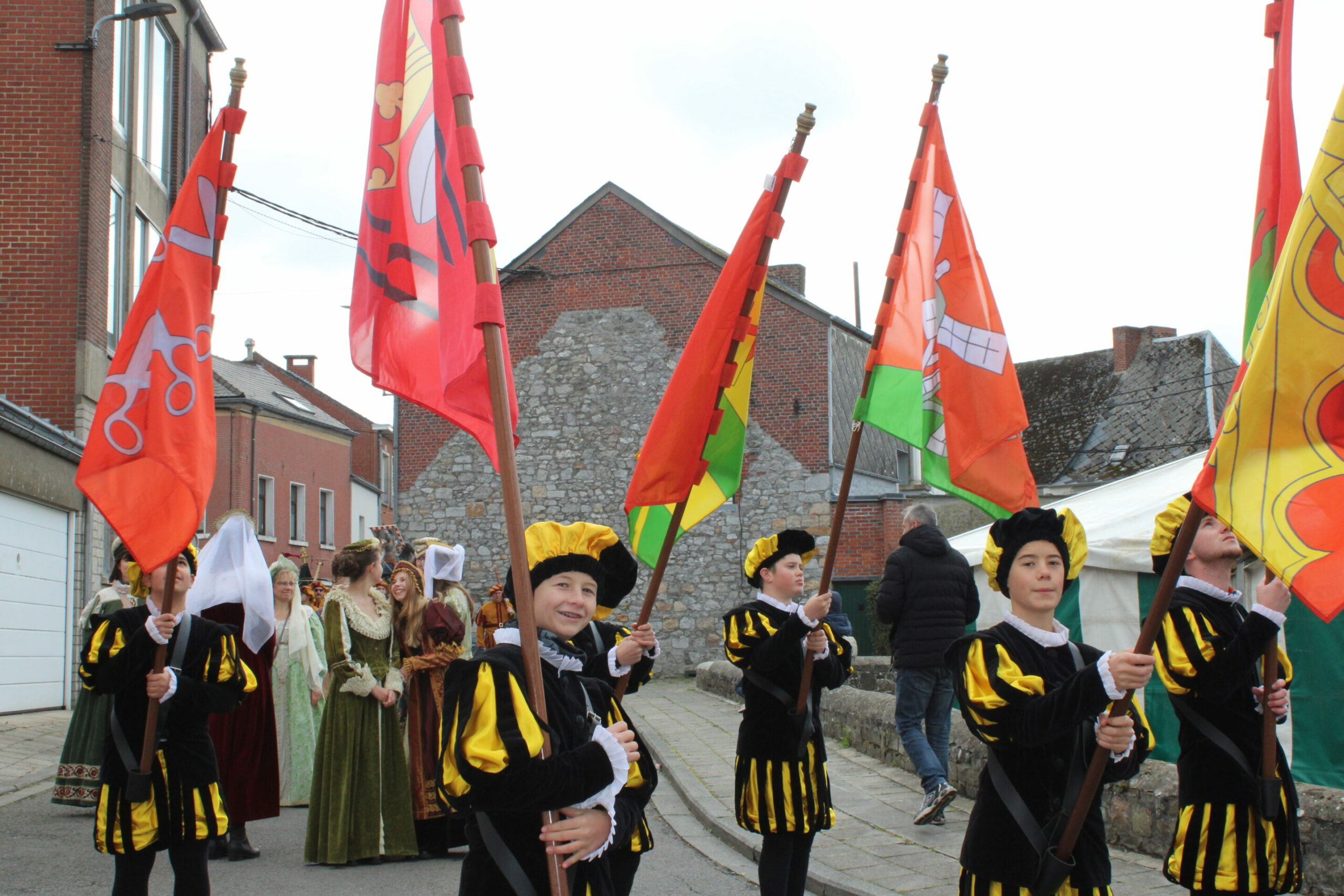
Credit: Isabella Vivian / The Brussels Times
In keeping with tradition, we arrive at Grand Place at midday, and the Auvergnats' judgement is read out – all while they continue to playfully run away and get rugby tackled by guards.
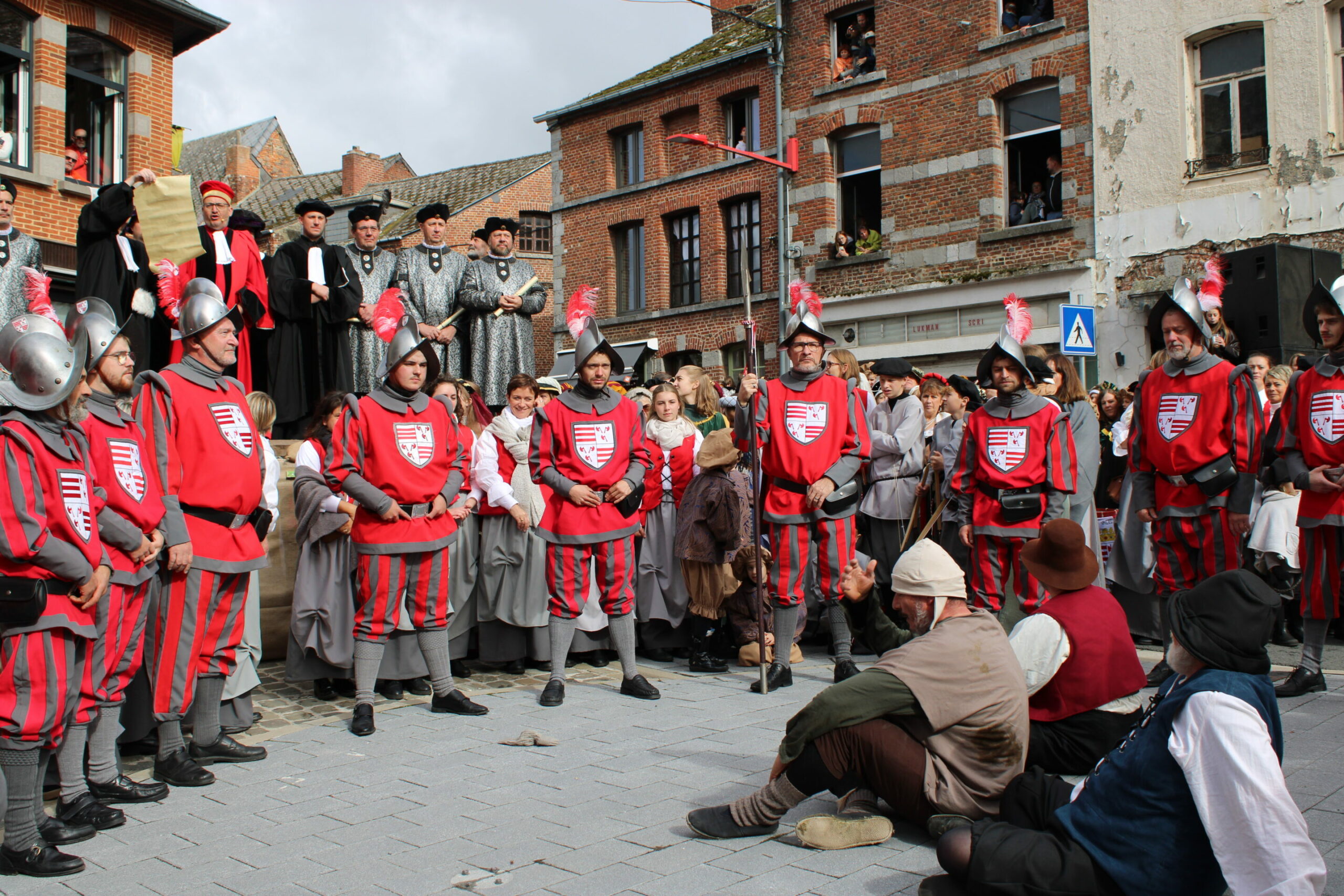
The three Auvergnats listen as their sentence is read out. Credit: Isabella Vivian / The Brussels Times
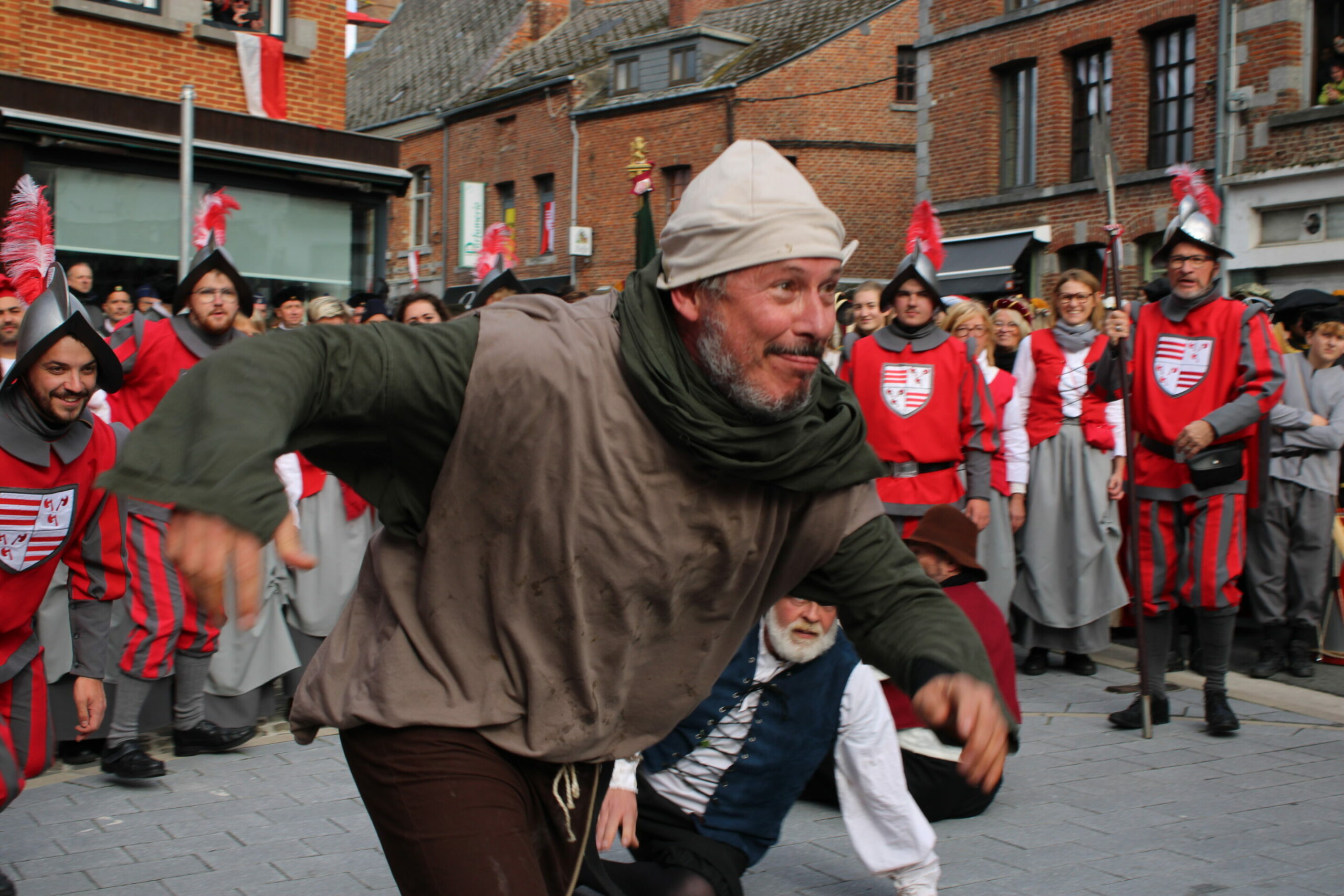
An Auvergnat makes a last-minute dash for freedom. Credit: Isabella Vivian / The Brussels Times
As the gallows is assembled and a flag spectacle takes place, there's time for one last circle around the town before the crucial moment.
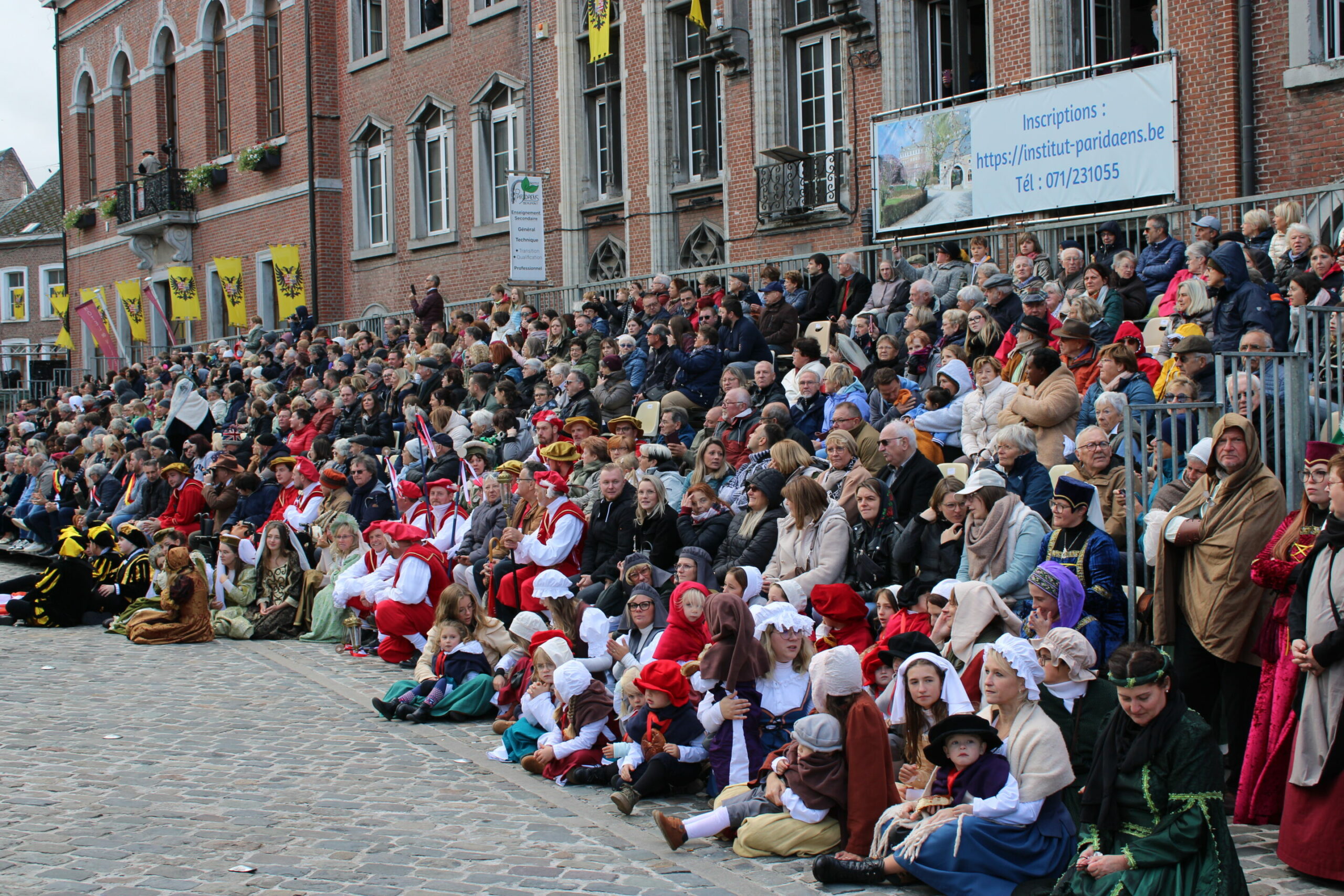
Crowds gathered on Grand Place. Credit: Isabella Vivian / The Brussels Times
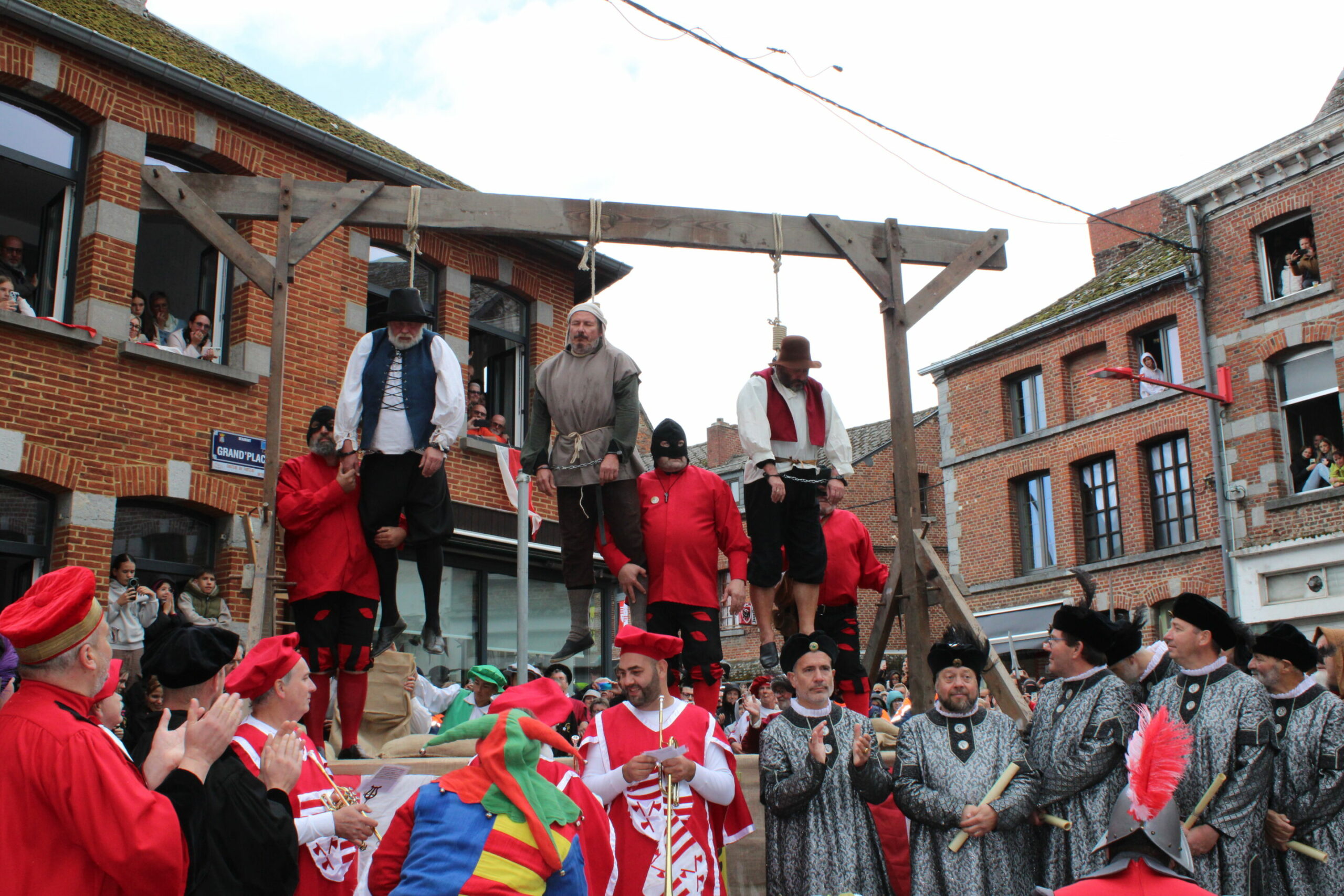
One by one, each noose is slipped around each of the Auvergnats' necks (I should add here: all three applied for this position and had to go through a rigorous selection process).
At exactly one o'clock, the stool is kicked away from under each of their legs. Just before the final man is hanged, he cries out, "Ville de Beaumont, ville de malheur, arrivés à midi, pendus à une heure!" ("Town of Beaumont, town of misfortune, arrived at noon, hanged at one o'clock!")
The crowd erupts into cheers and applause: justice has been served.*
Credit: Isabella Vivian / The Brussels Times
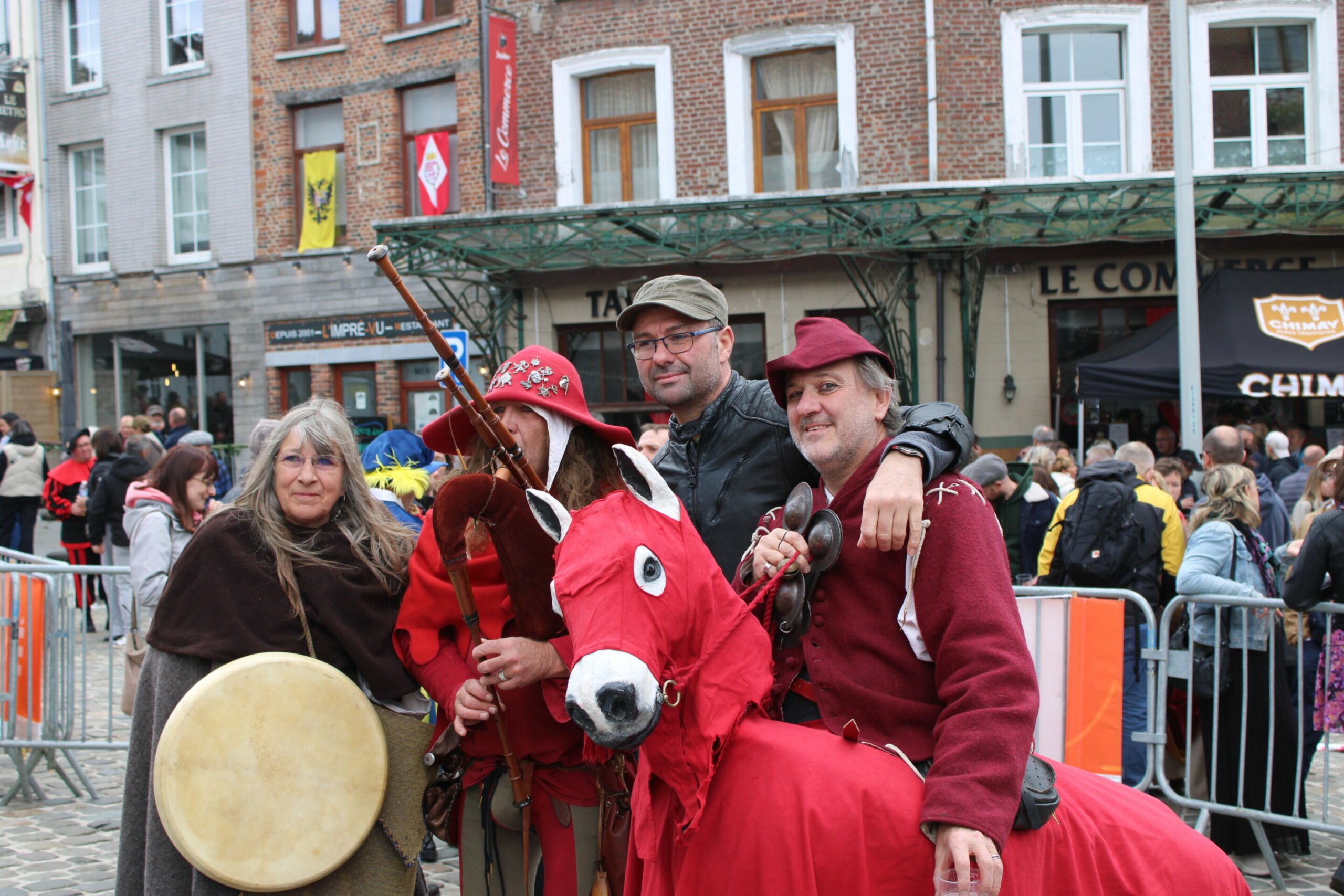
"What now?" asks Pauline's school friend, Robin. "What do we do for the rest of the afternoon?" In true Belgian fashion, she replies: "Everyone gets pissed!" She wasn't wrong: the pints had been flowing throughout the somewhat sinister ceremony and police had even been called as a brawl had broken out in the crowd. With the speciality Charles Le Quint beer measuring a whopping 8.5%, it was easy to see why.
Enjoying a celebratory drink after the hanging. Credit: Isabella Vivian / The Brussels Times
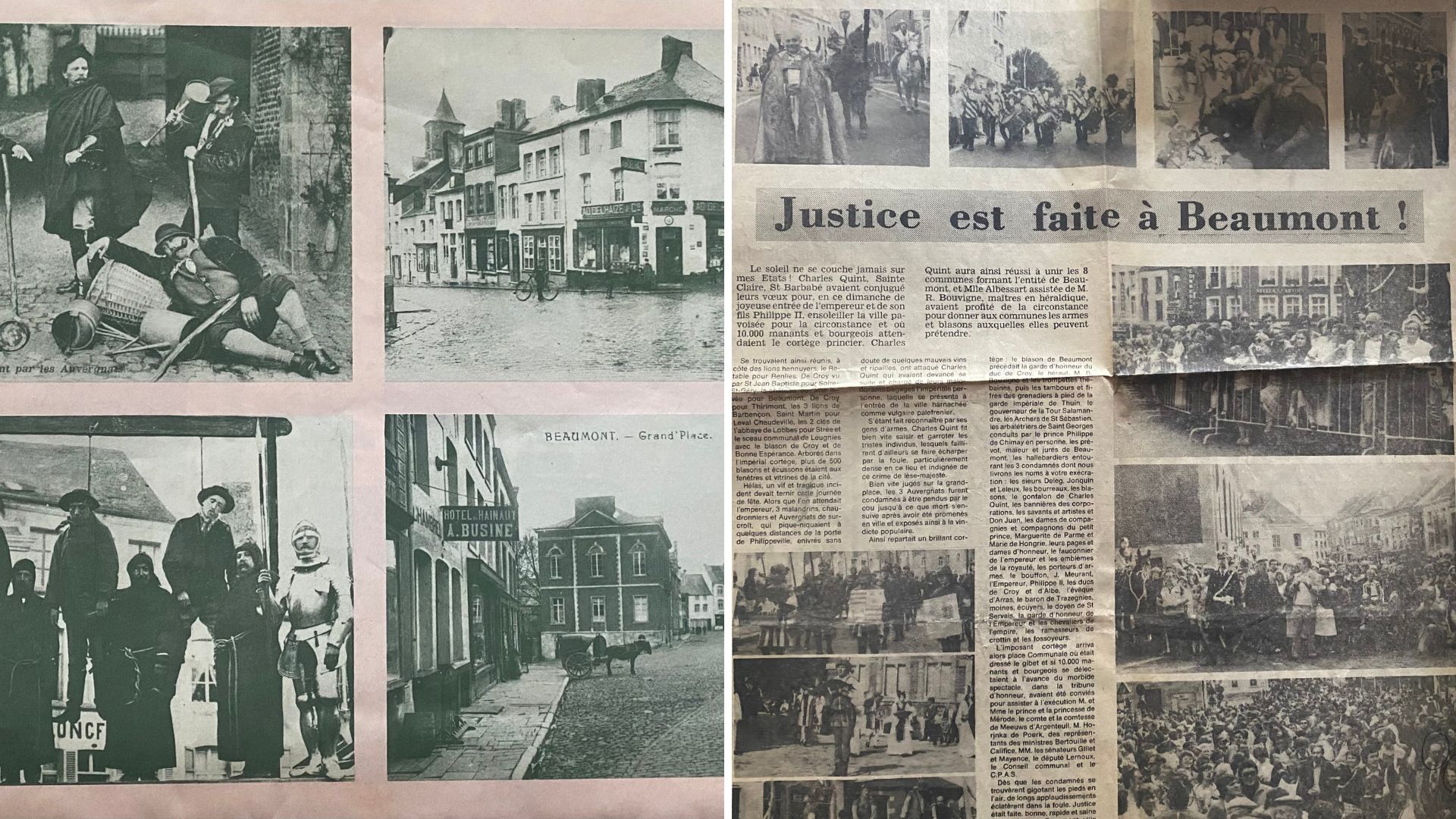
Just before we return to Brussels, we pause at Pauline's grandmother's house. She sifts through newspaper clippings from previous editions and finds one from the first hanging she attended on 5 October 1980 – 45 years to the day. "We need to understand our roots, our culture and our traditions," she says earnestly.
Newspaper clippings and postcards from 5 October 1980: "Justice is served in Beaumont!". Credit: Isabella Vivian / The Brussels Times
Pauline and I return to Brussels, and we reflect on the absurdity of the day's events. As we part ways, she leaves me with: "It was a pleasure going to a public execution with you."
*Disclaimer: No humans were harmed in the making of this article.
