
Train travel in Belgium is set to become cheaper for most passengers, as Belgium's national train operator SNCB/NMBS is launching a new pricing system next week. While prices are supposed to decrease for about 80% of travellers, it is slightly more complicated than that. Here's everything you need to know.
SNCB is rolling out a completely revamped ticket offering on Wednesday 15 October, which is supposed to make travelling by train cheaper overall, especially during off-peak hours and at weekends, and for those who take the train more often.
"Until now, there were various ticket options: some with a fare based on the number of kilometres travelled, others with a fixed fare – sometimes linked to certain conditions," said SNCB in a press release announcing the changes.
"This sometimes caused confusion among passengers, as they did not always know which option was the most advantageous for them," they added. "With the new ticket offer, that is now a thing of the past."
From now on, all fares will be calculated based on the distance travelled. Additionally, fixed-price tickets are being replaced by percentage discounts.
In practice, what does that mean?
For people with an annual season ticket, nothing will change on 15 October.
For those travelling with regular tickets or passes, the new system will mean a big adjustment.
Passes
The Youth Ticket and Senior Ticket, as well as the Youth Multi, Local Multi and Standard Multi, will be discontinued. Discounts for large families will also be discontinued. However, they will be replaced by new options.
Credit: Belga/ Eric Lalmand
Regular tickets
The maximum price of a train ticket will be reduced by 20%. From now on, the fare will be calculated on the basis of 120 kilometres (instead of 150 kilometres before). This means that a second-class journey will only cost a maximum of €20.90 for an adult (aged 26-64), instead of €26 today.
"When purchasing a train ticket, SCNB will automatically offer the traveller the cheapest ticket," the company said.
Train+
For people who travel by train more frequently, SNCB is also launching the Train+ card from 15 October – which entitles cardholders to an additional discount during off-peak hours and at weekends, as well as a favourable maximum fare, even during rush hour.
"The Train+ card is a discount card that people can purchase annually or monthly," Dimitri Temmerman, SNCB spokesperson, told The Brussels Times. "For adults aged 26 to 64, the card costs €6 per month. Once you have one, you get the extra discounts."
This, however, is where the new pricing system could get a little complicated.
Credit: Belga / Eric Lalmand
Many people who regularly take the train used to buy Multi passes (ten-journey passes), which is much more economical for travellers covering longer distances, according to Peter Meukens, the chair of passenger organisation TreinTramBus.
"Those Multi-passes were very popular, and with good reason. For people who had to go longer distances, they were much cheaper," he told The Brussels Times.
The maximum price for a long journey used to be €26, but the Multi-passes allowed people to activate one journey on their pass – which came down to €10.50 one way. "Which, for people who regularly made long journeys, was much cheaper than the €26 rate."
Meukens himself regularly travels between Hasselt and Ghent. While a round trip used to cost him €21 (€10.50 each way), this will now go up to €28 (€14 each way).
Passengers who often travel shorter distances, however, would do very well to buy the Train+ discount card, he stressed. "The card in itself is not expensive and the discounts count for on shorter distances as well."
Credit: SNCB
With the Train+ card, passengers will get an extra 40% off ticket prices, during off-peak hours (boarding from Monday to Friday until 6am, between 9am and 4pm, and after 6pm) and at weekends, as well as a reduced maximum fare, even during rush hour.
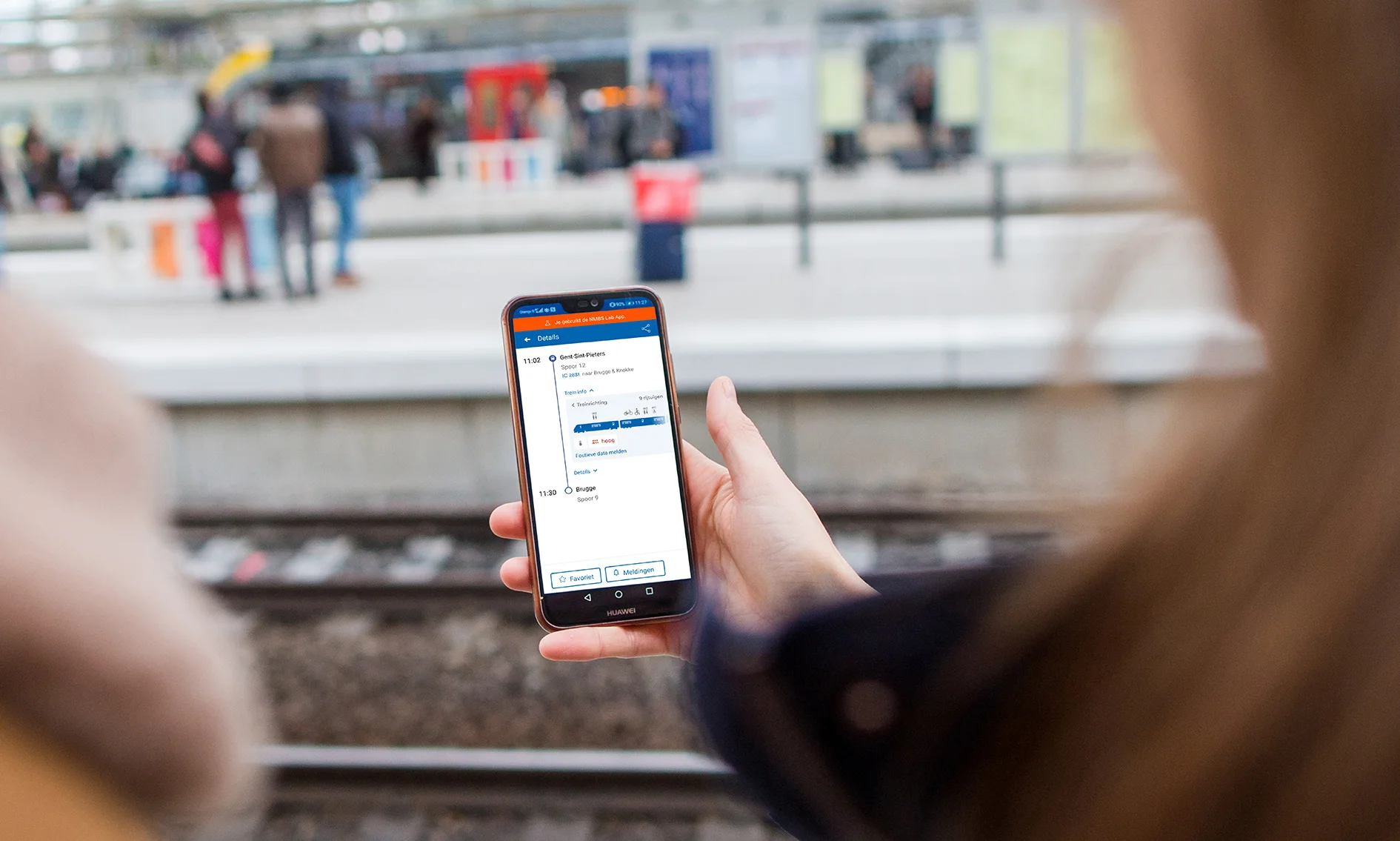
Train+ will be available from 15 October through all SNCB sales channels (online, ticket machines, ticket offices). It will be available in three ways: linked to the MoBIB card, linked to the My SNCB account (online or in the app) or as a separate QR code (digital or on paper).
Travellers can already use the SNCB website to simulate how much they can save with the Train+ card.
Discounts for adults
For adults aged 26 to 64, there is the new Weekend Ticket with a 30% discount – also for single journeys. Those who combine this with Train+ enjoy an additional 40% discount, bringing the total discount to 58%. Adults with Train+ pay a maximum of €14 per journey, even during rush hour.
Another new feature is the discount rate for those travelling together in a small group of at least four people: during the weekend and off-peak hours, they receive a 40% discount.
Large groups of 15 people or more receive a 60% discount, as is currently the case, if they book their journey in advance.
Credit: Belga/Nicolas Maeterlinck
Extra discounts for specific target groups
Young people (under 26), senior citizens (aged 65 and over) and those entitled to an increased allowance receive a basic discount of 40%. They always receive this discount, regardless of the distance or time of their train journey – and even without a Train+ card.
"For senior citizens, this immediately removes the travel time restrictions of the senior citizen ticket, which means that, unlike now, they can also enjoy a discount before 9am and for a single journey," SNCB stressed.
With Train+, young people, senior citizens and those entitled to an increased allowance during off-peak hours and at weekends will receive an additional 40% discount, bringing the total discount to 64%. With a Train+ card, they will pay a maximum of €5.50 per journey, even during rush hour.
Children under the age of 12 will continue to travel free of charge when accompanied by an adult.
'Needlessly complicated'
TreinTramBus' main criticism is that the new system is needlessly complicated, Meukens stressed. "There is a 40% discount, and with the Train+ card, you get another 40% on top of that. But that does not come down to 80%, it is really 64% of the whole – a complicated calculation for people who just want to know which option is cheapest."
While the organisation is not against the new ticket pricing system, they feel like it could have been done in a simpler and more flexible way.
"It has been made so complicated that it will inevitably lead to a lot of discussion," Meukens said. "If you want more people to use the train, complicating things is obviously not the way to go about it. If it is too complex, people will just give up and get back in their car. And that is the opposite of what we want."
