
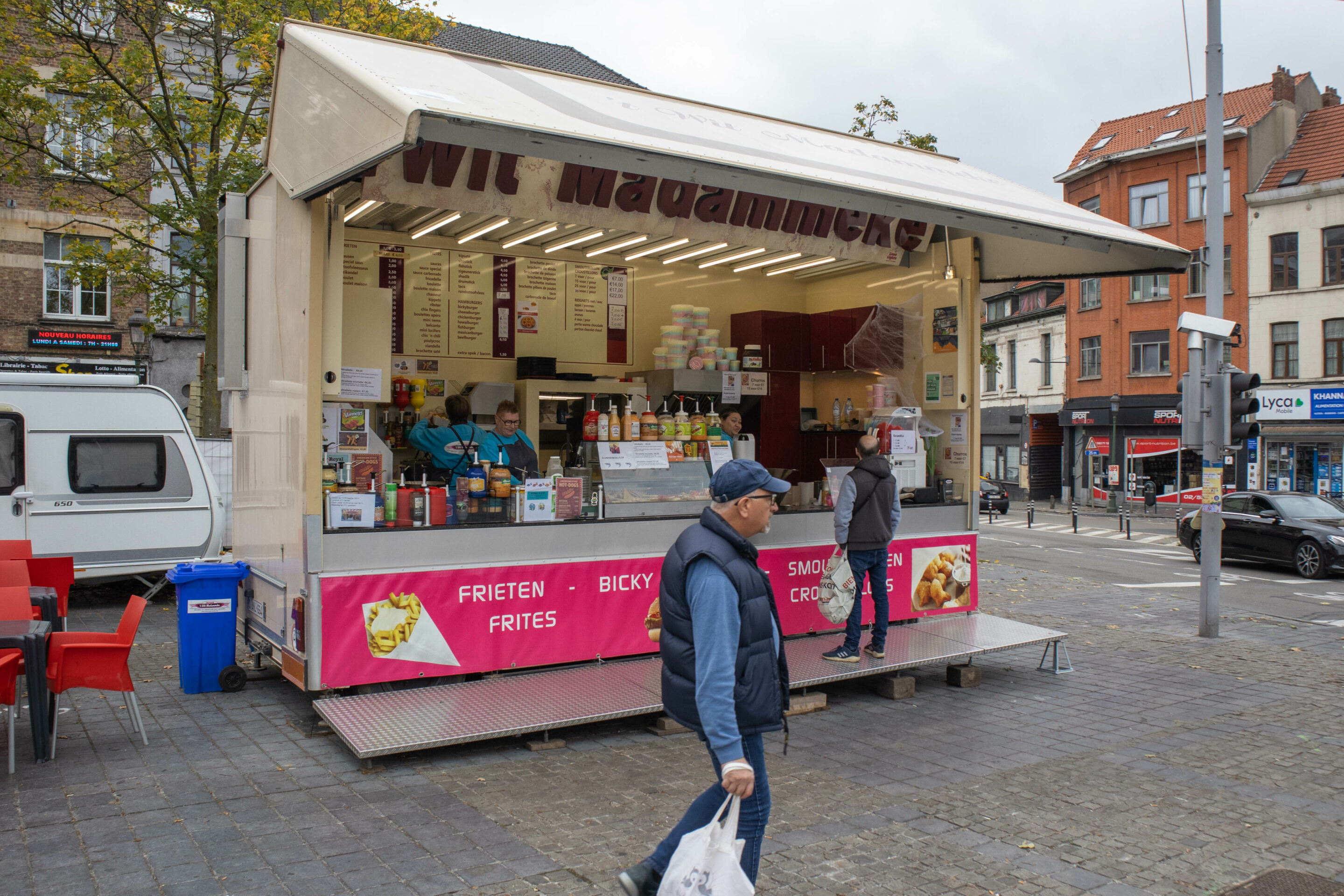
When someone asks online for a friterie recommendation in Brussels or Leuven, one name always crops up.
‘T Wit Madammeke is an authentic Belgian street food business with a cult-like following which has been run by five generations of the same family since 1906.
Just like the original fry sellers, their food truck moves from one spot to another, chasing fairs, markets and festivals. However, there is much more to discover here compared to classic friteries.
In addition to their succulent fries, ‘T Wit Madammeke also sell sweet food: Belgian waffles, Spanish churros, French beignets with fruit fillings – they have it all. But their specialty is croustillons or smoutebollen – fried dough balls which are crispy on the outside and fluffy on the inside, coated with powdered sugar.
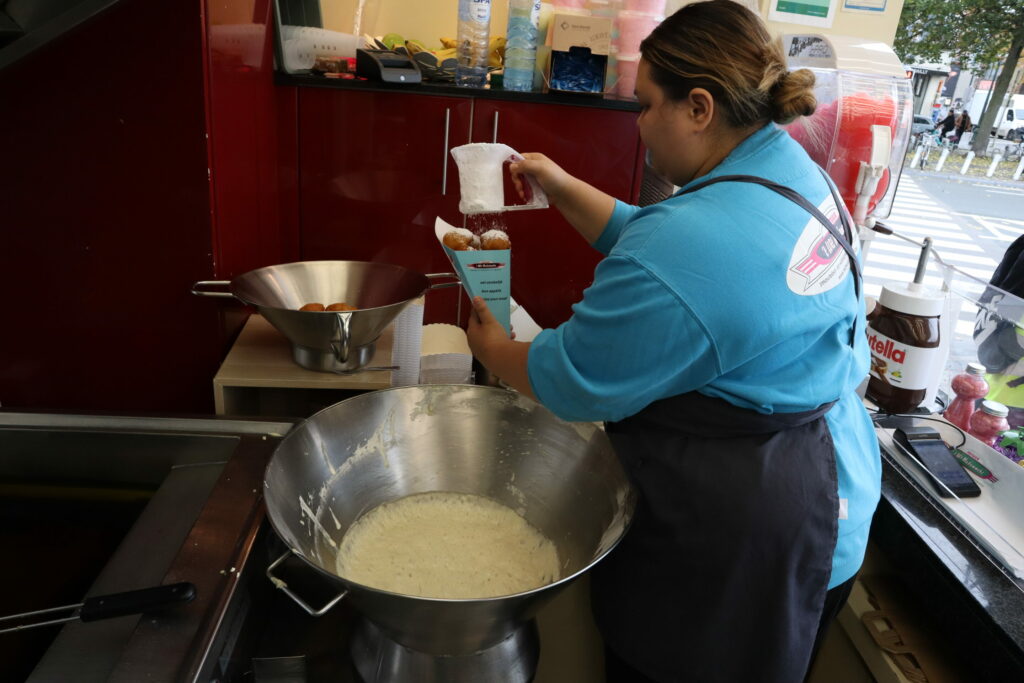
Kim, daughter-in-law of the current owner of 'T Wit Madammeke, dusting croustillons with sugar. Credit: Kosmos Khoroshavin / The Brussels Times
Oliver Roland, the current owner of the friterie, says that his great grandma was one of the pioneers of croustillons.
She also inspired the name of the business. After suffering a minor heart attack during her sleep, one day she woke up with her hair completely white – giving rise to her unusual monicker, the Wit Maddammeke (White Madam).
Regular customers used the nickname, adding the Dutch article het (the) shortened to 't before it. The -ke in the end is diminutive, showing affection or endearment, a common Flemish speech pattern.
During the Brussels World's Fair of 1897, a grand international event full of food innovations and cultural exchanges, Roland's great grandmother is said to have presented oliebol, a Dutch deep-fried pastry. Later on, she modified the heavy Dutch batter for a lighter Belgian one, giving birth to croustillons.
'T street food institution
Throughout the rest of October to early November, ‘T Wit Madammeke can be found at Place Dailly in Schaerbeek. They will move on eventually, only to come back at a later date.
This week, The Brussels Times travelled to Schaerbeek to discover this Belgian culinary gem for ourselves.
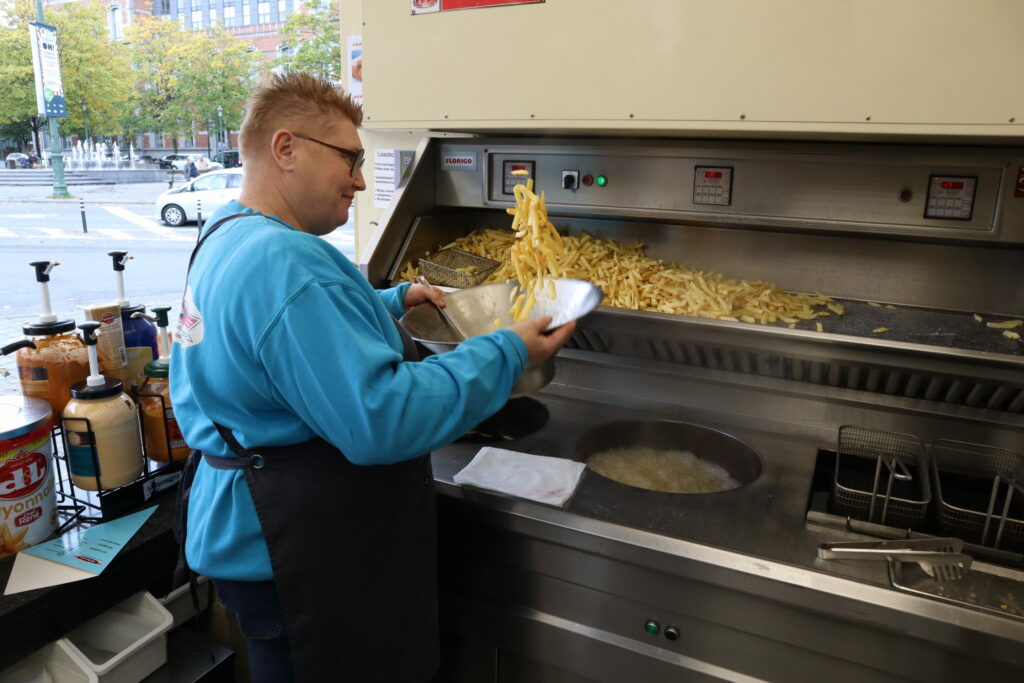
Sabine, the wife of Oliver Roland, masterfully flipping fries. Credit: Kosmos Khoroshavin / The Brussels Times
In Schaerbeek, we are not greeted by Oliver Roland, the usual figure in the spotlight. Instead, two lovely ladies, Sabine and Kim, – Oliver's wife and daughter-in-law – agreed to tell us about their work.
‘T Wit Madammeke is often called a street food institution – and for good reason. According to Sabine, one of the secrets of their great culinary skills is tradition. “We still do it the old way”, she tells us.
“Even the batter for our smoutebollen is made the same way as five generations ago. We don’t have machines. Everything is handmade – that’s why we have so much success in Leuven or Aarschot.”
The authentic way of making fries is double frying in beef fat – and (of course) they use it. Still, this attachment to the old ways of doing things doesn’t prevent ‘T Wit Madammeke from adapting to modern life.
“We still use beef fat for frying," says Sabine. "Many people ask if it’s halal. The fries are halal, but not all snacks are. I always tell them honestly which are not, out of respect. We try to have something for everyone, but still stay traditional Belgian.”
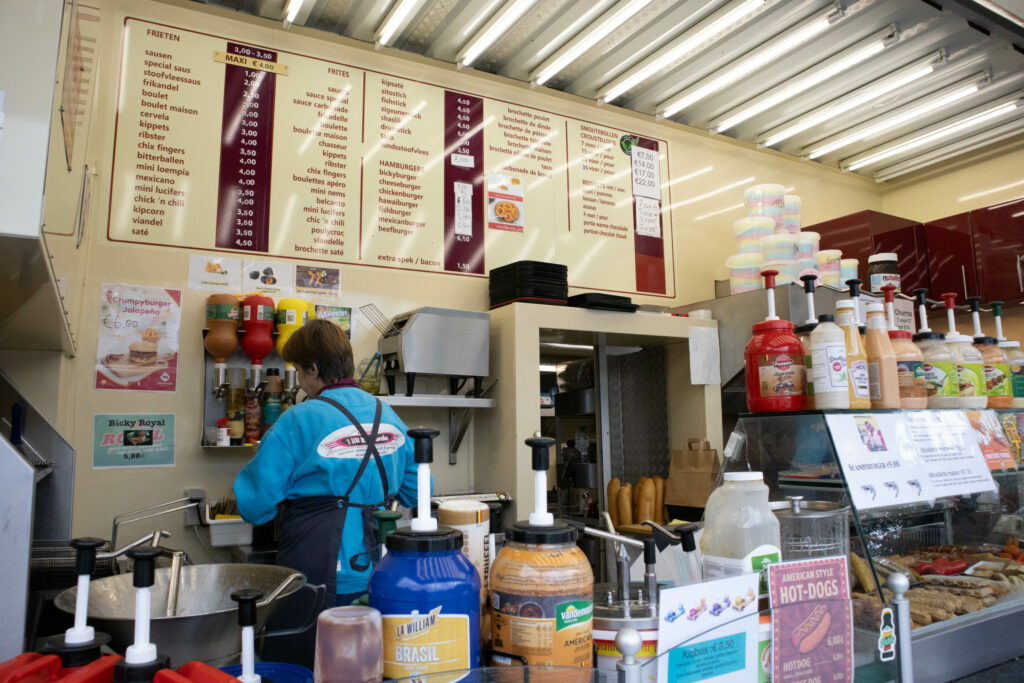
Credit: Kosmos Khoroshavin / The Brussels Times
Their smoutebollen are especially popular in Leuven, where they can sell over a thousand a day. As the food item is strongly associated with Christmastime, the numbers during winter seasons are even higher.
“The city of Leuven hires us to bake smoutebollen for the New Year’s reception for the people who live there," explains Sabine. "We have to bake 9,000 of them in three hours. We also get many orders from retirement homes–sometimes a thousand smoutebollen in one hour.”
When asked how they manage to cook and serve such an amount, Sabine humbly responds, “One by one. I’m proud that my hands still work!”
There is warmth here – it’s like a small village in the city'
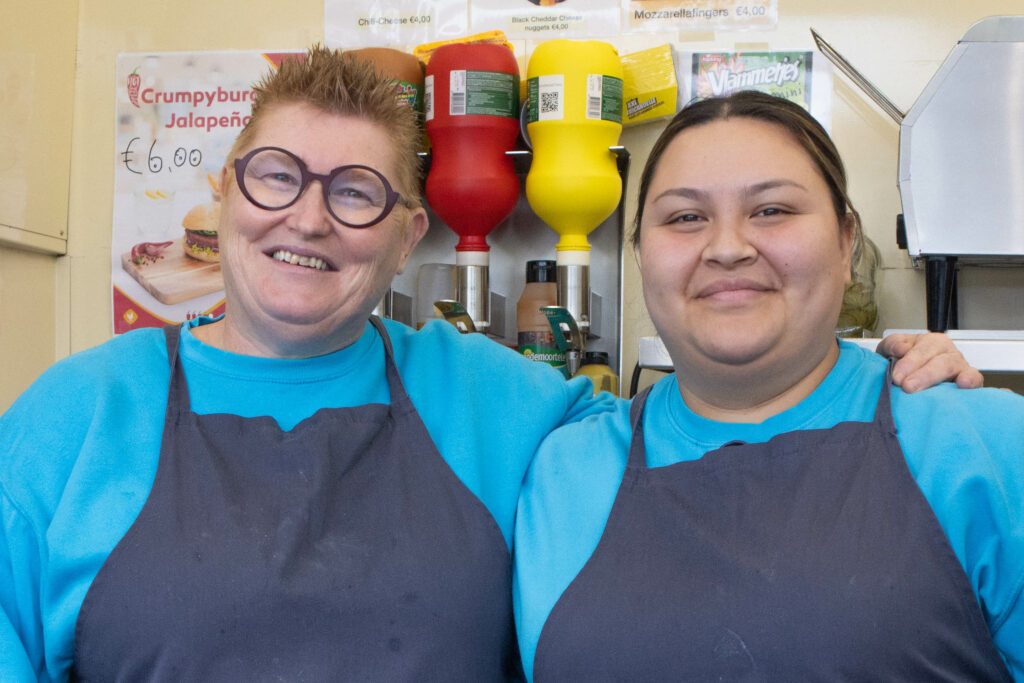
Sabine and Kim together. Credit: Kosmos Khoroshavin / The Brussels Times
Schaerbeek has a special place in Sabine's heart. “When I was young and married, I was working together with my mother-in-law. We travelled a lot and so we bought this place in Schaerbeek. That way, we could work on our own terms," she says.
“We do the same fairs every year, and this fair was one of them. There were other fairs in Brussels, but we chose this place because there is warmth here. It’s like a small village in the city. When I was pregnant with my son, people brought me the rest of their dinner from the day before so I could eat something else besides fries.”
Kim also appreciates the kindness of the locals here. “There’s a little boy who wants fries but doesn’t have enough for an extra sauce," she tells us. "Here, people are quick to say, 'Here, take it, I’ll pay for it.'"
Related News
- 'Fries with that?': How fries became a staple of Belgian identity
- Potato prices reach historic lows
- How Belgium built a culture around chips
- Belgium’s biggest and oldest Christmas market will return to Liège
'I still really enjoy serving people food'
Sabine used to live wherever she worked, sleeping in a trailer for over 30 years. However, it has become harder to live like that as the years have gone by. “We used to be like snails – we brought our house with us. But it’s too noisy. At five o’clock the buses stop, there’s a lot of traffic, people shouting, cafés open late, drunk people at night – it’s impossible to sleep. I’m getting older, and I don’t like the noise.”
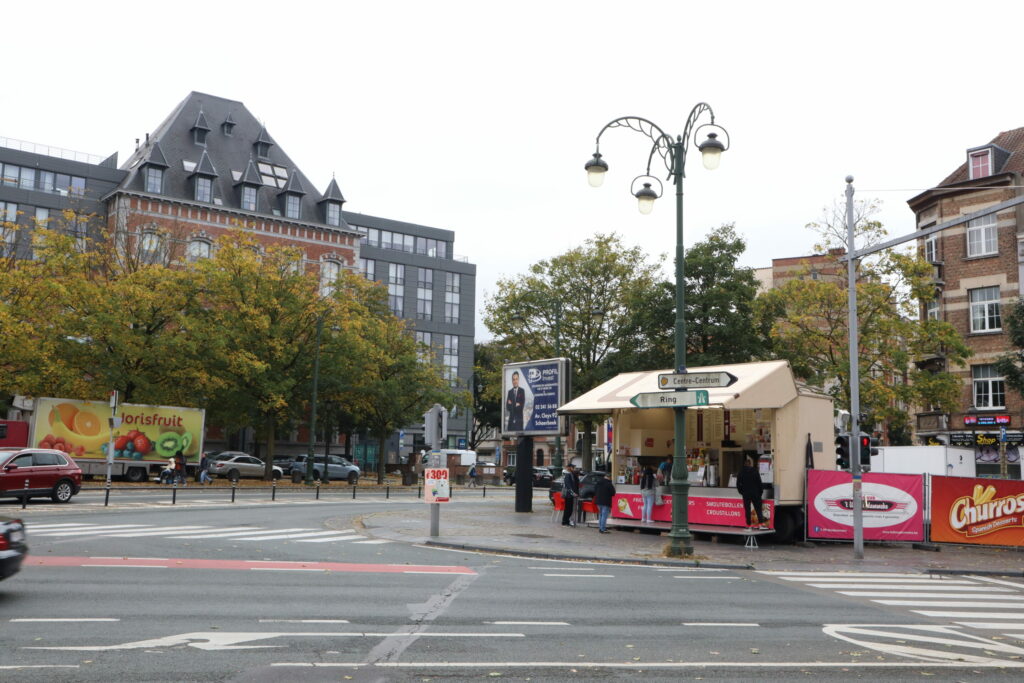
Place Dailly in Schaerbeek is layered with history. It used to be an esplanade used by the military. Credit: Kosmos Khoroshavin / The Brussels Times
Now Sabine lives in Herent, a much calmer place to lay your head in the evening. But that doesn’t mean she will stop cooking anytime soon.
“If I listened to my doctor, I’d work less, but I don’t think I’m made for that. There’s a restaurant we like, and the lady there says the same, ‘You’ll die in your truck.’ Maybe she’s right.”
“I still really enjoy serving people food. I’m scared for the emptiness that will come when I stop. In the winter I have time to rest, but after three weeks there is nothing to do. Even when my son and daughter-in-law take over, I think I’ll still be around sometimes.”
Sabine and Kim were not aware of the extent of their popularity and seem amazed when we tell them about it. "I got goosebumps. I know we have a good name, but not to that point. I hope my son keeps the standard high," says Sabine.
Kim responds with a message to their customers, "We really appreciate that people still come to us. Sometimes there’s a very long line, and they still wait. We thank them so much. We’ll keep up the quality and stay the same – because without them, there’s no us."
