
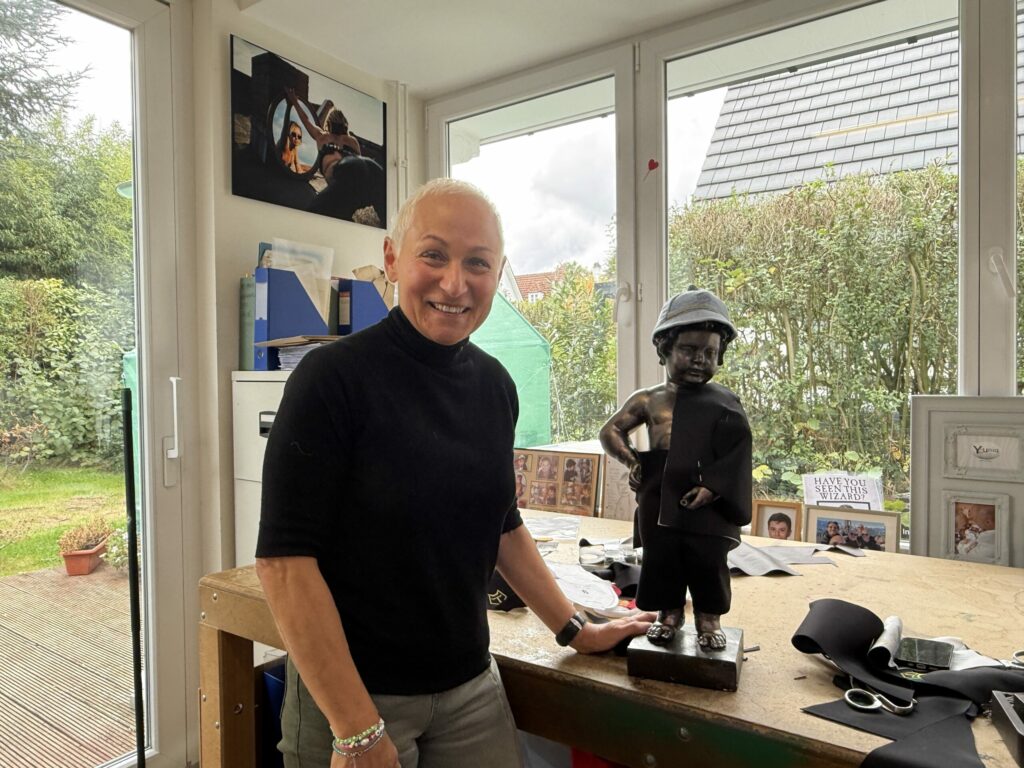
In her studio in Kraainem, right outside of Woluwe-Saint-Pierre, rolls of fabric and sequins glimmer under the light.
Between royal commissions for the Queen Mathilde herself and private clients, Esmeralda Ammoun spends her days sketching, stitching, and perfecting garments that tell stories.
But her most unusual "client" is neither royal nor human - it’s the Manneken-Pis, the tiny bronze boy who has come to symbolise Brussels itself. "I often say I work for the greatest lady… and the smallest gentleman", she tells The Brussels Times.
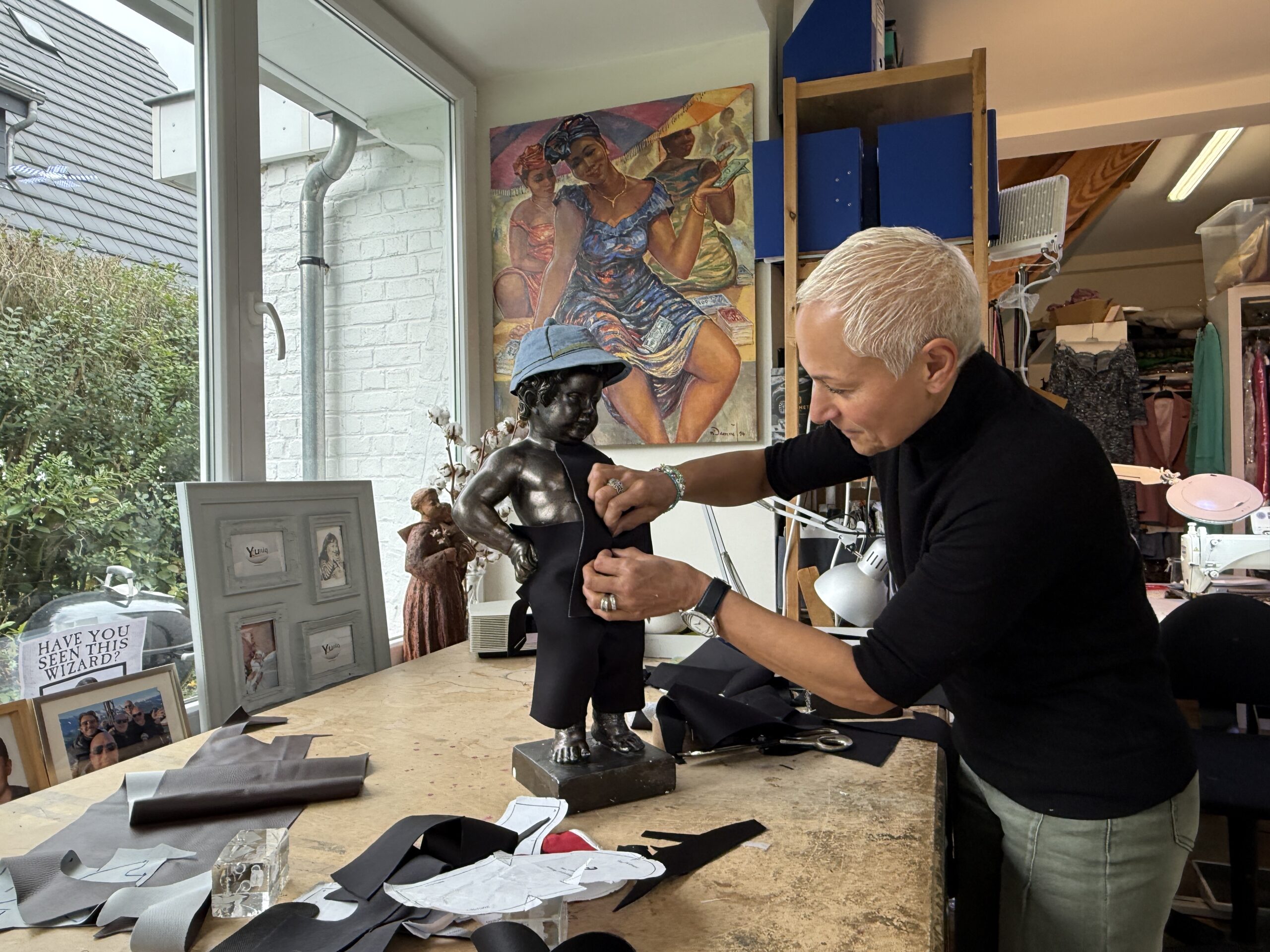
Esmeralda working on Manneken-Pis. Credit: The Brussels Times/Léa Huppe
From medicine to styling
Ammoun didn’t set out to become a designer. Born in Charleroi, she first studied medicine and was on track to become a dentist. Then a chance encounter changed her life.
"One day I was visiting a friend at the workshop of Pierre Salik, a well-known jeans manufacturer in Brussels. I was wearing a little suede vest I had made myself. He asked where I had found it, and when I said I made it, he told me: ‘You should be a stylist.’ That’s when everything clicked."
She abandoned medicine, applied to a fashion school in Brussels - and was rejected. “I had no drawing skills at all,” she admits. But she persisted, learning by observation.
At a fashion show, she met her first husband, designer Pierre Gauthier, and together they launched their own couture house. "At first, he was the stylist,” she recalls. "I learned everything on the job. We worked together for thirty years."
From haute couture to bespoke design
For the past ten years, Ammoun has run her own designer brand, creating made-to-measure pieces with great care from her private studio.
Her clients still include some of Belgium’s most elegant women - among them, the Queen. "I usually work with her once a year," Ammoun explains. "When I come across fabrics I think she might like, I send them over. If something catches their eye, the Palace gets back to me to place an order."
The smallest and proudest client
If her royal commissions are prestigious, her most famous client is also the most diminutive: the Manneken-Pis. The beloved statue, just 55 centimetres tall, has a wardrobe of over a thousand outfits - and a few of them bear Ammoun’s signature.
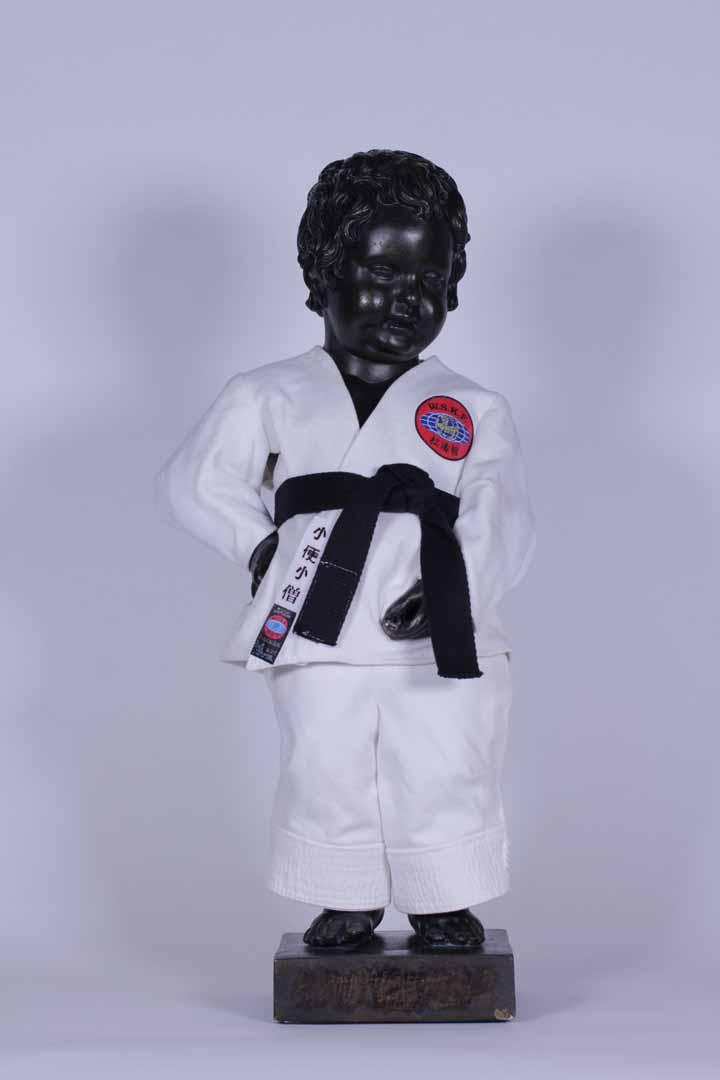
Costume Karatéka. Credit: Garde-robe Manneken-Pis
Her first costume was commissioned in 2017 for Operation Thermos, a charity that provides meals for the homeless."I had just finished a fashion show where I’d designed a shirt with two sides - one neat, one worn. I thought it would be symbolic: from one day to the next, life can go from good to bad, and the reverse too."
The concept was instantly praised. Since then, she has created costumes for Les Petits Riens, Télévie, the Construction Federation, and even the Galatasaray football club.
“For Béjart [Maurice, French ballet dancer, ed] , I recreated the ‘Firebird’ costume. For Les Petits Riens, I was completely free to design what I wanted. Recently, for Galatasaray I made three identical costumes: one for Brussels, one for the Galatasaray museum in Istanbul, and one for the club’s president!”
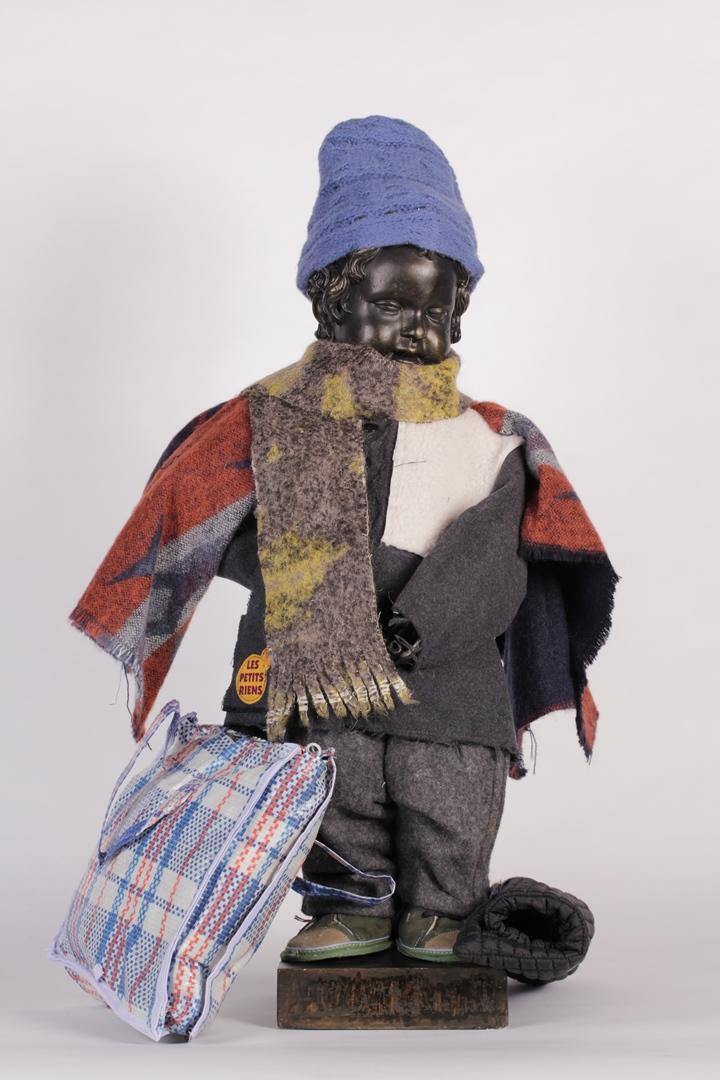
Costume Les Petits Riens. Credit: Garde-robe Manneken-Pis
The secret rules of dressing a legend
Designing garments for the Manneken-Pis is not as simple as it sounds. Every outfit must follow strict guidelines: "A costume can’t be religious, political, commercial, or promotional," Ammoun explains. "It has to stay neutral."
Once a request is approved, the City of Brussels provides a basic sewing pattern. "It’s not easy to understand how it fits on the statue," she says. "Not everyone has access to a real mannequin for testing."
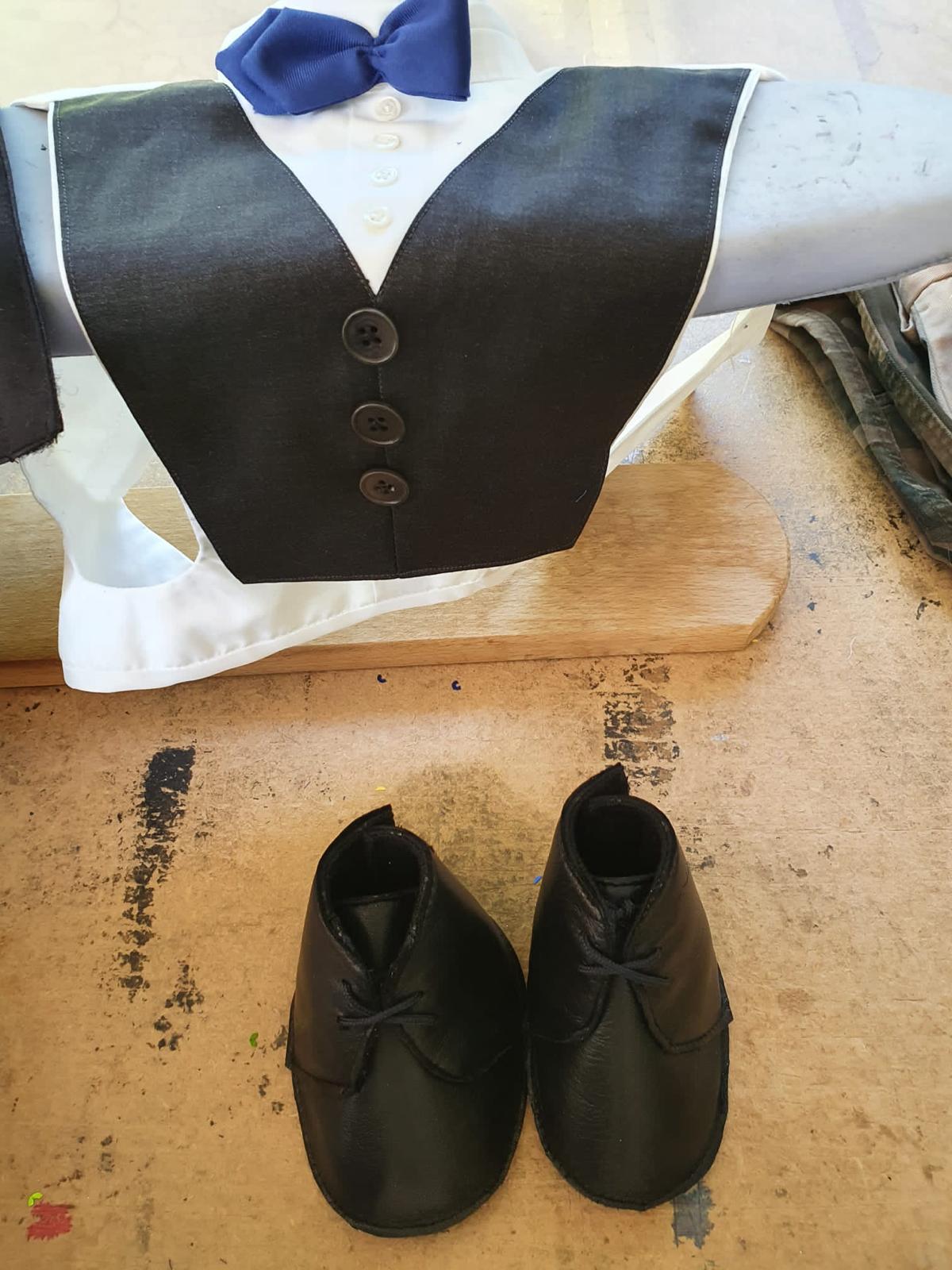
Ammoun has made 22 costumes for Manneken-Pis. Credit: handout
Her process begins with fabric selection and a pinned prototype. But there are many challenges to design a costume for Julien, the Manneken-Pis.
"What makes creating a costume for Manneken-Pis so tricky is mainly his posture: his feet are fixed to the base and his arms are very close to his body. The pattern is therefore quite complex - you need lots of adjustments to make it fit properly".
The hardest part, she admits, is always the shoes. "I usually buy children’s shoes, then deconstruct and reshape them so they fit the statue perfectly." And of course, every outfit must include two openings: one at the front for the fountain, and another at the back for the water pipe.
Ammoun has made 22 costumes so far, often juggling tight deadlines. "Once, a seamstress pulled out two days before a football club’s event. The city called me, and I made the entire costume in 24 hours!"
Stitches, stories and surprises
Among her many costumes, one stands out. "For the Rolling Stones creation, I wasn’t supposed to do it at first. Another designer made a version, but the client didn’t like it — she didn’t have an embroidery machine.
"I made a new, fully embroidered costume. But when we unveiled it, they had accidentally dressed the statue with the old one! The curtain opened, the press and TV were there, and I realised it wasn’t my costume. Too late to fix it!"
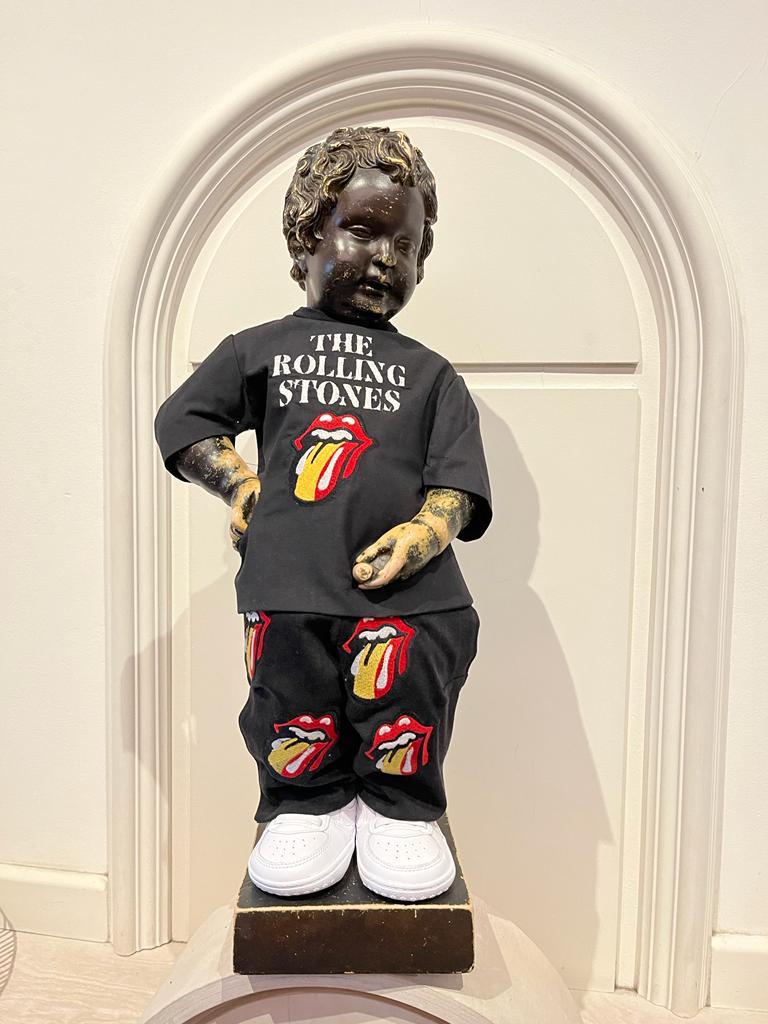
The Rolling Stones costume. Credit: handout
A few weeks ago, Esmeralda appeared in a video produced by the Brussels City Museum, filmed in her workshop surrounded by fabrics. With precision, she demonstrates how each of Manneken-Pis’s costumes takes shape.
For her, every creation carries a sense of purpose and pride. “It’s a great source of pride, because he’s a monument known all over the world,” she says.
"I’m also proud that charities like Télévie have called on me - it’s a real recognition of the quality of my work. Designing costumes for Manneken-Pis truly reflects my pride and my love for Belgian folklore."
