
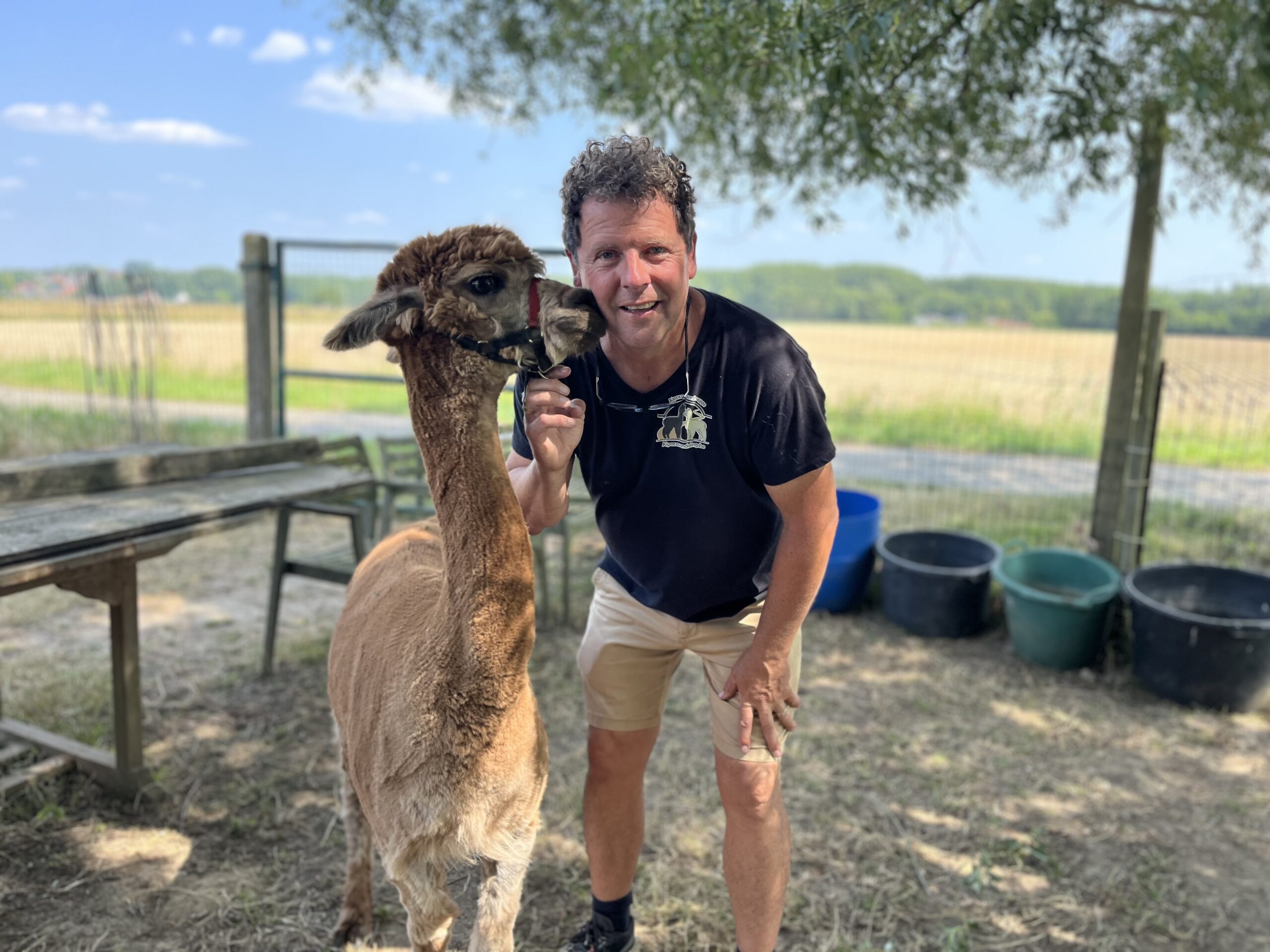
“Don’t touch their heads, that scares them. Don’t touch their bodies, that tickles. Touch the neck. Only the neck.” Following these simple rules will get you far when it comes to an activity that has taken Belgium by storm: alpaca walking.
Alpaca-related activities – from birthday party appearances to wedding photos to therapy sessions – have exploded in Belgium in recent years. At least 40 businesses offer activities, but walking an alpaca on a lead along country roads or through a forest is by far the most popular. It is billed as fun for families, romantic for couples, zen for individuals and teambuilding for office workers.
The words of wisdom above came from Kris De Groot, owner of Alpaca Bambrugge in Erpe-Mere, East Flanders, to whom I turned to find out for myself what all the fuss is about. “It’s very calming, very relaxing,” says De Groot when asked why alpaca walking has become a craze. “You are forced to keep a certain pace with an alpaca. You cannot hurry them.”
This soon becomes apparent. During our walk, De Groot’s border collie darts this way and that, a bark here and a lunge there, but the alpacas remain steady on. “Alpacas are calm and quiet,” he continues. “They are just such nice animals to have around.”
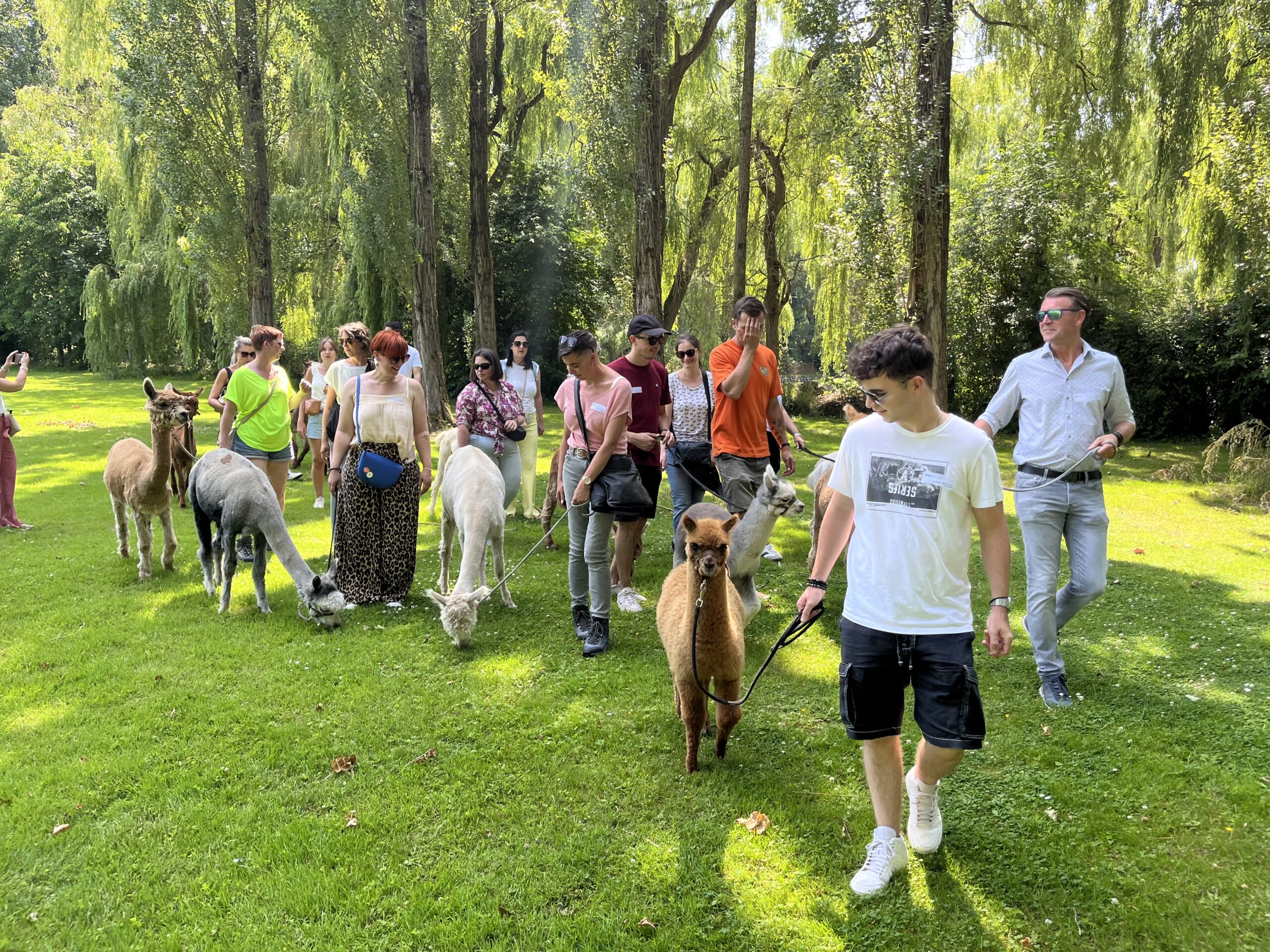
I have joined a team-building group, and the first task is to choose and leash an alpaca. This is where the neck advice comes in very handy. Taking a tame alpaca by the neck to attach the leash to the harness is quite easy - but touch one on the head, and it will dodge you. There are three babies in the group. All the alpacas have names, and De Groot rattles them off – Posh, Flor, Ariel, Bounty, Caramel and her baby Heddy.
Alpaca walking
Once everyone has their alpaca, we head out on a walk of about three kilometres, which leaves from De Groot’s house, winds along grassy trails and through a little residential area, then along a creek and into a monumental garden that belongs to a welcoming pub. The alpacas are loosely tied to a fence while everyone grabs a drink.
Popcorn wool
De Groot proceeds to fill me with entertaining tales and interesting facts about alpacas. Like their cousin, the llama, they can spit. Unlike the llama, they give you a warning first in the form of snorts. Heed the snort, and you’ll be in the clear. Alpacas also create toilets in any field or corral. They only poop in the spot they themselves have designated.
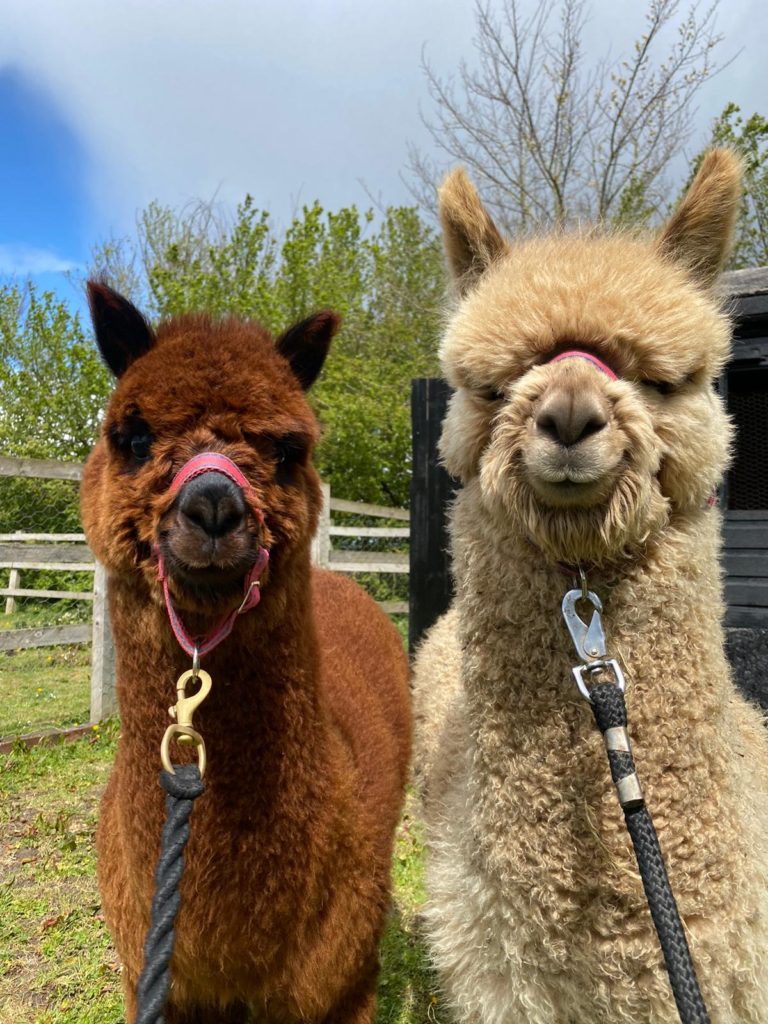
Alpacas don’t smell, which is why they don’t attract flies. Two bonuses! “Children often tell me they smell like popcorn,” De Groot shares. The wool is hypoallergenic and lightweight, providing protection from the heat as well as the cold. It’s like insulation. You can even make an ice bucket with alpaca wool, says De Groot – though it’s more of a bag.
De Groot rotates his 16 alpacas between several fields near his rural home. While some alpaca businesses are full-on farms, with 50-plus animals, De Groot is more of a keeper. He first fell in love with the creatures about 10 years ago when he came across a farm in the Netherlands. He had the 800 square metres required to keep a pair of alpacas, so he bought two. “You always have to get two because they are very social herd animals,” he explains.
While a short walk doesn’t allow you to get to know an alpaca in the same way it would a dog, living with them does. “At one point when I was lying in my hammock, one of them came to lay his head on me. That’s also part of the appeal. When you are calm, they see you as part of the group.”
Alpacas
De Groot also takes the alpacas most suited for it to off-site events, like parties and photo shoots. Caramel is his most serene alpaca and has made trips to nursing homes. “We take the elevator to the third floor. It doesn’t bother her at all.” During one such trip, a woman started talking to the alpaca. “Her therapist said to me that she doesn’t normally speak anymore. She doesn’t talk to the staff at all.”
Which brings up another Alpaca Bambrugge activity: non-violent communication sessions. It’s a popular team-building exercise at several alpaca businesses. According to alpaca therapists, they are calm when people are and so act as “mirrors” of a person’s emotional state.
Entertainment tools?
All of this brings up questions about animal welfare and exploitation. There are no specific policies regarding these kinds of activities, “as long as animal welfare regulations are followed,” according to Ann Heylens of the Flemish Department of the Environment. “That means that the welfare of the animal must always be guaranteed, regardless of the nature of the activity.”
Belgium’s animal rights group, GAIA, however, is sceptical. “We have serious concerns about the impact of this activity on animal welfare,” says GAIA CEO Ann De Greef. “Alpacas are prey animals. Their natural defence mechanism is to avoid confrontation by creating distance. Being led on walks, especially in the presence of noisy or unpredictable groups, can cause significant stress to the animals.”
While the walking is bad enough, she says, using them “as entertainment tools” might be worse. “These are sentient beings with complex needs and sensitivities. Using them in coaching sessions, team-building exercises or festive events often fails to respect their ethnological characteristics and can lead to serious welfare compromises.”
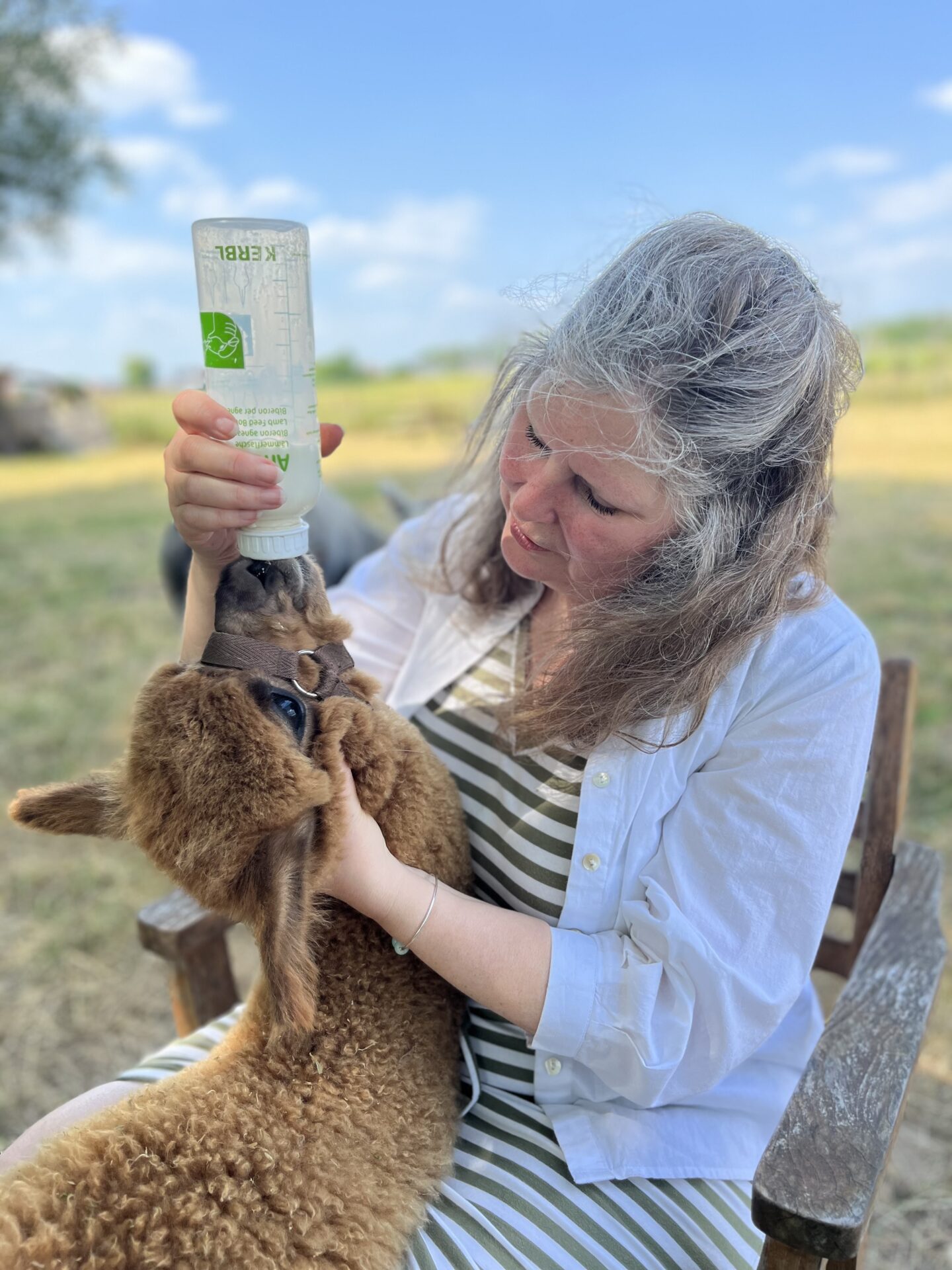
Alpacas, Lisa feeds an alpaca
John Peeters agrees. Belgium’s first alpaca farmer, he began breeding them more than 25 years ago. Now with a wealth of activities, including walking, parties, weekend excursions, summer camps for kids and even an alpaca obstacle course, his Alpacaboerderij in Limburg welcomes some 30,000 visitors a year.
Keepers know their alpacas, he says. “It’s very important to use the right alpaca for the right group of people or the right activity. For example, of the 20 alpacas we use for activities, only two like larger groups of small children.”
One might consider this “tolerating” more than “liking”. But alpacas, says Peeters, “have been bred for thousands of years and are very similar to horses, behaviour-wise. That is why they are very suitable for these activities. I try to have the perfect match between the alpaca and the people or activity to make sure the alpacas enjoy this.”
In Belgium, West Flanders is home to at least 42% of such alpaca businesses. There’s definitely a difference between Flanders and Wallonia, with only a smattering in the latter. But the French-speaking part of the country goes all out: At La Ferme Des Capucines in Braives, Liège province, you can also walk with llamas. And at Domaine Des Hautes Fagnes, you can do yoga surrounded by alpacas.
