
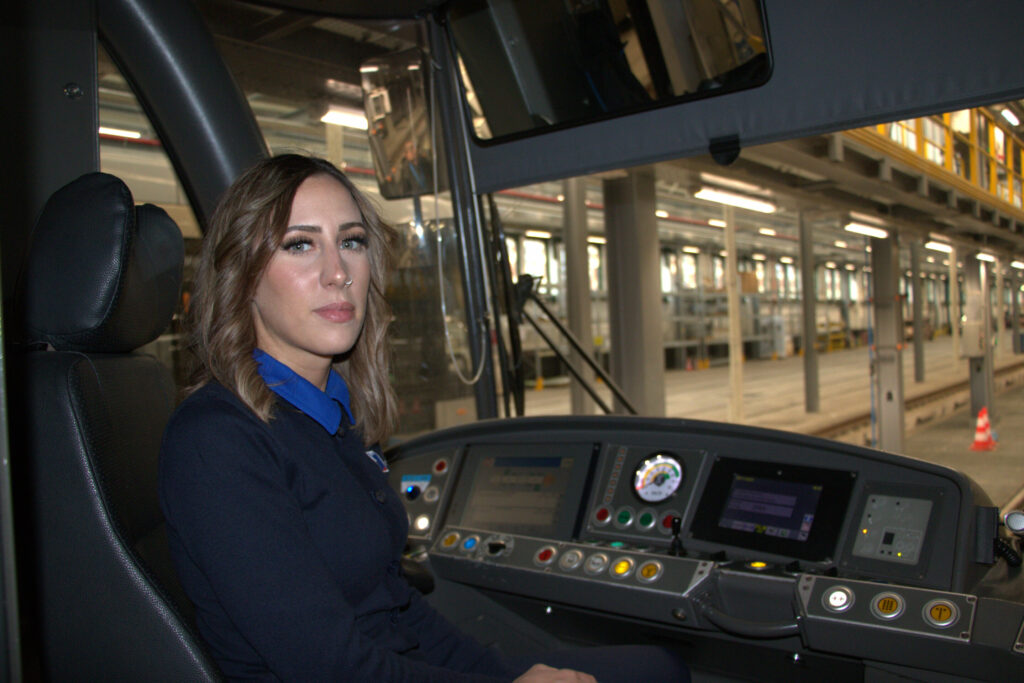
Trams are one of the most familiar sights on the streets of Brussels, but the people operating them remain largely out of sight.
The job is demanding, shaped by responsibility, public contact and split shifts that stretch across the day. And while the profession is slowly changing, women still make up only a small fraction of STIB tram drivers.
Laura Fochesato, 28, is one of them. She has been driving trams for a year and a half. For her, the job was not a spontaneous choice, but a childhood ambition finally pursued. “When I was little, I saw the tram passing and I always said: yes, I want to do that one day,” she tells The Brussels Times. “When I want something, I need to try it.”
Before this, Laura worked for three years as a care assistant and later for five years in security. “And now,” she says with a smile, “I’m here - driving trams.”
Working in a male-dominated field
Women remain a minority across tram depots. On many line teams, Laura says, there may be two or three women among 10 men. But the gender imbalance does not define her experience.
“I always worked with men,” she says. “If you greet everyone respectfully, they respect you too.” She also feels backed by management. “The customer isn’t always right and the company supports us on that.” Respect, she says, depends more on attitude than gender.
To many passengers, tram driving appears deceptively simple, but according to Laura, while the job is not physically demanding, it is mentally exhausting.
“People think you just press a button...but you need to stay focused all the time,” she explains. Every shift requires scanning sidewalks, bike lanes and pedestrian crossings for potential hazards. Headphones, phone screens and scooters weaving unpredictably mean a driver's vigilance must be constant.
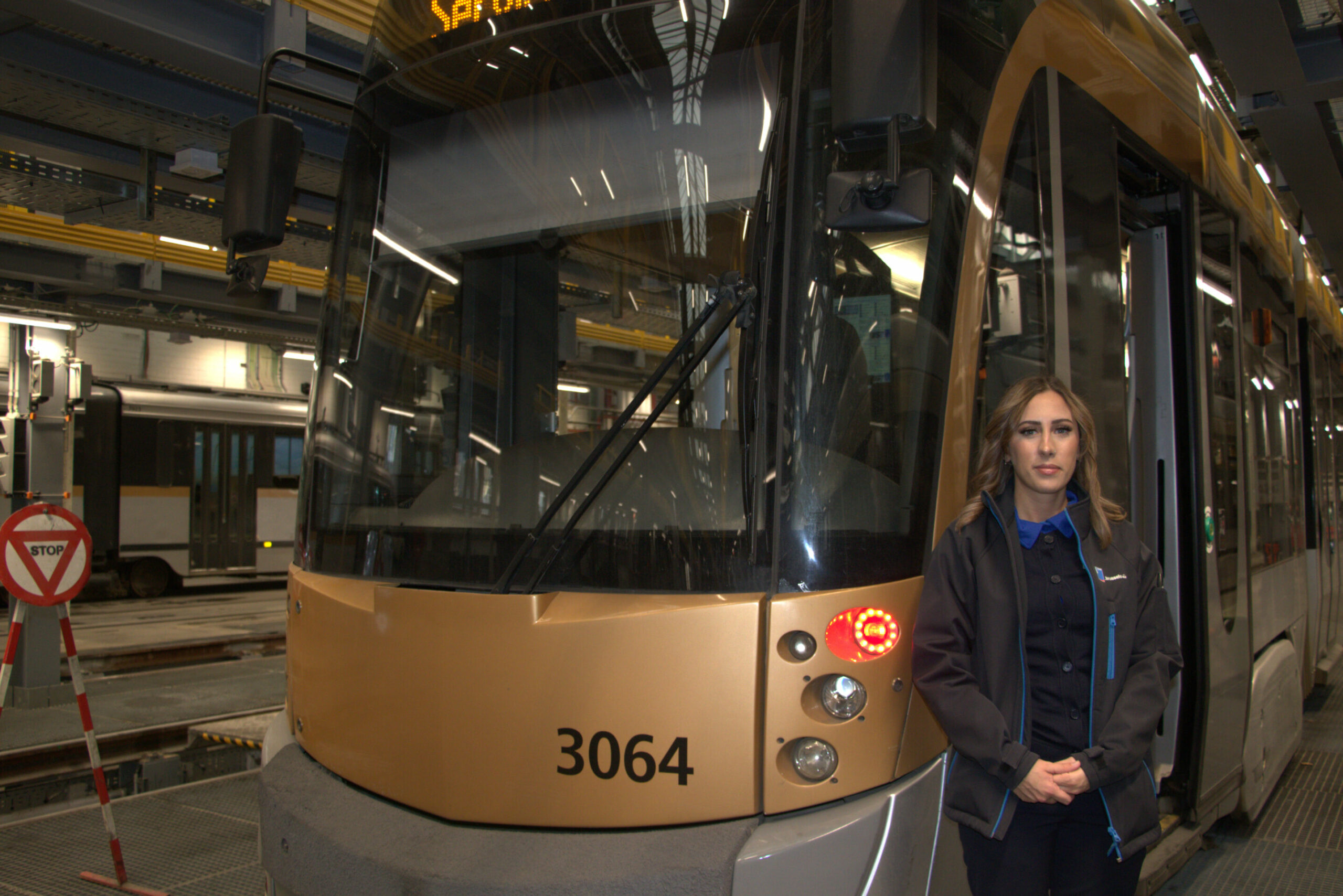
“I honk sometimes five times and they still don’t hear,” she said. “A tram can’t brake the way people think. When leaves fall or there’s rain, the rails get slippery. You can slide metres before slowing down.”
Laura recalls a moment when a man suddenly stepped onto the tracks. She managed to stop in time, but barely. “Your heart races,” she said quietly. “But you have to breathe. If you don’t control yourself in those moments, you make mistakes.”
Carrying empathy into the cabin
Though she left care work behind, Laura still brings that mindset into her job. Helping someone with a pushchair. Asking passengers to offer a seat to someone older. Greeting people who seem nervous or lost.
“You’d want someone to do that for your grandparents,” she says. “It’s not about being a woman or a man. It’s about mindset. Treat people the way you want to be treated.”
But the driver’s cabin does not shield her completely. She once had a passenger stand too close behind her in a smaller tram cabin.
“He said: ‘Let me take a good look.’ I told him: move to the back or I will stop and everyone gets out. He moved. But it felt gross.” Since then, she avoids eye contact at certain stops. “Sometimes one look can be misinterpreted. You have to protect yourself.”
The job’s hardest part: the hours, not the tracks
She loves the work, but she is clear about the main challenge: the split shift system. Drivers often work several hours early morning, then again late afternoon or evening, with long breaks in between that cannot always be used to rest or return home.
Credit: STIB
“You’re mentally ‘on’ from six to nine, then again until early evening. If you live far, you can’t just go home and relax.”
For parents, she says, this schedule becomes difficult. “With children, I think I would stop for a while and train for HR.” Yet she feels strongly connected to the workplace itself. “The atmosphere is like family. They check in with you. They see when something is wrong. They help,” she says.
Brussels, seen from the front window
Driving through different neighbourhoods shows her contrasting sides of Brussels, moments of civility and moments of distance.
“People don’t always say hello here,” she said. “But when I drove lines in Woluwe-Saint-Lambert, you see more nature. People greet you. A greeting motivates you. It helps you continue.”
Other times, Laura notices how disconnected people have become.
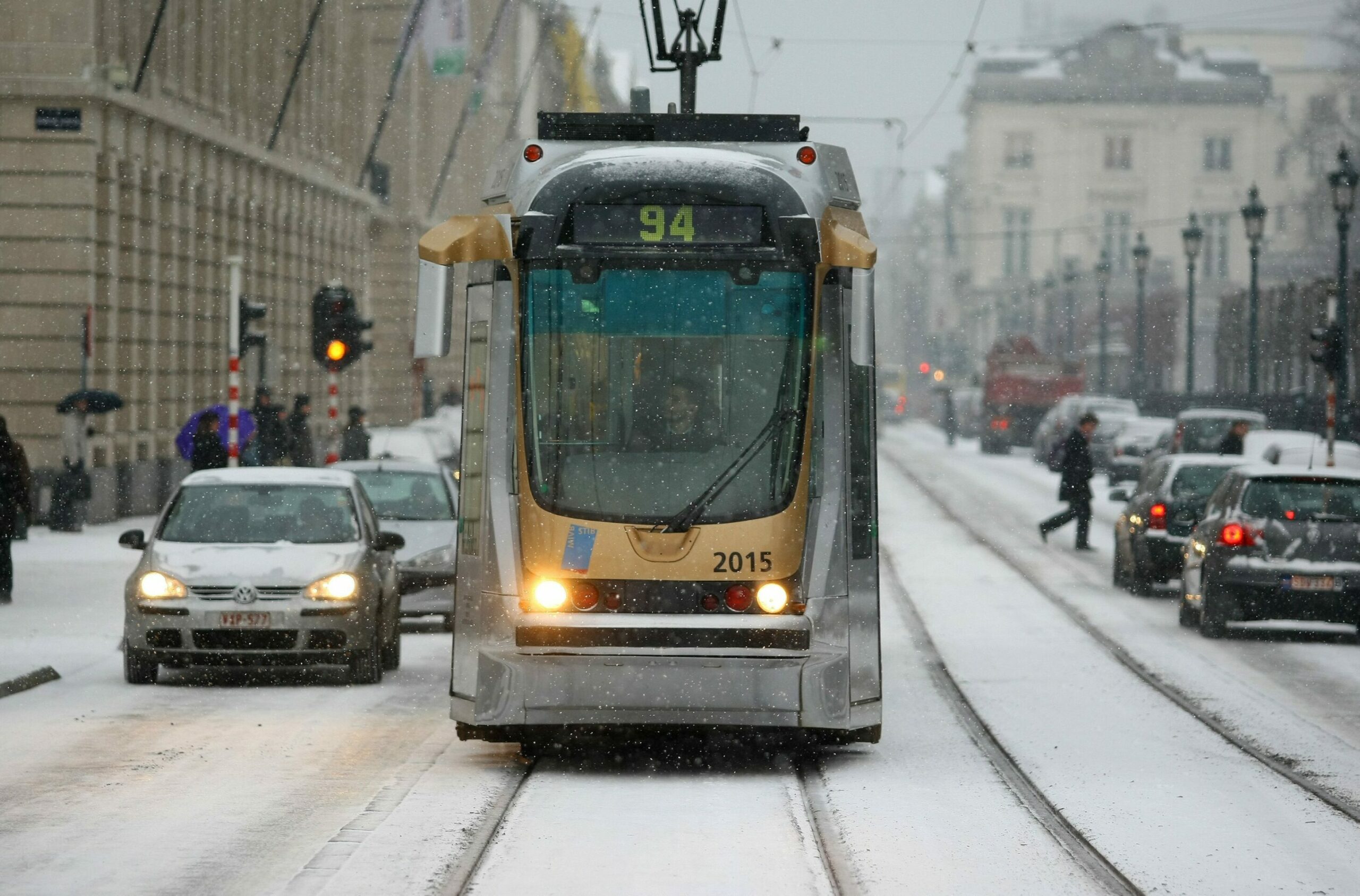
Cars and a tram on a road covered with fresh snow, in Brussels city centre. Credit: Belga
“Since Covid, people became less social," she says. "More afraid. Even when someone gets robbed, people stare at their screens instead of helping.” Yet she still finds warmth in small details: a child waving, an elderly passenger thanking her, sunlight reflecting on wet rails.
“These things stay with you,” she says.
No regrets and a message for the city
Despite the stress, the schedule and the occasional unwanted attention, Laura speaks with clarity and conviction: she loves her job.
Related News
- 'The danger is very real', STIB warns after rise in people jumping onto metro tracks
- Man hit by tram in Ixelles
“I like working. I like my job. Some days are tough, yes. But I love what I do. And I have good colleagues. We support each other.” She would encourage other women to try the profession, even if they assume they might not fit into it.
“People should try it and see that it’s not as easy as they think. Mentally it’s heavy. But it’s a good experience. No regrets.”
She pauses and adds one last thing, directed at everyone outside the cabin: “We only have one life. Before crossing, make sure the driver has seen you. Make eye contact. People forget that.”
