
The European Commission has offered guarantees to Belgium that it will be not be left to deal with the consequences if €140 billion worth of Russian assets - currently held at Brussels-based Euroclear - are seized and lent to Ukraine.
The Commission wants to use the funds as a loan to keep Ukraine financially and militarily afloat for the next two years. Belgium fears the possible legal and financial consequences of this, and is demanding firm guarantees from the Commission and the other member states to share these risks, fearing possible Russian retaliation.
In a letter sent to EU member states on Monday, the Commission set out how it would ensure Belgium does not shoulder the burden alone.
According to the letter, which has been reported by several media outlets, the Commission’s guarantees would cover risks arising from arbitration or judicial decisions related to bilateral investment treaties - such as the 1989 Belgium/Luxembourg-Russia treaty - that are linked to the freezing of Russian sovereign assets, even after the asset freeze has been lifted.
The letter says that in order to ensure that the EU remains able to repay, member states would provide the Union with "legally binding, unconditional, and irrevocable" guarantees based on their national wealth (the key being GNI, or Gross National Income).
The loan, as presented so far, could amount to €140 billion to cover Ukraine's needs for 2026-2027. In its letter, the Commission estimates these needs at €70 billion for 2026. Ukraine would only repay the loan once it has received reparations from Russia for the damage caused.
In addition to central securities depositories like Euroclear, the initiative could be extended to cash balances associated with Russian sovereign assets held by other financial institutions in the Union, such as commercial banks (€25 billion), the Commission says. The coverage could thus increase from €185 billion to €210 billion.
"In all cases, the guarantees will remain in place even after the lifting of sanctions," according to the text.
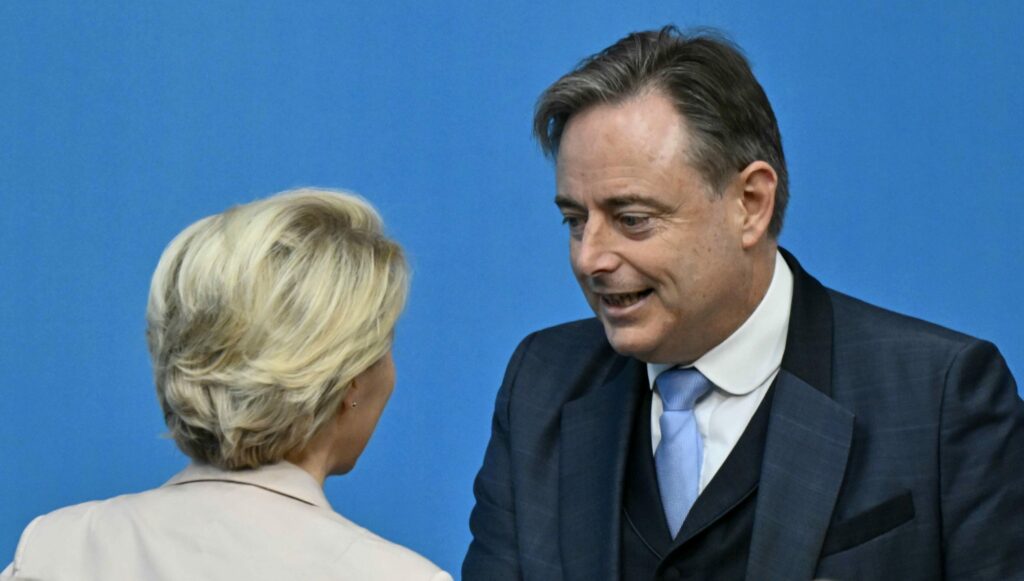
The letter comes in the wake of a one-hour meeting between De Wever and Commission President Ursula von der Leyen on Friday to discuss the issue of Russian assets.
Related News
- Russian ambassador threatens Belgium with 'severe retaliatory measures' over frozen assets
- De Wever to meet Commission President Von der Leyen this afternoon
- 'Out of the question': Norway rules out being the sole guarantor of loan to Ukraine
- 'Europeans are the only ones who have a say' French President Macron on frozen Russian assets
