
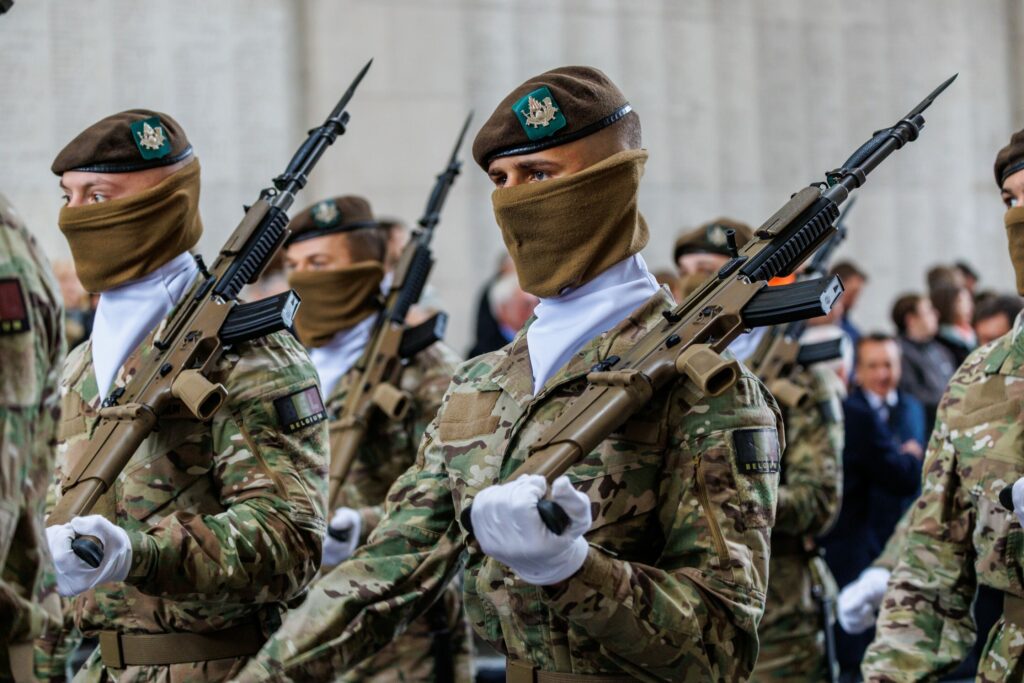
The European Commission announced a "military Schengen area" to strengthen military mobility, fewer rules and a framework for the rapid movement of troops and equipment in emergency situations within the EU to better respond to the current security context.
Earlier this year, the European Commission proposed several plans to boost military investment in the EU, taking into account the war in Ukraine and the changing geopolitical situation.
But in addition to enhanced European defence cooperation and a strengthening of the industry, logistics must also be strengthened. Therefore, the Commission presented its plan on Wednesday to strengthen military mobility within the EU.
"It is very simple: the faster we can move troops and equipment, the stronger our deterrence and defence," said High Representative for Foreign Policy Kaja Kallas.
She referred to the suspected Russian sabotage of a railway line in Poland earlier this week, which "demonstrates the unprecedented risks to European transport infrastructure."
Minutes, not months
The Commission is proposing a series of measures to create an "EU-wide military mobility zone" by 2027 and, in the long term, a "military Schengen area" with free movement of military troops and equipment.
Among other things, it wants to harmonise the rules, improve the infrastructure itself, and allow Member States to share capabilities.
Specifically, it wants Member States to authorise cross-border military transport within three days during peacetime. Currently, these deadlines vary widely and can take up to 45 days.
"We should be talking about minutes and hours, not weeks or months, as is the case today," said European Commissioner for Defence Andrius Kubilius.
For the first time, the Commission is also proposing legislation on military mobility, "which will move us from 27 national authorisation procedures to a single EU procedure," he said.
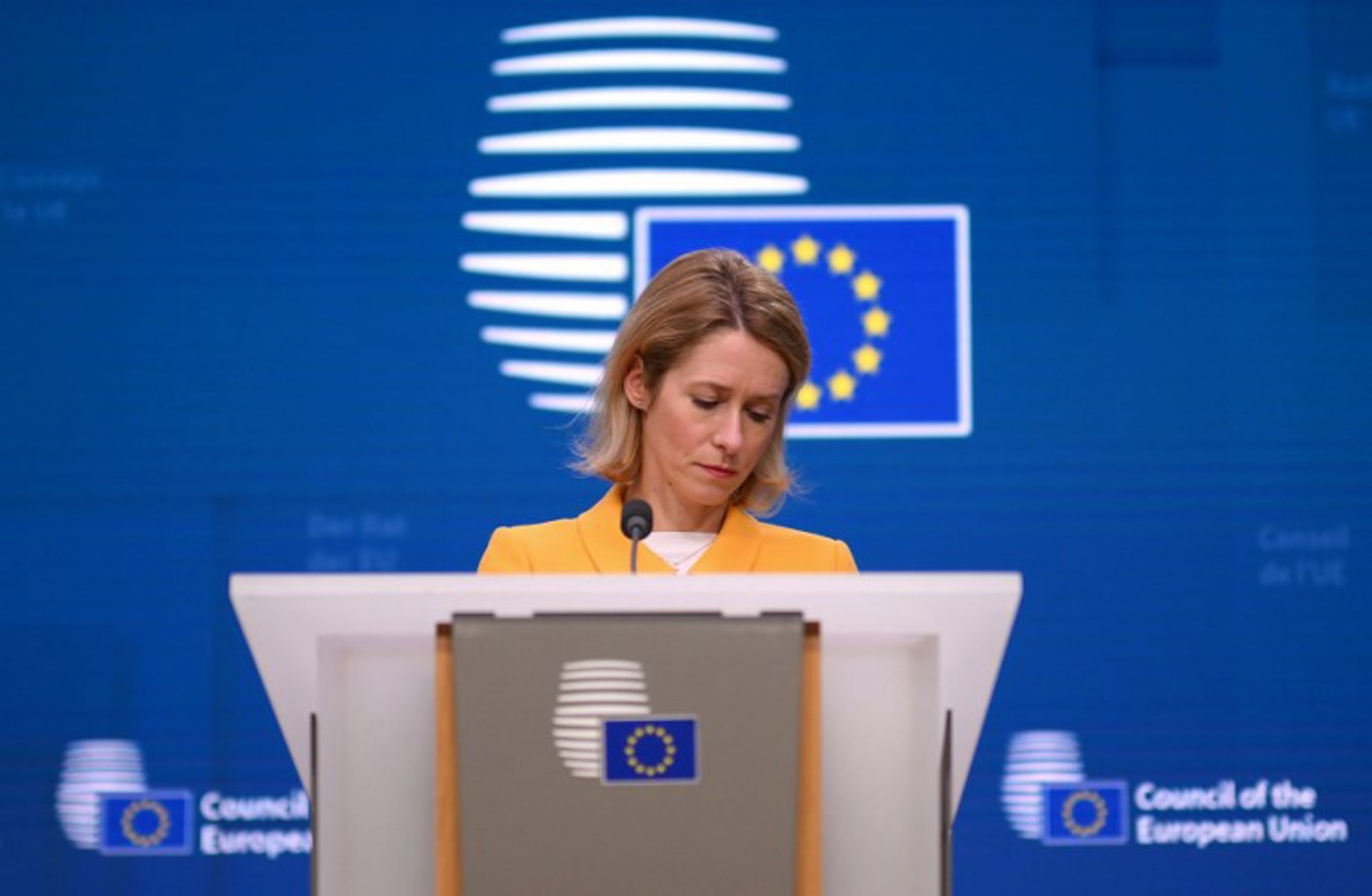
EU High Representative for Foreign Affairs and Security Policy Kaja Kallas. Credit: John Thys/AFP/Belga
Also noteworthy is the creation of an emergency framework (European Military Mobility Enhanced Response System, EMERS), which would give military convoys priority at border crossings and logistical transit points throughout the EU in a crisis situation.
Permits would also be granted automatically, and rules on driving and rest times, as well as on environmental and noise pollution, would be temporarily suspended. Either a Member State or the Commission can propose the activation, after which the Council (the EU institution in which the Member States reside) must make a decision within 48 hours.
The Commission will also examine, together with the Member States, which infrastructure needs to be improved in the short term, such as bridges that are not strong enough for tanks or tunnels that are too narrow, for example.
Around 500 hotspots have already been identified by the Member States, which together require an investment of around €100 billion, according to the Commission.
Solidarity pool
The Commission also wants to establish a "solidarity pool," in which Member States can jointly share national and EU transport resources. A Military Mobility Transport Group will be established, which will coordinate the package's coherent and effective implementation, among other things.
Each Member State must also appoint a national coordinator for military transport. The Commission is also planning stress tests and intends to organise annual military mobility exercises starting in 2026.
The proposal does not provide for additional funding beyond the budget already announced in the current multiannual budget. For the period 2028-2034, the Commission has earmarked €17.5 billion for military mobility, an amount that can still be adjusted during the negotiations – ten times more than the current EU contribution of €1.7 billion.
Member States can also use cohesion funds for investments in military mobility, or the SAFE mechanism, the Commission emphasised.
The Member States and the European Parliament still need to consider the proposal.
Belgian MEP Wouter Beke (CD&V) is pleased, stating that military mobility has been neglected for years. He emphasised that Belgium also plays a crucial role.
"Our ports and airports are not only Europe's logistical hub, but also play a crucial military role," he said. "The Port of Antwerp is one of the most important gateways for NATO troops and must therefore be ready for large-scale, complex operations. The Iron Rhine/3RX is also essential for this military mobility and for strengthening our port, but unfortunately remains blocked by the Netherlands."
