
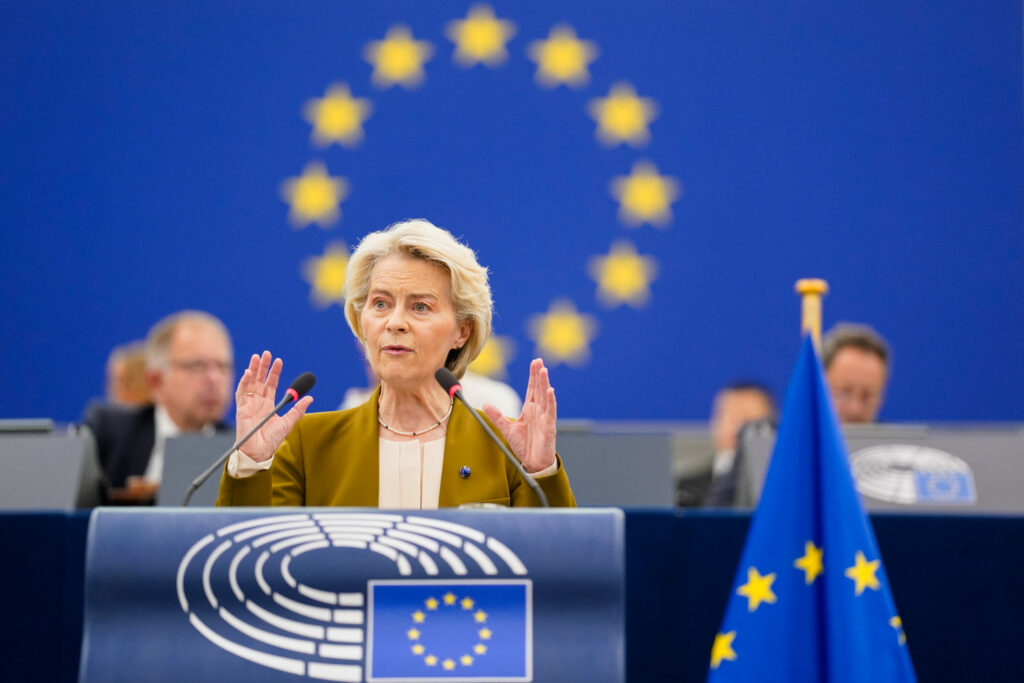
European Commission President Ursula von der Leyen stated on Wednesday in Strasbourg that European taxpayers cannot be expected to bear the financial burden for Ukraine alone.
Speaking before the European Parliament, von der Leyen stressed that as long as Russia shows no genuine intention to engage in peace talks, the EU must support Ukraine’s defence.
The Commission plans to submit a legal proposal before December’s EU summit to provide a loan to Ukraine next spring, covering its financial needs for 2026-2027.
Options under consideration include direct national contributions, a new large-scale joint EU loan, or utilising frozen Russian sovereign assets, primarily held by Euroclear in Belgium.
However, Belgium has expressed significant concern over legal, financial, and potential retaliatory risks, demanding strong guarantees and a shared burden among EU states.
Von der Leyen reiterated her stance that European taxpayers should not finance this alone, emphasising the importance of exploring alternative resources to assist Ukraine in resisting Russian aggression.
"The next step will be for the Commission to present the corresponding legal text," confirmed von der Leyen. "To be very clear: I cannot conceive of a scenario in which European taxpayers alone would foot the bill," she stressed.
US plan unacceptable
Last week, diplomatic manoeuvres regarding Ukraine and frozen Russian assets took a twist with the leak of a contentious 28-point US plan.
The US wanted to invest $100 billion from the frozen assets in a Washington-led effort to rebuild Ukraine. The Americans would have pocketed half the profits and the Europeans would have had to add an additional $100 billion. The rest of the frozen assets would have been paid into a US-Russian investment vehicle.
A few days later, the plan was radically revised in Geneva, where the Americans sat down at the negotiating table with the Europeans and Ukrainians.
This brought them back to square one, namely that Ukraine must be fully compensated financially for the Kremlin's war of aggression, including through Russian assets that would remain frozen until Moscow had paid for the damage caused in Ukraine.
Ukraine's financial needs are estimated at around €135 billion until the end of 2027.
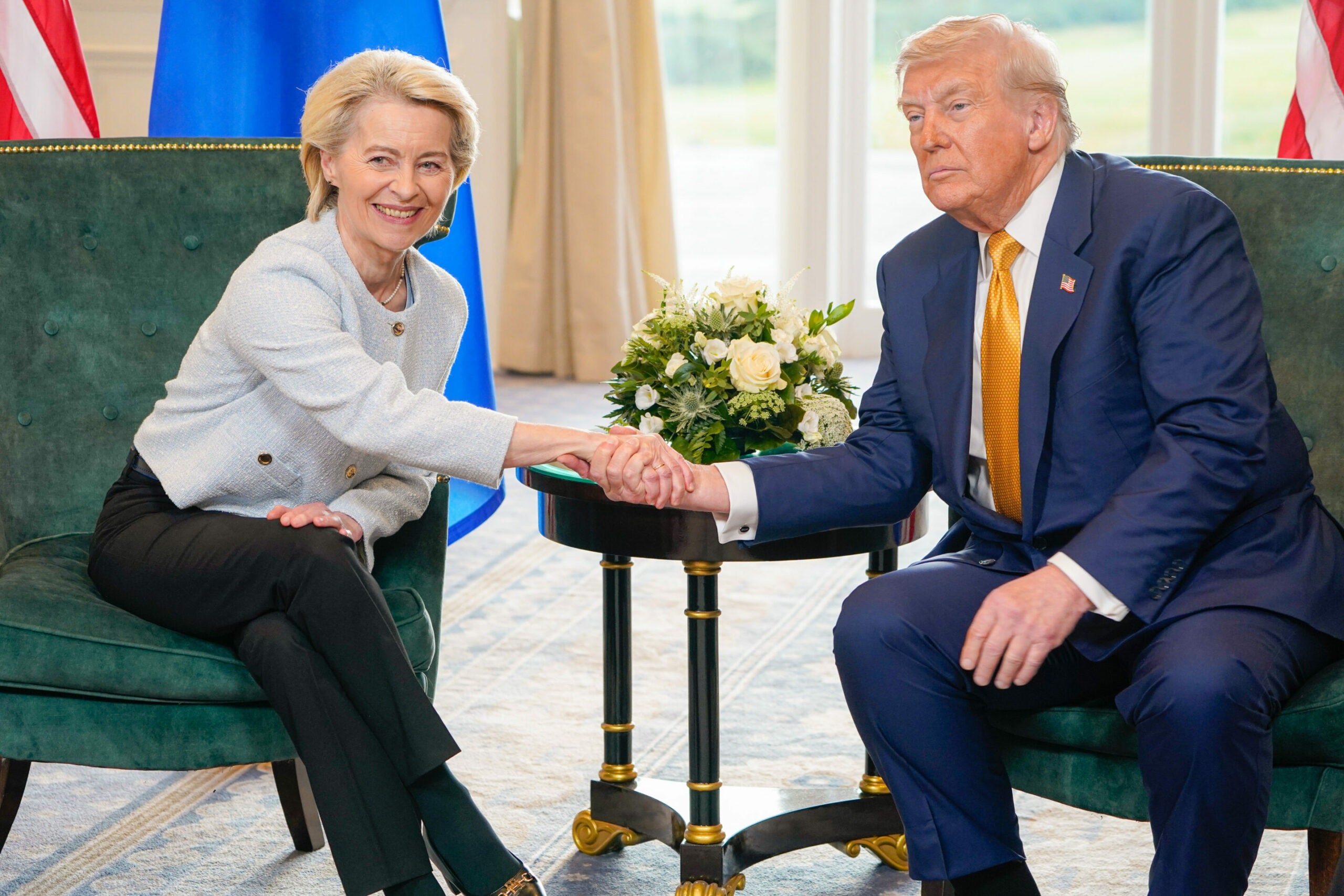
President of the European Commission Ursula von der Leyen, travels to Scotland, upon invitation of Donald Trump, President of the United States, to discuss transatlantic trade relations Sunday 28 July 2025. Credit: EU
Regarding the peace talks, the work done in Geneva in recent days is "a starting point", according to the German politician. But "every time we get close to negotiations that could lead to real peace, the violence intensifies. We have seen this before; it is a recurring scenario," she laments.
For peace to be sustainable and just, she argued, Ukraine’s sovereignty must be protected, its borders must remain intact, and its military must not face restrictions.
The leaked US plan faced condemnation in the European Parliament as entirely unacceptable. Wouter Beke (CD&V, EPP) accused far-right and far-left groups of supporting the proposal, which he referred to as "Putin’s 28-point plan communicated by Trump."
Hilde Vautmans (Open VLD, Renew Europe) criticised Europe’s limited role, saying, "This shows again how weak and irrelevant we are without speaking with one voice or developing our own defence capabilities."
Marc Botenga (PTB, The Left) called for serious consideration of Ukrainian desire for negotiations, citing a survey indicating 69% of Ukrainians favour a negotiated solution, yet questioned Europe’s intentions, asking, "Are we prolonging this war?"
Finally, Kathleen Van Brempt (Vooruit, S&D) highlighted the plight of over 17,000 Ukrainian children kidnapped and taken to Russia, stressing that any peace agreement must ensure their return to Ukraine.
