
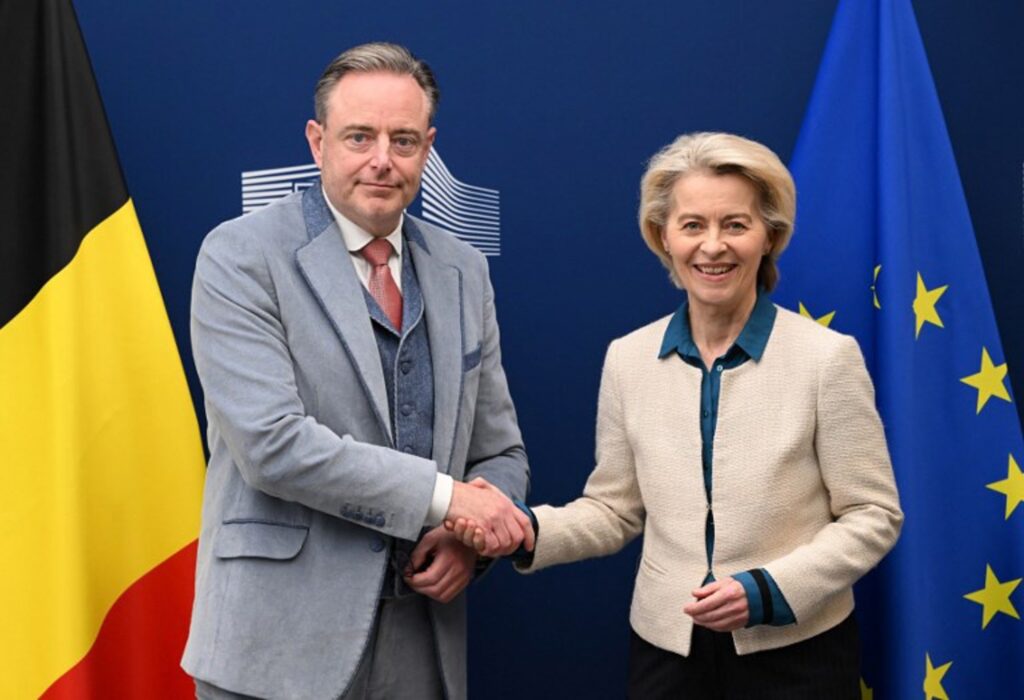
The European Commission’s plan to use frozen Russian assets to fund Ukraine’s recovery is "fundamentally flawed," according to Belgian Prime Minister Bart De Wever.
In a letter to Commission President Ursula von der Leyen, seen by The Financial Times and Belga, De Wever expressed concerns about the legality and financial risks of the proposal. The plan involves utilising Russian state assets held primarily at Euroclear in Brussels, valued at approximately €140 billion.
Belgium fears that this approach could violate international law and destabilise global financial markets. De Wever criticised the Commission for failing to adequately address these concerns.
He warned that, despite the EU’s confidence in the plan’s legality, other countries might view it as an illegal confiscation and respond accordingly. This could increase financial instability and expose the EU to significant risks.
The Prime Minister emphasised that the EU might eventually need to repay the frozen funds, making a collective loan a potentially safer alternative. He also suggested that member states should share the burden more equally, using assets frozen in other countries.
De Wever cautioned against potential Russian retaliation and raised concerns that using the assets could harm peace negotiations. He stressed the importance of exploring alternative funding options.
The issue of financing Ukraine will be discussed at the EU summit on 18 December. While Belgium will not veto the proposal, De Wever stated that his government will only agree if its concerns are addressed. The Belgian PM called for member states to guarantee the entire amount, with commitments made in writing.
Von der Leyen's spokesperson, Paula Pinho, confirmed on Friday that the letter had been received.
"We are continuing to work intensively with the Member States and with Belgium following the presentation of the paper setting out the various options for meeting Ukraine's financial needs in 2026 and 2027,"she added, referring to the three options Von der Leyen proposed to the Member States: a rebalancing, financial contributions from Member States or common debt.
When asked whether the Commission is considering having the financing approved by a qualified majority Pinho replied that procedures will only be discussed once the legal text is ready. This will follow "in the coming days," she added.
"We now want to ensure that the concerns and questions, which are legitimate, are addressed in a satisfactory manner, so that everyone has confidence in the final solution and feels comfortable with it," Pinho concluded.
She declined to comment on De Wever's remark that the use of the funds would jeopardise the peace negotiations. "That is one of the elements of the peace talks. The President has listed the EU principles that must be respected in this regard," she said.
Related News
- MEPs vote for Ukraine reparations to be covered by Russia's frozen assets
- Belgium and other EU states to question Kallas over details using frozen Russian assets
- EU taxpayers should not pay for Ukraine defence alone - Von der Leyen
- ECB will not back EU loan to Ukraine funded by frozen Russian assets in Belgium
This article was updated at 12.20pm to include comments from Paula Pinho.
