
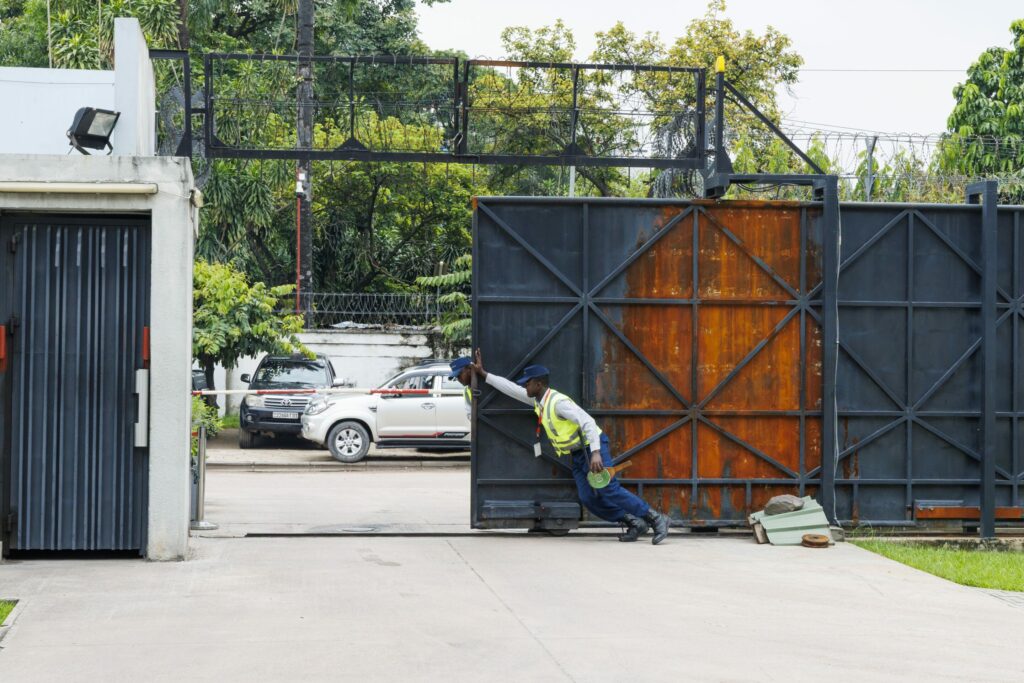
Belgium is looking into simplifying its procedure for people to apply for a visa to come to the country. Currently, the requirement to submit the application at a Belgian diplomatic mission in person can be difficult, and even dangerous.
As submitting a visa application to come to Belgium should never be a very difficult or dangerous undertaking, the Federal Ombudsman has made several recommendations to the country's Foreign Affairs Ministry and Immigration Office to make the process easier.
"The requirement to present oneself in person is problematic," Jérôme Aass, Federal Ombudsman, told The Brussels Times.
Anyone who needs a visa to come to Belgium must apply at a Belgian diplomatic mission authorised to process the application. To submit the application, the applicant must present themselves in person.
Unsafe
While ideally there is a Belgian diplomatic or consular representation in the country where the applicant is located, sometimes they have to cross a border to go to a competent mission.
"But this can be complicated because it sometimes involves additional administration, and expensive when an entire family has to travel to another country, for example," he said.
Most importantly, this process can also be dangerous: in some cases, applicants have to cross unsafe territory or are uncertain about returning to their country after applying.
"Applicants from Afghanistan (where the Taliban took over several years ago), for example, have to go to the diplomatic post in Islamabad (Pakistan) to submit their application," Aass said.
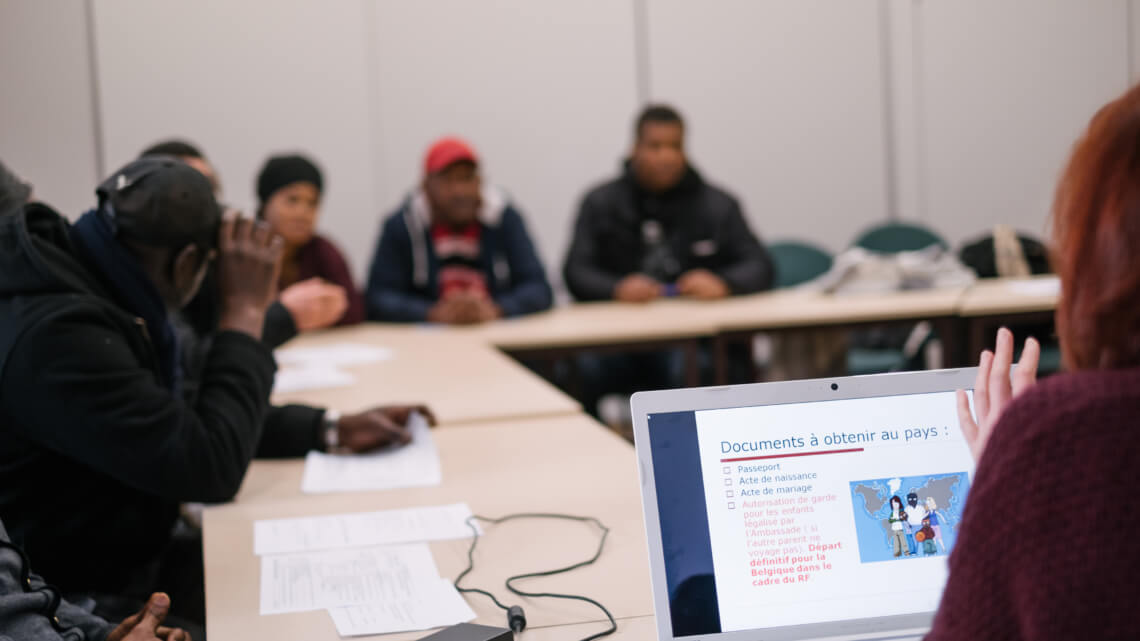
People being briefed on how to get the necessary documents. Credit: Caritas
For years, the Federal Ombudsman has been receiving complaints about the difficulties and obstacles people face when submitting a visa application.
"An administration must be sufficiently accessible, provide legal certainty, and treat citizens equally," the Federal Ombudsman stressed, adding that the current way of working "does not provide quality service" in some situations.
Additionally, the requirement to submit a visa application in person is firmly anchored in the administrative practice of the Foreign Affairs Ministry and the Immigration Office, but it has no legal basis.
Feasible alternatives?
In April 2023, the issue was brought before the European Court of Justice in a family reunification case. In the so-called 'Afrin judgment,' the Court ruled that the requirement that applicants submit their application in person "may not undermine the fundamental right to family reunification."
Additionally, the court also ruled that EU Member States may not systematically require applicants to submit their applications in person. Instead, the court required Member States to be flexible and take into account difficult circumstances.
In these circumstances, they must provide "feasible alternatives," such as an application by letter or email. At a later stage of the procedure, when feasible, they may still ask the applicant to appear in person.

Credit: Unsplash
Following the European Court of Justice judgment, Belgium's Immigration Office introduced an exceptional 'Afrin procedure' for foreign nationals who "find themselves in a situation where it is impossible or extremely difficult" to submit their family reunification visa application in person.
They can submit their application via remote communication (such as email) to the Belgian diplomatic or consular post responsible for their place of residence.
While the Ombudsman said that this procedure is "certainly an improvement" in some cases, he stressed that some problems remain.
The biggest issue is that the emphasis remains on remote submission as an exception, and it is only possible in certain situations, such as in the event of an armed conflict in the region. Additionally, the procedure is not applied uniformly and consistently across all diplomatic missions.
"The current way of working results in a high workload in some embassies and diplomatic posts," Aass said.
Finding modern solutions
This, the Ombudsman stressed, results in persistent problems with the accessibility of the diplomatic missions (long waiting times for an appointment), uneven quality of the reasons for the refusal of an application, and continued legal uncertainty for applicants.
He also noted that the same problems arise with long-stay visas other than family reunification visas (such as humanitarian visas), and with difficulties other than having to cross an area affected by armed conflict.
The Federal Ombudsman sees the solutions resulting from the Afrin procedure as "an opportunity to review the procedures for submitting residence applications," aiming to "find modern and innovative solutions" to the problems surrounding the accessibility of the diplomatic missions for applicants and to the increasing workload at the missions.
The Federal Ombudsman consulted with the Foreign Affairs Ministry and the Immigration Office about the problems and provided them with recommendations to improve the problematic situations.
"It is now up to them to see to what extent they can implement them," said Aass. "We hope that our recommendations can be implemented as quickly as possible."
