
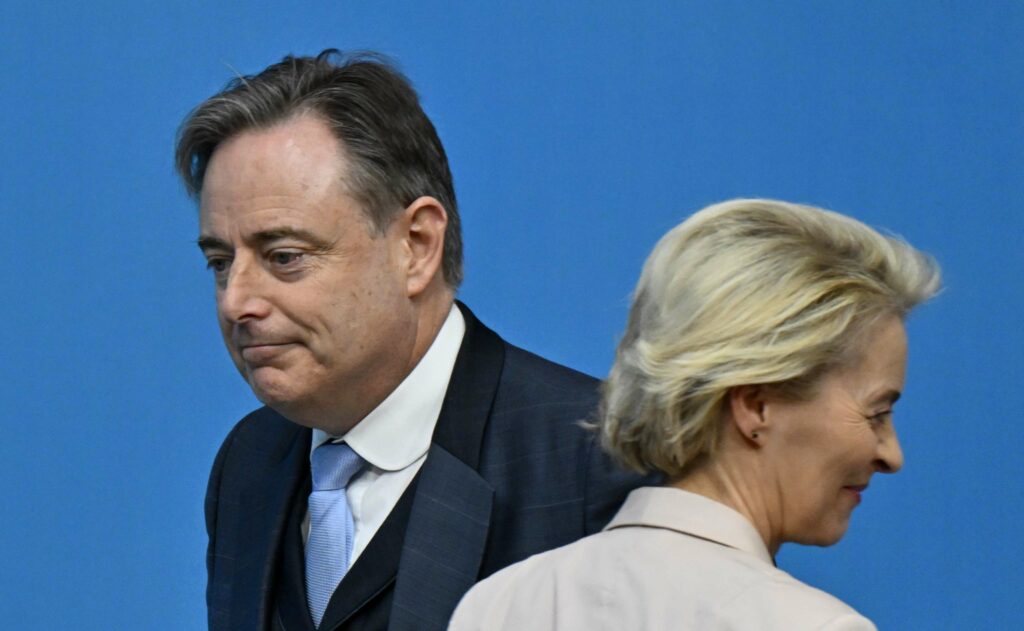
Belgium's Prime Minister Bart De Wever (N-VA) will meet for dinner with German Chancellor Friedrich Merz and European Commission President Ursula von der Leyen in Brussels to discuss the frozen Russian assets held at Euroclear in Brussels.
Belgium remains unconvinced by the Commission's plan to utilise frozen Russian state assets (primarily held at Euroclear) as collateral for a loan to support Ukraine, due to potential legal and financial risks, even after the draft legal texts were presented on Wednesday.
In an opinion piece published on the same day, Merz again urged the use of Russian assets for Ukraine's reconstruction, arguing that this would be "fully compatible with international law and our international obligations."
He added that any risks must be shared by all EU Member States and that this principle should be politically enshrined. He also stated that Belgium’s objections "must be addressed during the discussions on the concrete legislative texts. These need to begin immediately and be concluded swiftly."
Now, Merz even postponed a planned trip to Oslo to try to convince De Wever over dinner with Von der Leyen on Friday evening.
Written guarantees
Belgium is demanding written guarantees from all Member States that they will underwrite the operation should the funds ever need to be returned to Russia or compensation payments be required.
Speaking at a lecture for a French-speaking audience in Brussels earlier this week, De Wever noted that Germany was the only country so far to declare that it is prepared to guarantee "x percent of the operation" and, if necessary, provide the required liquidity.
Like Foreign Minister Maxime Prévot (Les Engagés), De Wever advocates financing Ukraine through a joint EU loan rather than using Russian state assets.
