
Yassine Mahi, the man who killed a Brussels police officer in 2022, will be sectioned following a ruling by the Brussels Council Chamber.
The Council Chamber determined that Mahi suffered from a mental disorder at the time of the attack and continues to do so, making him legally unaccountable for his actions.
However, the investigation also revealed that Mahi had undergone jihadist radicalisation, and his actions were characterised as terrorism.
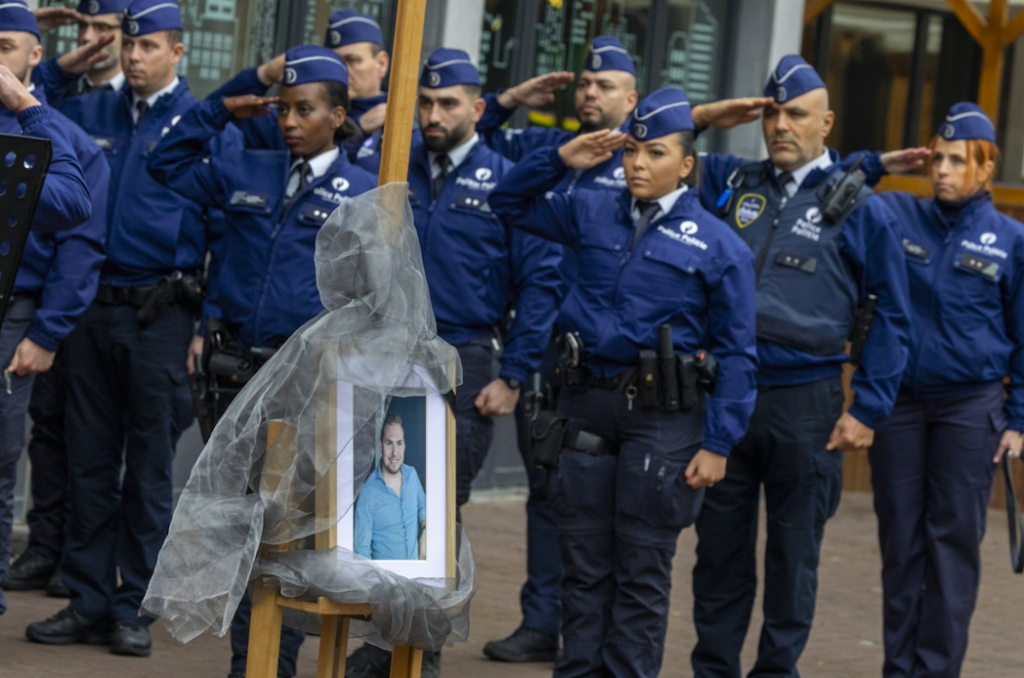
Officer Thomas Monjoie, aged 29, was stabbed on 10 November 2022 at around 7:00 pm on Rue d'Aerschot in Schaerbeek while patrolling with a colleague. Monjoie succumbed to his injuries, while his colleague, Jason P., was wounded.
Another police patrol arrived as reinforcement and shot the perpetrator, Yassine Mahi, injuring him in his arm and leg. Mahi was hospitalised with serious injuries and was placed under arrest two days later.
Earlier on the day of the attack, Mahi had turned himself in to the police in Evere, claiming he intended to attack officers and requesting psychological help. He was transferred to Saint-Luc University Clinics’ psychiatric unit for evaluation, but left shortly afterwards without receiving treatment.
Mahi had been under surveillance by security services since 2015 because of radicalisation during a previous prison sentence. He had undergone a de-radicalisation programme but continued to maintain contact with radicalised individuals, as shown by analysis of his phone before the attack.
He reportedly stated multiple times that he sought “forgiveness for his mistakes by killing police officers.” The Council Chamber considered his attack to be motivated by extremist jihadist ideology.
Witness reports suggested Mahi exhibited signs of severe mental distress, including paranoia, talking to himself, and describing hallucinations such as being “attacked by colours” and hearing “voices.”
Three psychiatric assessments conducted during the investigation diagnosed Mahi with schizophrenic psychoses and concluded that he remains a danger if not provided with psychiatric care.
Based on these expert reports, the Council Chamber decided to section him.
