
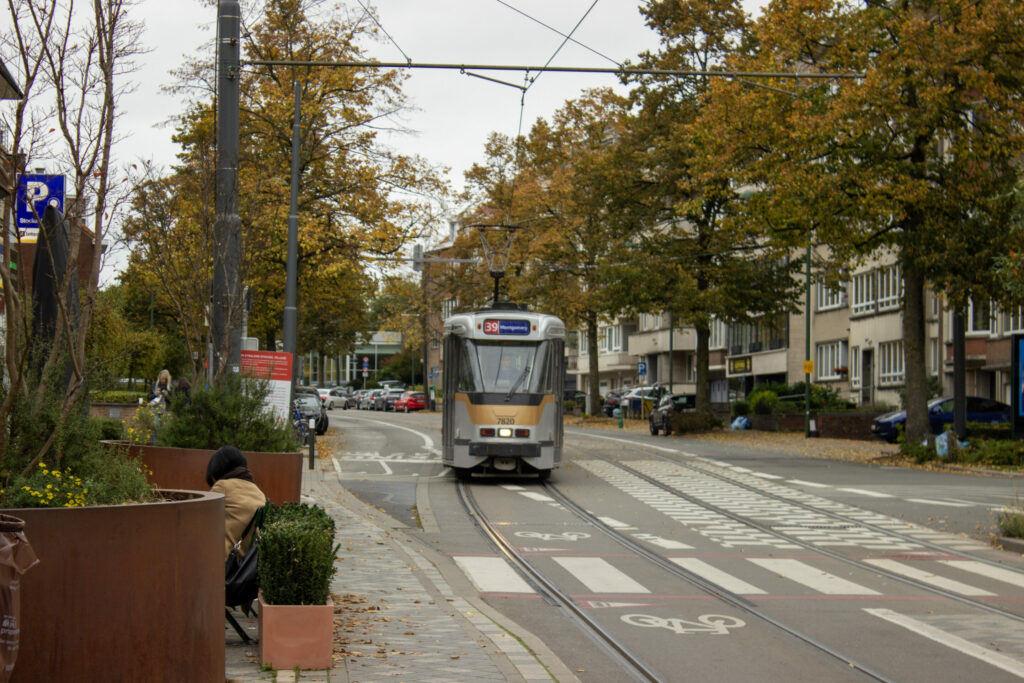
If you hop on the metro in central Brussels and travel eastwards all the way to the end of line 1, you will find yourself in one of the city’s most charming and coveted suburbs.
Stockel, which is located at the eastern end of Woluwe-Saint-Pierre, has the easy-going vibe of a traditional market town. Though much of its architecture is modern, going there feels like stepping back into a different era, before supermarkets and the internet changed the way we shop. The area is chock full of businesses selling everything you would expect to find on an old-fashioned high street, from clothes and shoes to books and toys.
Tintin aficionados have been coming here for years - not for the high street, but for the town's unique tourist attraction. Inside the metro station is an enormous fresco bringing together all 135 characters from the Tintin universe - a monumental work of art conceived by Hergé himself, shortly before his death.
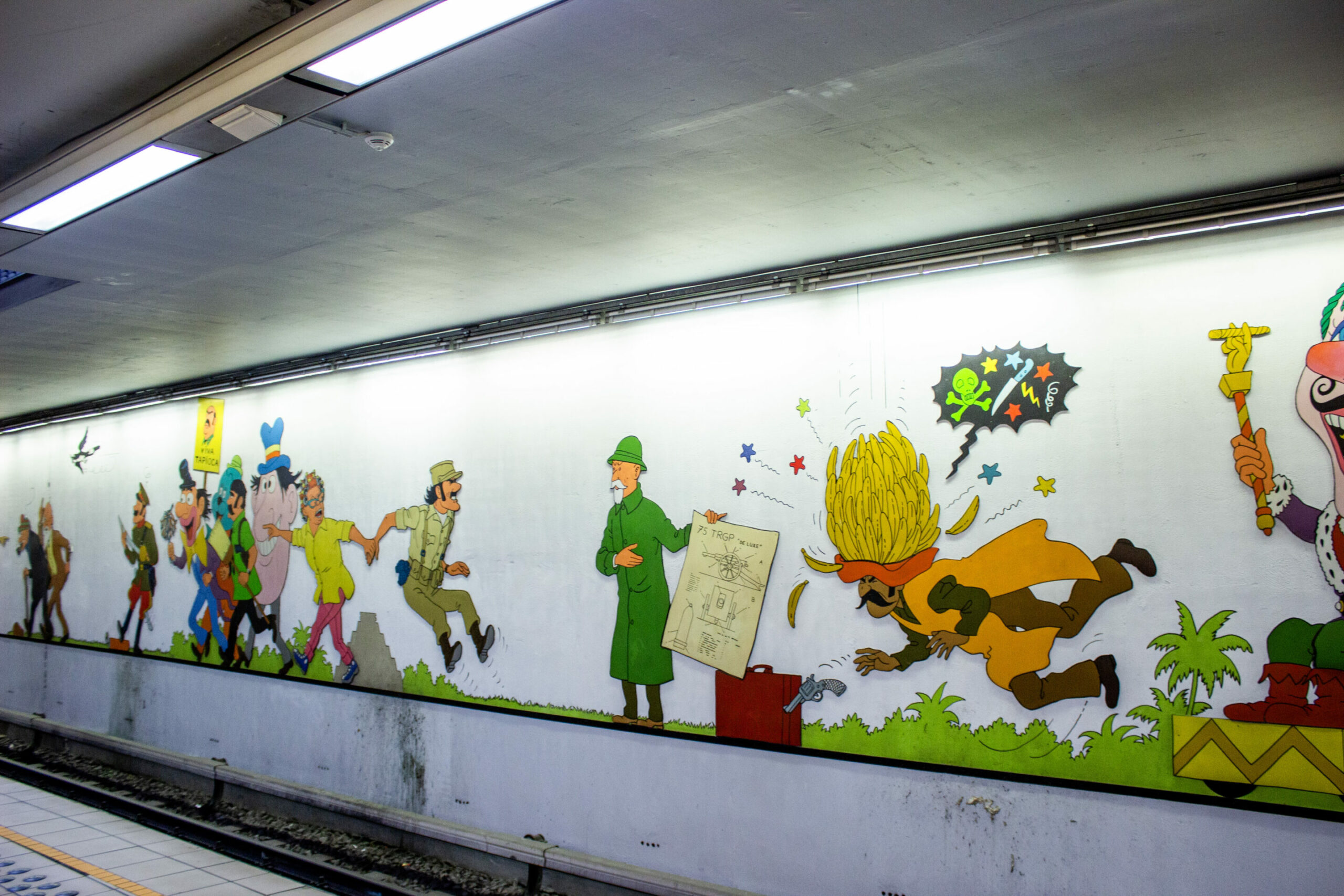
Tintin murals adorn the walls in Stockel's metro station. Credit: The Brussels Times/Ingrid Morales
In addition to this show-stopping attraction, another factor helps set Stockel apart from other neighbourhoods in Brussels: its enviable culinary offering.
In Stockel, you can do all your grocery shopping in and around the town’s bustling main square, Place Dumon. Here, you'll find a fishmonger, a cheesemonger, a deli, a wine shop, a butcher as well as patisseries, bakeries and chocolate shops.
Three times a week – on Tuesday, Friday and Saturday - there is a market in the square, where you can buy fresh fruit and vegetables or treat yourself to oysters washed down with a glass or two of Chablis.
'There’s basically everything here'
It’s little wonder, then, that the neighbourhood has quietly built a reputation as a foodie haven in Brussels. Speaking to The Brussels Times, Julie Vandenbrande, who owns the Italian deli Prego, says she chose to set up her business here two-and-a-half years ago because it is an “atypical” neighbourhood in Belgium.
“It’s a neighbourhood that is primarily food-oriented,” she explains. “So it’s a place where I go to shop for food. Because there’s the market, there’s the butcher, a bakery – there’s basically everything here in Stockel.”
While many businesses in Belgium have struggled to cope in recent years with rising running costs and changing consumer habits, the business owners we spoke to in Stockel appear to be weathering the storm well.
“We’re very happy with our business here,” says Julie. “In any case, we have a lot of customers, a really great clientele who really appreciate the products.”
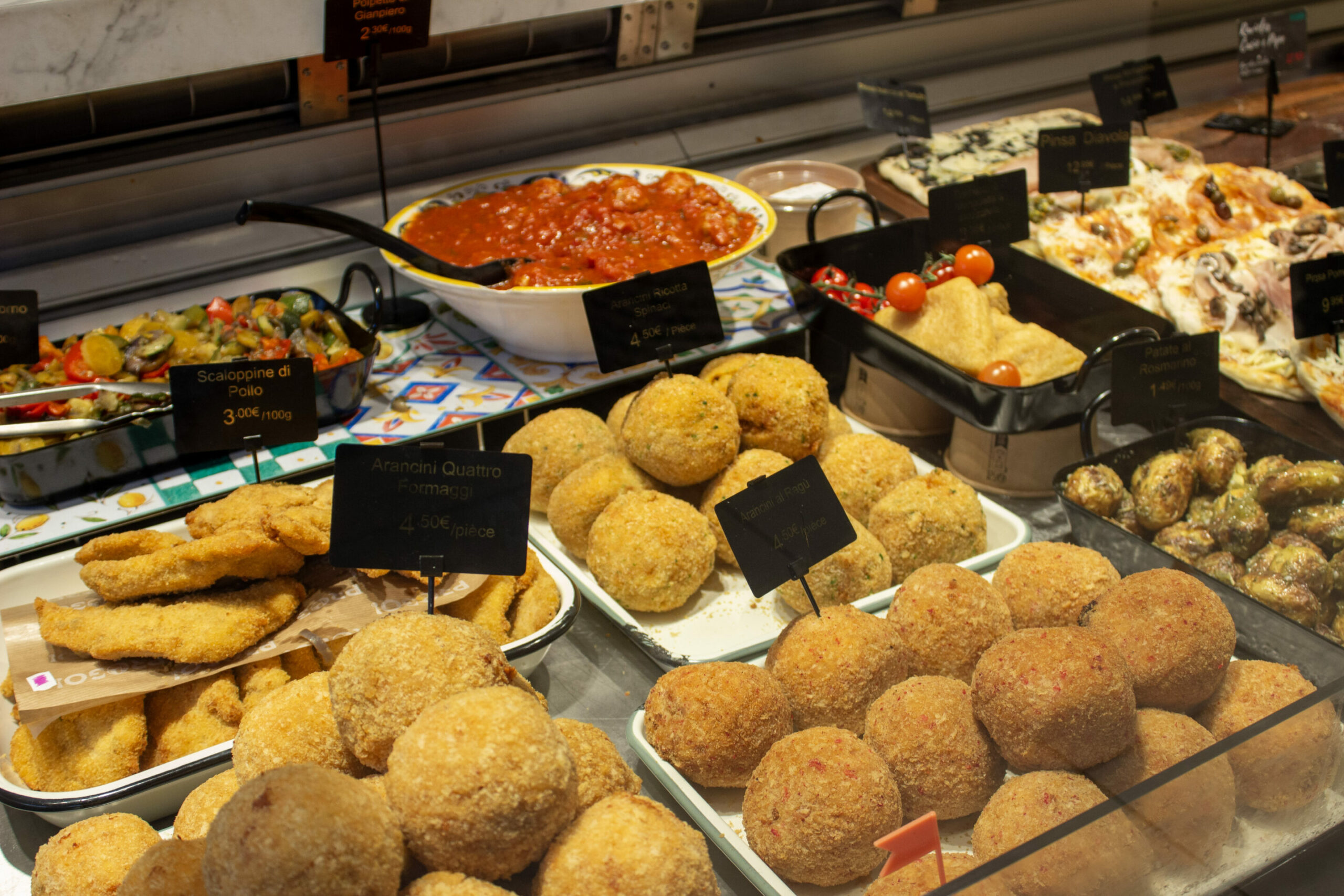
Italian gourmet food at Prego deli in Stockel. Credit: The Brussels Times/Ingrid Morales
Across the square at newly opened brunch restaurant Cali, owner Avi Yaakov tells a similar story. The restaurant is packed to the rafters with diners on a weekday afternoon and at weekends, reservations are a must.
Avi tells us he chose to open his business here because it’s a “dynamic, family-oriented neighbourhood, with lots of footfall” and he felt there was a gap in the market for a good brunch restaurant.
Investors have to be quick off the mark to start businesses in Stockel. The commercial zone of Stockel Village, as it is marketed, is carefully controlled by the local authorities. One business owner explained there are strict limits on the number of businesses allowed to develop in the area, meaning entrepreneurs may take over existing establishments, but cannot set one up from scratch in new premises.
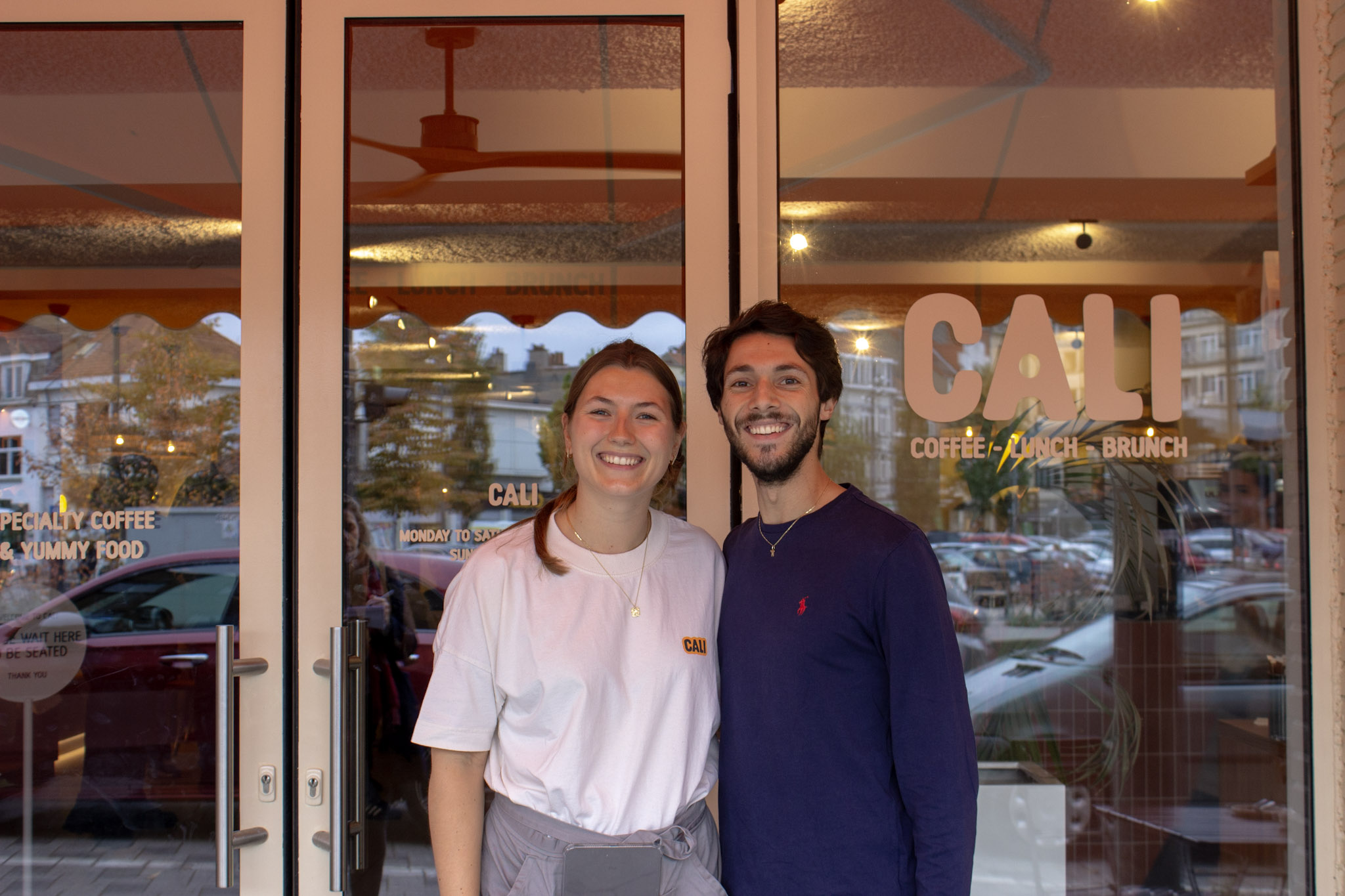
Cali owner Avid Yaakov pictured with Noémie, one of his employees. Credit: The Brussels Times/Ingrid Morales
A cultural melting pot
Like any Brussels neighbourhood, Stockel is a melting pot of cultures, with Belgians and immigrant families living side-by-side. It has long been seen as something of an expat enclave. British national Melissa, 49, lives in the neighbourhood with her French husband and two teenage children. She has lived here for over a decade and is almost evangelical in her enthusiasm for the place.
“I can’t really think of anything I don’t like about it,” she says. “It’s always been great, but they renovated the whole area a few years back and made it much more pedestrian-friendly. It has great shops, you can get pretty much anything you need and it’s nice to walk around.
“We’re particularly lucky to have a really nice cinema [Le Stockel], which shows lots of independent international films and films in English. And it’s really reasonably priced.”
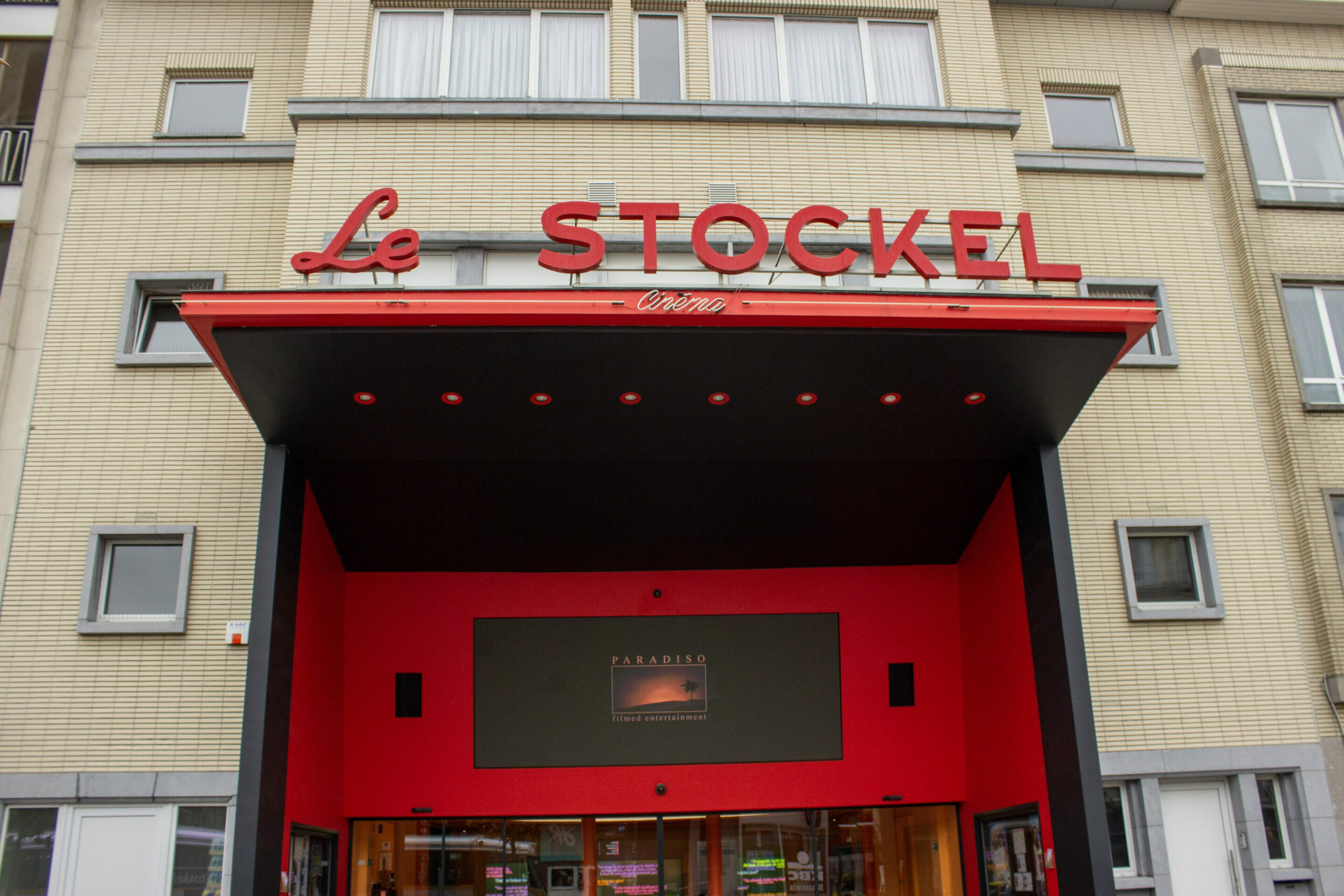
Le Stockel cinema in Stockel. Credit: The Brussels Times/Ingrid Morales
Conrad, who works at Sorimo Real Estate in Stockel, describes the area as “very family-friendly”.
“You're still a little removed from Brussels while still having quick access to everything,” he says. “It's very green. For children, for family life, it's perfect. You have all the schools, sports clubs, tennis, football, hockey, everything is within easy reach.”
Conrad says Stockel is highly sought after as a place to live and the property prices reflect that. After Ixelles, Woluwe-Saint-Pierre is the second most expensive commune to buy or rent a property in Brussels. It is difficult to find any property here for less than €600,000, with houses costing well over a million euros.
The changing face of Stockel
Older residents are shocked by the skyrocketing prices in the area. Aline, 77, was born in Stockel and says she loves the neighbourhood for its vibrancy, but finds it “incredibly expensive” now, and worries about younger people being priced out due to high rents and property prices.
A native Flemish speaker, Aline has seen dramatic changes in Stockel over the past few decades. When she was a girl, she says, “it was just a village”, but with the arrival of the metro station, everything began to change.
New apartment blocks were constructed in the 1990s to accommodate new arrivals and shops and restaurants were built to cater to them.

Place Dumon in Stockel. Credit: Ingrid Morales
According to Aline, Stockel has become increasingly ‘Frenchified’ in recent years, with French displacing Flemish as the lingua franca in shops and restaurants - something she laments.
Still, despite the high property prices and the occasional nuisance of aircraft noise from nearby Brussels Airport, she thinks it would be difficult to find a better place to live. “We’ve got everything we need here,” she says. “There’s no need to go to Brussels.”
