
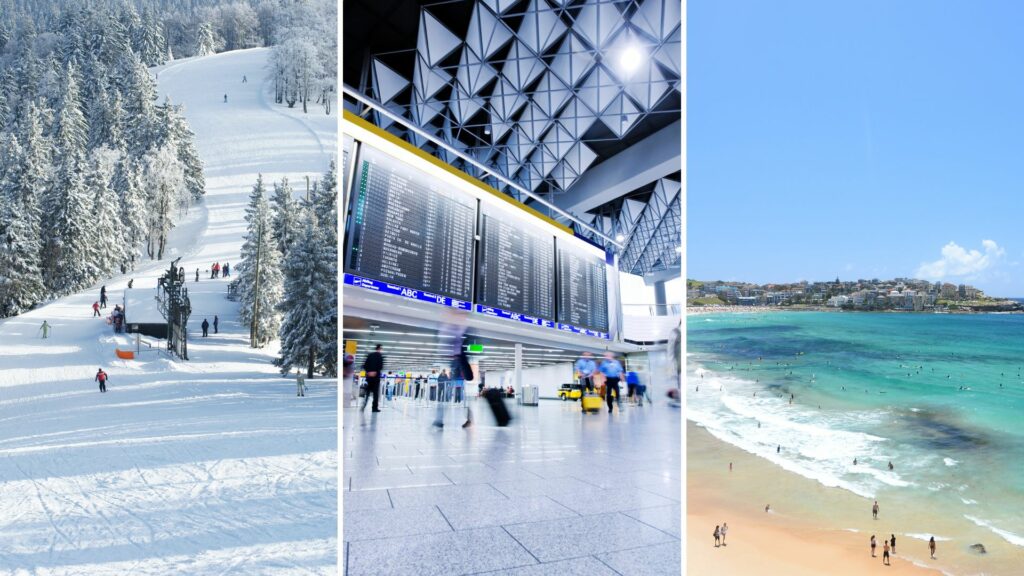
If you're back in the office this week and already dreaming of your next holiday, look no further. With some diligent planning, there are plenty of ways to maximise your 2026 annual leave when combining it with Belgian public holidays and weekends.
Employees in Belgium are legally entitled to a certain number of statutory holidays, depending on how many days they worked the previous year, known as the 'holiday service year'.
"Employees who worked full-time in the previous year are allocated a maximum of 20 days of annual leave," Katleen Jacobs, Business Manager at HR consultancy firm SD Worx, previously told The Brussels Times.
In addition to statutory holidays, many are also entitled to extra holidays, such as seniority leave (days awarded to employees who work for the same company for a long time). People who work more than the average 38 hours per week are also entitled to working hour reduction days or WTR-days. On average, Belgian employees have 28.5 holidays.
Credit: Canva
Employees in Belgium are also entitled to ten paid, official public holidays. In principle, people should not work on these days. In 2026, the public holidays are:
- Thursday 1 January: New Year's Day
- Monday 6 April: Easter Monday
- Friday 1 May: Labour Day
- Thursday 14 May: Ascension Day
- Monday 25 May: Whit Monday
- Tuesday 21 July: Belgium's National Day
- Saturday 15 August: Assumption of Mary
- Sunday 1 November: All Saints' Day
- Wednesday 11 November: Armistice Day
- Friday 25 December: Christmas Day
Related News
- What's coming up in Brussels in 2026?
- Six of the best destinations to fly to from Brussels Airport to escape the January blues
How to make the most of your days off
Two holidays fall on Fridays this year (Labour Day and Christmas Day), meaning long weekends are already guaranteed, but there are several other ways to plan your holidays strategically and maximise your time off work in 2026.
For example, Ascension Day (14 May) always falls on a Thursday. Taking off Friday 15 May, therefore, means you can have a four-day weekend.
If you want to go one step further, why not also combine it with Whit Monday a couple of weeks after? If you take off the working week after Ascension Day, you'll enjoy 12 consecutive days of holiday from 14 to 25 May, using just six allocated days of leave.
Later in the year, you could book off Thursday 12 and Friday 13 November after Armistice Day (or Monday 9 and Tuesday 10 before) and benefit from a five-day weekend, using just two days of leave. Or a four-day weekend to celebrate Belgium's National Day (21 July) by taking leave on the Monday.
This year, the Assumption of Mary (15 August) and All Saints' Day (1 November) fall on weekends. Employees who work full-time should be offered replacement days for these bank holidays. However, if the company does not collectively set that replacement day, employees can choose when to take it themselves – and this can work in your favour.
For example, you could delay these holidays and combine them with Armistice Day (11 November) or Christmas Day (25 December) to extend your break. This would result in nine consecutive days off, using just three allocated days, respectively.
Not for everyone
Jacobs previously stressed, however, that not everyone can juggle days in this way: "Employees can't just do whatever they want without taking into account the company they work for and their colleagues."
In some cases, the holiday periods are defined in advance by the sectors and vary per profession. In others, days are scheduled collectively by the company. "But even if that isn't the case, there must be mutual agreement between the employer and employee to avoid too many people being off at once," Jacobs explained.
Some rules are established by law: people with school-age children are given priority to take leave during school holidays, and everyone is entitled to at least two weeks of uninterrupted holiday between 1 May and 31 October.
Agreements regarding a deadline to apply for holidays are made in the company's labour regulations. "Companies may not allow people to take holidays if there are peak moments of busyness."
Previously, the 20 statutory holidays had to be used within the year in Belgium, but now, people who cannot take their holidays (due to a period of illness, an accident or maternity leave) can carry them over to the next year. However, this only applies within a strict framework and rules are mostly regulated at the sectoral or company level.
