
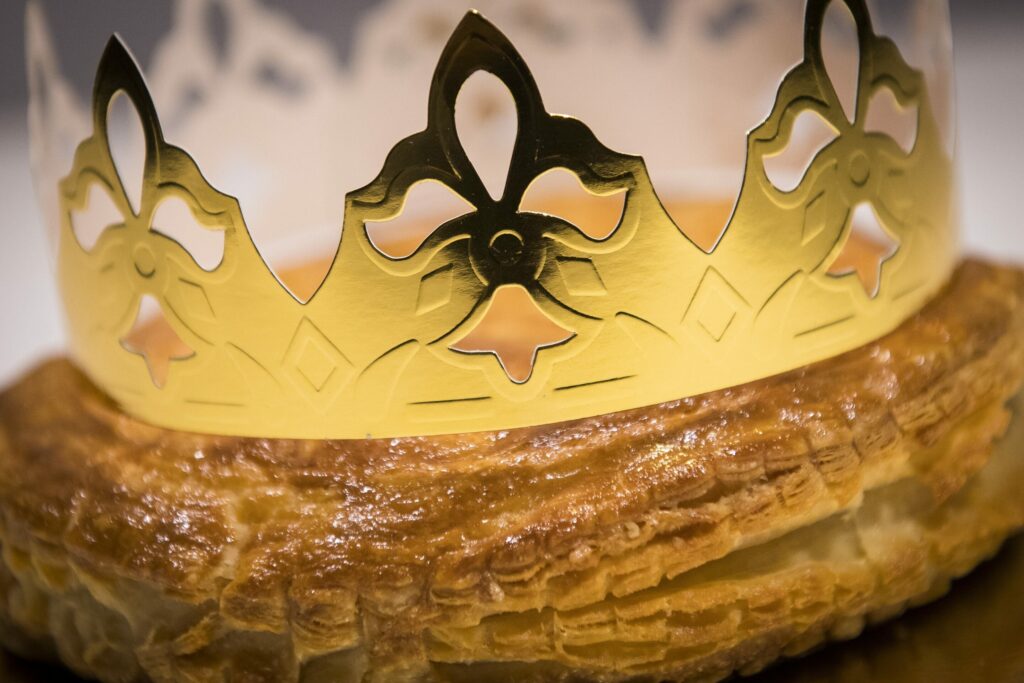
Although Epiphany on 6 January has lost many of its religious connotations in modern-day Belgium, many people still celebrate the day – known as Driekoningen in Dutch and la fête des Rois in French – with cherished traditions.
The Christian festival of Epiphany marks the day the three kings Caspar, Melchior and Balthasar visited the manger of baby Jesus in Bethlehem.
Unlike Austria, Colombia, Croatia, Cyprus, Poland, Ethiopia, Greece, Italy, Slovakia, Spain and Uruguay, 6 January is not a public holiday in Belgium. Businesses, public transport and administrative services are therefore operating as usual. Festivities aren't as resplendent as in countries such as Spain, which holds huge annual parades, but Belgium has its own way of celebrating the end of the Christmas season.
Children in Belgium celebrate Epiphany by dressing up as the three wise men. They go from door to door singing songs, and people give them money or sweets in return, similarly to Halloween.
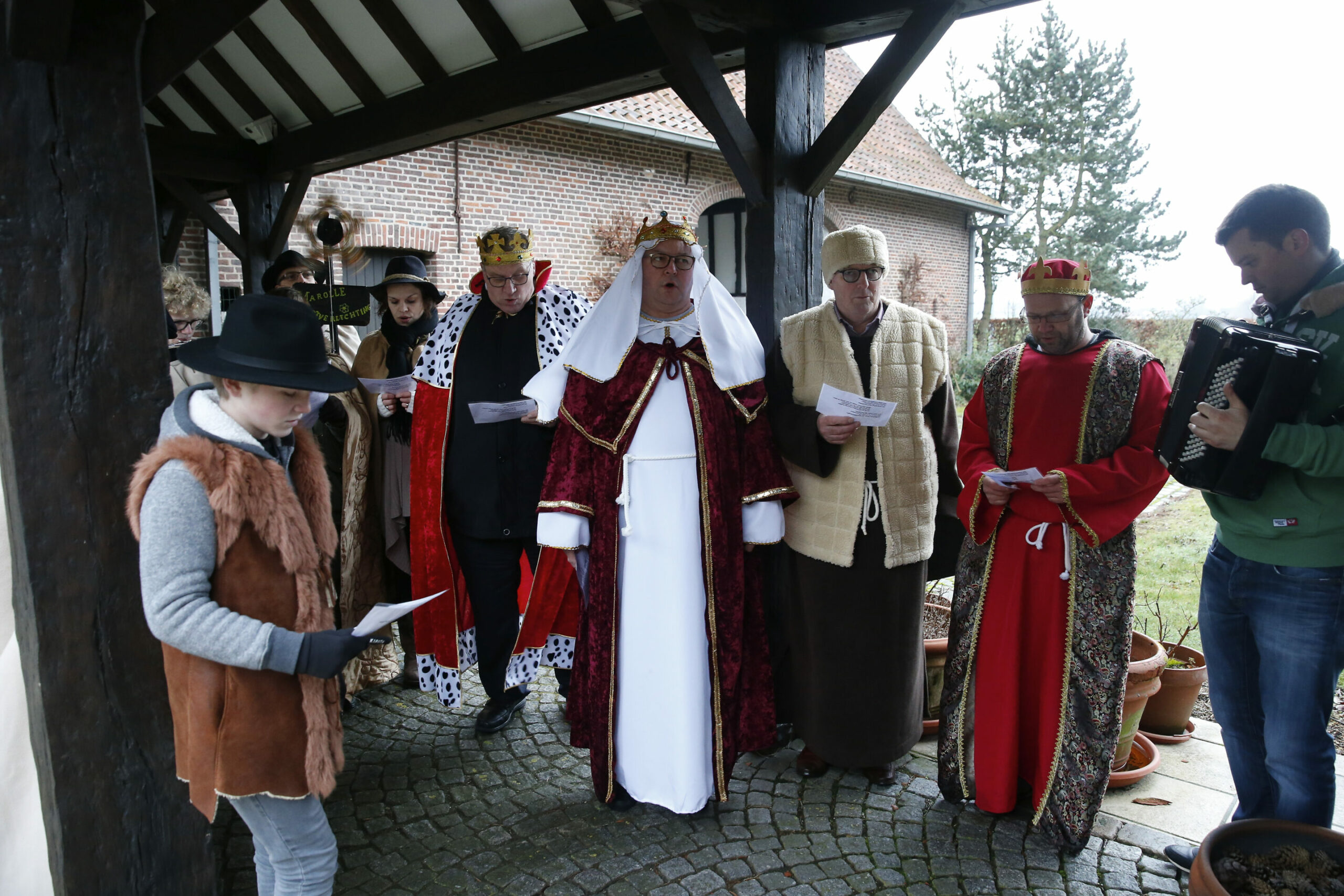
The 'Marolle' choir from Kruishoutem, dressed as 'The three kings' on Saturday 5 January 2019 to raise money to sponsor the annual Christmas lights in the city. Credit: Belga / Nicolas Maeterlinck
On 6 January, Belgians also eat a galette des rois or Koningscake, a puff pastry tart with an almond filling which is also popular in France. Inside the tart is a tiny hidden figurine called a fève ('bean').
The youngest person in the family or friendship group typically sits under the table and calls out which slice should go to which person. Whoever finds the fève in their slice becomes king or queen for the day and wears a gold paper crown.

Child eating a 'galette des rois' on 3 January 1957, and three students dressed as kings parading through Brussels. Credit: Belga Archives
When in Rome
The galette des rois tradition supposedly dates back to Ancient Rome.
During the Roman winter solstice celebrations (the Saturnalia), it was customary "to cast lots for royalty," as the Roman historian Tacitus explains in his book 'Annals'. Great banquets were organised between the end of December and the beginning of January to bring families together.
A real bean was hidden in a cake, as it was the first vegetable to grow after winter and was a symbol of fertility. Whoever found it was crowned king for a day and could grant all of his wishes for a day before returning to normal life.
In the Middle Ages, the 'king' was said to have had to pay for a round of drinks. To prevent cheating, the edible bean was replaced by a porcelain one.
Buried treasure
Nowadays, bakeries are getting increasingly creative with the treats they put in their tarts. In previous years, Brussels-based bakery De Weerdt hid 18-carat gold coins worth €250 in its pastries, but it has not announced the same offer this year.
But you can still try your luck at Anderlecht-based Succulente, which specialises in vegan baking and pastries. Succulente is offering its customers the chance to win a one-gram ingot in galettes for six people and a two-gram ingot in galettes for eight people. A golden epiphany! The surprises don't stop there, as a silver coin is hidden in the galettes for four people.
Meanwhile, artisan bakery Blé d'Or in Braine-le-Château (Walloon Brabant) has hidden a ten-gram gold bar in one of its apple, chocolate or traditional frangipane galettes. Needless to say, the person who finds it will have a great start to 2026.
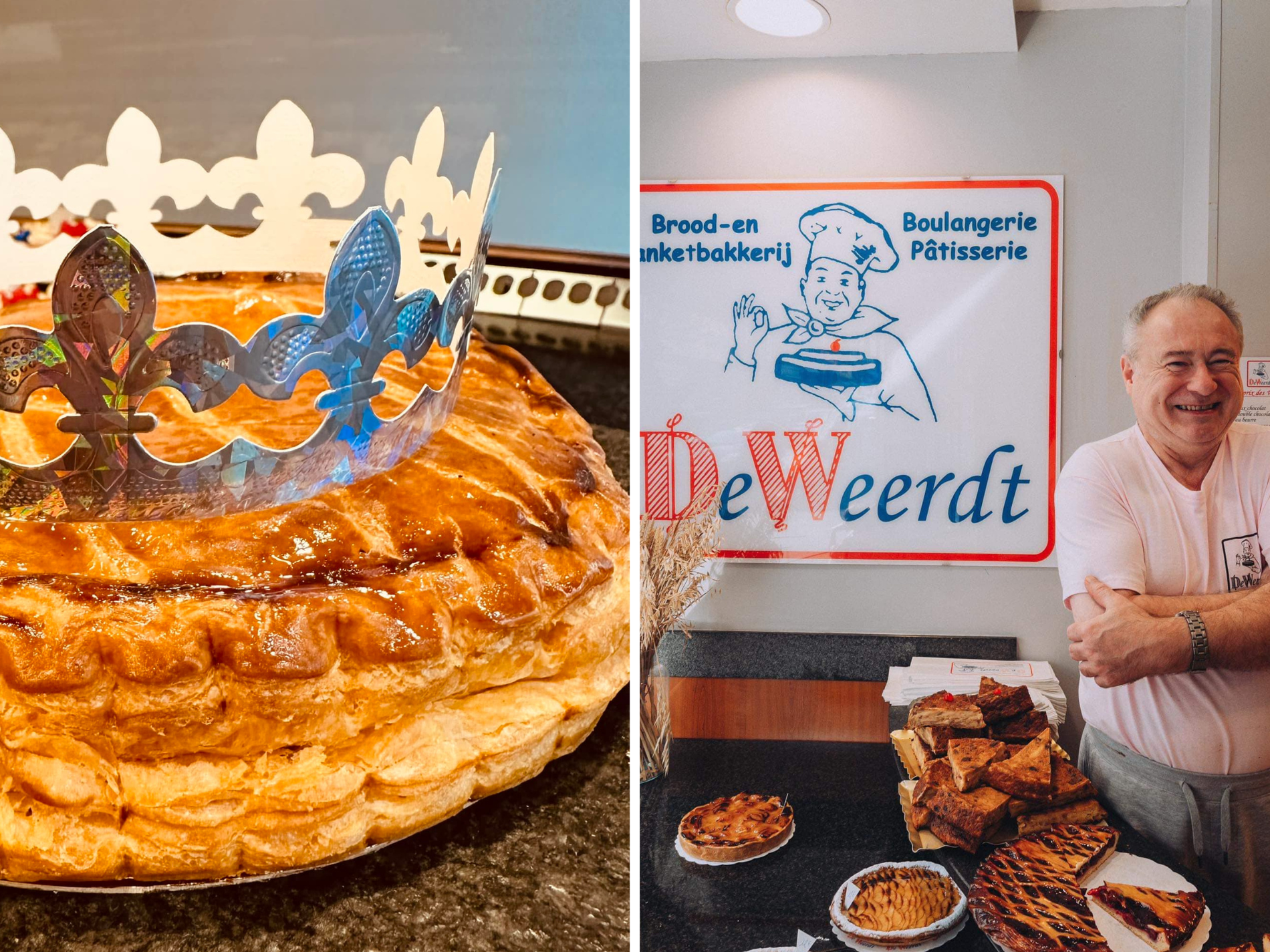
Pastry Chef Luc in his bakery. Credit: De Weerdt
Best in town
Following on from last year, the results of the second edition of the best galette des rois in Brussels competition were announced on 2 January.
A total of eight pastry chefs were in the running, down from last year's 14. Their creations were tasted blind behind closed doors by a panel of judges. Scores were based on the appearance, filling, puffiness and flavour of the tarts, as well as the sustainability of ingredients used (plastic beans and artificial flavourings were banned).
Goods, an artisanal bakery in Ixelles participating for the first time, was crowned the winner. Fiston in Woluwe-Saint-Lambert claimed second place, and Boulengier in Saint-Gilles (last year's winner) completed the top three.
The other participating bakeries were Janine (Forest), Brood (Ixelles), Mains (Etterbeek and Uccle), La Boule and Pateike (Saint-Gilles).
For next year's third edition, sustainable food consultancy agency Mingle – which organised the event – hopes to expand the competition across the entire country.
Popularity pushing up production
The growing popularity of the festival is reflected in a marked increase in production. "Ten years ago, just a few dozen galettes were produced by traditional bakeries; today, some bakers produce hundreds every year," said Albert Denoncin, President of the federation which represents French-speaking bakers and pastry-makers in Belgium.
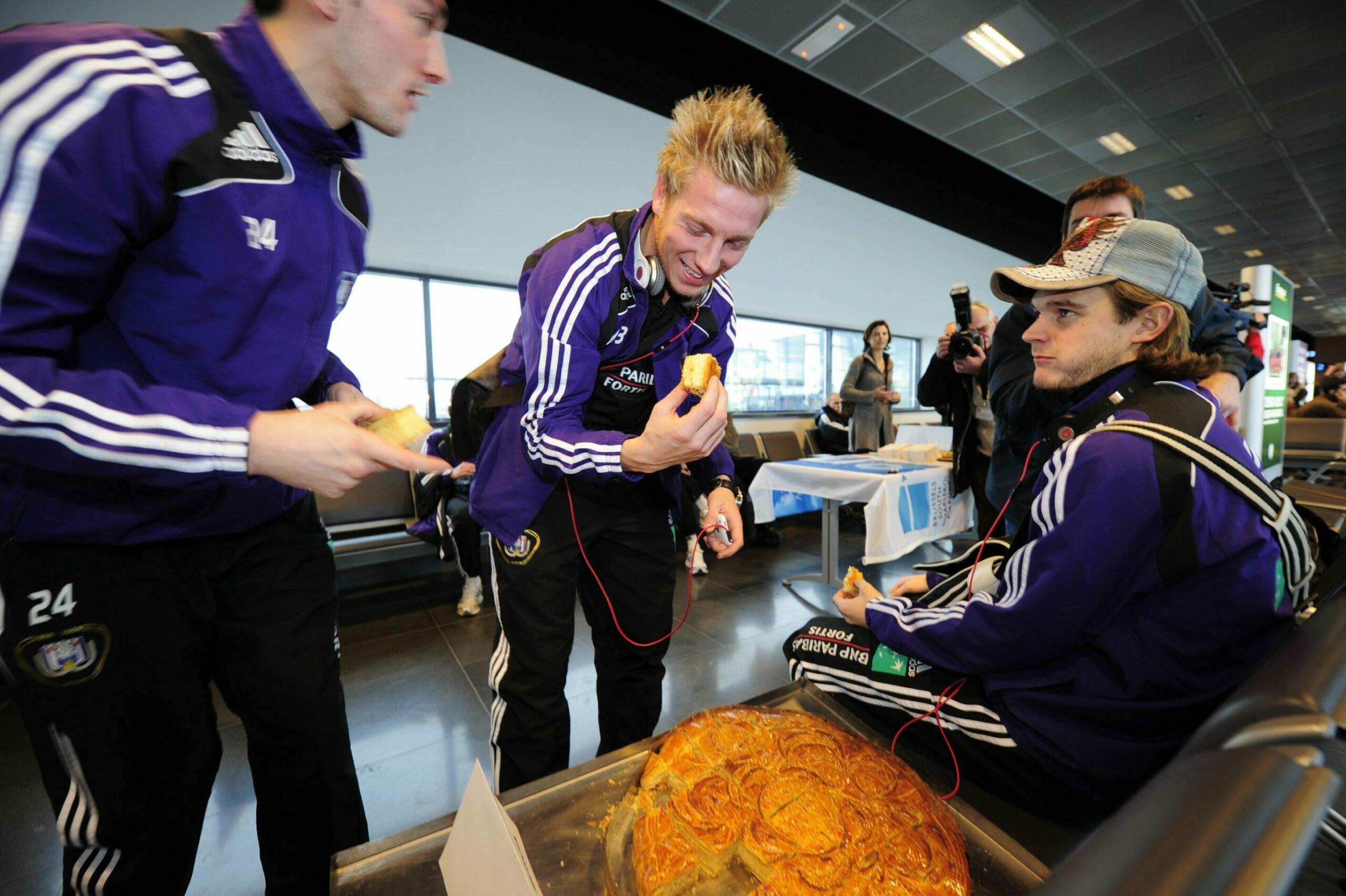
Anderlecht's football team enjoy a galette des rois in Charleroi Airport as they leave for Murcia, Spain, for their winter training, Wednesday 6 January 2010. Credit: Belga / Eric Lalmand
On the industrial side, numbers can even exceed hundreds of thousands. Supermarket chain Delhaize, for example, sold some 200,000 galettes last year. "In the past, bakers took a break after New Year's Eve, but now it's after Epiphany," Denoncin said.
The increase in production is welcomed by bakers, however, as the period between Epiphany and Valentine's Day is particularly quiet.
