

Belgium is once again punching above its weight on the global fashion scene.
According to Vogue Business, two Belgian institutions - La Cambre in Brussels and the Royal Academy of Fine Arts Antwerp - rank among the top 10 fashion schools in the world.
The prestigious ranking places the two schools alongside international heavyweights such as Central Saint Martins in London, Parsons School of Design in New York and the Royal College of Art.
La Cambre: fashion as a critical practice
Based in Brussels, La Cambre stands out for its research-led, concept-driven approach to fashion education.
Rather than treating fashion as a purely commercial discipline, the school positions it as a "critical, cultural and social practice", encouraging students to interrogate why clothes exist and what they mean in the world today.
While it may lack the mainstream visibility of some international schools, La Cambre’s alumni list speaks for itself. Among its graduates are Anthony Vaccarello (creative director of Saint Laurent), Matthieu Blazy (Chanel), Nicolas Di Felice (Courrèges), Julian Klausner (Dries Van Noten) and Marine Serre — all key figures in contemporary fashion.
The school offers a five-year integrated bachelor and master programme in Stylisme et Création de Mode, with a strong emphasis on an interdisciplinary approach.
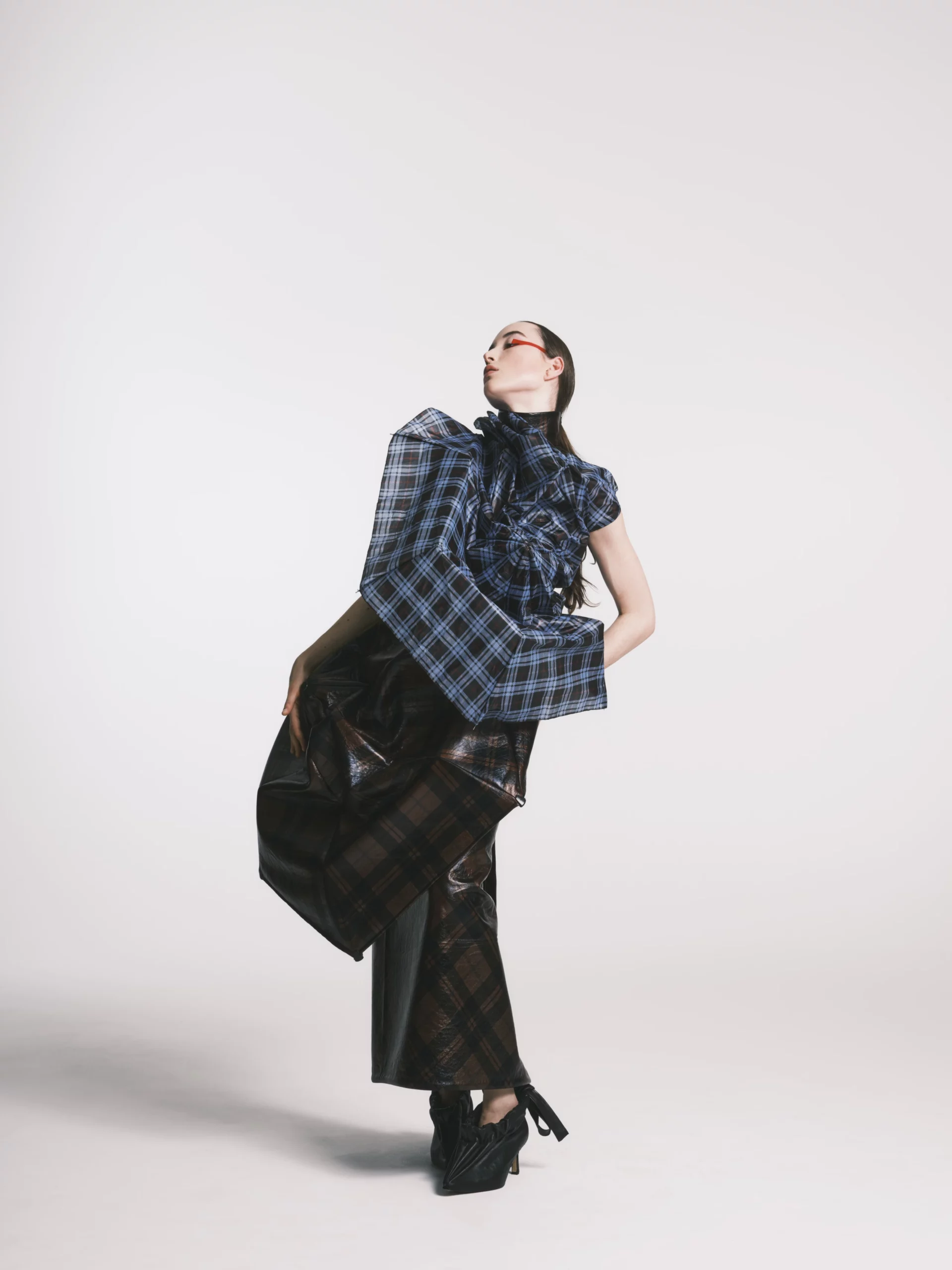
La Cambre. Credit: La Cambre/ Brunner Lucas 2023
As explained in Vogue article, students are encouraged to work across fields and to collaborate creatively, developing not just garments but "entire conceptual worlds". Unlike many fashion programmes, La Cambre prioritises three-dimensional work from the outset, focusing on pattern-cutting, material exploration and construction alongside narrative and image-making.
“Above all, we are pragmatic,” explains Tony Delcampe, head of fashion, in an interview with System Magazine. “We’re looking to make intelligent fashion, not to fantasise. Clothes should be a reflection of the world we’re living in — thoughtful rather than merely pretty or impressive.”
This philosophy also shapes the admissions process. Applicants are expected to demonstrate curiosity, cultural awareness and a deep understanding of the school’s pedagogy. “We want to see smart attempts and trials of garments made with boldness,” Delcampe says.
Another distinctive feature is accessibility. Compared with many elite fashion schools (Parsons School of Design in New York is $60,240 per year for US residents), La Cambre remains remarkably affordable, with annual fees ranging from €374 to €1,194 for EU students, and just over €4,000 for non-EU students.
Antwerp Academy: a legacy of radical creativity
If La Cambre is known for its conceptual rigour, the Royal Academy of Fine Arts Antwerp is synonymous with fashion radicalism. The school famously gave rise to the Antwerp Six - Dries Van Noten, Ann Demeulemeester, Walter Van Beirendonck, Dirk Van Saene, Dirk Bikkembergs and Marina Yee - whose work revolutionised fashion in the 1980s and put Antwerp firmly on the global map.

Royal Academy of Fine Arts Antwerp. Credit: AP-arts
Since then, the academy has continued to produce influential designers, including Demna Gvasalia and Kris Van Assche, reinforcing its reputation as one of the world’s most demanding and prestigious fashion schools.
As explained by Vogue, the Antwerp programme is known for its exacting entrance exam, intense studio culture and strong grounding in fine arts. Its four-year bachelor programme, followed by a master’s-level final year, is designed for independent thinkers who see fashion as a form of artistic expression as much as design.
“Our approach is rooted in the classic artistic tradition - drawing and craftsmanship - while creating designers who are modern thinkers,” says Brandon Wen, creative director of the fashion department. “The tension between tradition and contemporary is our strength.”
Drawing remains central to the curriculum, alongside a deep exploration of materials, techniques and theory. Students are immersed in art history, philosophy and research methodologies, developing collections through sustained personal inquiry. Individual supervision and dialogue with expert lecturers are key elements of the pedagogy.
For graduates like Julie Kegels, the academy’s value lies in its uncompromising pursuit of authenticity. “The teachers have this strange gift of sensing immediately when something isn’t really you. They force you to confront yourself so you can find your own voice - not a trend or a reference, but something that belongs only to you,” she says.
