
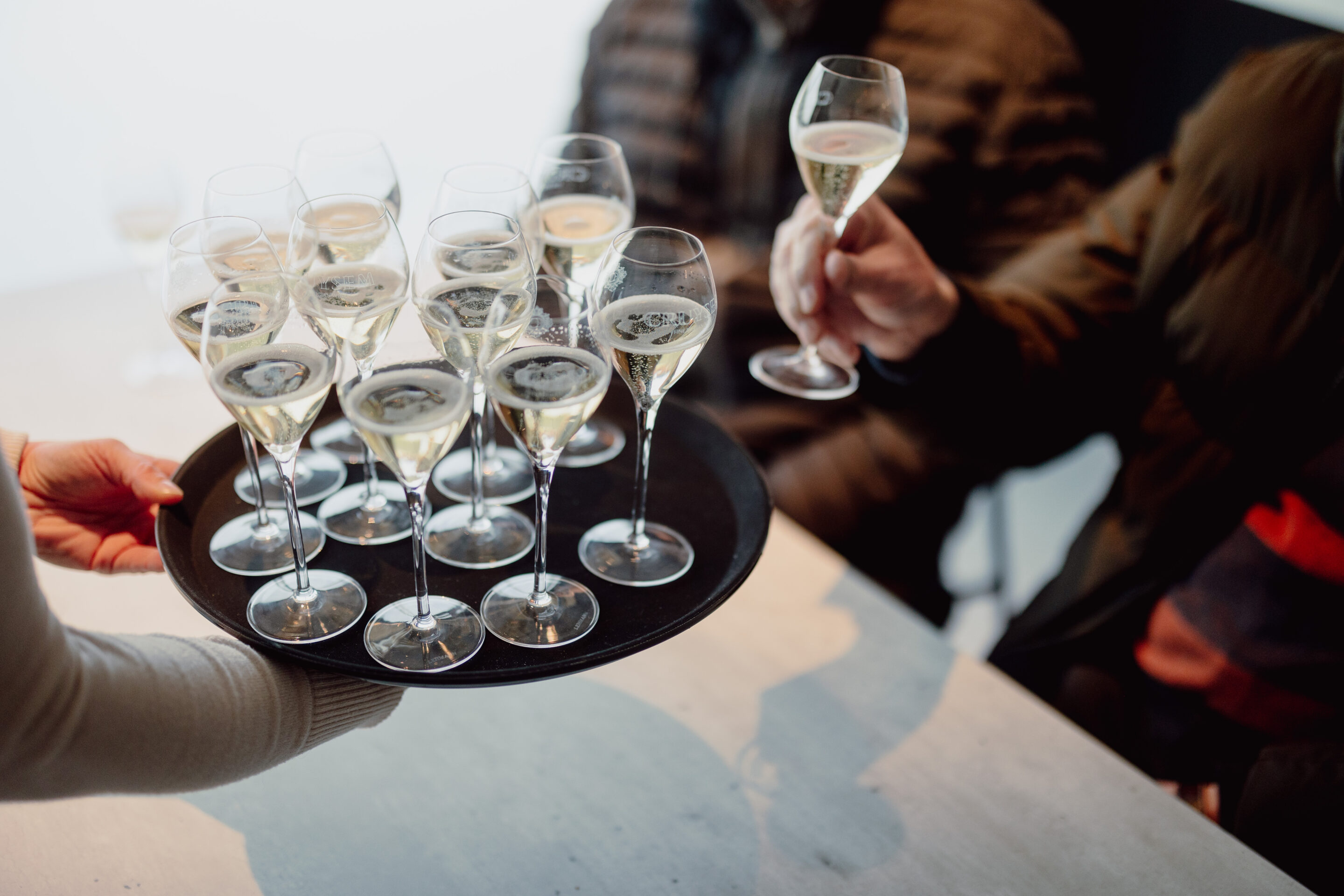
Sparkling wines have long been the pride of Belgium’s young but fast-maturing wine industry.
They already account for more than half of national production – and nearly two-thirds in Wallonia. The reasons are as crisp as the wines themselves: Belgium’s cool, temperate climate naturally favours grapes high in acidity, the perfect raw material for bubbles.
Wallonia, with its cooler summers and later ripening seasons, shares the same climatic logic that shaped northern France’s Champagne region. Yet there’s another explanation too – Belgians simply adore their fizz. Sparkling wine makes up about 14% of all wine consumed here, roughly six bottles per person each year, and an even higher share by value. As domestic vineyards expand – output more than doubled between 2021 and 2022 – the nation’s fondness for effervescence has become the backbone of its wine identity.
Until recently, Belgian producers faced a branding problem. Champagne, prosecco, cava, crémant – each carries an instantly recognisable pedigree, an origin story, and a guarantee of quality. Prosecco’s tank-fermentation method may differ from the bottle-fermented “traditional” style used elsewhere, but consumers know exactly what to expect.
Belgian names, by contrast – Crémant de Wallonie, Vin mousseux de qualité de Wallonie, or Vlaamse Mousserende Kwaliteitswijn – rarely rolled off the tongue. Something snappier was needed.
Enter BelBul, a uniquely Belgian compromise that even cynics might toast. The name riffs on both languages: “Bel” from belletjes (Dutch for “little bubbles”) and as shorthand for Belgium itself; while “Bul” echos bulles (French for “bubbles”). Together they form a playful, bilingual wink: belles bulles, “beautiful bubbles.”
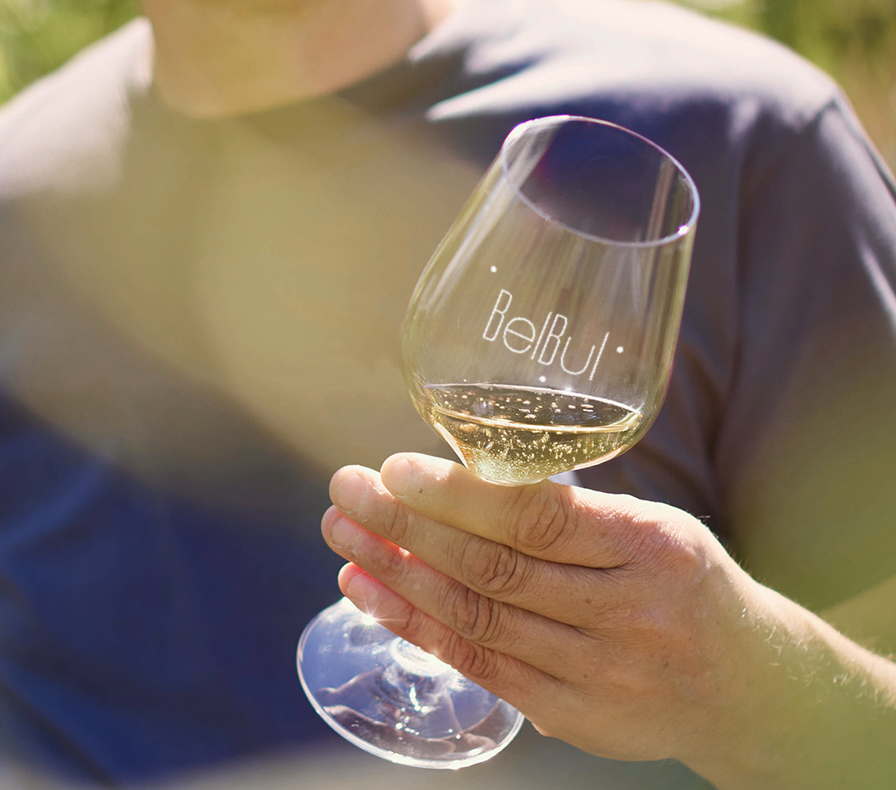
Credit: BelBul
Launched in May 2024, BelBul gathered 22 producers – 14 Flemish, eight Walloon – representing about 60% of national sparkling output. “We have now enough maturity, output and fame. The only thing that was missing was a tool to stand out from other bubbles,” says Vanessa Vaxelaire, chairwoman of the Wallonian producers’ association and head of Château de Bioul.
“It’s a brand and not a PDO,” she adds. “With BelBul, we give a strong identity to our Belgian sparkling wines and consolidate our position as producers of excellent bubbles,” echoes Lodewijk Waes, her Flemish counterpart.
Joining the club
Membership of BelBul requires more than a patriotic spirit. To qualify, wines must be 100% Belgian – from vine to bottle – made solely by the traditional method, and carry an official PDO seal guaranteeing origin and quality. Only family-run wineries belonging to either regional association may apply, and members collectively steer the label’s strategy.
One potential barrier is the cost: about €5,000 to join, plus a small fee per labelled bottle. For boutique estates – the norm in Belgium, where three-quarters of vineyards cover less than three hectares – that’s a serious investment. Less than a quarter of Belgium’s roughly 100 sparkling producers have signed up so far.
But in terms of output, that quarter speaks volumes. The first six Walloon members – Chant d’Eole, Ruffus, Monts des Anges, Domaine du Chenoy, Château de Bioul and Château d’Annevoie – already account for more than half of national sparkling production.
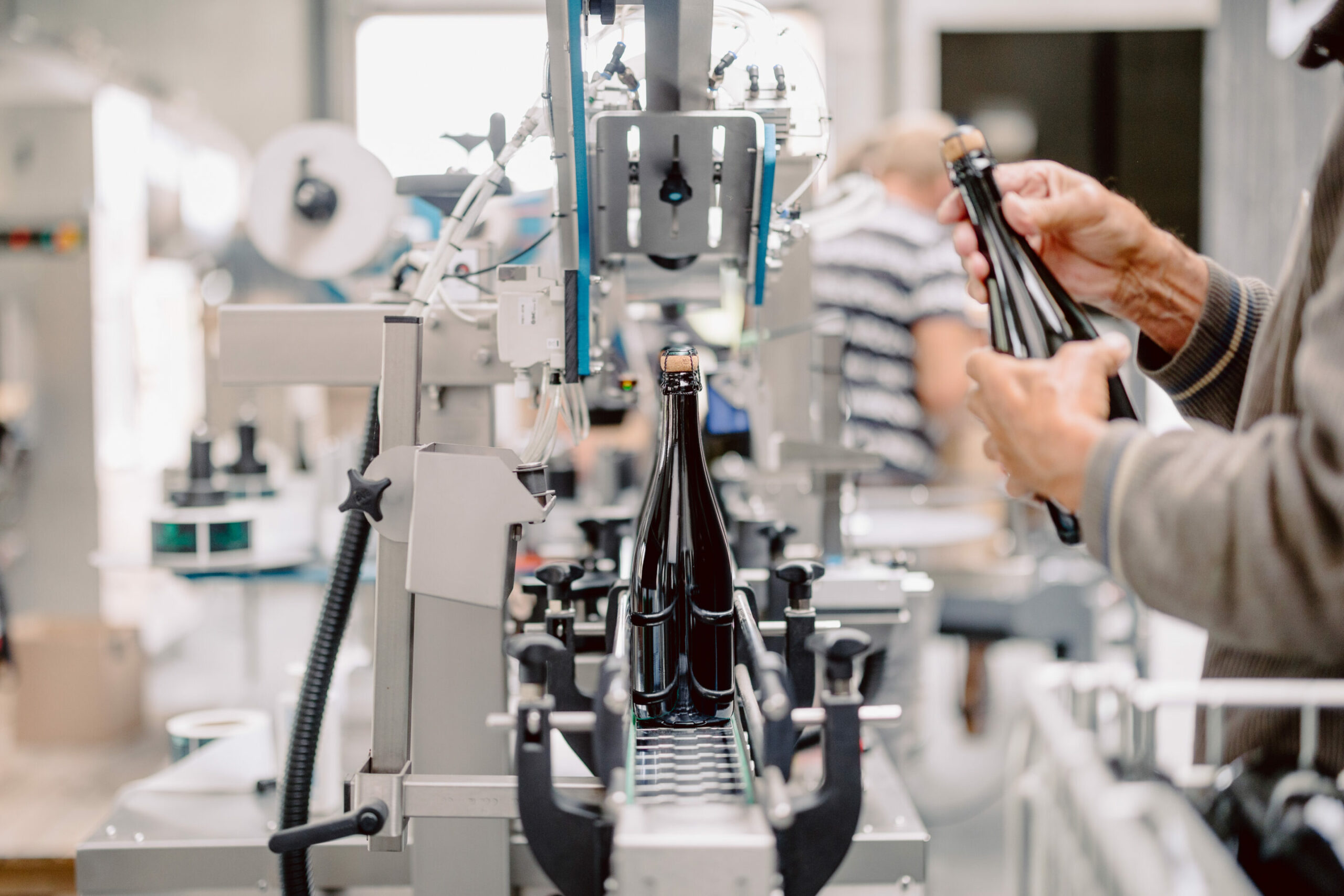
Production at BelBul
“We need new members, though,” admits Vincent De Busscher, founder of Monts des Anges, an award-winning house dedicated entirely to fizz. “For me, BelBul is a password to foreign markets. We will all go abroad. Since the launch of BelBul, we export to France and South Korea.”
Still, not everyone is persuaded. Esteemed names such as Vin de Liège and Domaine W have (so far) stayed out, citing affordability and limited relevance to local sales. Bruno Jadoul of Domaine des Lowas in Brabant-Wallon calls the label “not very useful,” adding that his 12,000 bottles sell out nearby anyway. “BelBul is aimed for export.”
Two paths to perfection
If BelBul unites the country on paper, Belgium’s winemakers are split in practice between two philosophies: the classic Champagne model and a more experimental hybrid path built on interspecific (disease-resistant) grapes.
At one end stand the traditionalists – Ruffus, Chant d’Eole, Monts des Anges – whose vineyards in Hainaut are planted exclusively with chardonnay, pinot noir, and pinot meunier. Their success has turned the region into Belgium’s sparkling heartland. “I couldn’t afford not to follow the two Big Ones in BelBul,” confesses De Busscher.
Chardonnay now dominates Belgian vineyards with over 300 hectares, followed by just over 100 of pinot noir – figures driven largely by sparkling demand. The terroir helps: Belgium shares geological roots with the Paris Basin, enjoying a climate similar to Champagne’s two decades ago. No surprise, then, that even a Champagne winemaker has crossed the border.
In Heuvelland, Thierry Niziolek of Louis Déhu in Venteuil has planted pinot noir on a 1.5-hectare sandy-clay slope at the Louis van’t Hooghof domain. His Belgian cuvée, grown in iron-tinged soils beneath the Kemmelberg, could easily pass for a fine Champagne.
Hybrid revolution
The other path is distinctly Belgian: embracing interspecific grape varieties bred for disease resistance and sustainability. These non-GMO hybrids – names like solaris, souvignier gris, pinotin, johanniter, cabertin, rondo, régent, and bronner – require fewer chemical treatments and thrive in cooler, wetter climates. They now cover about a third of national vineyards and supply roughly one-fifth of sparkling production.
Pioneering this approach is Domaine du Chenoy near Namur, where all grapes are interspecific. Since Bordeaux-born brothers Pierre-Marie and Jean-Bernard Despatures took over in 2017, the estate has expanded and modernised its facilities, championing organic methods. “Either you seek to make French-like wines from mainstream grapes, or you go for your own style with other grapes, to make your wines truly original,” Despatures explains.
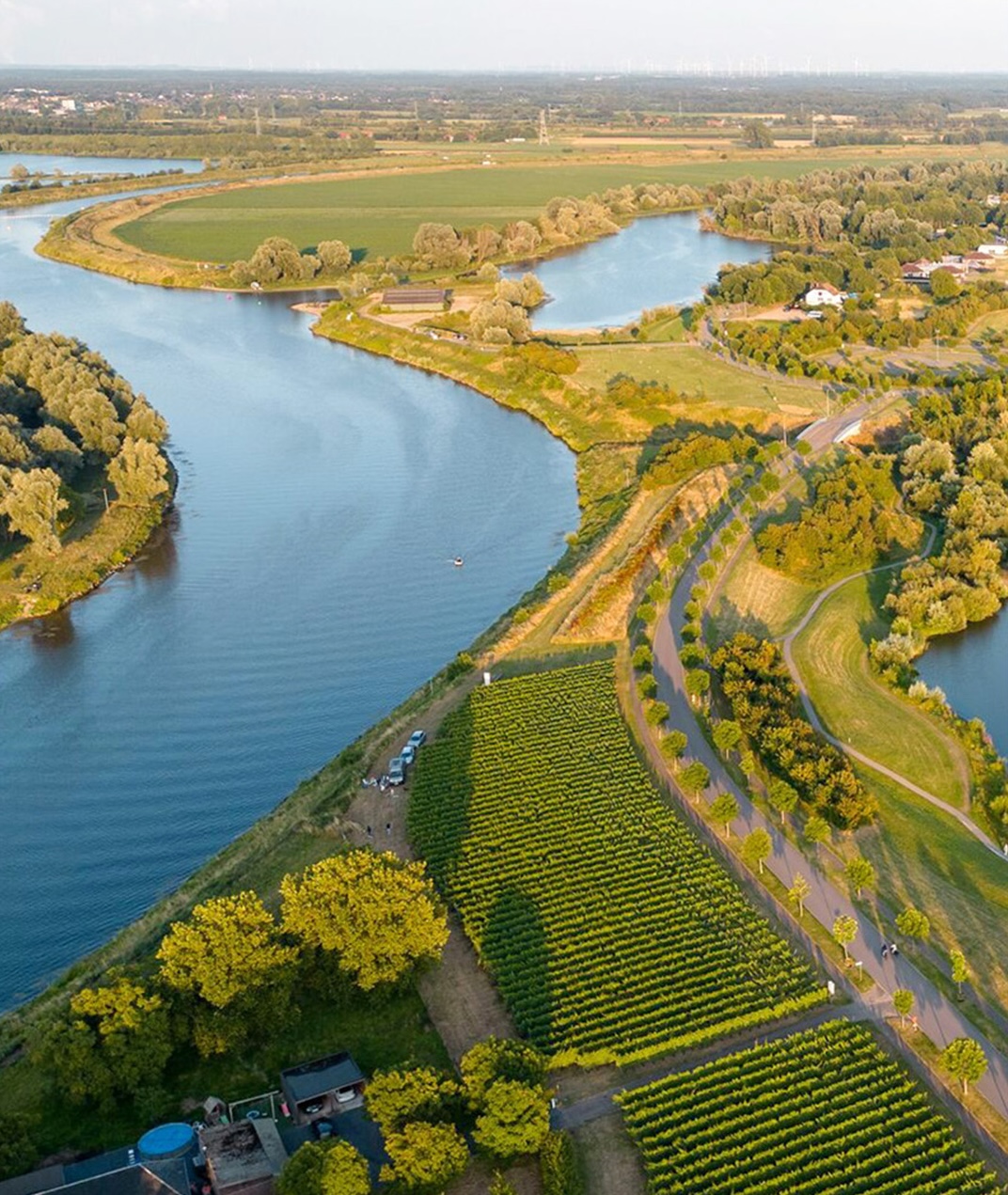
Aldeneyck
Le Chenoy’s signature rosé Perles de Wallonie – a blend of johanniter, bronner, souvignier gris and régent – proves his point, offering remarkable quality for its price.
Nearby, Vin de Liège crafts the acclaimed L’Insoumise, a white sparkling made solely from johanniter and souvignier gris, with brioche notes and a delicate, vinous complexity. For good measure, the winery also produces Meuzenne, a surreal Belgian hybrid of sparkling wine and lambic beer – proof, perhaps, that in Belgium bubbles and eccentricity often ferment together.
Some estates straddle both worlds. Entre-Deux-Monts in Heuvelland, Flanders’ largest sparkling producer with 120,000 bottles a year, mixes classic grapes like chardonnay and pinot noir with interspecifics such as auxerrois and kerner. The result: award-winning blends that embody both innovation and terroir.
Belgium’s secret weapon
“Belgium is the first laboratory in the world for interspecific grapes,” says Eric Boissenot, the celebrated Bordeaux oenologist advising Domaine du Chenoy. “They ripen earlier than classical ones, they resist well to diseases and frost. Since they don’t have history, you don’t stumble upon local culture. Belgium is clearly ahead of France on this point. Their winemakers can now teach others how to use them.”
Belgian sommelier Eric Boschman says the country’s dual approach – investing in both classic and hybrid varieties – could prove visionary. “Given the growing climate change and the tendency to make ‘cleaner’ wines, interspecific grapes are a way forward,” he says.
With BelBul, Belgium finally has a vehicle to carry its sparkling ambitions abroad. The label may be a brand rather than a legal appellation, but it provides something just as valuable: a clear, collective identity.
After two decades of refinement, the méthode traditionnelle is now second nature to Belgian producers, while the Champagne grape trio – chardonnay, pinot noir, pinot meunier – proves ideally suited to local soils. Yet the country’s greatest strength may lie in its willingness to experiment, championing those resilient hybrids that give Belgian fizz its signature twist.
The hundred or so producers who make Belgian sparkling wine won’t all join BelBul, but even sceptics benefit from the buzz it creates. Between Champagne’s hauteur and prosecco’s populism, Belgium’s bubbles offer something refreshingly original – and defiantly local.
Because in the end, as any Belgian winemaker might say, the proof is in the pop.
