
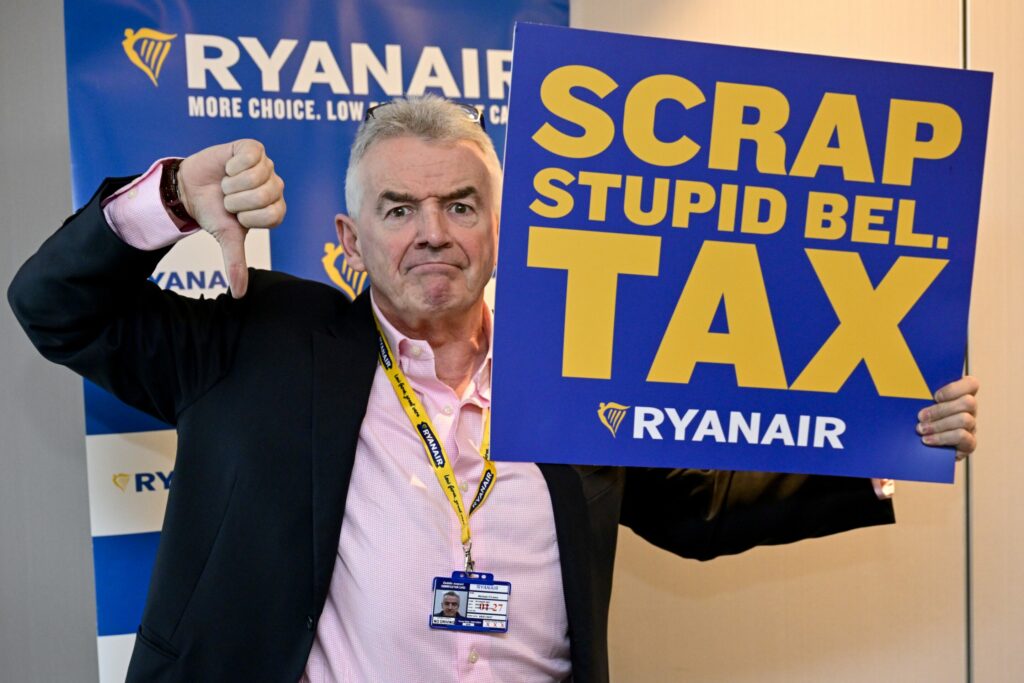
Irish low-cost airline Ryanair is doubling down on its threat from the end of last December: not only is it cutting 1.1 million passenger seats in Belgium this year (mainly at Charleroi Airport), it also plans to cut 1.1 million more in 2027.
The announcement follows the Belgian Government's decision to raise its so-called "flight tax" to €10 per departing passenger from 2027. Additionally, the Charleroi City Council has proposed to introduce a €3 tax per departing passenger travelling from Charleroi Airport from next year.
"Only the stupid Belgian Government could be so ridiculous as to increase taxes, while Sweden, Hungary, Italy, Slovakia and Albania are abolishing their aviation taxes," Ryanair's CEO Michael O'Leary said during a press conference on Wednesday.
According to him, the country's Federal Government, led by Bart De Wever (N-VA), is "determined to fail," he told The Brussels Times. "I have one message for the Prime Minister: scrap this stupid tax."
'Very little money'
O'Leary said that he will make the decision to scrap the 1.1 million seats this year on the condition that the city of Charleroi does not reverse its tax measure.
However, the Charleroi city council on Tuesday confirmed to Belga News Agency that the decision has been "democratically voted" and is included in this year's budget – meaning it will not be reversed.
Such a tax is necessary because the airport generates "external effects in terms of noise, safety, traffic and parking on public roads," but without the city of Charleroi receiving a single euro for this, they stressed.
"We had a meeting with the Charleroi mayor, who argued that the tax does not affect Ryanair because they are levying it on the airport," O'Leary said. "How stupid do you have to be? What is the airport going to do, do you think?"
This current winter season (2025-2026), Ryanair is operating flights to 119 destinations from Charleroi Airport and 11 from Brussels Airport.
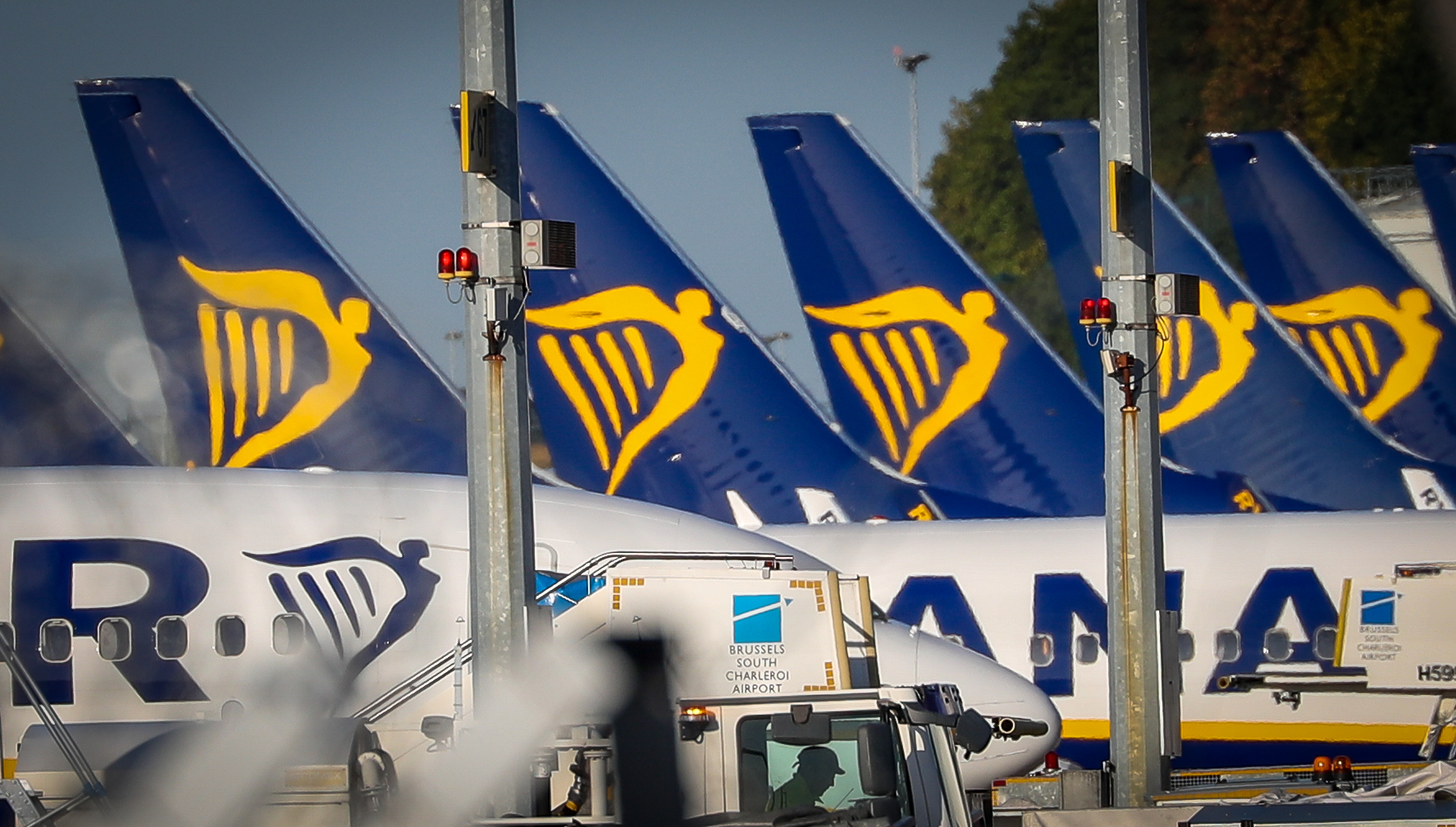
Credit: Belga/Virginie Lefour
The CEO is convinced that these taxes will raise "very little money" for Belgium's budget (De Wever plans to save €9.2 billion by the end of 2029), because the country does not have very big passenger volumes. "The only thing these taxes are doing is damage to Charleroi Airport."
Additionally, Ryanair is planning to cut an additional 1.1 million seats in Belgium (mainly from Charleroi) next year if the Federal Government does not reverse its planned tax increase for 2027, he threatened.
"If they go back on their decision, we will not only reverse our decision to cut over a million seats this year, but we will go back to our original plan: grow traffic by a million passengers in Belgium," O'Leary said.
Should the city of Charleroi abandon its plans for the €3 tax before April, Ryanair will reverse its decision to cut a million seats this summer. "However, if Belgium goes ahead with its tax increase in January next year, we will cut 2 million seats in 2027."
Others are reducing tax
Ryanair is not alone in its criticism; Brussels Airlines previously also made its concerns clear, stating that the announcement of the tax came just four months after the previous increase, a spokesperson told The Brussels Times.
The costs will have a severe impact on passengers – who will be the ones presented with the bill. "At the same time, we see that other countries, such as Sweden, Germany and Italy, are reducing their air passenger tax."
"They are doing this because aviation is an important economic driver that creates jobs and therefore contributes very positively to the entire economic fabric," she added. "Connectivity is also vital to the entire Belgian economy."
In November 2025, Airlines for Europe (A4E) was astonished to see Belgium's Federal Government "ploughing ahead with yet another air ticket tax increase," its Managing Director, Ourania Georgoutsakou, told The Brussels Times at the time.
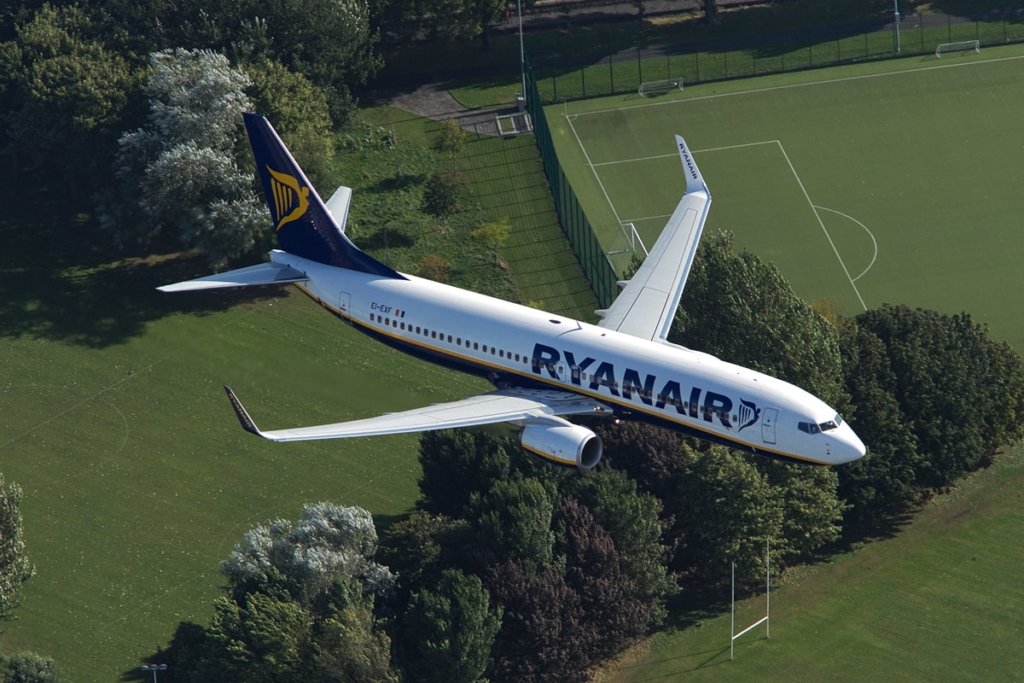
Credit: Ryanair
The airlines all argue that the "silly tax rises" will damage Belgium's competitiveness and cost the country millions of passengers, thousands of flights, and thousands of jobs in tourism and support industries – and this at a time when many other EU Member States are abolishing or reducing taxes.
"What these stupid politicians do not understand is that passengers and aeroplanes are mobile," O'Leary said. "If Belgium wants to tax passengers, they will simply switch to lower-cost, non-tax destinations. Belgium's loss will be to the gain of these EU Member States."
However, he explained that very few entire flight routes would be scrapped. Instead, the frequency of flights would be reduced: a route that is currently served several times a week will only be operated once a week in the future, for example. For routes that are offered several times a day, the frequency will only be available once a day.
O'Leary stressed that he is still open to discussion and is not writing Belgium off completely –"When you have these issues, you don't give up and go away. You fight." – but his envisioned dialogue boils down to one thing: "Scrap that stupid tax. It is not too late to back down."
Low-cost airline Wizzair did not respond to The Brussels Times' request for comment about whether it is considering following Ryanair's example.
The Brussels Times contacted the offices of Prime Minister Bart De Wever and Mobility Minister Jean-Luc Crucke (Les Engagés) for comment, but did not receive a reply by the time of publication.
