
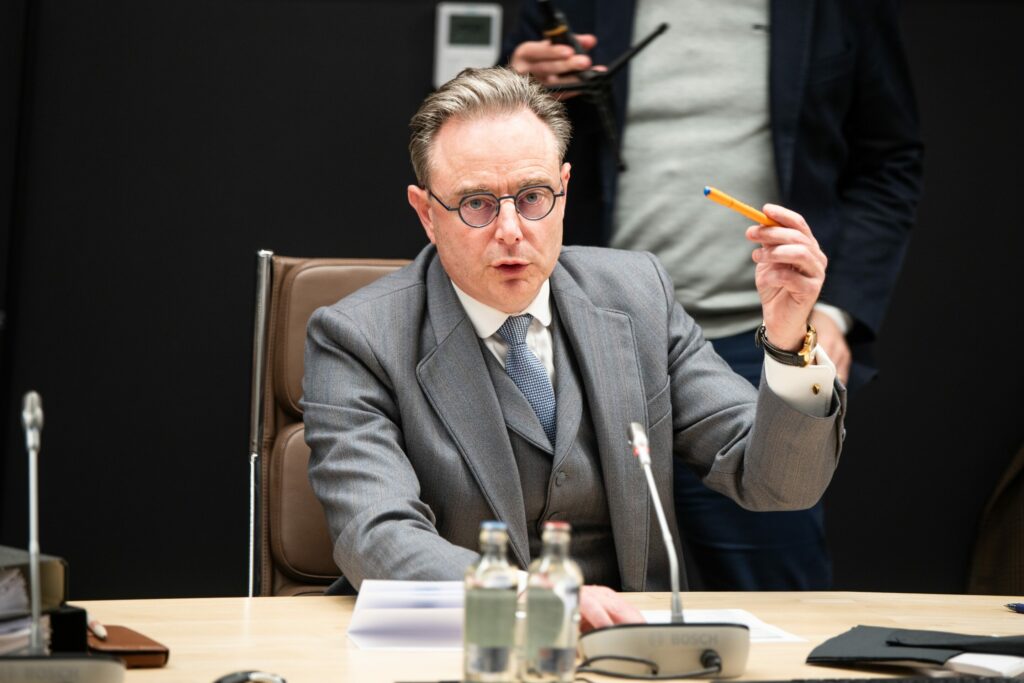
After negotiations that lasted some 20 hours last weekend, the Federal Government announced a budget agreement on Monday – just hours before the start of Belgium's three-day strike this week. This is what is in it, and how different sectors are reacting.
After weeks of delays, a crisis which threatened to bring the entire government down, as well as a three-day strike to protest his government's austerity measures, Prime Minister Bart De Wever (N-VA) announced that his so-called Arizona coalition had finally agreed on a budget.
Today, with the previous two-strike days culminating in one large national strike, he is presenting his plans in the Federal Parliament. The three days of union action had no impact on the progress of the negotiations, according to De Wever.
"I am going to be very honest: everyone is going to feel this in their wallet. There is no denying it. We have to realise that the country has not been well-managed financially for many years," De Wever said.
"Our budget is structurally unhealthy," he said. "I could say that I can fix the problem without the citizens feeling it, but that would simply be a lie. If you do not dare to take painful measures, you're not worthy of governing."
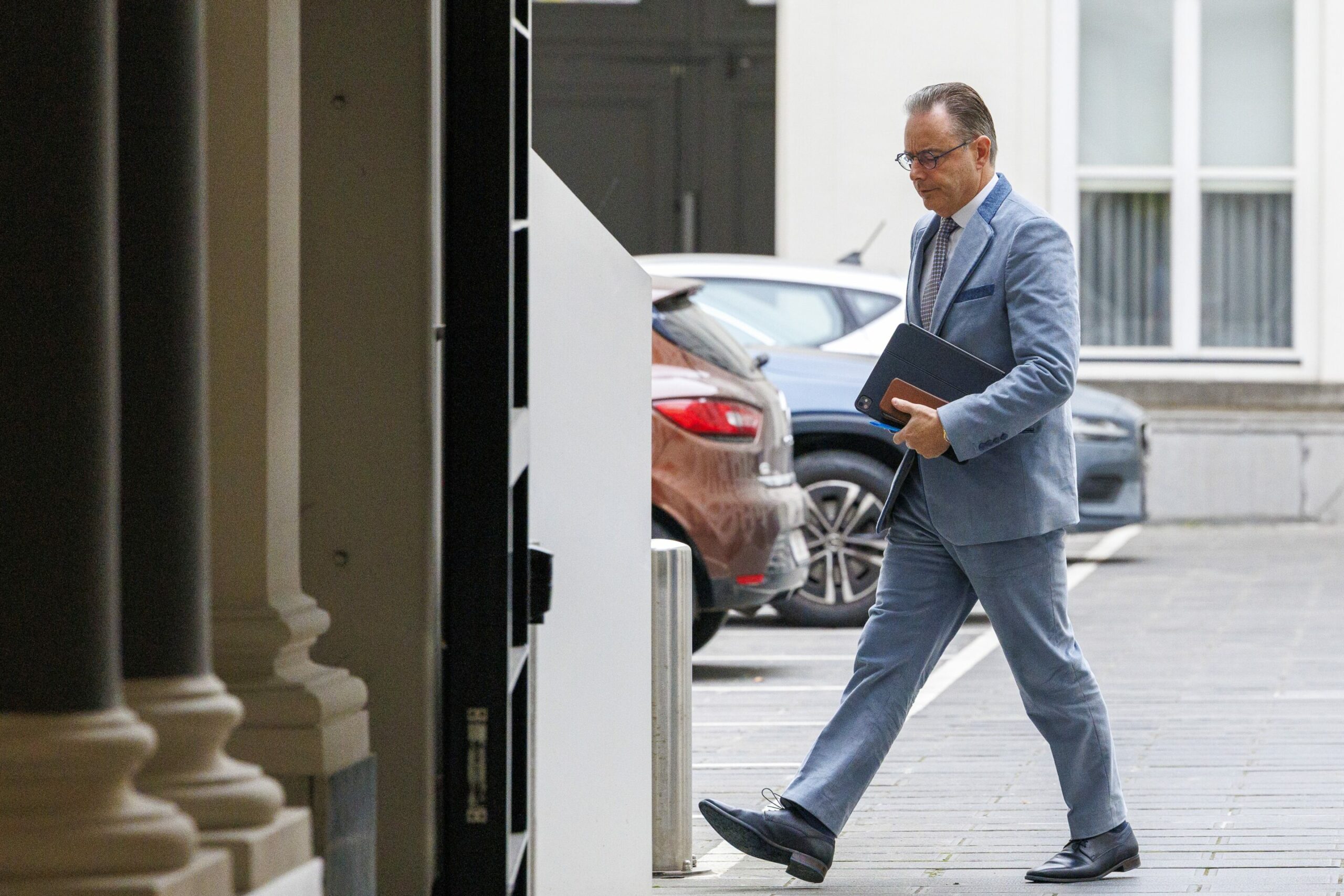
Bart De Wever. Credit: Belga
De Wever spoke of "a particularly challenging exercise," but added that an agreement had been found. Given the scale of the deal, he called it a "kind of second coalition agreement."
The Prime Minister was supposed to deliver his State of the Union address on the second Tuesday of October. However, it was postponed because there was no agreement at that time. Negotiations subsequently stalled for a while, causing the speech to disappear from the agenda entirely.
Now that the five parties have reached an agreement, he can finally make an appearance to present his plans on Wednesday. A debate about the measures will take place on Thursday, followed by a vote on Friday.
With this budget, De Wever plans to save €9.2 billion by the end of his Federal Government's legislature, in 2029.
What is in the budget plan?
Previously, the coalition agreement presented in February by De Wever's then-new Federal Government had already reduced the debt by €15 billion, he said. Now, another €17 billion will be added.
A total of €2.7 billion will be found in savings. A key measure is the introduction of a so-called "cent index" in 2026 and 2028, which means that only wages will be indexed up to a (gross) amount of €4,000 (or €2,000 for benefits) in those two years.
In concrete terms, for people who earn less than €4,000 gross or receive a pension of less than €2,000, nothing changes. For those who earn more than this ceiling, their salary or benefits will only be indexed on the portion up to €4,000 gross (or €2,000 gross for benefits).
If inflation rises by 2%, this means people will receive a fixed amount of €80 gross (2% of €4,000) on top of their salary, or €40 on top of their benefits. This applies even if their salary or benefits are significantly above the ceiling.
This affects roughly 41% of Belgian employees, according to HR services provider Partena Professional.
Credit: Belga
This measure will reportedly generate a budgetary gain of €800 million, but also €800 million in competitive gains for businesses. The salaries of ministers and MPs will not be indexed for the remainder of the legislature.
A 'back-to-work' plan for the long-term sick should generate €1.9 billion – €427 million has been allocated for a social agreement and investments in the healthcare sector, but "efforts are needed" to achieve this, such as co-payments for doctor visits being increased.
The Flemish employers' organisation Voka agreed that the cap on automatic wage indexation in 2026 and 2028 will "give companies some breathing room," but they would prefer a "full-fledged index jump." They also called the fact that "the growing problem of long-term sick leave is finally being addressed" a positive development.
More expensive sports and entertainment
Additionally, €1.3 billion has been found in consumption: there will be no actual VAT increase on natural gas. Instead, excise duties on gas will still be increased (meaning it will become more expensive), while excise duties on electricity will be reduced (meaning it will become cheaper).
By increasing excise duties (and not VAT itself, for which there are only three rates: 6%, 12% or 21%), a more gradual approach can be taken, De Wever explained.
This way, the government is getting ahead of the VAT increase to 21% that the European Union expects in Belgium by 2030. Additionally, the lowest rate of 6% currently applies to electricity, so intervention is only possible through excise duties.
Consumer protection organisation Testachats is pleased that the budget agreement does not include a general VAT increase. This is essential for maintaining purchasing power, they said. "A country's economic health hinges on maintaining its citizens' purchasing power," stated Testachats, adding that they also welcome the planned reduction in excise duties on electricity.

The Anderlecht branch of hypermarket chain Cora, in Brussels, on Tuesday 8 April 2025. Credit: Belga/Hatim Kaghat
One of the reasons why the budget negotiations repeatedly stalled over the past months was the idea of a general VAT increase, which ultimately did not happen. However, VAT on certain products will still be raised.
A VAT increase (from 6% to 12%) will be introduced for overnight stays in hotels or on campsites, for sports memberships, for entertainment such as cinema and festival tickets and takeaway – meaning these will all become more expensive for the consumer. It is not clear whether football tickets will also be included.
For pesticides, VAT will even go up to 21%. For non-alcoholic beverages, however, the VAT will decrease from 21% to 12%.
More expensive hotels
Retail federation Comeos also welcomes the new agreement, particularly the lack of general VAT increase and the cap on automatic wage indexation for those earning over €4,000 gross in 2026 and 2028 – saying that it is "satisfied that shopping carts will remain unaffected."
According to the Brussels Hotel Association (BHA), the added VAT for overnight stays in hotels will seriously jeopardise the sector if there is no transitional period. Horeca Vlaanderen is dissatisfied as well: "Customers will be the victims of such a blatant doubling of the VAT rate."
In an international market, this measure will put pressure on the competitiveness of Belgian hotels, they stressed. "We advocated for 9% instead of 12%. We often work with long-term contracts; without a transitional period, this will harm the sector."
Additionally, it also disadvantages the Belgian hotel sector compared to accommodations offered through tourist rental platforms on the domestic market, such as Airbnb.
This VAT increase will "primarily impact people who are already struggling to afford a trip," agreed Testachats. "The latest consumer barometer already showed that 52.9% of families struggled to afford their holiday."
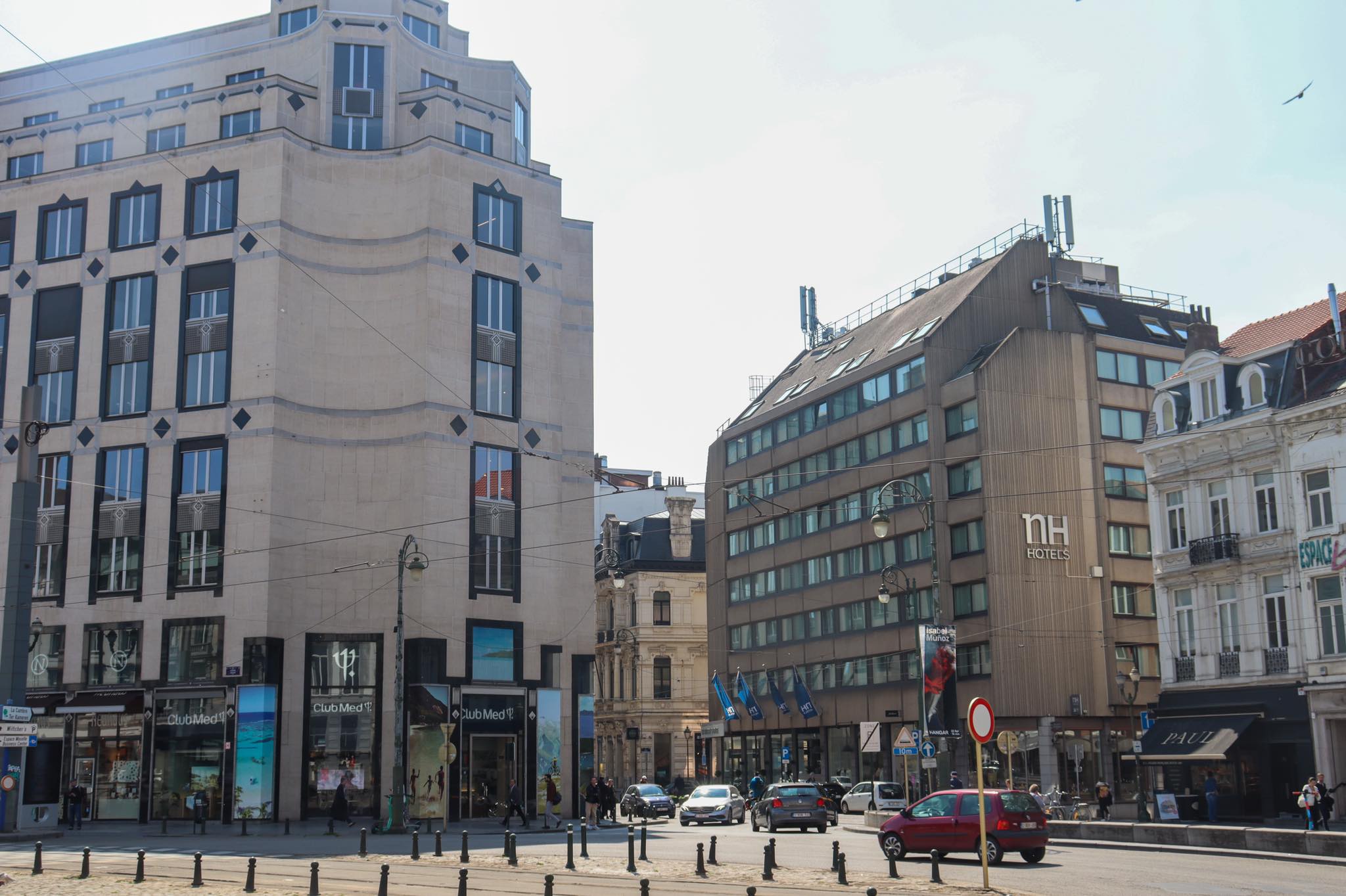
Hotels and travel agent on Place Stephanie. Avenue Louise shopping street. Credit: Lauren Walker/ The Brussels Times
On the revenue side, the Federal Government has found €2.1 billion, of which €912 million will come from the so-called "strongest shoulders."
The most important measure is the doubling of the securities tax for those with more than €1 million in their accounts, while a bank tax is expected to generate €150 million.
However, banking federation Febelfin stated that banks already pay more than €1 billion in bank taxes and complained that adding another €150 million is "unprecedented."
The organisation says it understands that everyone should contribute, but the banks already pay enough. Due to the "excessive tax burden," the profitability of Belgian banks is already rather low from a European perspective, they said.
The improper use of management companies will be addressed, and the fight against tax and social security fraud will be stepped up by hiring nearly 380 additional inspectors.
Parcel and flight taxes
Additionally, the Federal Government is introducing a €2 "parcel tax" for parcels from outside Europe; taxes on long-distance flights will increase from €5 to €10 from 2027 as well. The flight tax for short-distance flights already stood at €10, but will go up as well: by €0.50 in 2028 (to €10.50), and again in 2029 (to €11).
Fedustria, the sector federation of textile, wood, and furniture companies, can "only applaud the measure" in the face of the "flood" of parcels from Chinese online stores such as Shein, Temu, and AliExpress.
The higher flight tax, however, was less well-received. By reintroducing a higher air travel tax, the Federal Government is "bucking the trend," reacted Brussels Airlines. The Belgian airline points out that the previous increase only dates back to July.
"Italy and Germany have lowered their air travel taxes, Sweden has abolished them," a spokesperson for the company said. Brussels Airlines cannot afford the additional tax out of its own pocket and will therefore have to pass it on to passengers.
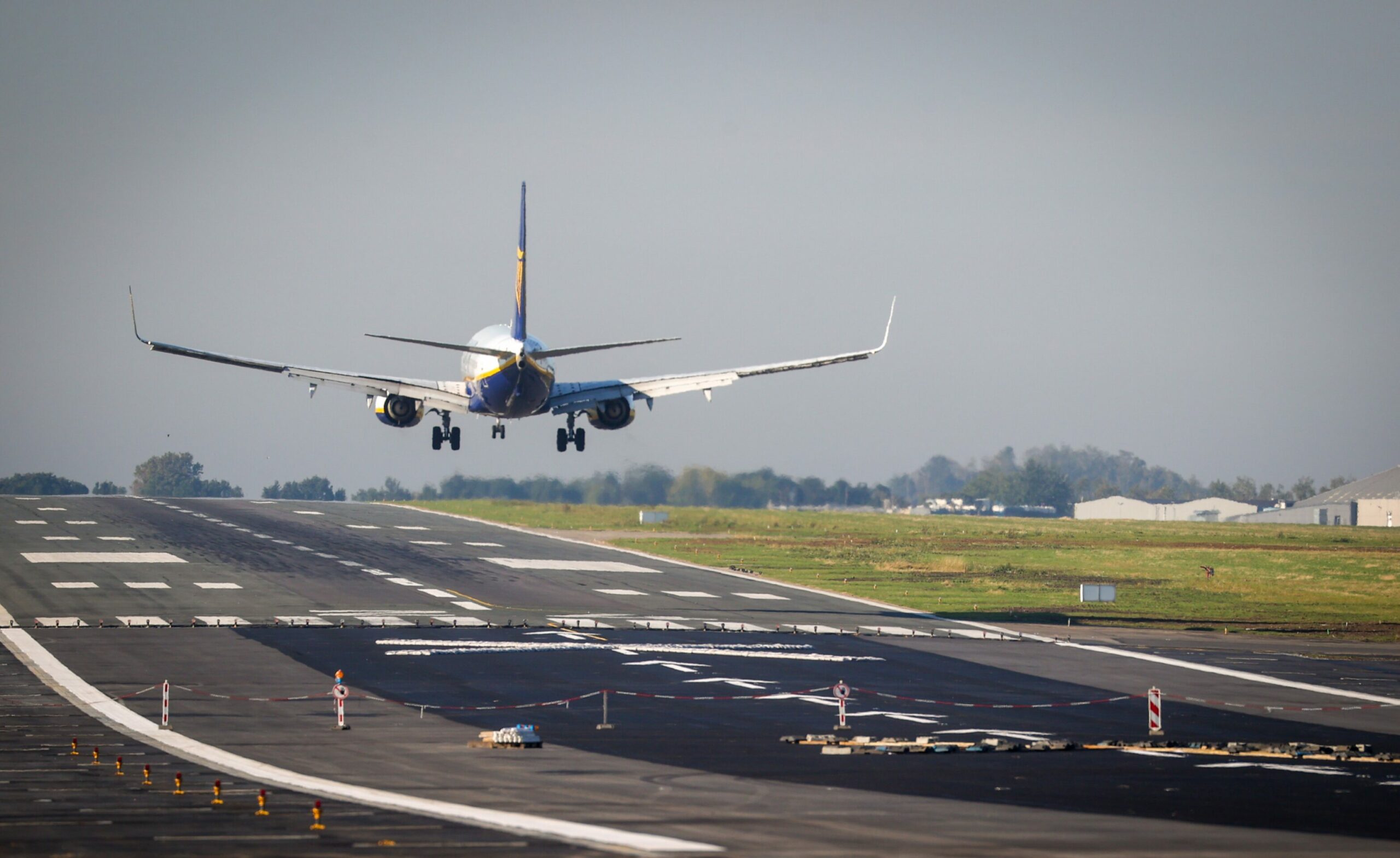
Aeroplane landing at Charleroi Airport in Ransart, Charleroi on Friday 08 October 2021. Credit: Belga
All these measures combined should lead to €9.2 billion. Along with the budget, the Federal Government also reached an agreement on the loose ends of the 'Summer Agreement'.
For example, it has been decided that long-term illness will be fully counted as a qualifying period for the pension penalty for early retirement. The first year of employment (including for those who only started working at the end of the year) will also be fully eligible.
Part of the tax reform is also being accelerated; the Federal Government will begin increasing the work bonus for the lowest incomes as early as 2026 – much earlier than foreseen. Another part of the reform, worth €1 billion, will be postponed until 2030.
Speaking about the agreement, De Wever called it "a balance between savings, revenue, social adjustments," stressing that "everything is connected."
"Either we change everything, or nothing," De Wever said. "Ultimately, a compromise has to be reached. It is never easy to get five parties to accept something; it takes time."
Update: This article was updated to clarify the specific flight tax increases.
