
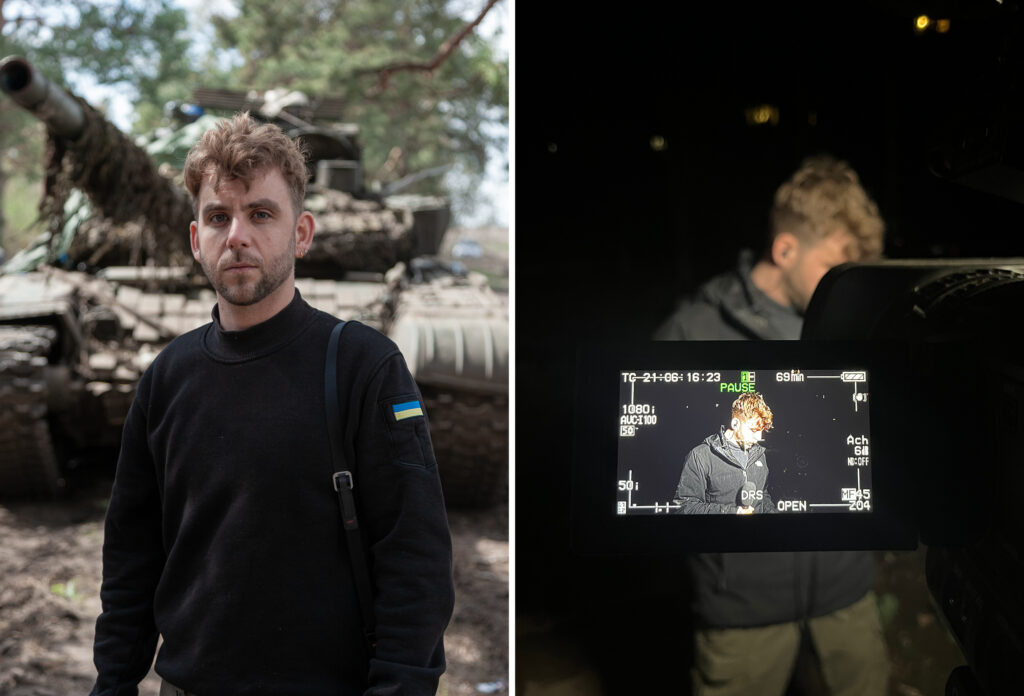
At the snowbound frontline in Ukraine, 1,064 days into the war, the fight is relentless. "The intensity of war has never been as high as today," an independent Belgian journalist, Arnaud De Decker, told The Brussels Times.
De Decker, 30, has been an on-the-ground reporter in Ukraine since Russia invaded Ukraine in 2022. He returned to his hometown, Brussels, after a month spent in and around the Donetsk region. "I never find that same combative attitude and belief in the free future as I do in Ukraine," he said.
Having reported from Kupiansk, Kramatorsk, Bakhmut and other cities in Ukraine, De Decker has seen his fair share of action.
Last month, while on a mission with the Ukrainian military in the Donetsk region, a Russian guided bomb landed metres away from the position he was at. "We were lucky," he said.
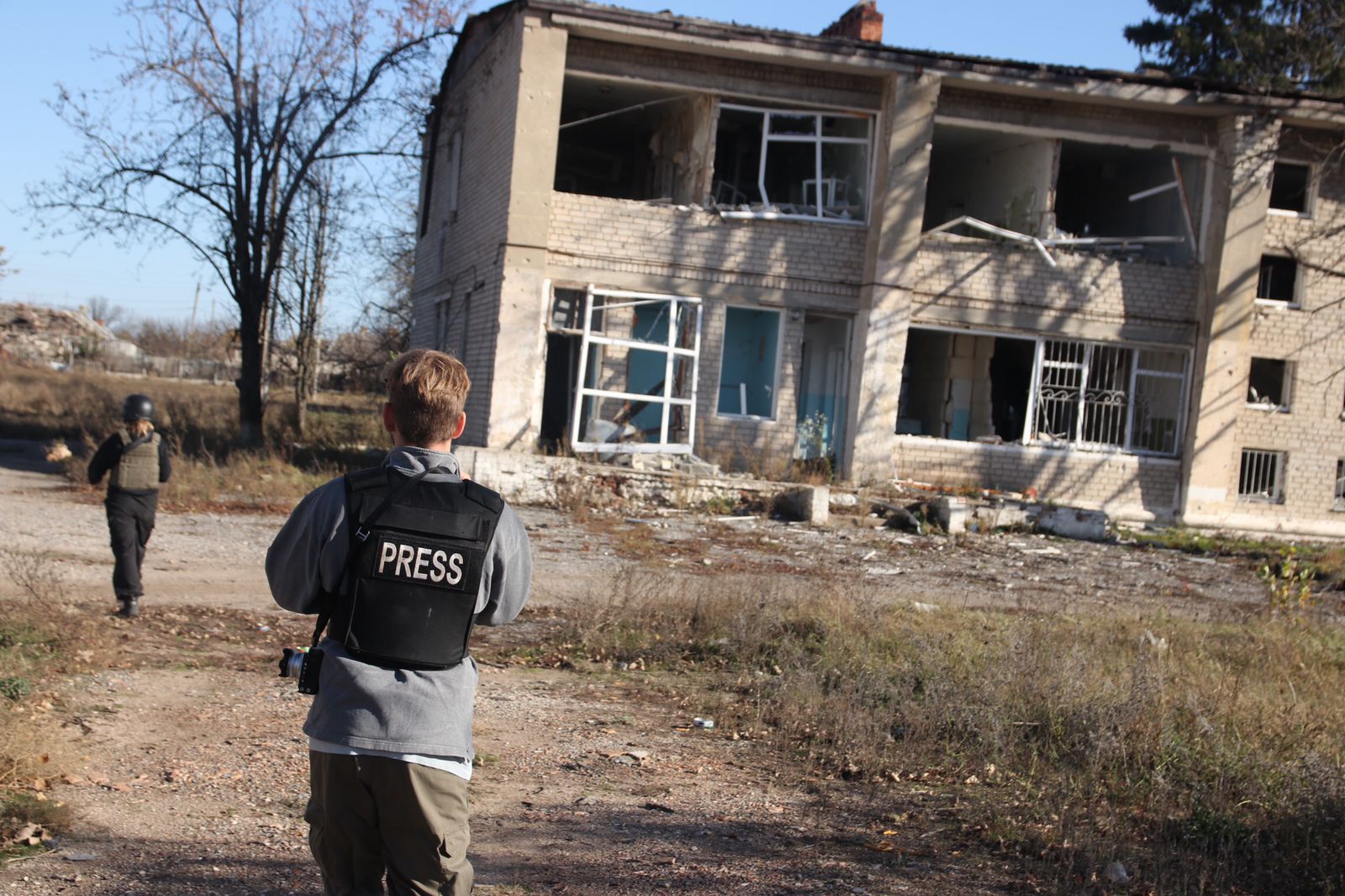
Belgian journalist Arnaud De Decker on the ground during the war in Ukraine. Credit: Arnaud De Decker
A matter of 30 minutes
This was not the first time De Decker got close. When reporting from Kramatorsk, a city that remains a Ukrainian stronghold in the eastern Donetsk region, on 27 June 2023, Russian forces hit a local restaurant, Ria Lounge – a popular hangout for civilians, journalists and volunteers.
"I went there that day as I often have done. I saw a manager and staff that I knew. They showed me to a good table, I had pizza and non-alcoholic beer, and then I returned to the hotel," De Decker recalls.
About 10 to 15 minutes later, an S-300 missile hit the restaurant, killing 13 civilians and wounding 61, including a Ukrainian novelist, Victoria Amelina, who died in the hospital.
"Killed on that exact spot or surviving was a matter of 30 minutes," he said. "It was hard to understand why I was still alive."
His father called that evening. "You do not talk about it. I said that I was fine as nothing happened. Of course, my family and friends read about it in the news later," he explained.
A month earlier, De Decker lost his friend Arman Soldin, a Bosnian-French journalist who was killed while reporting near the eastern city of Chasiv Yar. "All of it affected me more than I thought."
It took a while to recover, resulting in a handful of poignant tattoos, he said, a letter Ї - unique to the Ukrainian language - and a Donetsk flag on his hand. De Decker also wrote a book about his experience. "I cannot say that I healed, because you do not heal from that, but I managed to live and give all this a place in my life."
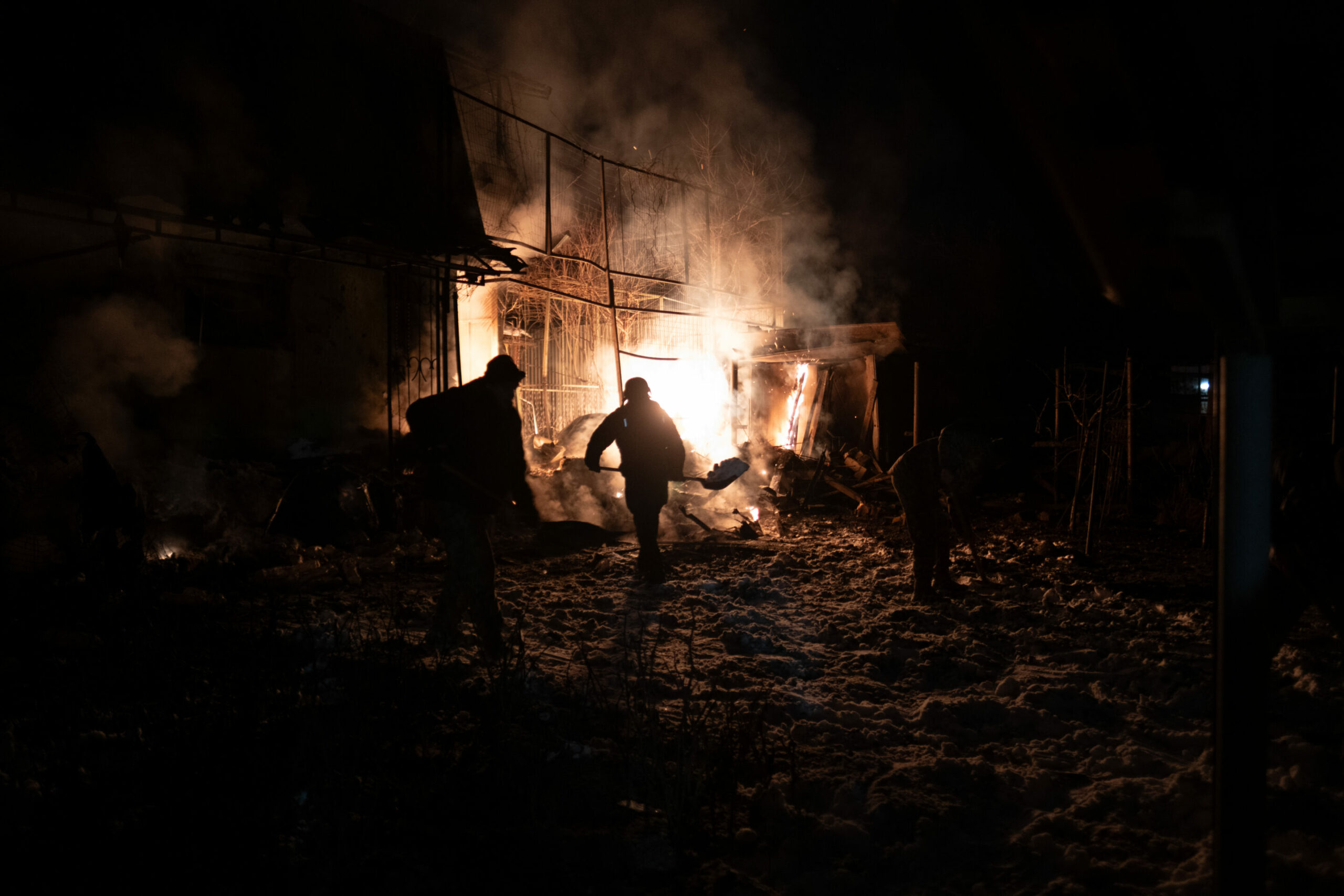
First responders to a fire following a drone strike in Ukraine. Credit: Arnaud De Decker
How drones reshape war reporting
Today, Russian drones have expanded the 'kill zone' to 20 kilometres, whereas in 2023, journalists could still get 700 metres close to the contact line.
"I had close calls in Bakhmut, a few hundred meters from Russian positions. In Kupiansk, I had bullets flying over my head. But that was before drones," De Decker said.
As Ukraine recorded more than nearly five thousand first-person view (FPV) drones used by Russia on 19 January, the intensity of the war has never been as high as today, De Decker said.
"About 20 kilometres away, you can consider it more or less safe. Of course, you have artillery, and guided bombs – these you cannot know," he explained.
Drones reach reporters, even beyond the 20-kilometre line. "Journalists get killed like this - Antoni Lallican, killed 20 kilometres away from the contact line. Even a press officer cannot predict this. As a journalist, you need to accept that you can be hit and it is not in your control.”
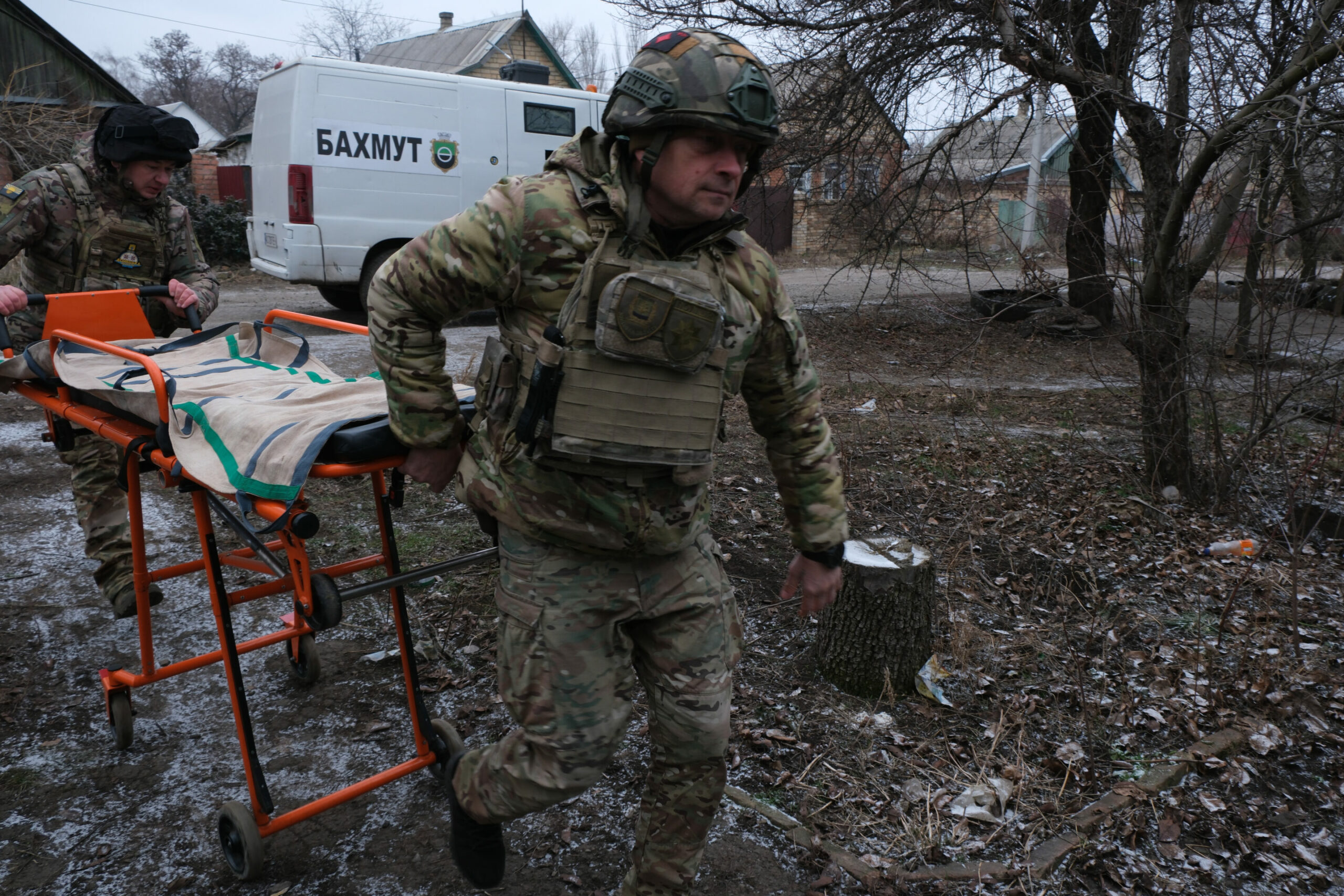
Stretcher for the wounded in the Ukrainian army. Credit: Arnaud De Decker
The war looks the same today as last year, De Decker said. "Photos I made two months ago in Druzhkivka look nearly identical to those from Pokrovsk a year before." For that, fewer journalists are willing to come close as it gets increasingly life-threatening, while the outcome seems less impactful.
"There is a shift in the lookout for stories towards more optimistic reports, which is hard to find in Ukraine nowadays," he said. "We need to focus more on stories that tell about the creativity of Ukrainians in how they manage to go through this war."
