
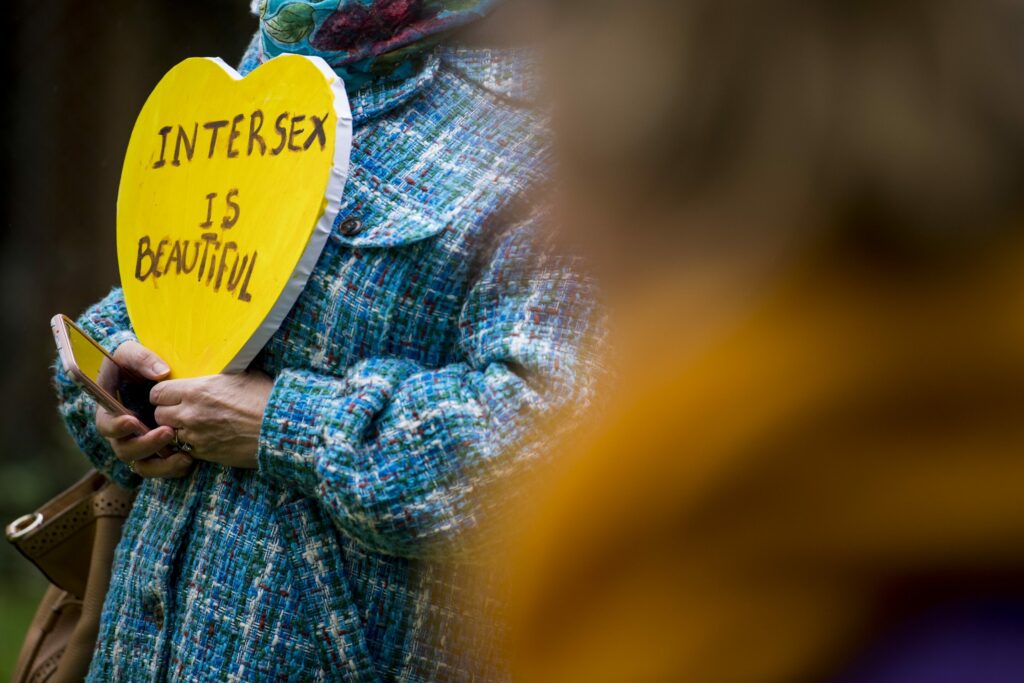
The University of Antwerp has launched a large-scale study into the living conditions of people with variations in sex characteristics, also known as intersex people, in Belgium.
The research, commissioned by the Institute for the Equality of Women and Men, seeks to improve understanding of the experiences and needs of a group that researchers say is often overlooked.
The term "variations in sex characteristics" refers to cases where a person's body does not fully fit typical definitions of male or female, due to differences in chromosomes, hormones, internal reproductive organs or external genitalia.
According to a Danish study cited by the researchers, around one in 90 people is born with such a variation, a prevalence comparable to that of twins in the general population.
"We still have very little systematic knowledge about how intersex people live their lives in Belgium," said researcher Marion Wasserbauer.
"By placing their voices at the centre of this research, we want to contribute to evidence-based policymaking and greater social recognition."
The research team will examine intersex people's interactions with the medical system, their social and romantic lives, issues of openness and privacy, as well as experiences of discrimination and the support they receive.
People concerned can take part through an anonymous online questionnaire, an in-depth interview or a written personal account.
