
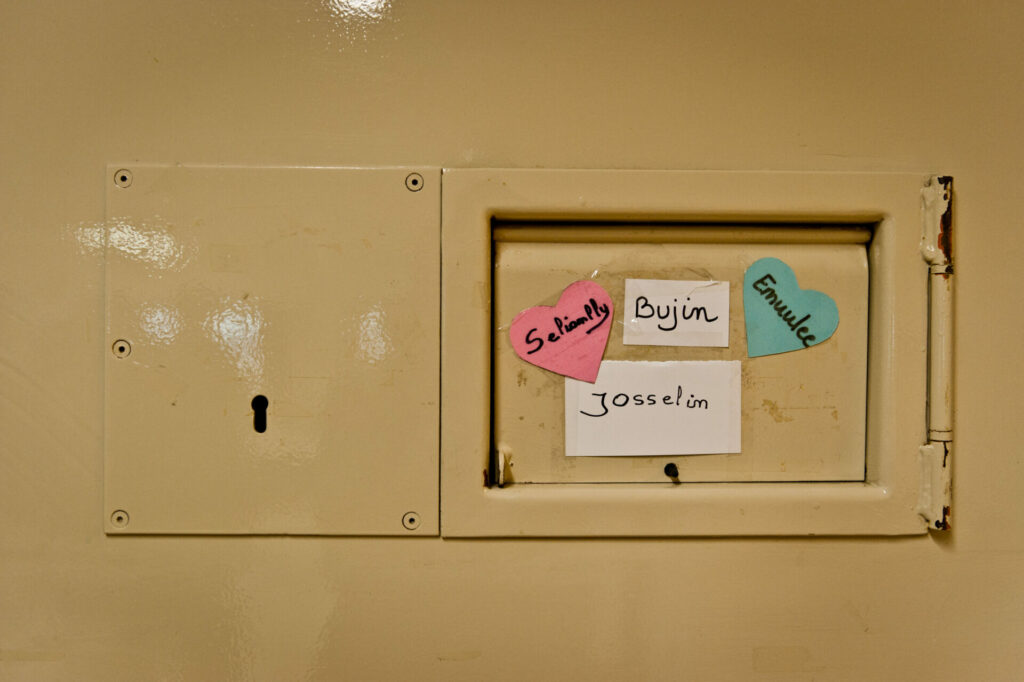
On Friday, Belgium's public prosecutor requested the acquittal of the Federal Public Service Justice, which is being sued by a detainee who claims he has been subjected to degrading treatment due to poor prison conditions.
The case was brought by Nordin A., who is detained in Ghent Prison for drug-related offences. He argues that his cell was too small and that inadequate medical care amounted to degrading treatment.
His lawyer, Jesse Van den Broeck, went as far as calling for the resignation of justice minister Annelies Verlinden.
According to the defence, the prisoner, who suffers from diabetes, did not always receive the insulin injections required for his treatment.
Van den Broeck said his client spent 49 days in a living space measuring just 2.24 square metres and experienced health problems as a result of insufficient medical follow-up.
"My client simply wants to be treated humanely, like you and me," his lawyer told the court, arguing that he is entitled to a larger cell and proper medical supervision.
He also referred to multiple rulings by the European Court of Human Rights condemning the state of Belgian prisons, criticising the lack of structural solutions despite repeated promises of reform.
The detainee is seeking €1,000 in damages and the appointment of an independent doctor to examine him.
While acknowledging that the situation in Belgian prisons is problematic, the public prosecutor argued that, from a legal standpoint, the conditions described did not constitute degrading treatment.
He cited case law indicating that structural overcrowding can be mitigated by compensatory measures such as access to exercise, workshops or other activities, which he said are available in Ghent prison.
The prosecutor also said he could not establish a causal link between the detainee's health problems and his incarceration, adding that the Belgian state does not deliberately or knowingly subject prisoners to degrading treatment.
Lawyer Kris Luyckx, representing the Justice Ministry, likewise acknowledged systemic issues in Belgian prisons but rejected the claim of degrading treatment in this specific case.
He also disputed the allegation that the detainee was not receiving insulin, stating that nurses are authorised to administer injections when doctors are not present.
The court is expected to deliver its verdict on 27 February.
Related News
- Brussels woman murdered after judicial blunder allowed her grandson to remain at large
- 'Crooked fraudster': Belgian man denied fair trial over media attacks
- STIB probes sexist WhatsApp group where drivers ranked female colleagues
- Belgian ISIS fighters held in Syria will not be allowed to return, says Foreign Minister
