
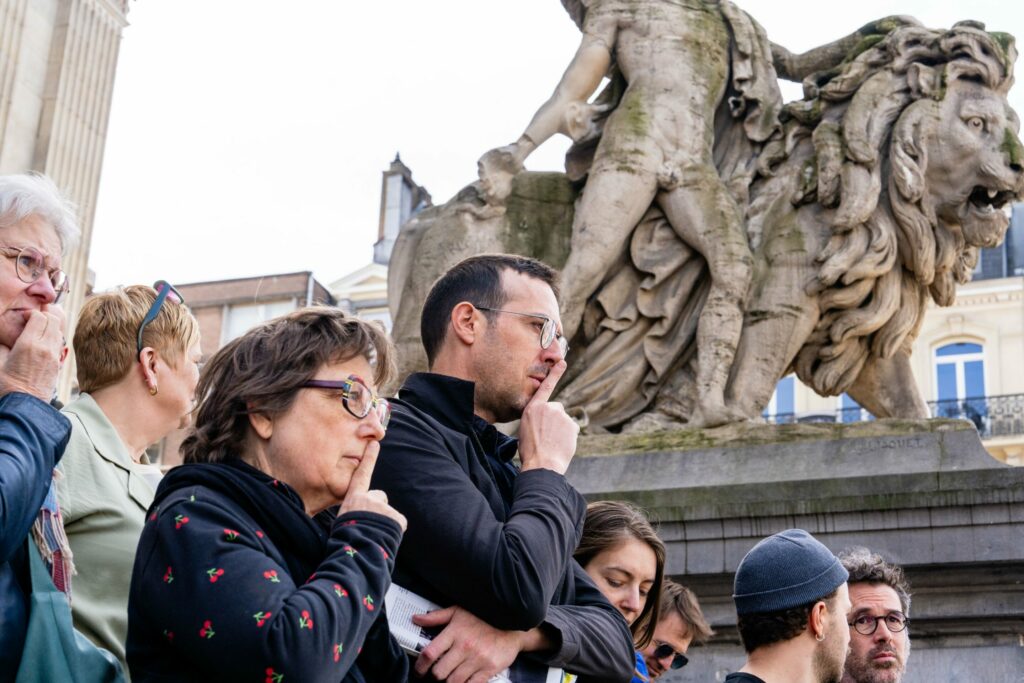
For exactly 600 days now, the Brussels-Capital Region has been without an elected regional government. As Brussels citizens are again taking to the streets to denounce the political impasse, a new unexplored avenue could still be opening up.
On Friday, Brussels residents are holding a demonstration to urge politicians to take their responsibility for the seventh time since the elections in June 2024. Hundreds of protestors are expected to denounce the deadlock in front of the Bourse/Beurs in the city centre at 19:00.
"600 days without a Brussels Government means 600 days without a Minister-President to defend our interests," said Eric Vandezande of the citizens' collective 40 comités.
Among other things, Vandezande refers to the ongoing asylum and migration issues, the consequences of which are hitting Brussels hard.
"Public works are being postponed, jobs are being lost, and people who work hard for Brussels every day are losing perspective," he stressed. The organisations are also sounding the alarm about the essential social services that are coming under pressure and the erosion of confidence in the Brussels economy.
An alternative route?
The first attempt to form a coalition, led in particular by MR (Francophone liberals), was abandoned after months of fruitless negotiations in February 2025, when formator David Leisterh (MR) threw in the towel in the face of insurmountable issues between the parties at the table.
His own party's veto on working with Team Fouad Ahidar, who won three seats on the Dutch-speaking list, further complicated finding delicate balances between the linguistic communities.
In January 2026, formator Yvan Verougstraete (Les Engagés) took the reins in an attempt to form a coalition without MR, but ran into similar issues – even when trying to form a very different coalition.
Flemish Christian Democrats (CD&V) also failed to tip the balance, but Flemish liberal party Anders (formerly Open VLD) has been accused of blocking the formation by refusing to join a coalition government without the Flemish nationalist party N-VA.
As a result, political experts fear that all possibilities have been exhausted, and the Brussels-Capital Region may remain without a new government until the next elections in 2029.
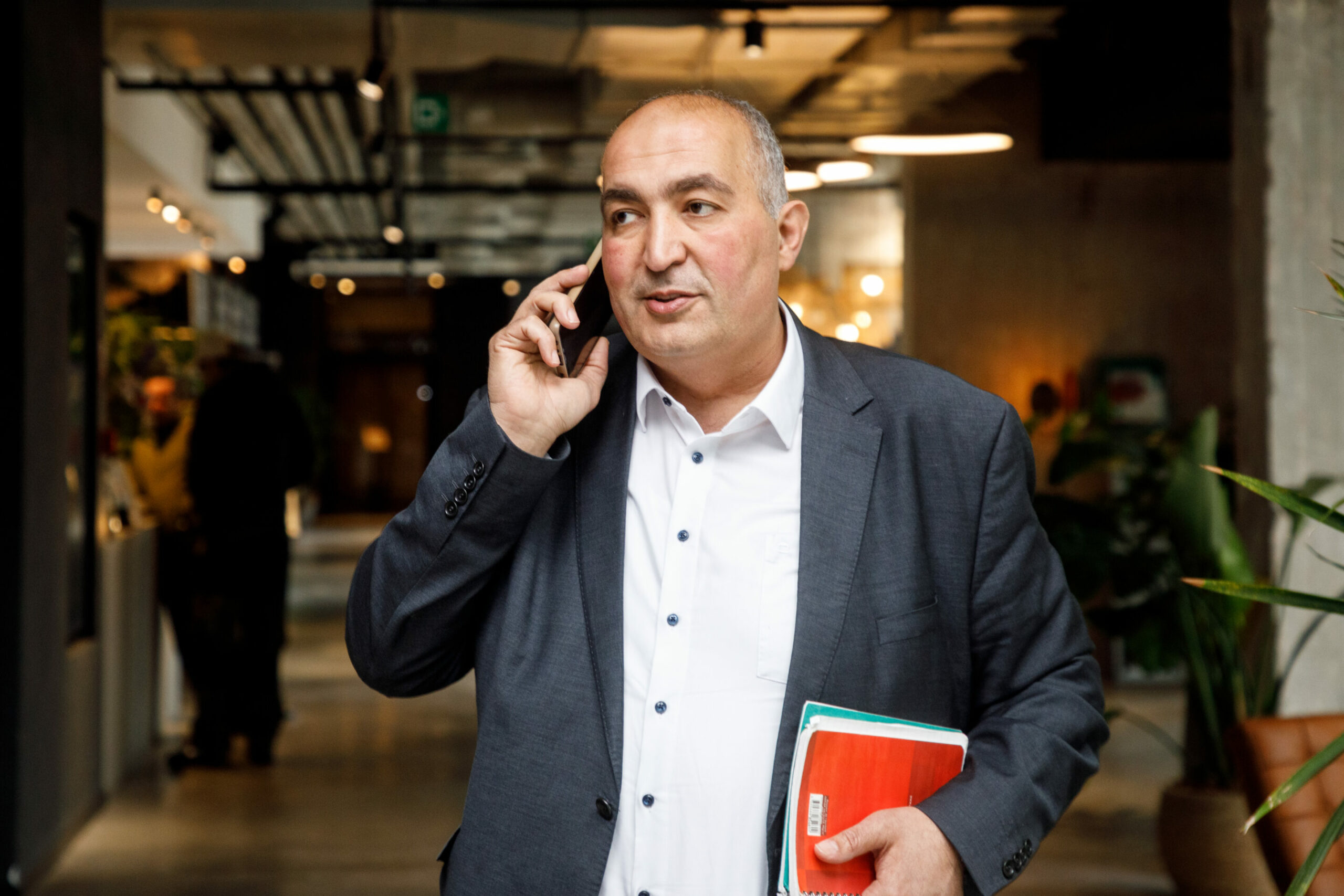
Fouad Ahidar. Credit: Belga/Hatim Kaghat
However, a new hope may now be on the horizon: the inclusion of regionalist party Team Fouad Ahidar, with three seats, is reportedly back on the table. This option could break the deadlock by gathering the seats needed to form a Dutch-speaking majority with just three parties (Groen and Vooruit), instead of four.
"Of course, we would like to be part of the Brussels Government," Fouad Ahidar told The Brussels Times on Thursday. "If we can take our responsibility, then we will do so."
However, he stressed that his party will not just join any coalition; he wants to see the policies, how much money needs to be saved, and where.
Institutionally and mathematically, Ahidar has the three seats needed to form a Dutch-speaking majority as well as over 20 years of experience in Brussels politics. "If we are invited to the table, we will certainly accept. But just because they invite us to dinner does not mean we have to eat whatever is served."
Defying vetoes
Ahidar stressed that for nearly 20 months now, his party has been contributing positively in the Brussels Parliament and its several committees.
"Every time there is a positive project for the people of Brussels, we try to make a difference. Whether the initiative comes from MR, PS or Groen, we will give our support," he explained. "And I feel like the other parties are slowly starting to realise that."
Despite being the second-biggest party on the Dutch-speaking side, TFA has not been truly included in the negotiations – mainly due to vetoes from several parties, who claim that Ahidar is an Islamist and only wants to focus on religious issues.
"I do not understand why my party is being ostracised like this at all. For over 20 years, I was part of the Brussels Parliament, and there were no problems," he said. "But as soon as I start my own party and do very well in the elections, I'm an extremist? No, that's not right."
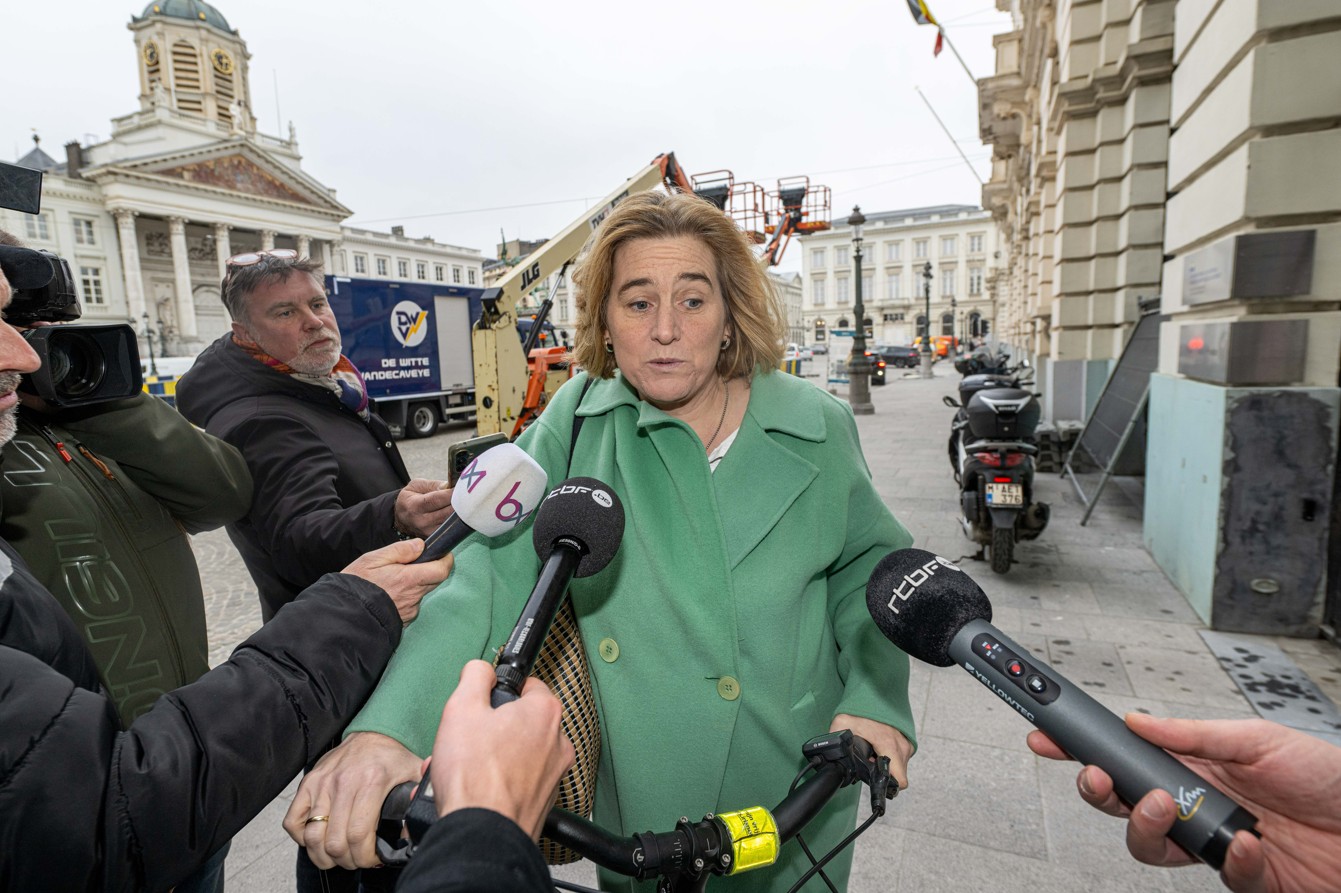
Groen's Elke Van den Brandt arrives for a meeting to form the Brussels Government, 3 November 2025. Credit: Belga/Jonas Roosens
The biggest party on the Dutch-speaking side, Groen (greens), stressed that they are open to any solution that would unblock the current situation – including a potential government with Team Fouad Ahidar.
"We have shown up to all negotiations and are definitely willing to speak with everyone," Litte Frooninckx, a spokesperson for Elke Van den Brandt, told The Brussels Times. "We have always been open to negotiating with Fouad and his party. Various parties have vetoes against him, but we feel that this is not the time for vetoes."
However, she stressed that Groen does not believe that the issue lies with Ahidar. "The issue is with PS – which is not budging because it does not want to work with N-VA – and with Anders – which is not budging because it does not want to work without N-VA. That deadlock is simply not being resolved."
Serious reforms and savings
Vooruit (socialists), the other Flemish party needed for a Dutch-speaking majority in a potential three-party coalition, also sees no issues with Fouad Ahidar either. They know Ahidar very well, as he used to be a party member for over two decades, until he resigned in December 2023 and started his own party.
"For us, there is no problem sitting down with Fouad Ahidar, and there never has been," Nils Quintelier, spokesperson for Ans Persoons (Vooruit), told The Brussels Times. "What needs to be on the table for us are serious reforms and a willingness to make a savings effort of €1 billion."
The path taken by Yvan Verougstraete – who tried forming a centre-left 'Guinness' coalition – and the proposals already on the table "are a strong basis and should be followed as much as possible," he added.
With Ahidar's party on board, however, the question is whether a majority can be found on the French-speaking side, as MR and DéFI have both vetoed working with the party in the past, and are anything but enthusiastic about it.
"If they are invited to the negotiating table, we will be even more demanding," Bernard Clerfayt (DéFI), a minister in the outgoing Brussels Government, told Sudinfo.
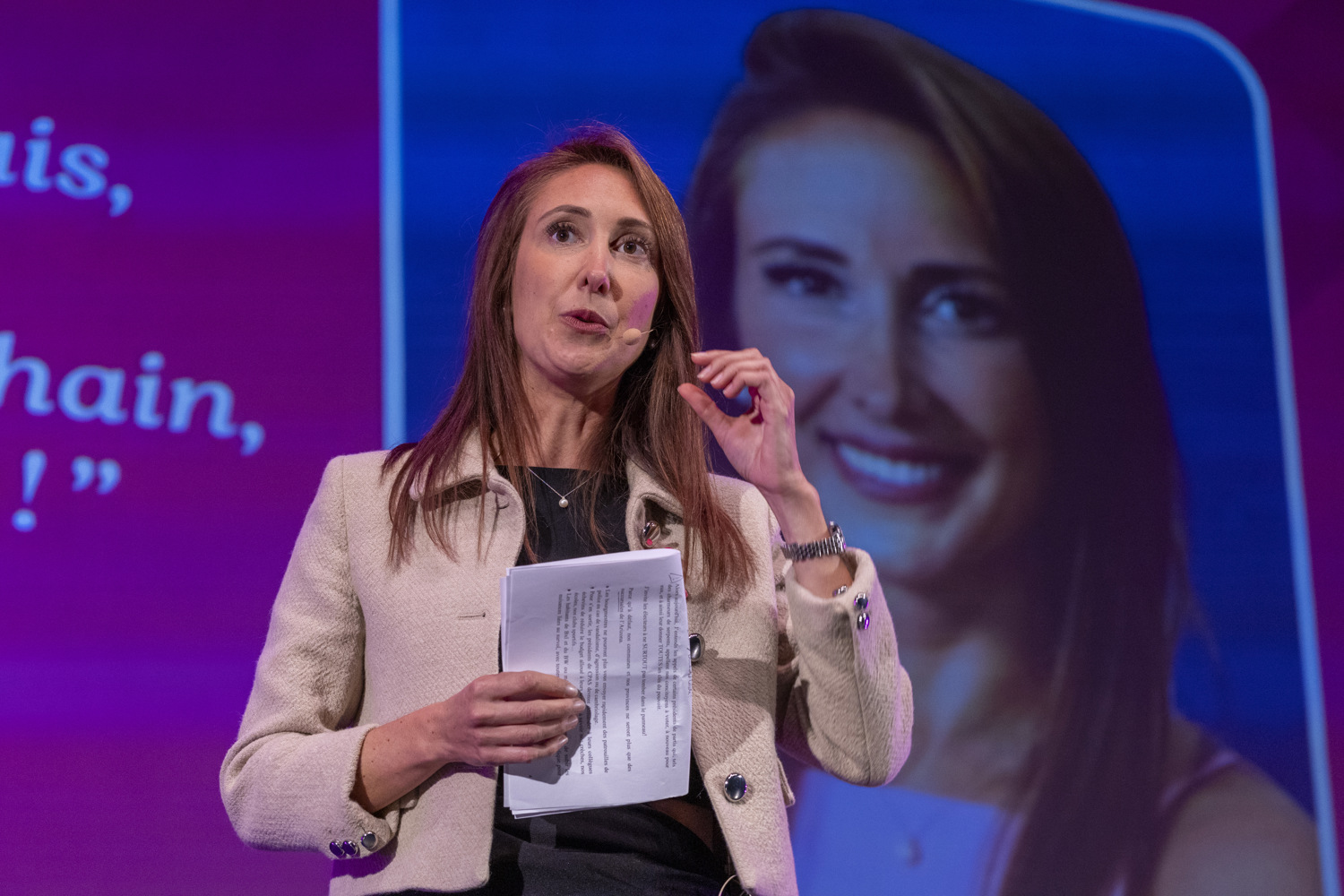
DéFI's Sophie Rohonyi delivers a speech at the elections congress of French-speaking regionalist party DeFI ahead of next week's elections, Sunday 06 October 2024. Credit: Belga/Nicolas Maeterlinck
The party could be a potential partner in a French-speaking majority (with PS, Les Engagés and Ecolo), but DéFI made it clear that TFA's inclusion would not be greeted with applause.
"We will clearly call for a vote on a regulation guaranteeing neutrality," he said. "Mr Ahidar has advocated populist texts in the Brussels Parliament: this would also raise questions about the possibility of a return to regional financial equilibrium."
The party leader Sophie Rohonyi added that a whole series of questions must be answered by TFA, and that DéFI will take a stance depending on the answers.
"Is TFA willing to make significant savings to get the Brussels Region back on track, to defend animal welfare by putting an end to the slaughter of animals without stunning, and to uphold the neutrality of the State, in line with decades of struggle for the separation of Church and State?"
