The latest crushing failure in the Brussels political saga has led experts to fear that the Brussels-Capital Region will remain in limbo and without a new government until the next elections in 2029.
After trying for weeks to find a majority to work with, formator Yvan Verougstraete (Les Engagés) announced earlier this week that he was throwing in the towel.
Visibly frustrated, he told reporters he was giving up because the Flemish liberal party Anders (previously called Open VLD) would not come to the negotiating table despite the promising signs.
"It is a testament to incompetence and ignorance, but I fear that there are no other feasible options," political scientist Dave Sinardet (VUB) told The Brussels Times.
To a greater or lesser extent, all options have been attempted, he fears. "Some took a very long time, others never got off the ground because certain parties did not like the formula. But basically, everything conceivable has been repeatedly tested and tried out."
Broken trust
Verougstraete's attempt to form a centre-left so-called "Guinness" government with Groen (greens), Vooruit (socialists), CD&V (Christian Democrats), and PS (socialists), Ecolo (greens), DéFI (regionalists) and his own centrist party Les Engagés briefly seemed to offer some hope, but ultimately fell through as well.
Some are wondering if it would be an option to go back to previously-tried formulas, but those always come back to the issue of needing both MR (liberals) and PS. "If any trust ever existed between those parties – and especially between PS' Ahmed Laaouej and MR's Georges-Louis Bouchez – it has completely disappeared. So I do not see why that would suddenly work now."
"Unless the attitude of certain parties changes, some key players are replaced, or external pressure to form a government becomes even greater than it is now, I do not foresee a solution," Sinardet said.
With none of these things looking likely, he fears that the outgoing Brussels Government will remain glued to their seats until the next elections are organised in three years' time.
"The only scenario that remains to continue with this outgoing Brussels Government until the next elections in 2029," he said. "To be absolutely clear, that is a truly dramatic scenario, in my view. It is a sign of the total impotence of the current political class in Brussels."
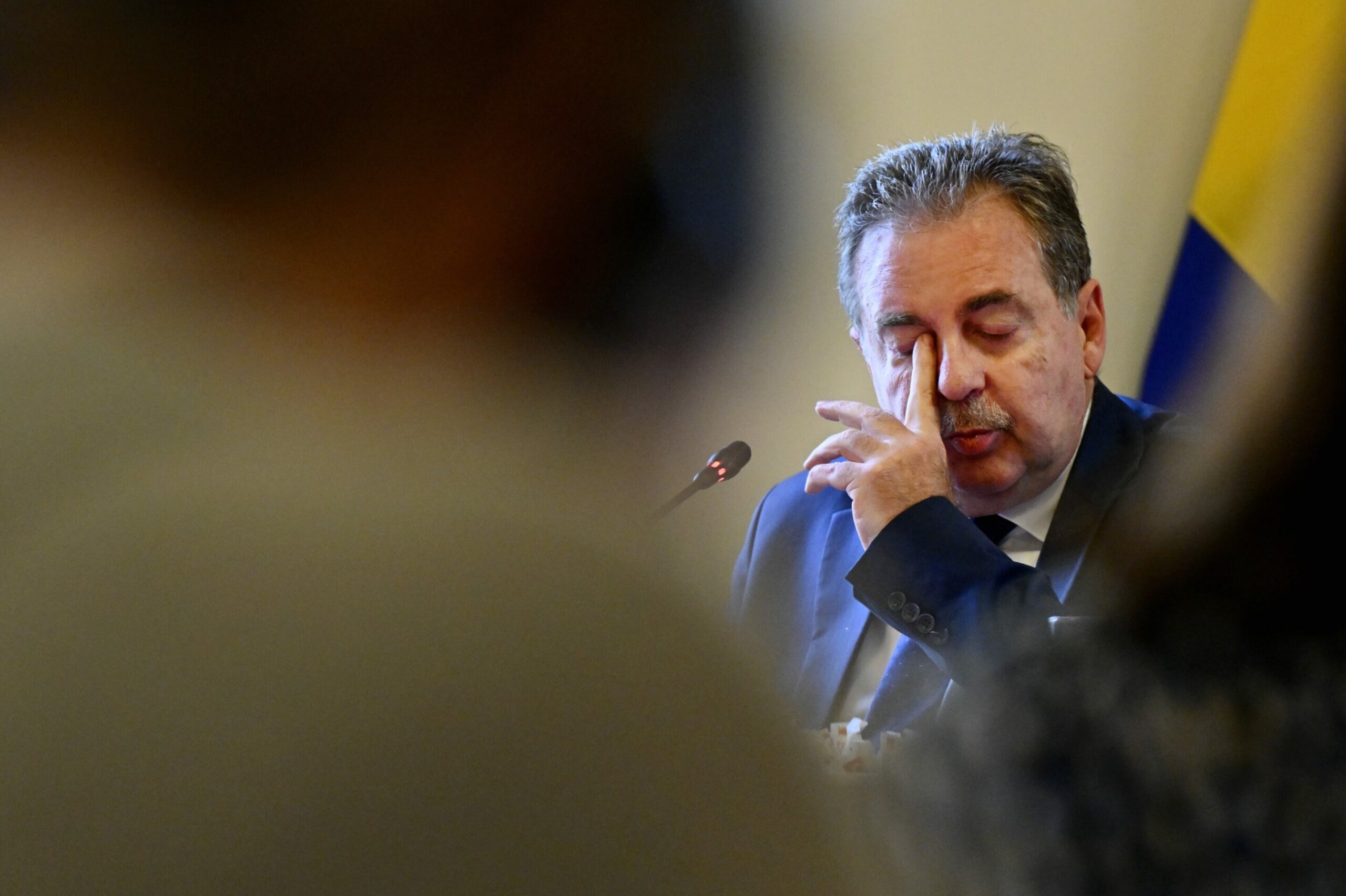
Outgoing Brussels Minister-President Rudi Vervoort (PS), at the Brussels Region Parliament, on Tuesday 9 December 2025, in Brussels. Credit: Belga/Eric Lalmand
The final blow to Verougstraete's attempt came when Budget Minister Dirk De Smedt (Anders) pulled out at the last minute, allowing other parties at the table to point the finger at the liberals.
"If they had come on board, there would have been a majority to get started on the actual substance of a government agreement. But I never really believed that would happen," said Sinardet.
That idea would be at odds with the profile that Anders leader Frédéric De Gucht wants to project, he said. "His party is not part of the Federal or Flemish Government. And now, he wants to be an opposition party across the board, and no longer have to defend any compromises."
The newly chosen party name is a very symbolic one: 'Anders', means "different" in Dutch. "He wants to show that he will really do things differently now that he is in charge. Brussels is also the only place where his party has a say, because it is simply necessary in many scenarios."
Early elections?
The Belgian electoral system is set up in such a way that early elections can be organised at the Federal level. It is not possible for the regions – something which is laid down in the Constitution.
"The Constitution can be amended, but that requires a two-thirds majority in the Parliament," Sinardet said. "At the moment, no such majority exists, simply because not all parties are convinced that new elections should be held."
He underlined that MPs' attitudes can change over time and a two-thirds majority might be achieved at some point, but it will not happen overnight.
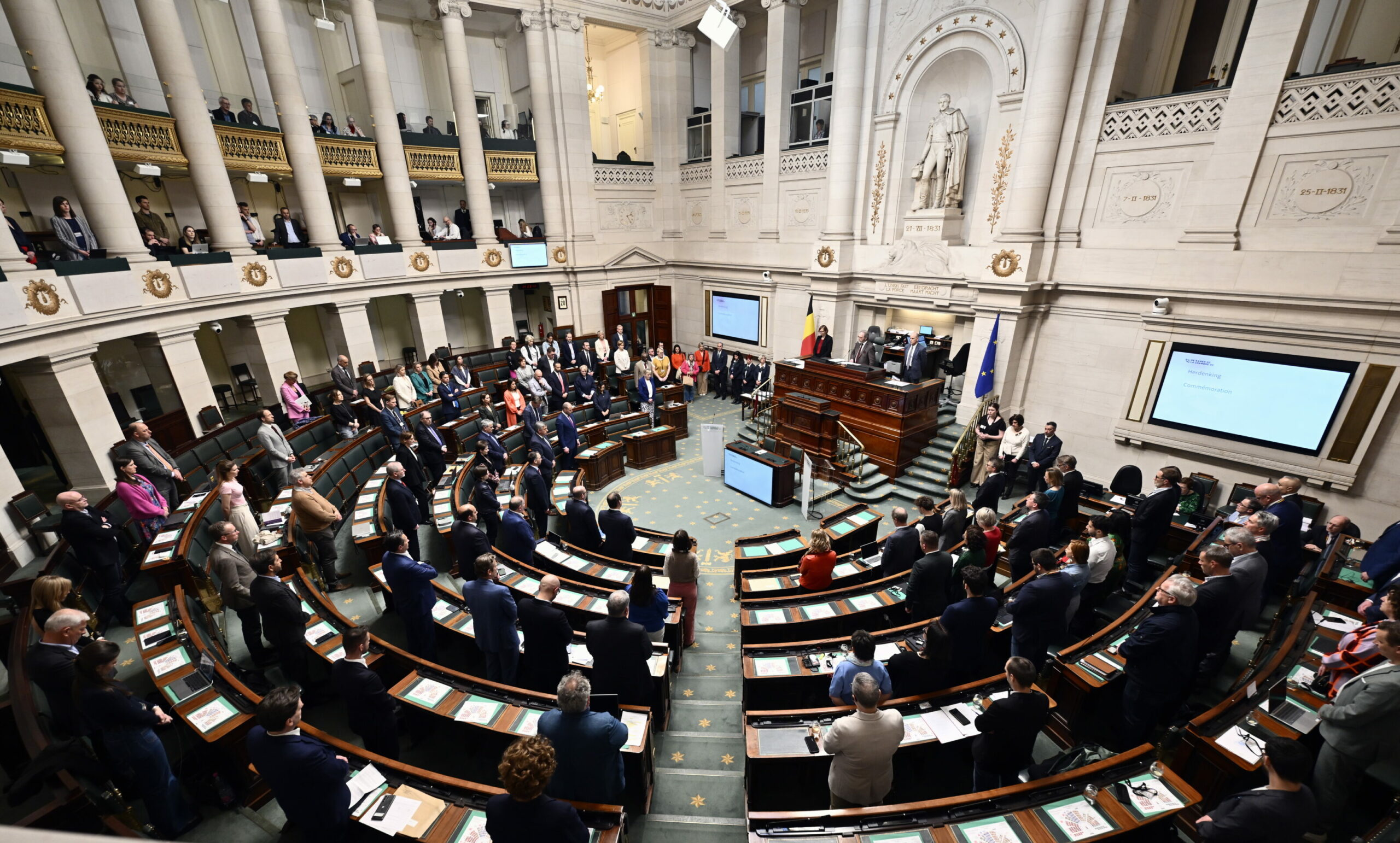
To change the Constitution, a two-thirds majority is required in the Federal Parliament. Credit: Belga/Eric Lalmand
"What's more, if a two-thirds majority in the Federal Parliament would ever be achieved to change the Constitution and make early elections possible in Brussels, then a majority in the Brussels Parliament itself would still have to vote in favour of dissolution," Sinardet said.
"In practice, that means that Brussels MPs would then have to vote for their own dismissal."
He also pointed out that even though early elections are possible at the federal level, not even the long and difficult formation that led to 2011's 541-day government formation made MPs consider the option.
Sinardet does not entirely rule out that there will be more external pressure that will set something in motion, but he "doubts it."
600 days with no Brussels Government
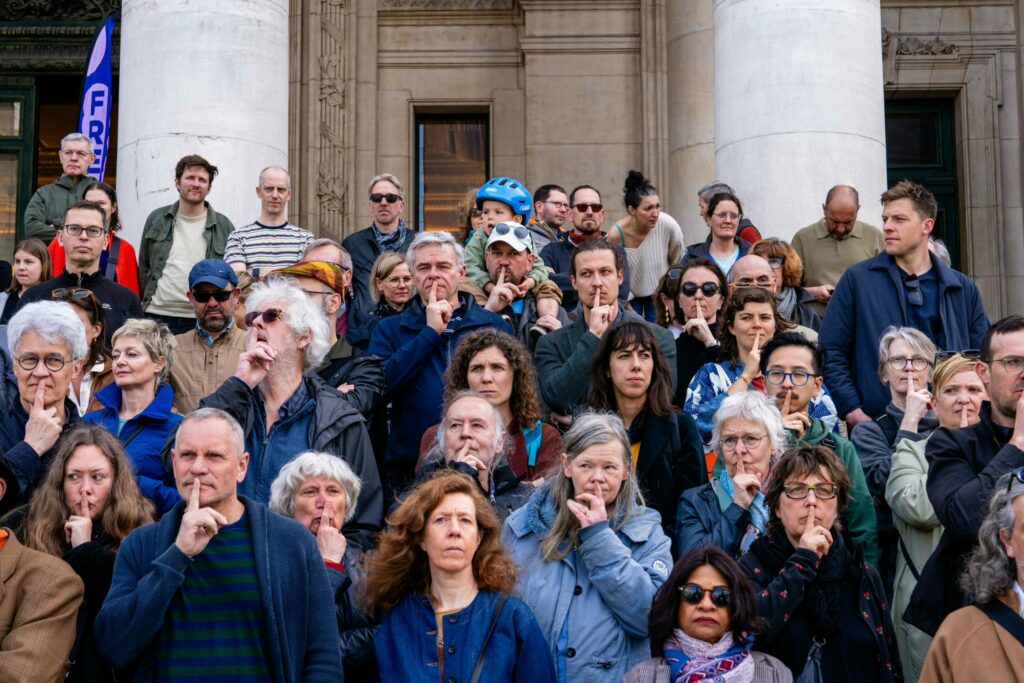
For the seventh time since the elections in June 2024, civil society is organising a demonstration to urge Brussels politicians to take their responsibility, on Friday 30 January, in front of the Bourse/Beurs in the city centre.
"600 days without a Brussels Government means 600 days without a Minister-President to defend our interests," said Eric Vandezande of the citizens' collective 40 comités. He refers, among other things, to the ongoing asylum and migration issues, the consequences of which are hitting Brussels hard.
"It is the Federal Government that has decided to concentrate the consequences of its mismanaged asylum and migration policy in Brussels," he said. "The result: 10,000 homeless people and 100,000 undocumented migrants."
"Is it any wonder that people in desperate situations are trying to survive by any means possible? Which Minister-President will finally put an end to this culpable negligence on the part of the Federal Government towards Brussels?"
The organisations are also sounding the alarm about the essential social services that are coming under pressure and the erosion of confidence in the Brussels economy. "Public works are being postponed, jobs are being lost, and people who work hard for Brussels every day are losing perspective."
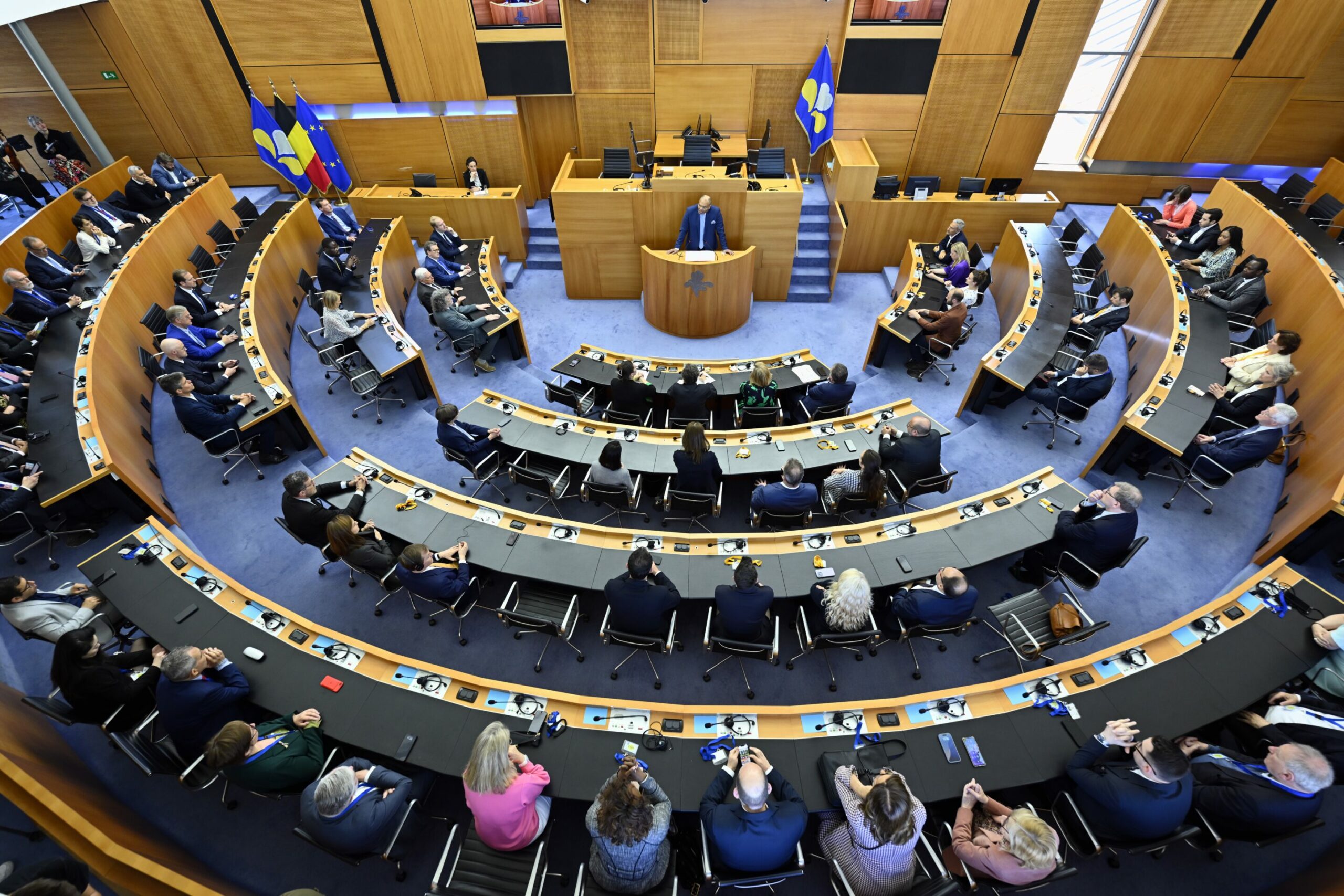
Credit: Belga/Eric Lalmand
What's worse, the few things that the outgoing Brussels Government is still able to do will now likely become much harder as Budget Minister Dirk De Smedt's last-minute departure will leave its mark on the inter-party relations.
"He will now probably find himself very isolated in the government," said Sinardet. "After all, the parties there are largely the same as the ones around the negotiating table. It will only complicate matters further."
To avoid these drawn-out negotiations in the future, institutional reforms are necessary in the long term, according to him.
"The many-layered institutional system in Brussels complicates matters immensely, the electoral system is no longer adapted to reality, and the election results have made things much more difficult in the Capital Region than anywhere," Sinardet said. "That is all true, but it cannot be an excuse."
"Politicians have to function within the existing system with the cards that they are dealt," he stressed. "At some point, everyone has to make concessions. But that's simply not happening here."
