
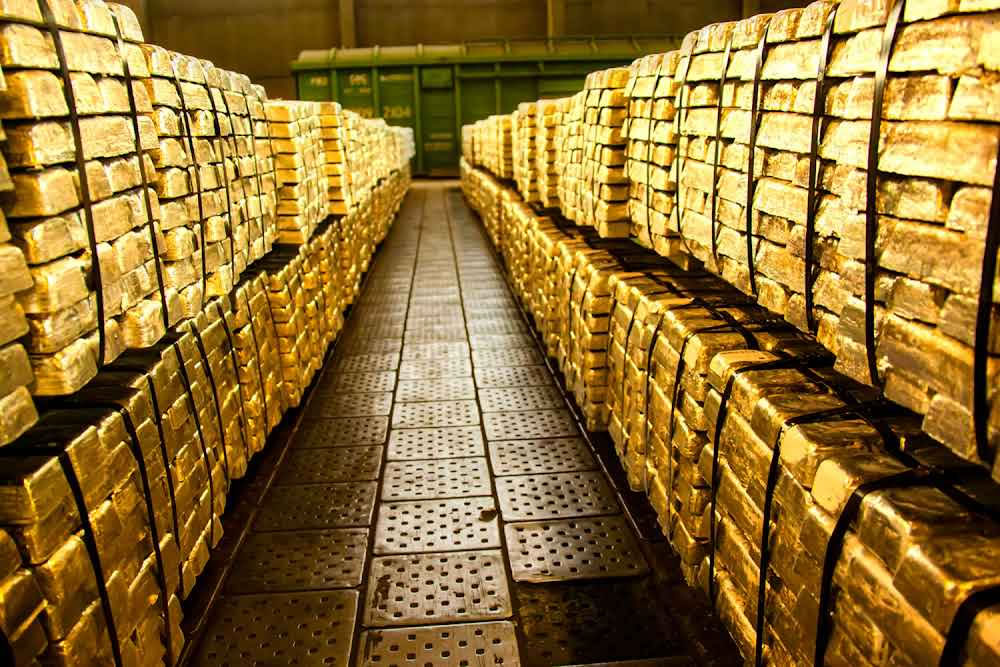
So much for bitcoin, artificial intelligence (AI) and the digital revolution – in 2026 people across Brussels and other European cities have been flocking to buy physical gold bars and coins.
And no wonder: as of last week, the price of gold had more than doubled since the start of 2025 – and had shot up by more than a quarter in January alone. The price of a troy ounce reached a record high of $5,594 on 29 January – roughly €150,000 a kilo – before falling back. Gold has always been pretty, but it has never been this precious.
Is the price plunge since Thursday proof that this is just a speculative mania? Or are there sound reasons why the yellow metal is now so valuable?
Safe haven
Gold has been the ultimate safe haven since ancient times. It is portable and convertible, a store of value and a universally accepted means of payment.
When the Russians invaded Estonia in 1944 and my grandparents fled, they took with them their only child, a single suitcase and their gold jewellery. As refugees, that gold later bought my family food to survive.
When the financial crisis struck in 2008, my partner stocked up on gold coins in case the banking system collapsed. (The price of gold in euros peaked in 2012, at the height of the ensuing crisis in the eurozone.)
And when Donald Trump became US president again a year ago, I piled into gold, albeit indirectly by buying shares in gold mining companies and an exchange-traded fund (ETF) that owns physical gold.
War, geopolitical upheaval and a loss of trust in the financial system are all powerful reasons to turn to gold. After all, if World War Three were to break out, which would you rather own: shares in a buzzy AI company, US government bonds – or gold?
Many sober economists and supposedly sophisticated investors are sniffy about gold. A century ago, the illustrious British economist John Maynard Keynes dismissed it as a “barbarous relic”, albeit while also investing in gold mining shares.
Critics object that this precious metal has few uses beyond jewellery and some industrial applications. Unlike financial assets such as corporate shares or government bonds, it isn’t a claim on a future income stream and cannot readily be valued using standard models. More broadly, in our modern world of digital trading, financial derivatives and newfangled investments such as DOGE coins, gold may seem crude and primitive.
Yet in a world of paper promises and digital accounts, there is something simple, solid, reliable and relatable about gold. Gold can’t be hacked, frozen, defaulted on, bankrupted or disappear in a bank collapse. Its value derives from its scarcity and the durable demand for it. Gold was valued before governments existed, let alone the nation state, and it can outlast them all.
At the very least, then, gold is a valuable form of insurance in troubled times such as now. As a bonus, it can also offer a decent return over time. Ignoring the exuberance of the past year, it appreciated by an average of 9% a year between January 2000 and January 2025.
From Ukraine to China
The recent rally was sparked by Vladimir Putin’s full-scale invasion of Ukraine in 2022. Western governments responded by freezing the foreign reserves of Russia’s central bank, notably those held at Euroclear in Brussels. That prompted other central banks, led by China’s, to shift into gold. Unlike US or eurozone government bonds, gold is safely out of the reach of sanctions from Washington and Brussels.
Central banks are still buying up gold – albeit a bit less enthusiastically last year – with Poland’s leading the charge. China’s may be too; its purchases are often opaque.
But what began with central banks has broadened into a bigger investor shift, especially since President Trump’s re-election.
Over the past year, Trump has undermined trust in US institutions and taken a wrecking ball to the US-led international order. The US government is on a borrowing splurge, while Trump has sought to bully the legally independent Federal Reserve into cutting interest rates further and faster. Lowering borrowing costs would juice growth ahead of the crucial midterm Congressional elections in November, but also risk a resurgence of inflation.
At the same time, Trump has launched trade wars against all and sundry, cast doubt on the NATO alliance, threatened to abandon Ukraine, talked of annexing Canada and Greenland, kidnapped the leader of Venezuela, bombed Iran and much else. Rarely has the geopolitical outlook seemed so uncertain.
US Treasury bonds are traditionally a safe haven in a storm – even ones that originate in the US, as the 2008 financial crisis did. But after Trump’s wild “liberation day” tariffs last April, US shares, Treasuries and the dollar all sold off together. Briefly, US markets behaved more like Argentina’s, a mismanaged submerging market.
A complete loss of trust in the dollar would be a truly monumental thing: the world financial system is based on it. Even a slight erosion of confidence makes waves. And since neither the euro nor the Chinese renminbi are yet able to fully replace the greenback, one beneficiary of dollar distrust is gold. The tradable market for gold is tiny compared to the vast $30 trillion US Treasury bond market, so even a little diversification can send gold soaring.
A third big wave of buying has come from Chinese investors. Since the country’s property crash, the central bank has been pumping liquidity into markets to prop up the economy. For those mistrustful of other assets, gold has been an appealing option.
Speculative fever
There are thus solid reasons for gold’s recent rally. At the same time, speculative flows have surely added to it. Fear of missing out has amplified fear of financial and geopolitical turmoil.
The world remains a worryingly uncertain place, so the fundamental reasons for gold’s upturn remain in place. But a caveat is that if gold becomes a more widely held and mainstream financial asset, it may provide less of a safe haven in a panic. If investors are forced to sell gold to meet margin calls when shares or bonds tank, gold prices will fall too.
